Through a mirror digitally

I’ve written about the first season of Charlie Brooker’s Black Mirror when it first aired (here and here). I didn’t consider all three of the original episodes equally successful at presenting a dark, satiric funhouse reflection of people in the age of omnipresent smartphones, tablet computers and social media, but Brooker’s takes on how technology reinforces human nature in weird but not always wonderful ways were always eminently watchable.

To my mind, the second series (which recently finished on Channel Four) dropped the ball somewhat on its final episode, but again, it has held a fascinating black, quite possibly Apple-branded mirror up to us, and the reflection is not always pleasant. It’s not necessarily scathing, though, so much as sad; other than in his editorials, though, Brooker tempers his satire with empathy for his characters. Well, some of them. Let’s look at the individual episodes, though:

Be Right Back

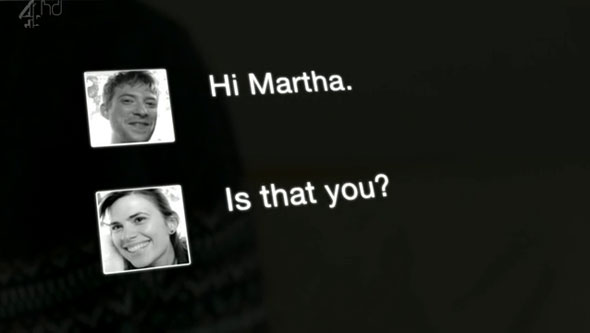
The first episode is probably the one I liked best, and it is the one that I related to most. “Be Right Back” is the story of a woman whose husband dies in a car crash; a friend, also recently bereft, signs her up to a service that creates a simulacrum – first virtual, later physical – of her husband based on his digital footprint: his Facebook posts, his tweets, his e-mails, the many photos and videos. (Sound far-fetched? Check this site out and tell me if it still does.) While initially the simulation consoles her, being almost like her husband in how he talks and acts, that almost becomes impossible to bear, in a sort of emotional uncanny valley effect. So much of him is there, bringing into stark contrast the ways in which the simulated husband falls short of the real thing.
Be Right Back

Perhaps more than most episodes, “Be Right Back” needs its near-future vision of where technology will take us to tell a story, but the story it tells is not about this technology. It’s about loss, mourning and the inability to let go. It’s about the characters, which is why it works eminently well but perhaps falls somewhat short in its ability to comment on the titular ‘black mirror’. Still, it makes you wonder: what if the sci-fi tech had created a more perfect copy of the protagonist’s husband? Is it the imperfection of the process, the ways in which its result falls short of reality and memory, that’s the problem? There are shades (or perhaps digital ghosts?) of Solaris that resonate throughout the episode.

White Bear

If “Be Right Back” was tragedy, “White Bear” is closer to the horror genre, reminiscent of 28 Days Later: a young woman wakes up with no memory (except for occasional flashes) of who she is. Trying to figure out her situation, she finds that everyone films her or takes photos on their smart phones, but otherwise they ignore her – except for the masked weirdos wielding shotguns, electric saws and other implements of unpleasantness. They’re the hunters, apparently using the disconnected voyeurism of the watchers to do whatever they damn well please, including torture and murder.

So, a comment on how people make themselves into audiences, how they film violence and atrocities and put these online for all to see, instead of becoming involved and helping those at the receiving end of the violence? Wrong, at least sort of: the episode pulls the rug from under the main character’s (and our) feet, revealing that this whole thing is an elaborate, grotesquely ironic punishment: she is a convicted criminal, having filmed her boyfriend torturing and killing a child, so her memory is wiped and, in a modern twist on Dante’s contrapasso, her crime is visited on her… day after day after day.

In other words, the episode is about mob mentality, witchhunts and how modern media twist justice by ‘democratising’ it, right? Well, that’s partly the problem: the episode is about both of these things, to some extent, but I’m not sure it succeeds at bringing them together in a satisfying way. Arguably, the sort of disconnectedness that can be heightened by perceiving everything through the filter of a digital camera or smartphone can in turn reinforce the mob’s hunger for revenge, which in turn isn’t necessarily far from a simple hunger to see lions tearing apart Christians in the arena. And there’s clearly the irony of the punishment making the ones inflicting it (the audiences with their phones and cameras) into the person they’re punishing, mirroring her crime. But the two themes are an uneasy fit – and perhaps that unease is part of how Brooker tries to make us uncomfortable.

What is way more uncomfortable, though, and in that sense entirely in keeping with Brooker’s series and his themes, is how on so many online review sites a sizeable portion of the (mostly anonymous) commenters felt the episode’s punishment of its main character was absolutely, 100% justified, i.e. the bitch got what she deserved. Democratising justice, eh?

The Waldo Moment

I’m not sure I would have ended the series on “The Waldo Moment”, not least because it’s very clearly the odd one out. If Black Mirror is indeed about the effect the new media and technologies have on our lives, that element is utterly unimportant in the episode: yes, it features a motion-captured virtual cartoon, but the story could pretty much be exactly the same if Waldo, the sarcastic blue bear, were a sock puppet. The episode feels like a left-over from a different project, probably because that’s exactly what it is. (It incorporates material originally written for Nathan Barley, Brooker’s collaboration with Chris Morris of Four Lions fame.)

“The Waldo Moment” makes a good point about the general cynicism about politics, and how so many of the things we blame politicians for – their pandering to the lowest common denominator, for instance – we’ve fostered in them ourselves. Politicians deserve to be criticised, but at least some of the blanket criticism they’re exposed to is hypocritical: we slam them for being undemocratic when they act differently from what we’d want, and we slam them again for lacking integrity and being in it for the votes only when they act in ways that appeal to the majority. Our cynicism is facile – and, Brooker suggests, dangerous, making us vulnerable to demagogues in the guise of those speaking the truth and sticking it to the man.

The thing is, while I think there’s something to the point, it is presented in a similarly shallow way that simply fails to carry the episode for its full length. Compared to “Be Right Back”, the characters don’t carry the story enough, and the pace is much slower than in “White Bear”. “The Waldo Moment” has material for perhaps half an hour, but even then it isn’t all that perceptive or incisive. There is one strong moment, both funny and chilling, where an American from “the Company” comes to the protagonist, the comedian who breathes life into foul-mouthed Waldo, and suggests a global roll-out, starting in South America. Indeed, if you’re in the business of toppling regimes, why not do it with a friendly blue cartoon face?

The Waldo Moment

Regardless of being underwhelmed with the final episode, I’m curious to see where Brooker’ll take Black Mirror next – or, if he thinks he’s exhausted the topic, whether he’ll find another topic to turn into a fascinating, witty, angry, sad series. Waldo or not, I’ve enjoyed this journey into the near-future with Mr Brooker (to say nothing of the pig).
Disappointment. The ‘D’ is silent.

Waltzing with ChristophI want to say, “It’s not you, Quentin. It’s me.” But I couldn’t say it with much conviction.

What’s happened? Why the sad face on my part? It’s this: ever since first watching Pulp Fiction, I’ve been a Quentin Tarantino fan. This doesn’t mean that I love everything the man’s been involved in – I wasn’t too keen on From Dusk Till Dawn or Natural Born Killers, for instance – but I’ve greatly enjoyed his directorial work. While most people would go, “Yeah, I dig Reservoir Dogs, but fuck Jackie Brown, man, what a bore!” or “Kill Bill Part 1 rules, Kill Bill Part 2 drools,” I came away from all of them with a big grin on my face. Yes, even Death Proof, apparently the litmus test for Tarantino fans.

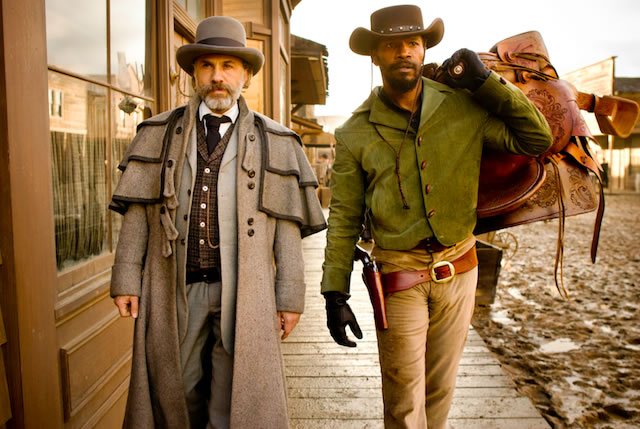
So what was wrong with Django Unchained? Let’s mention the positive first: I found the film very entertaining. It was funny, it had its tense moments, it was well crafted, it had good performances. Christoph Waltz was a joy to watch, Jaime Foxx was effective in the part, Samuel L. Jackson played a very different role from what I’m used to seeing. It’s just… I expect more than “very entertaining” from Tarantino. I remember sitting in the cinema for Jackie Brown and being hooked in the very first scene, thanks to the perfect combination of actress, visuals and music. I remember being pulled into the film immediately when Kill Bill started with a black and white close-up of the bloodied Bride and Bill doing his “Do you find me sadistic?” monologue, followed by the blackout and Nancy Sinatra’s “Bang Bang (My Baby Shot Me Down)”. With Death Proof it took longer – up until the halfway point I was prepared to hate the film for, well, finding it sadistic, but then things fell into place in the second part. And the first scene of Inglourious Basterds is pretty much perfect in how it creates tension and then ratchets it up to unbearable levels.

I felt giddy about all of Tarantino’s earlier films, sometimes due to the sheer exuberance of what he was doing, often because of the virtuoso way in which he remixed styles and genres to amazing effect, usually because the films had a sharp wit and intelligence that might not be apparent at a first viewing. Django Unchained, though? I never felt giddy. I never felt excited at what Tarantino was doing. The closest the film came was Christoph Waltz’s character and performance, which were pretty much pitch perfect, but other than that the film was strangely flat. No surprising juxtaposition (and no, it’s not enough to have Ennio Morricone and 2pac on the same soundtrack any more), not much in the way of subtext. Especially after Inglourious Basterds, which did some pretty intriguing things with its revenge plot(s), Django Unchained is strangely, disappointingly straightforward – and often it’s the lack of straightforwardness, the eagerness to stray of the most direct path, smell the daisies and cut them to shreds in an ironically postmodern homage to grindhouse gardening (“Alan Titchmarsh stars in The Gardener and his Hoe!“) that make Tarantino’s work stand out.

I’m wondering whether some of my disappointment comes from slavery being much more of a cultural issue in the States, and accordingly it wouldn’t resonate with me in the same way that it might with an audience that is still confronted with its racial past. Perhaps that adds an element that simply wasn’t there for me. Or perhaps Django Unchained is Tarantino light, at least with respect to the things I like best about Tarantino. Anyway, I’m in no particular hurry to see the film again (I saw both Kill Bills three times each at the cinema), but perhaps the film will grow on me if/when I sit down to watch it again. And in the meantime I’ll finally see what Pulp Fiction looks like on my TV…

… when she says nothing at all

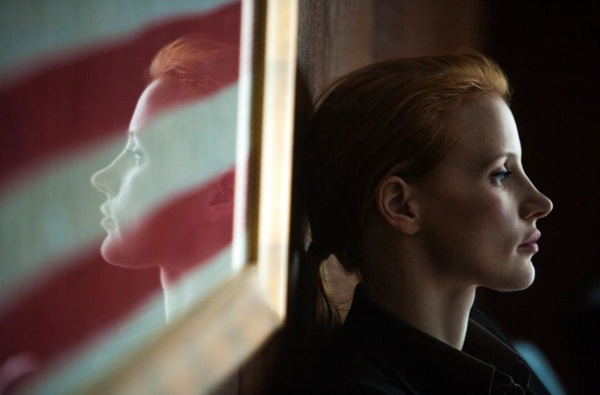
Anyone who’s used the words “Leni Riefenstahl” unironically to describe Kathryn Bigelow and her latest film, Zero Dark Thirty, needs to get a handle on themselves and a sense of proportion (and if they ever saw even an episode of 24, chances are that their frontal lobes would explode into mush). Seriously, if Zero Dark Thirty is supposed to be pro-torture propaganda, it is extremely inept at furthering a pro-torture agenda – and being inept at her craft is about the last thing you could criticise Bigelow for.

No, the problem with Zero Dark Thirty isn’t that it espouses problematic opinions – it’s that the film hardly has any opinion at all. It effaces practically every trace of an ideological or political position from its story, becoming one big Rorschach test in the process. Depending on one’s own view of the issues – the war on terrorism, the hunt for Osama Bin Laden, the use of torture – it’s easy to read any set of diametrically opposed intentions into the film. The same scenes can serve as evidence, with a bit of prodding and tweaking, that Bigelow approves of torture and that she sees it as a dehumanising evil, but without the outside input of the viewer’s opinions the movie does not forward any statement beyond “And then this happened.”

Zero Dark Thirty

I don’t particularly want to get into the quagmire of What Really Happened. I accept that this is a fictionalised version of the events, added to which I doubt there’s an unadulterated, unbiased, and most importantly unredacted version of what happened that Bigelow – or anyone, really – had access to. My issue with the film isn’t its political position but its blankness, which makes it difficult to engage with the film. I like cinema to be ambiguous, I enjoy making up my own mind and thinking for myself, so it’s not that I wanted Zero Dark Thirty to tell me how to feel about what was happening – but the film, its events and its characters are such blank slates that there isn’t even much there to engage with. There is a distinction between even-handedness and utter neutrality, and Switzerland could learn one or two (or two-hundred) things from Bigelow’s latest.

As a result, I found myself thinking and feeling relatively little about what was happening on the screen, beyond “Yeah, this – or something like it – did probably happen at some point.” Shouldn’t the events on screen carry some dramatic weight? The main adjective describing Zero Dark Thirty for me is this: professional. The film is well directed, shot, acted, edited; there is little to fault (except one clumsily manipulative scene that makes the characters involved look stupid) except its blankness. If anything, perhaps its very basic plotting can be criticised – a mere string of events reminiscent of a schoolchild’s essay on “What I did on my hols hunting for Bin Laden” – or its pedestrian characterisation, but both of these reflect what seems to be Bigelow’s intention, not to impose anything on the audience. But, Ms Bigelow, imposing on the audience and giving them something, anything, to work with, those are two very different things. Should I come away from a film on this topic feeling faintly impressed by the craft, faintly bored by the sheer length of the movie, but mostly just blank?

Meet the new Bond…

… same as old Bond.

I have to admit this up front: I’m not a big fan of James Bond or the series of films he features in. I liked Casino Royale a lot, but even apparent series classic Goldeneye didn’t do anything for me, and while I could tolerate the Sean Connery films I wouldn’t want to sit through Roger Moore’s panto-style movies ever again.

Skyfall is both a call-back to old-school Bond and a deconstruction of the films and the character. In terms of both form and theme, it’s the most ambitious film in the series. At the end, as the credits were rolling, I was exhilarated and excited – yet I’m not sure I’m looking forward to what the Broccoli Gang will come up with next. For, see, Skyfall ends at a point where we could very easily segue into Dr No. Craig’s Bond at the film’s close is Connery’s original Bond, for all intents and purposes, complete with a male M and trusty Moneypenny.

Regardless of this, I come to praise Bond, not to bury him. After a boring, confused Quantum of Solace that barely works as a companion piece to Casino Royale – and that even then doesn’t add much to its predecessor – Sam Mendes has a much better handle on… well, everything. I haven’t yet seen a Mark Foster film that has convinced me the man deserves the praise he’s received, and he was most definitely the wrong man for Bond. Mendes hasn’t really done any action films, the closest being Road to Perdition, but he knows how to stage scenes effectively – and he knows how to pick his collaborators, with Roger Deakins turning in the most gorgeous film in the series yet. His aesthetic sensibilities complement Mendes’ directorial eye well, especially in a fight silhouetted against Blade Runner-esque Shanghai facades and in the Macao scenes. (Also, is it just me or is Mendes more overtly theatrical, though effectively so, in this than in any of his previous films?)

Skyfall

There’s more to like about Skyfall: the phantasmagoric-to-the-point-of-becoming-apocalyptic intro sequence (I didn’t like Adele’s song all that much until I saw it matched to the intro visuals), Craig’s co-stars (let me single out Javier Bardem who succeeds at being camp and chilling, gentle and deranged), a smart, witty script that doesn’t shy away from pathos when it is called for. It’s the first Bond film I’ve seen at the cinema that I wanted to see again as soon as the credits rolled, and it’s the second that has made me emotionally invested. Yet there remains that niggling feeling that Skyfall succeeds all too well at making everything that’s interesting about it superfluous for the next film in the franchise. Bond mentions at some point during the film that his hobby is resurrection – let’s hope that what this film has resurrected isn’t one of the undead, a revenant of the Bonds of old and nothing more.

P.S.: Ben Whishaw’s Q, while not much more substantial than a cameo, was much appreciated, as were Naomie Harris, Ralph Fiennes and Albert Finney.

Christmas Variety Pack – of one!

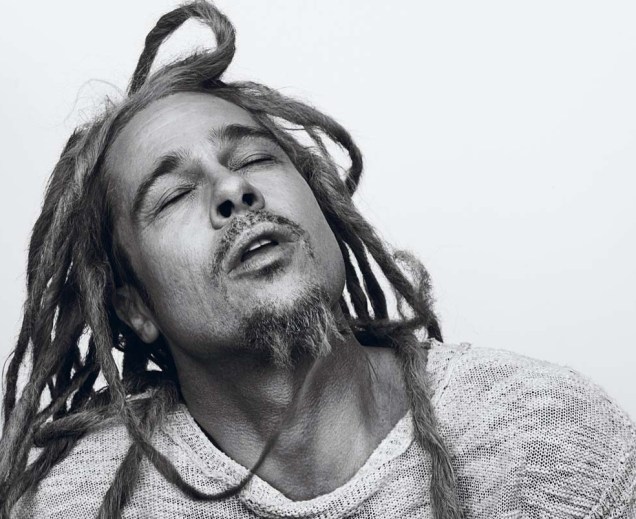
I’ve managed to catch a few films at the cinema in the last few weeks and I wanted to get them off my plate before a big steaming turkey landed on said plate… or something to that effect. Possibly something less ewwy. However, since WordPress just played a naughty pre-Christmas trick on me, gobbling up what I’d written for the second and third item, here’s a shorter variety pack, featuring the silliest picture of Brad Pitt in a long, long time.

Killing Them Softly

For anyone who’s forgotten one of the zillion times I’ve mentioned it, Andrew Dominik’s The Assassination of Jesse James by the Coward Robert Ford may just be my favourite film of the last ten years. I was accordingly excited when I heard that its director and star were getting back together for a darkly comic gangster flick, and the trailer looked intriguing – as well as pushing several of my movie- and TV-loving buttons. James “Tony Soprano” Gandolfini? Richard “Late Nate” Jenkins? Henry Motherfucking Hill himself, Ray Liotta? Count me in!

Talk about killing a film, not softly, but with unrealistic expectations. I loved The Assassination… for its sure-handed direction and for Pitt’s performance (although it’s Casey Affleck and Sam Rockwell who were the biggest revelations), but also for its elegiac tone, its hauntingly beautiful images, the writing largely taken from the original novel. Killing Them Softly may have been directed by the same man and shares the star of Dominik’s earlier film, but it is entirely different in tone and setting. It’s grimy, and it rarely evokes any emotions for its characters other than sarcastic pity. They’re a largely pathetic gang of losers, and Pitt’s pragmatic blue-collar hitman is the best of a sorry bunch. Which is exactly what the script requires and what Dominik goes for, and he’s very effective at this – but I wasn’t exactly engaged by all of this. Several Sopranos alumni turning up didn’t exactly help, replacing one set of expectations (something that would pull me in as much, and in similar ways, as The Assassination… had) with another (will this ever crawl out of the shadows of The Sopranos?).

Maybe someone should tell him that Bob Marley was black?

Is Killing Them Softly a good film? I didn’t mind watching it, even while my expectations deflated like a sad seaside toy punctured by an urchin. Does it do anything special or new? Not particularly. There’s a sustained political subtext, a commentary on today’s America that, at least in my opinion, doesn’t work and comes across as fairly facile. There is a beautifully tense robbery scene, and the mis-en-scène is generally interesting – but damned if I know what, if anything, Killing Them Softly adds up to. Perhaps that’s the jaded, cynical point.

And that’s it for now. Tune in soon for my thoughts on Argo and Skyfall – and in the meantime, happy holidays, one and all!

Childhood’s end

I was seven… and five minutes into the film I was already bawling, as those nasty men with big cars and jangling keys were running after the space gnome with the glowing chest. Just leave the guy alone! He’s already stuck on a planet that isn’t his with little chance of ever getting home.

E.T. was when I became a fan of the cinema. Before that I’d seen movies – it was a tradition of our family to go and see a film, usually Disney, on the second Sunday in December – but Spielberg’s classic was the first time I had an inkling that how a film is done is at least as important as what it’s about. I didn’t turn into Little Man Criterion all of a sudden, but the seed for my love for film (and my constant worry of running out of shelf space for DVDs and Blu-rays) was planted.

In the meantime I have been disappointed by Spielberg repeatedly. Obviously the guy is a consummate craftsman, but I can’t help thinking that he peaked in the late ’70s and early ’80s and never reached those heights again. Jaws, Raiders of the Lost Ark and Close Encounters of the Third Kind – those films do what they set out to do almost perfectly. Later Spielberg still has his moments, and many of his later films are still good, but his great skill at evoking a sense of wonder (no other film manages this as well as Close Encounters and some of E.T.) was marred by his increasing tendency towards mawkishness. Early Spielberg was already sentimental, E.T. being a perfect example of this, but he also knew when to be ruthless with his characters. In Jaws pretty much anyone could die – in Jurassic Park it’s bad guys and side characters that get munched on while especially the kids get a free pass, surviving even high-voltage fences that would probably have turned a velociraptor into fried dino.

After the 20th anniversary edition of E.T., with its walkie-talkies and check-out-my-CGI moments, I felt a bit burned on the film and on Spielberg’s older films. What next? A Jaws where Alex Kintner gets a good scare by the mean old shark but escapes unharmed otherwise? Spielberg himself admitted that he’d made a mistake Lucasing his film, promising that the 30th anniversary edition would be a return to the original, shotguns, rubber puppet and all.

So, like the good little film geek consumer that I am I toddled off to Amazon and ordered the Blu-ray – and yes, it’s the E.T. I remember bawling at when I was a kid. No walkie-talkies, no memory hole for Elliott’s immortal “Penis breath!” line (can you imagine this in a PG film nowadays?).

What seems to have changed, though, is me. This time around, the gap between my nostalgia and my actual enjoyment of the film was too big not to notice. It’s still an example of Spielberg at the top of his game, but perhaps that game is no longer for me. Spielberg’s sentimentality, John Williams’ bombast, the cuteness of the kids, it all gets a bit too much and isn’t modulated nearly is well as I’d like it to be: it’s as if Spielberg & Co. only know piano and forte fortissimo but nothing in between.

Which is sad – but I have the sneaking suspicion that I already felt like this ten years ago when I saw the re-release at the cinema. Back then I probably put it down to Spielberg’s regrettable edits, but more likely it’s that I’ve outgrown the film. The good news is, though, that I just need to give it a year or two and I’ll have forgotten how I felt about the film this time around, remembering only the nostalgia.

And if I then, in another ten years or so, re-watch the film, I’ll make sure to do so without subtitles – there’s something disconcerting about having the little brown space guy’s sounds described as E.T. moans and E.T. pants, as if he needed to phone not home so much as the Intergalactic  Party Chat Line.

P.S.: Almost equally disconcerting is this E.T.-themed ad for the 1985 Special Olympics, which make it all too likely that the wrinkly gnome from outer space uses Reese’s Pieces to lure kids into his white van when he isn’t healing plants and drinking beer.

Payne Killer (part 2)

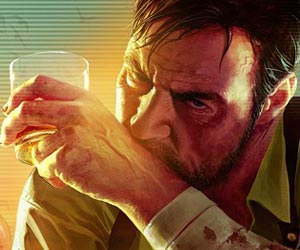
This post follows from my previous meanderings on Max Payne. For those who have not played Max Payne 3, beware: there will be spoilers.

While I am not an outright fan of explicit violence in modern media, I’m not particularly squeamish either. I have no interest whatsoever in the gore extravaganza of much modern horror, but neither am I put off by the viscera of some of Tarantino’s more recent offerings, and some of the TV series (e.g. Rome or Game of Thrones) I’ve enjoyed most over the last couple of years don’t skimp on the red gushing stuff.

And yet, Max Payne 3 almost made me switch off the game, not just once but twice, due to the brutality it depicts.

And this is in no way an indictment of the game.

Max Payne 3 is a brutal game – and more than any shooter I’ve played it does a remarkably horrid job of showing what bullets do to bodies. Does the game revel in showing exit wounds? I think I’d be lying if I said it wasn’t – MP3 does not present its violence with the frat boy, fist-pump glee of other games, but it has a fascination for showing the damage done, both to people and to interior (and exterior) decorating, in slow motion. So much so that checking out some of the videos on YouTube makes me queasy – less with the game than with the Beavis and Butthead-ish tone of the video description and comments.

But it’s not so much seeing the carnage I’m authoring that made me wince, at least not after the first ten minutes or so. (There is definitely something numbing to seeing henchman after henchman dying horribly at the business end of my gun – and it’s this repetitiveness that’s a major flaw of the game in my opinion.) It’s two key scenes: in one, I finally find the beaten, bleeding trophy wife of a São Paolo business man earlier abducted by a favela gang, only to see one of the gangbangers put a bullet through her head. In another, the business man’s brother is covered with petrol and burnt alive. The game has previously shown the man as shallow, narcissistic and rather pathetic – but the way the game depicts his death got to me, and quite possibly more so than a similar scene would have in a film.

I don’t want to get into the question here of whether games are becoming too violent or whether people are desensitised to real-life violence and cruelty due to watching brutal films or playing violent games. That question is much bigger and deserves a longer discussion in a wider forum. What I’m interested in is this: why did these two scenes get to me to the extent where I wasn’t sure I wanted to continue playing (keeping in mind, as I’ve said, that I’m not all that squeamish)?

I think it’s this: games make a big thing of player agency – as gamers it’s our finger on the trigger, we decide who lives and who dies, it’s, like, interactive! – yet in practice our agency is always limited, it’s circumscribed in a hundred ways: by a game’s design, its user interface, our character’s abilities and, often frustratingly, by the story a game tells. You’re Superman while playing the game, you’re John McClane, you’re Neo – and then comes a pre-rendered sequence, and what’s pre-rendered as well is your impotence in the face of the great god, Plot. The villain jumps from the shadows and skewers your love interest with his great big sword. (I’ve never played Final Fantasy VII, but apparently this is one of the primal scenes of so many gamers into Japanese role-playing games… and I wonder whether the cod-Freudian subtext is as heavy when you’re actually playing.)

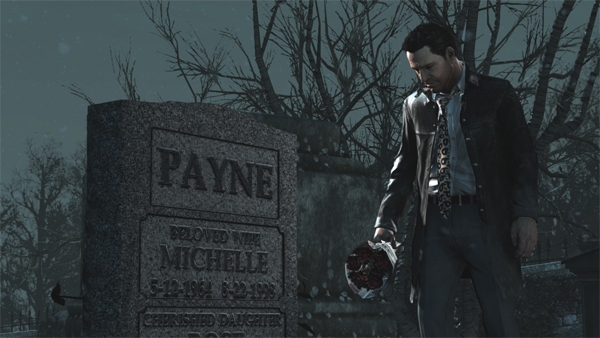
Many games use this in a frustrating way that feels like the program is cheating, in revenge for decades of players using hidden cheats and God modes to become invulnerable. Think you’re all-powerful, gamer? Take that! Ooh, that must’ve hurt! The two scenes in Max Payne 3 that I mentioned earlier (and there are others, although none as pointed) may have an element of this, but I think the game is being cleverer than that: Max Payne, from the first game onward, told a story about revenge and redemption. I’m not sure to what extent it manages the latter all that well, although there’s a lot of quasi-Noirish verbiage in the game about it – but especially Max Payne 3 never lets you forget that the revenge you’re effecting is finally hollow. Yes, you might get to kill hundreds of bad guys in bloody, bone-crunching ways, but Max’ loss is the constant foil through which the player views this revenge. For every henchman killed, for every villain stopped, Max’ wife and child is not a single bullet closer to being alive. For a game that’s entirely about revenge and redemption, it’s bleakly ironic that revenge is shown to be pointless and redemption all but impossible. Max Payne’s extended trauerarbeit (and I don’t think this is wankerish pseudo-analysis imposed on the game – every second line of dialogue is about Max’ ongoing, futile quest to find some sort of meaning in a life that’s had all meaning shot to hell), like the hundreds of painkillers he keeps popping, only serves to dull his pain momentarily.

I’m not saying that Max Payne 3 is a deep, philosophical treatment of mourning, revenge and the futility of redemption – but it does address these issues within the rules it has set up for itself… and, like Rockstar’s earlier Red Dead Redemption (although my vote still goes to RDR for doing more interesting, complex things with the theme) it goes a long way to disabuse the player of this crazy idea that just because he’s got his finger on the trigger he can make everything all right.

Payne Killer (part 1)

It has to be said: as a gamer it’s sometimes difficult not to be embarrassed by video games. Most people with a modicum of taste would take one look at a game called Max Payne (its central character of that name the proverbial Cop With Nothing To Lose, which doesn’t exactly make it less embarrassing) and snort derisively. It sounds about as classy and grown-up as one of those superhero comics where the women have breasts the size of battleships and waists with the circumference of a ripe peach.

The surprising thing was that Max Payne, while not exactly A la recherche du temps perdu (or even Pulp Fiction), was fairly smart and knowing in its writing, at least for a video game in the early years of this millennium, and its sequel, The Fall of Max Payne even more so. Mixing neo-noir cynicism and post-Matrix bullet time with comic book aesthetics, surreal dream sequences and a parodic style that was more Scream than Scary Movie, Max Payne didn’t take itself overly serious, yet it still pulled off that neat trick where we come to care about the characters. They’re funny, but they’re not just the punchline to a joke.

Not even poor, doomed mob underboss Vinnie Gognitti in his Captain BaseballBatBoy costume. Okay, perhaps a bit.

Max Payne 2 pulled off something strangely akin to Tim Burton’s Batman Returns. It shouldn’t work. It should be an incoherent mess of incompatible parts. Dark romance, surreal comedy, cartoon noir and self-referential humour shouldn’t come together to form something that’s somehow more than the sum of its parts – yet it does. Or perhaps it’s a variation on Stockholm Syndrome, where someone who enjoys playing computer games but also enjoys good writing and interesting characters convinces himself that purple prose such as “There was a blind spot in my head, a bullet-shaped hole where the answers should be. Call it denial. I wanted to dig inside my skull and scrape out the pain.” congeals into something that by some process of video game alchemy manages to transcend the clichés it’s assembled from.

What’s the occasion of all of this reminiscing about old games? Call it exposition, call it setting the scene – it’s basically a glorified lead-in for my thoughts on Max Payne 3, the latest (and possibly last?) game in the series, coming soon to a blog near you. Did the series manage to reinvent itself, almost ten years after its last instalment, by transposing its New York neo-noir bullet ballet to the sun-drenched favelas of Sao Paolo viewed through the camera lens left behind by Tony Scott?

Misinformed? Uninformed? By hook or by crook…

As I mentioned in my last post, we were just one episode away from finishing The Prisoner – the original UK series starring Patrick McGoohan, that is, not the remake with Ian McKellen and Jim Caviezel. The Prisoner may just be one of the Top 3 cult series of all time; it’s up there with the likes of Twin Peaks. And, as with so many things that are given the ‘cult’ label, it’s difficult to come to them with fair, realistic expectations, isn’t it?

Well, to begin with: you have to make allowances for the series’ age. Even though everyone talks about how original and revolutionary the series was and still is, in some ways it’s very much a product of its time. Sometimes that’s charming – as in the ’60s art and costume design, making the Village perhaps the hippest prison resort ever – but sometimes it is tiresome, as in the pacing (few of the episodes need to be 50 minutes long, and most would have benefited from cuts) or the fight scenes, which are tame, repetitive and overly long, not least because we’ve all seen better, more exciting fights by now. I imagine that these are less of an issue if you’re revisiting the series wearing nostalgia goggles, but then, they’re not my main problem with The Prisoner.

The thing is, the series was undoubtedly a pioneer – it’s still rare to find much on TV that mixes mystery, politics, psychology and metaphysics as The Prisoner does, and that is as willing, or indeed eager, to keep clear-cut answers from the audience. The series definitely wants us to think along and to form our own ideas on what is happening to McGoohan’s Number 6. At times it’s almost like watching a spy thriller penned by Samuel Beckett. However, looking at the series, its world and its puzzles more closely, I think that one of the main reasons why it raises so many questions is that it has little to no internal consistency: to be quite frank, much of the mystery stems from The Prisoner’s overall mythologybeing an incoherent mess. Remember all the accusations levelled at Lost, especially as they were approaching the finale? “They’re making it up as they go along!” Well, the very same seems to be true when it comes to its older fellow puzzle box of a series. It establishes few rules that it is content to stick with, which may work at the beginning as Number 6 is trying to escape the Village but is foiled over and over again because, well, the deck is stacked against him – but the longer the series goes on, the more it feels like The Prisoner‘s universe is random and arbitrary.

As a result, it became increasingly difficult for me to engage with or care about what was happening on screen. Why think along if the series can just put on a monkey mask and make fun of your wish, if not for answers then for some sort of internal logic? I’ve mentioned Beckett before, and I think there’s a definite similarity between his cruel, bleak and at times strangely funny universe and The Prisoner – but while I may have the patience and will to sit through 1 1/2 hours of Beckett (and even then only if the acting is impeccable), I’m not sure I could sit still for more than one episode of Endgame: The Series. (Oh, wait: I just did. Doesn’t mean that I was happy to, though.)

It’s a shame, because there are a lot of scenes and ideas that are fascinating. There are moments that are great, like Rover sitting (does a giant white ball even sit?) in Number 2’s chair or the sheer silliness of kosho (a sport played by Number 6 that makes sumo wrestling look dignified), there are some fascinating characters, and at times the mood is as menacing as in The Wicker Man (though with less Christopher Lee in drag). There’s a lot of ambition in the series and a rebellious spirit that a lot of TV programmes would benefit from even today. It’s just that these rarely come together to form something coherent – and as a result I’m left to wonder whether the people who profess to love The Prisoner see something in it that I’m blind to or whether there’s an element of weirdness worship going on, where the series is loved uncritically because it’s just so different. It’s very well possible that The Prisoner broadcasts much of its goodness on frequencies that I’m not able to receive, but even then I think it’s fair to say the series is deeply flawed, with its first four or five episodes being pretty exchangeable, the final four suggesting that the producers were getting tired of the format (leading to their use of a rather Trekkian conceit, the Western Episode), and the entirety of the series never quite deciding whether Number 6’s adversaries, the constant procession of new and improved Number 2s, are always a step ahead of him or whether they’re playing a futile game of catch-up, with the titular character just being so much smarter than all of them.

Oh, and don’t get me started on a computer that’s blown up by being asked the Deep, Unanswerable Question: “Why?”

Why indeed.

August Variety Pack: Special Edition

So, what’s special about it, I hear you asking? (Yes, I hear your voices in my head, because that’s how I roll. At least when I haven’t taken my meds.) The specialitude of this post comes from the following: you’re unlikely ever to check out any of what I’m writing about below, because it’s all about this year’s Edinburgh Fringe – so, unless you’ve already seen some or all of the shows I’ll be talking about, you’ve missed them! Ha! Cue comment about the fleeting, ephemeral nature of art, followed by silence as the tumbleweeds roll by.

Assassins

“Everybody’s got the right to be happy… everybody’s got the right to their dreams.” Sounds like common, especially American, musical fare, doesn’t it? Cheerful, inspirational, and simplistic hogwash, most likely? Well, in Sondheim’s Assassins, the protagonists’ right to be happy finds its expression in killing the President of the United States, or at least doing your darnedest to reach that goal. The show we caught – and it was sheer luck, down to two wonderful people who didn’t pick up their tickets for some reason – wasn’t perfect, not least because we sat more or less right next to the small orchestra, which made the non-mic singing difficult to understand at times… but even under these circumstances it’s clear that Sondheim’s musical is sharply written, very funny, and surprisingly chilling. If your culture is founded on the lie that you can make it if you really try, that even a nobody from a small town can become a millionaire – or a president – where does that leave you when your dream just won’t come true? Does it leave you permanently disaffected – or do you pick up a gun and show that you can make a difference because, after all, this is America?

Statements After An Arrest Under The Immorality Act

The title of this play by South African playwright Athol Fugard almost rivals that of my favourite deconstructivist western of the last, let’s see, forty or fifty years – but the play itself isn’t unwieldy or overly long in the least. Performed by a amazing, fearless cast in an effectively minimalist staging, Statements is a beautiful, poetic and essentially tragic story about lovers who, by decree of the state, shouldn’t be. Even 40 years after it was originally written, addressing the racial segregation under Apartheid, the play feels fresh, relevant and utterly touching.

http://vimeo.com/33584206

We saw two further South African productions – a raw, sweltering Mies Julie (adapted from Strindberg) and Woza Albert!, but it’s Statements that made the deepest impression.

… last but not least

Where to begin? Not everything we saw was brilliant, and a couple of plays were dismal (The Intervention, I’m looking at you!), but there were lots of moments of magic, from the beautiful, sad and endlessly inventive The Fantasist (manic depression, with puppets! see below for a trailer) to Centralia (equal parts WTF?!, mad giggles and poignancy) to Rites and Regulations (a fairly simple but moving play about funeral rituals in Singapore, pressing all my funereal buttons), from Educating Ronnie (about a young man’s exploration of friendship, charity and guilt – another trailer waiting below) to Pierrepoint (about Britain’s last hangman – again, great performance and chilling ending – and another trailer, seriously, when did stage plays start having trailers?) and Planet Lem (socio-critical sci-fi – on stilts! did you know that Polish people are a bit off their trolley?). All in all, to anyone who’s got an interest in theatre and what it can do, Edinburgh during the Fringe is well worth visiting – we’ve seen 25 shows in one week and feel utterly invigorated. Well, we would, if it weren’t for that nasty cold bug we picked up travelling back on easyJet…