Welcome to Six Damn Fine Degrees. These instalments will be inspired by the idea of six degrees of separation in the loosest sense. The only rule: it connects – in some way – to the previous instalment. So come join us on our weekly foray into interconnectedness!
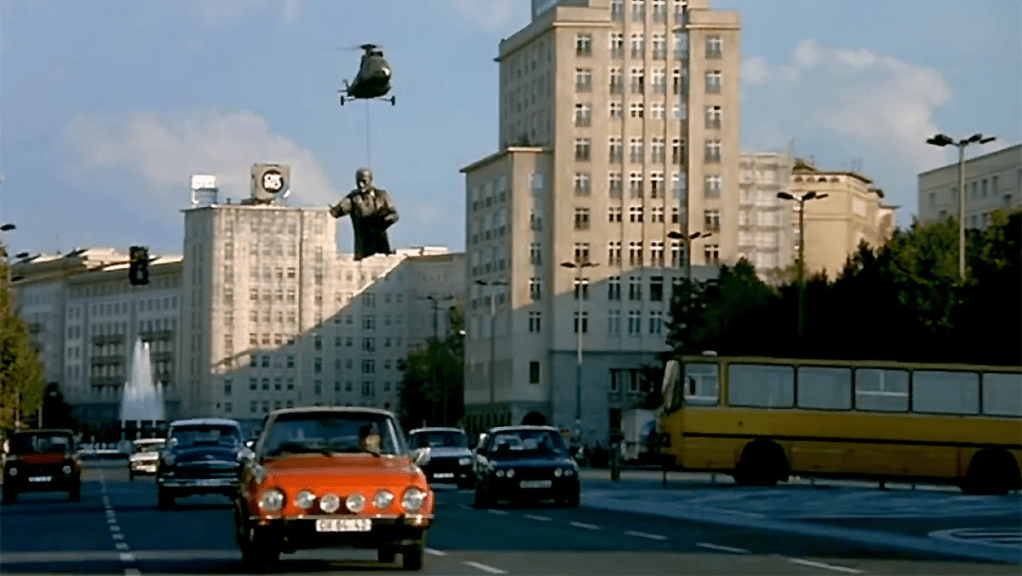
At first glance, Berlin hasn’t quite been as cinematic a city as, let’s say, romantic Paris, foggy London, cosmopolitan New York or sunny L.A. However, its tumultuous history during the first 100 years of cinema has made it an ideal space for movies that used it as more than just a postcard background. Arguably, the number of times Berlin’s cityscape felt like an active participant in the plot has to be significantly higher than the myriad establishing shots of the Eiffel Tower, Big Ben or the downtown zoom shot of the Hollywood sign used elsewhere.
For the June episode, join your cultural baristas as they discuss The Lives of Others (2006), the Academy Award-winning drama about East Germany in the 1980s, Stasi surveillance, the redemptive power of art and its tragic limitations. When not listening in to the artist couple in the apartment on the floor below, we also talk about Amazon Prime’s adaptation of the near-apocalypse, Good Omens, Béla Tarr equine mood piece The Turin Horse and Richard Powers’ 2003 novel The Time of Our Singing.
P.S.: In keeping with the thwarted surveillance motif, Matt’s recording equipment wasn’t quite up to the task this month. We apologise for any problems with the audio quality and promise to do better in July.
Uli Edel’s film Der Baader Meinhof Komplex is both fascinating and frustrating. It has some of the best actors Germany has to offer at the moment acting their hearts out; at the same time, it has a script that often feels like a badly edited Wikipedia article. I can imagine that the film becomes much more frustrating for those who’ve read the book it’s based on – I was in the lucky position to have known relatively litte about the RAF (Red Army Fraction, not Royal Air Force!) before watching it.
What the script would have needed, more than anything else, is an editor: it is packed with too many incidents, as if the author felt, “This has happened so it would be wrong to leave it out!” That may be true for history books – it is less true for films, obviously. Too many scenes feel like they’re a repetition of what was shown earlier, repeating the same points over and over again. “Yes, we know that Andreas Baader was an immature, self-righteous, misogynist asshole,” we want to say, “We know that Gudrun Ensslin was too much in love with herself! Get on with it!” As a result this 2 1/2 hour film feels strangely short-winded. There is little in the way of a Spannungsbogen, as we get what amounts to “This happened, and then this, and then this…”.
At the same time, there are moments when the film (almost despite itself) settles into a storyline, and that’s when the actors take over. Especially the scenes in prison where the incarcerated heads of the RAF turn on each other and on themselves are, at their best, riveting drama. Especially Martina Gedeck, at least as strong a presence as she was in The Lives of Others, creates a fascinating potrait of Ulrike Meinhof slowly falling apart in prison.
It’s in those scenes that I wished the film knew what it wanted to do. Mere chronology may be sufficient (at best) for documentaries, but it doesn’t make for very good drama. With the same actors but with a sense of focus, it could be so much better. As it is now, it ticks all the boxes but fails to bring them together into something satisfyingly coherent and whole.
What it did achieve, though, and quite strongly at that: I now want to find out more about the RAF and the people and events involved. And I definitely want to check out what else Martina Gedeck has done.
(I was going to write lots more here, on the inherent risk of presenting terrorism as sexy if you’ve got young sexy actors playing terrorists, and on the apparent development from the first generation of the RAF into a copy of a copy of a copy, reducing the sparse initial greys into stark black and white, but if I did that there’d be another week before an update. If you’re interested, let me know and I’ll write something about it next time.)
 For the June episode, join your cultural baristas as they discuss The Lives of Others (2006), the Academy Award-winning drama about East Germany in the 1980s, Stasi surveillance, the redemptive power of art and its tragic limitations. When not listening in to the artist couple in the apartment on the floor below, we also talk about Amazon Prime’s adaptation of the near-apocalypse, Good Omens, Béla Tarr equine mood piece The Turin Horse and Richard Powers’ 2003 novel The Time of Our Singing.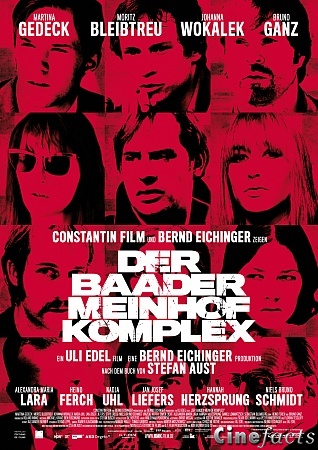
 A Damn Fine Cup of Culture