Join us every week for a trip into the weird and wonderful world of trailers. Whether it’s the first teaser for the latest instalment in your favourite franchise, an obscure preview for a strange indie darling, whether it’s good, bad, ugly or just plain weird – your favourite pop culture baristas are there to tell you what they think.
Welcome to Six Damn Fine Degrees. These instalments will be inspired by the idea of six degrees of separation in the loosest sense. The only rule: it connects – in some way – to the previous instalment. So come join us on our weekly foray into interconnectedness.
There is certainly joy in encountering anything perfectly crafted. Whether we’re talking about films or books or songs or games, there are examples that are exactly what they set out to be and you can’t see a single thing you’d change. Such craftsmanship is exceedingly rare, but to see it is always amazing.
And yet: sometimes it’s the imperfection of something that makes it especially memorable.
You know what’s almost as bad as not having any subtitles in a series of films filled by mumbling Yorkshiremen? (Note that in the meantime a friend’s lent me the German edition of Red Riding, which features subtitles along with the English audio track. Blessings upon their Teutonic heads!) Buying a DVD that advertises, right on the back, subtitles in every language under the sun, or at least in English, German, French, Russian and a fair number of other languages – but then the actual DVD bears little resemblance with what’s promised on the box.
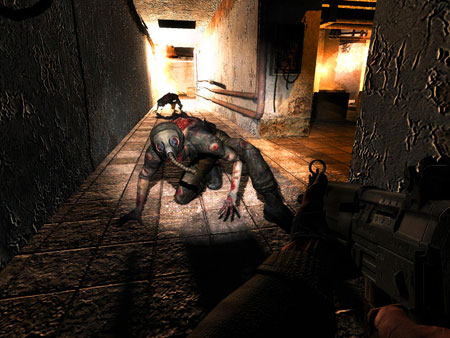
Other than featuring Andrei Tarkovsky’s enigmatic Stalker, that is. I’ve been interested in the film for, oh, about 15 years now, ever since a friend mentioned to me that it’s one of his favourite movies. My interest was piqued even more when I played the Stalker games, although they’re based less on the movie than on the novel Roadside Picnic (and ironically, while the games are relatively thoughtful, they still look like an ’80s action movie next to Tarkovsky’s film). I ordered the DVD on Amazon.fr ages ago – precisely because the edition promised subtitles in lots of different languages – but only got around to seeing the film now.
First impression: man, my French sucks. I was never very good at it, but after letting what ability I had rust for 15 years I understood perhaps 40% of what was being said. (Or rather, 40% of the subtitles; I understood even less of the Russian dialogue, although I did understand “бутерброд”!)
Second impression: even if I understand fairly little and the film is extremely slow – there’s something eminently compelling to Tarkovsky’s style. Even more than Solaris (which suffered somewhat from being set in an outdated future, the fate of so much sci-fi) Stalker is hypnotic… and gorgeous to look at. It is atmospheric without going for any of the predictable tools of atmospheric film makers. The world of Stalker is ominous and eerie, yet at the same time naturalistic, creating an effect I haven’t seen in any other film. There’s something almost documentary in its visuals, yet there’s a dream-like quality – and it’s this seeming contradiction, this tension, that is utterly fascinating.
More than that, perhaps it helps to see the film in a language I don’t fully understand. Films that are put in the ‘art film’ box tend to have a certain portentous, somewhat affectated quality to them; as much as I like Bergman, for instance, a number of his films have a certain self-aware heaviness that can be more alienating than is necessary. Perhaps Tarkovsky’s work has this same quality if the viewer understands the dialogues enough to realise that they’re unintelligible – but my impression was that while the world and themes of the film are portentous, the characters feel real. Not 100% and not all the time, but they’re more than just vehicles for themes.
In the end, though, I can really only judge Stalker as a visual experience until I’ve rewatched it (after a French refresher, perhaps), and on those terms alone it’s well worth seeing. Even if there’s a relative scarcity of Ukranian mercenaries, radioactive mutants and frantic gunfights.

 A Damn Fine Cup of Culture