The Rear-View Mirror: Five Easy Pieces (1970)

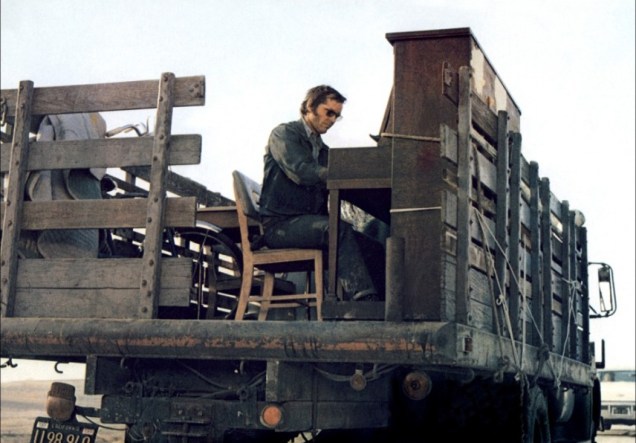
Each Friday we travel back in time, one year at a time, for a look at some of the cultural goodies that may appear closer than they really are in The Rear-View Mirror. Join us on our weekly journey into the past!It must sound incredible to ears younger than mine, but there was a time when Jack Nicholson didn’t let his freak flag fly in every movie he was in. The Shining, One Flew Over The Cuckoo’s Nest, The Witches of Eastwick will all make the top of any crazy poll because Jack eventually goes full Nicholson in all of them. I really don’t mind those movies, but there are other movies starring him, such as Five Easy Pieces, which use him not as a purring kitten exactly, but he brings a wonderfully layered performance to the movie.

Continue reading
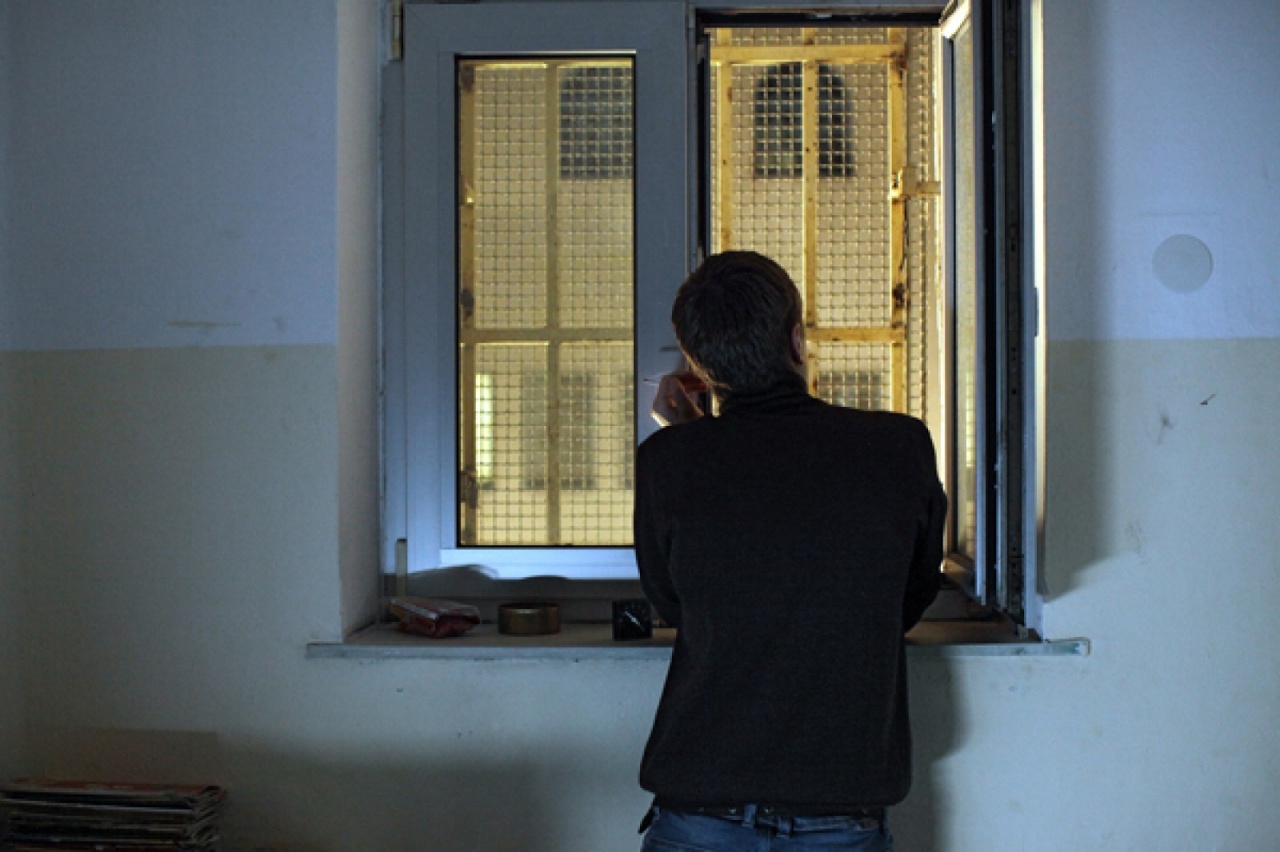
Breathing freely for the first time

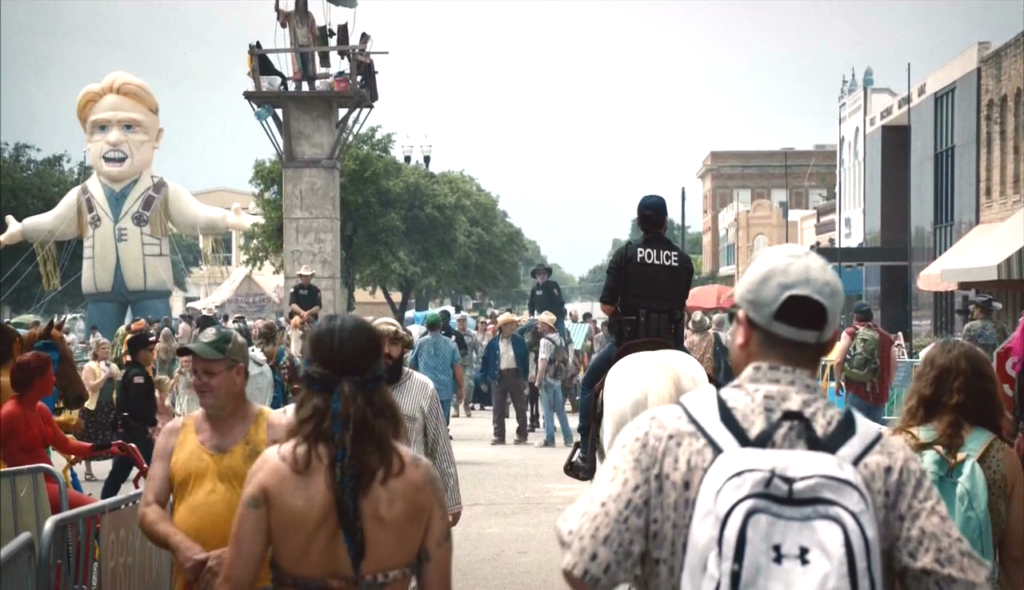
He is quiet, almost sullen, but there is also a coiled tension there, as if he’s ready to react – possibly more strongly than expected, possibly violently. Talk to him the wrong way, touch him perhaps, and he might lash out. His new colleagues have their suspicions about him: a young man his age, practically still a boy, who has been in juvenile detention for the past five years? There’s almost only one kind of crime that could account for that.

Atmen

So perhaps it’s the best thing for everyone involved if the work he applies for, in order to appeal for early parole, has him dealing with those who are already dead.

Continue reading

The Rear-View Mirror: Fiddler on the Roof (1971)

Each Friday we travel back in time, one year at a time, for a look at some of the cultural goodies that may appear closer than they really are in The Rear-View Mirror. Join us on our weekly journey into the past!

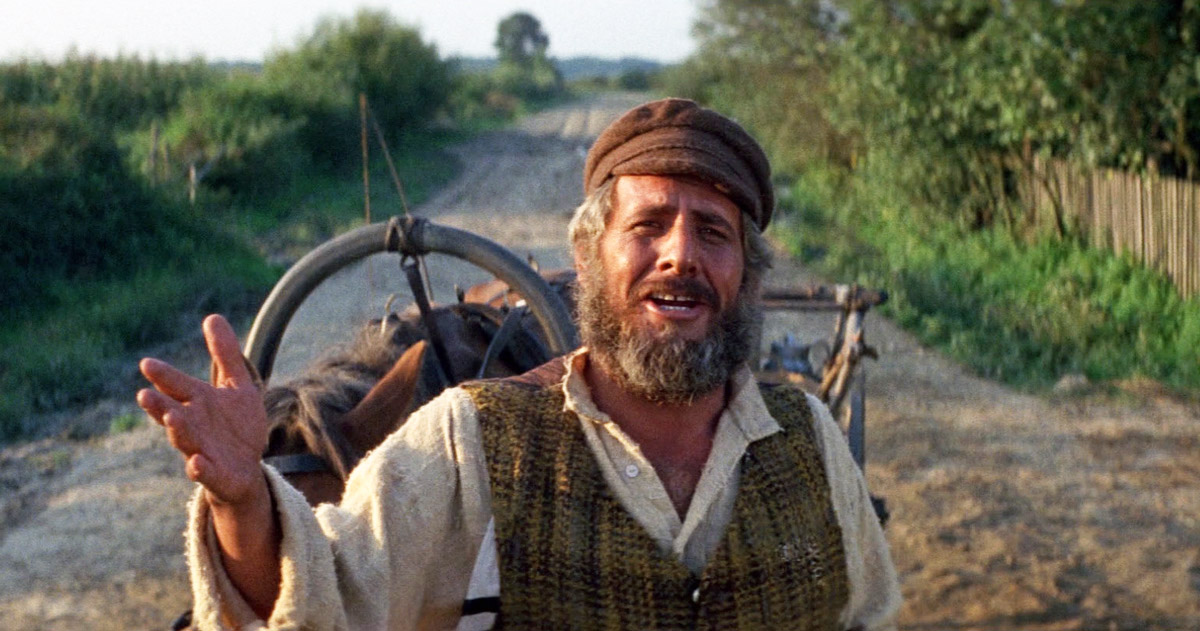
I must have mentioned it before: I’m not a fan of film musicals. Which doesn’t mean that I don’t like the genre, but I don’t like something just because it’s a musical. At the same time, there are a lot of musicals that I do like a lot, and they generally find ways of elevating the material, of making it more effective, because the characters in them have this odd habit of breaking into song every now and then.

Fiddler on the Roof
Continue reading

Don’t they know it’s the end of the world?

In an instant, they were gone. Family, friends, lovers. You turned around for one moment, and when you turned back they were gone. Where? Why? Who knows. How to go on? Who knows. And how can you ever hold on to anyone again if you don’t know whether it might happen again?

No, I’m not talking about the Snap. (We’ve done enough of that elsewhere.) I’m not talking about the Rapture either, not quite. What I am talking about is one of the strangest, saddest, most infuriating, most hopeless, most hopeful stories I’ve seen, on TV or elsewhere: The Leftovers.

The Leftovers

Continue reading

A Damn Fine Cup of Culture Podcast #22: Avengers: Endgame

d1ad56da-abce-4afe-9f45-79294aede9e3How’s that for galactic serendipity? For our 22nd episode, we’re strapping on our Infinity Gauntlets and snapping our fingers to discuss the 22nd film in the Marvel Cinematic Universe: Avengers: Endgame. Is it a worthy finale to the Infinity Saga or is it a titanic misstep? Were these particular fans serviced to their satisfaction or did they leave the cinema with a frown? Did we laugh, cry and cheer as the original Avengers line-up do their victory lap? Join us and find out! Beware: major spoilers for Infinity War and Endgame (and no, we don’t mean the play by Samuel Beckett)!
Continue reading

The Rear-View Mirror: The Godfather (1972)

Each Friday we travel back in time, one year at a time, for a look at some of the cultural goodies that may appear closer than they really are in The Rear-View Mirror. Join us on our weekly journey into the past!

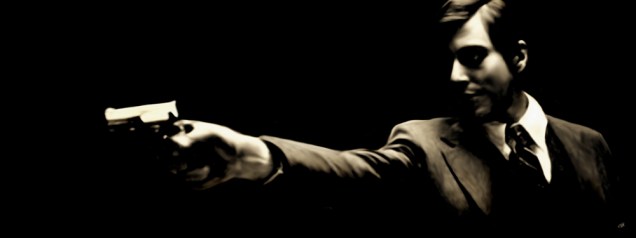
You could easily forget how reluctant Michael Corleone initially is to take over the family business. There are many reluctant heroes in the movies or in literature; reluctant villains are much rarer and often don’t see themselves as villains. They are set to do what seems necessary, blaming the times or the circumstances, acting for the greater good – and it’s their definition of ‘necessary’ that movies like Coppola’s The Godfather are really about.

Continue reading

The Rear-View Mirror: Don’t Look Now (1973)

Each Friday we travel back in time, one year at a time, for a look at some of the cultural goodies that may appear closer than they really are in The Rear-View Mirror. Join us on our weekly journey into the past!

DontLookNow1

There are many mysteries and unforgettable images at the heart of Don’t Look Now. The recurring motifs of falling, broken glass and the colour red. Getting lost. Not understanding each other, not understanding what is happening. This is the way the supernatural might infringe on the every-day.

Continue reading

Slow Night, Slow Fright

There is a point beyond which suspense does not increase. It’s a point that every filmmaker and editor should know, and avoid. In the words of a theatre director I once knew: “If you think your timing is just right, you are too slow.” He said this about most scenes, although maybe some scenes in horror movies are allowed to go on a little longer until the tension almost reaches tipping point, but even for horror flicks, there must be a limit to how long an audience is scared by ominous rumbling and blurry shadows moving in dark corners. It’s likely that horror movies depend more on suspenseful arcs than other genres. Obviously, writer and director Oz Perkins thought he would shoot his second feature I Am the Pretty Thing That Lives in the House a tad too slow, because slightly slower means slightly scarier, right? Continue reading
The Adaptation Game

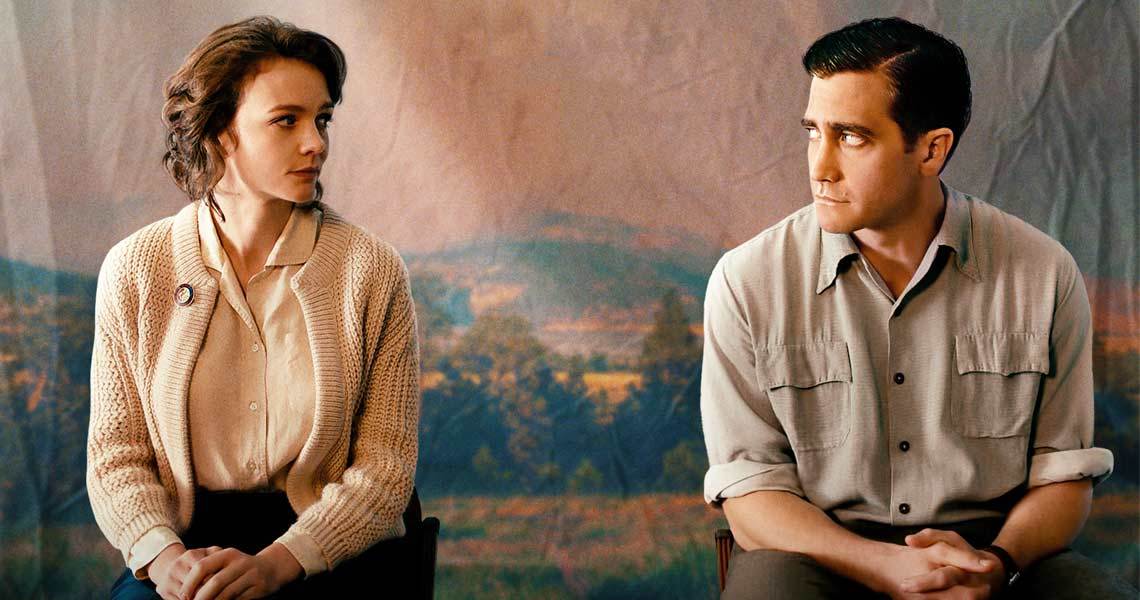
Wildlife, Paul Dano’s 2018 adaptation of the Richard Ford novel of the same name, is a strong directorial debut and a film featuring several strong performances, from Carey Mulligan’s Jeanette, a mother worn down by constantly needing to be the adult and pragmatic in her marriage, to Jake Gyllenhaal’s Jerry, the insecure father who finds no other way to prove his self-worth than abandoning his family when they need him most, and Ed Oxenbould as Joe, the son through whose eyes we see everything unfolding. Dano’s direction is traditional and quiet but serves the material well, evoking a very specific 1960s America we don’t often see and allowing the performances to create a complex, layered emotional landscape. It is a faithful adaptation, but not a mere flattening out of the novel into overly literal illustrations of the literary material.

In doing so, however, Wildlife has ended up in a strange in-between state. It uses cinematic means to achieve what Ford did with his prose, but it does so in such an unassuming way that there’s not all that much point for anyone who has read the novel to see the film. For better or for worse, after seeing the film, my main thought was, “Yup, that’s Richard Ford’s Wildlife.” Can an adaptation be too faithful?

Wildlife

Continue reading

The Rear-View Mirror: Philippe Petit (1974)

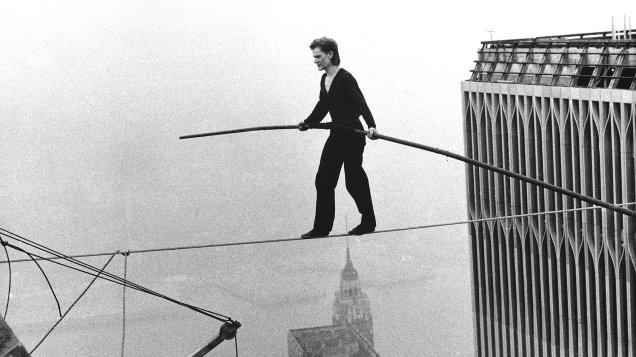
He is up there in the air, 417 meters above ground, a mere speck to his random audience, so you could easily mistake him for a plane or a bird. He might appear semi-abstract to you. Legend has it that, as a Parisian teenager, he had to go his dentist, but found a picture of the not-yet-built World Trade Center in New York in a magazine and drew a line between the two roofs. He left, his toothache all but forgotten, and he perfected his considerable talent as a tightrope walker and waited for the towers to be built. Until then, Philippe Petit worked his way up, from juggling and unicycling in Parisian streets to walking the tightrope between the two towers of Notre Dame, to doing the same thing between two towers of the Sydney Harbour Bridge. And then the Twin Towers got built, and in 1974, Petit was ready for them. Or they were ready for him.

Continue reading