Oh boy. Do you know the feeling when you hear about a film, it’s got an interesting director whose other films you’ve liked, as well as actors that you’ve enjoyed watching in the past. Not only that, but the film sounds really interesting for one reason or another: say, it’s in an unexpected genre for the filmmakers involved. It’s risky. It could backfire. But hey, it’s always worth the risk, isn’t it?
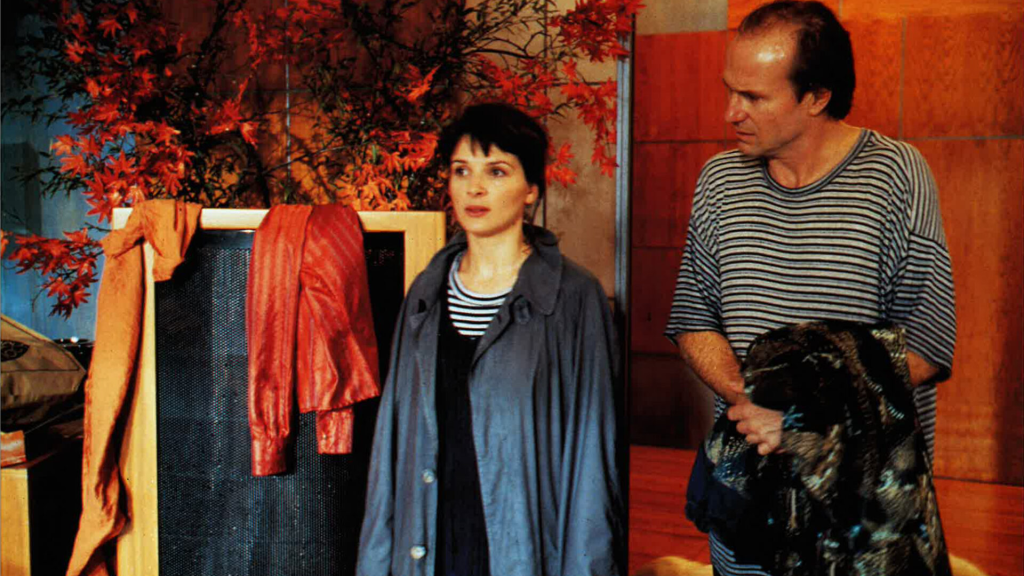
After having rewatched When Harry Met Sally recently, a romantic comedy that is pretty much pitch-perfect, I recently took advantage of our favourite cinema running a two-month programme dedicated to Juliette Binoche – and as a result, I ended up watching one of the worst romcoms ever. Okay, I expect there are worse ones, but this one feels especially bad because of all the squandered promise: A Couch in New York was directed by Chantal Akerman (of Jeanne Dielman fame), and it stars William Hurt and Juliette Binoche, but it is cringeworthy and dreadful. Its premise could work, in a screwball comedy pastiche way: a star psychoanalyst (Hurt) and a French Manic Pixie Dream Girl (Binoche) swap apartments, and, living in the other person’s flat and living their lives to some extent, each kinda, sorta falls in love with the other one in their absence.
So far, so par for the course when it comes to the genre: I don’t expect a comedy, whether of the screwball or the romantic kind, to be realistic. The characters can be a bit… strange in their behaviour, as long as they’re engaging and fun to watch, and as long as the writing is good. A Couch in New York, though, feels like aliens from outer space watched a bunch of romantic comedies, looked at some of the reasonably big names in filmmaking at the time, and decided to make a romcom themselves – without much of an understanding of filmmaking, writing, romance or indeed human beings.
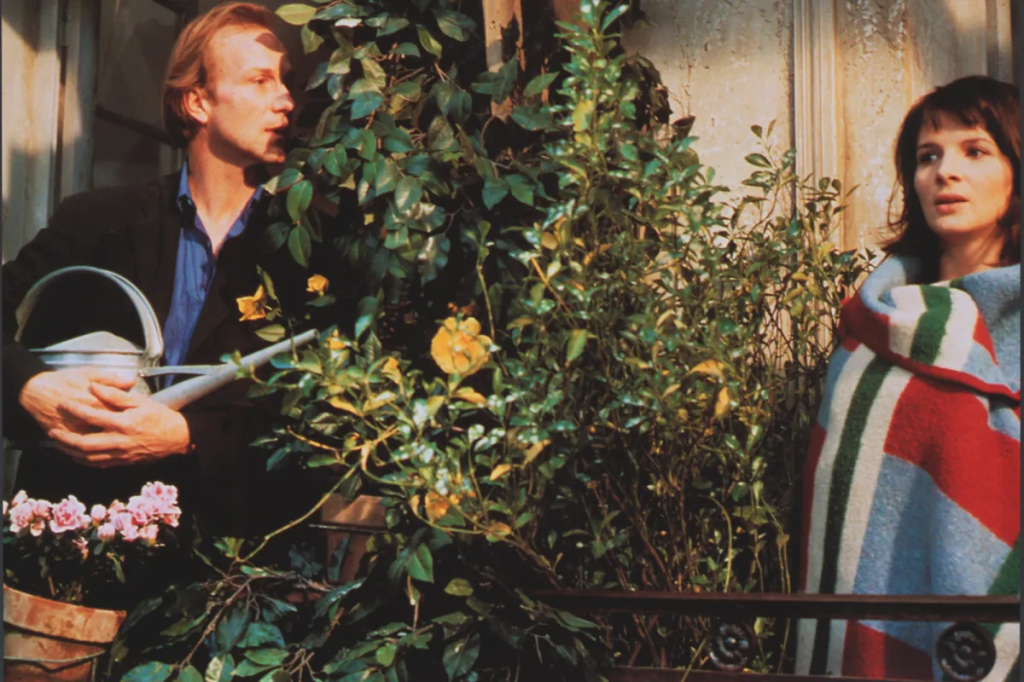
Of the actors, Hurt’s psychoanalyst Henry fares a bit better, because his character is repressed – which, sure, it’s a hoary cliché, but it means that for much of the film he acts less like a lobotomised child on the surface. Binoche, though, who can be absolutely luminous in the right material, is both not the right performer for the role nor is she given anything to do or say that really works. There are scenes where I can just about imagine another performer doing better in the role, but most of the time Béatrice, her character, is a walking, talking cringe generator. And Akerman, who’s made fascinating films about women, certainly doesn’t help the material work at all: for the first 10-20 minutes, I thought there might be an occasional goofy oddness to the film that almost, almost works in moments, but as the movie went on it became clear that this isn’t endearing goofiness but just a lack of understanding of the genre and how it would need to be done. There is a sense of constant mistranslation: between French and English, psychological drama and off-beat romcom.
If I want to be very charitable, I can see bits and pieces that, in a different film made by different people, could almost work: some bits I could imagine done on stage in a French farce, with actors and a director that understand how farce has to work, and other bits could work if done by people who understand screwball comedy. With this director and these people and especially this script, though? No, just no. It’s painful, and that’s when it isn’t outright aggravating. People talk about how AI ‘art’ fails as art because there is no underlying understanding of the material, just a game of probabilities; A Couch in New York, while made entirely by humans, also suggests that the people involved didn’t really understand the story they were telling, the genres they were working in, and how to make those work, so elements that could have been fun in a film with a better script and a director and actors with more affinity for this kind of storytelling end up stupid and insulting, such as Béatrice becoming an effective analyst to Henry’s patients by parroting their words back at them. In a better film this could have been excused as playing with clichés and tropes; in this film, it just comes across as anti-intellectual stereotypes, making Binoche’s character even more of an ignorant ditz without making the joke work.
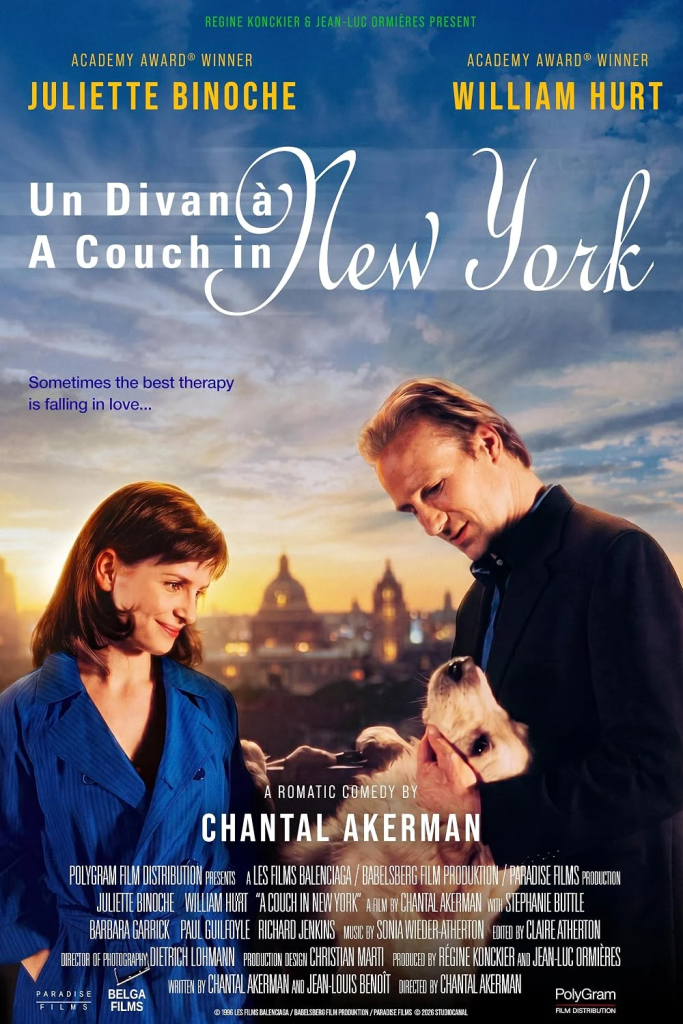
Anyway, I think the poster for the film (which looks like an entry to a Photoshop contest with the topic “A cinephile’s worst nightmare is being stuck in a plane where the in-flight entertainment consists of this film on an endless loop”) gives you a hint of its awfulness:
What made it all worse: the cinema was sold out to the last seat, and they had to send some people home again. Why? And, indeed, oh why??? I understand that Binoche is a draw, but a few weeks ago they showed Chocolat and only half the seats were filled. Since the cinema’s core audience mainly consists of people in their 60s or 70s (we’re an exception – being in our early 50s, we always feel pretty young when we go there), I doubt they would’ve been put off by the Johnny Deppness of it all, and while I don’t particularly like Chocolat, I think it’s a better, funnier, sweeter crowdpleaser if you’re into that sort of thing. (I mostly found it cloying and twee, but I can be a bit of a Grinch.) So why did A Couch in New York get such a big, enthusiastic audience? What nerve did it hit with 100+ retirees?

