Welcome to Six Damn Fine Degrees. These instalments will be inspired by the idea of six degrees of separation in the loosest sense. The only rule: it connects – in some way – to the previous instalment. So come join us on our weekly foray into interconnectedness!
What if. What if hell were a university campus. In R.F. Kuang’s most recent bestseller, Katabasis, grad students Alice and Peter battle their way through eight Dantean circles to bring back their deceased advisor, the charismatic Jacob Grimes. One of their recurring discussions: they have no idea what circle he could be in. Greed? Violence? They are all too petty, too small for a man of his brilliance, for an academic visionary of his magnitude. Sure, he stole his male students’ research and was handsy and vindictive towards his female students. And sure, he abused them all, but, you see, he abused them and in doing so he elevated them. Sure, he made them do things, but they did them willingly, hungering for his approval. Grimes was the sun around which they were in perpetual orbit. What even is a crime, when it serves the greater good, as surely the work of such a lone genius must?
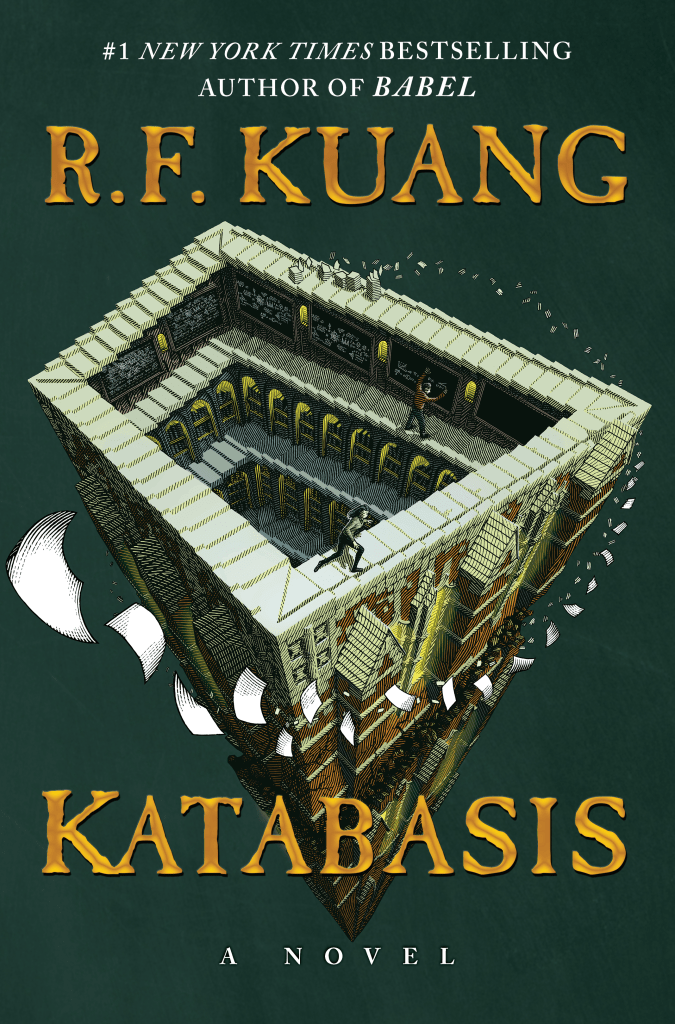
I have mixed feelings towards Kuang’s writing. In Yellowface, she dissects the mechanisms of plagiarism and racism in the publishing industry: Her tone is bold and direct, as much as it is satirical and playful. Subtlety is not her thing. She points things out with a sledgehammer. The same is true for Katabasis. She is a master, I think, of one main thing: ruthlessly exposing how people lie to themselves and others. There is always something uncomfortable about her books. Her characters are flawed, and you know that as soon as you start liking them, they’ll let you down.
Alice cycles through her memories and wrestles with truths in the same driven way she travels through the eight circles of academic hell. For the reader, the latter provides the backdrop and the novelty to the sadness of the former. You’ll keep reading just to find out what Kuang’s going to do with each of the circles. It’s fun! It’s smart! (If you’re in academia, you’ll no doubt know your way around; the allusions are pretty dense.) But will there be a happy end for Alice and Peter? And is there an answer for the real question that drives them: Why keep on living at all?
I read Katabasis right on the heels of another book that deals with a trip to the underworld: Yangsze Choo’s The Ghost Bride. While the tone is wildly different, the basic story of finding truth by jaunting through the lands of the dead is surprisingly similar. Ghost Bride is set in 1893 in Malaya. (A setting that, if you’ll pardon me, is way more interesting than 1980s Cambridge.) Li Lan’s hand in marriage has just been promised to a dead man, the oldest son of the rich Lim family. Marriage to ghosts or marrying between ghosts was a real practice, as Choo helpfully explains in the notes at the back. It was done “to placate spirits or allay a haunting”. Rough, of course, for the girl who was forced to wed a literal dead end.
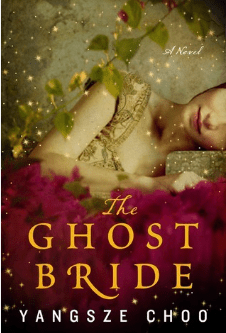
Li Lan is naive, maybe, but not stupid, and she knows what she wants and doesn’t want. Additionally, she has one thing over Alice: faith in her own moral compass. Dead wannabe fiancé is a creep who starts bullying her in her dreams. Also, his cousin is much nicer. In her efforts to dislodge the unwelcome spectre, Li Lan unfortunately severs her own soul from her body and is immersed in a whole new world full of spirits and dangers. She strikes a deal with a mysterious “minor official”: she will travel to the Plains of the Dead to collect evidence against her fiancé, and he will help her reunite with her body. On the way, she uncovers family history, grows secret powers, and dares to reach for what she really, really wants.
Again, the charm of the book is discovering how the Plains of the Dead work. To my delight, this underworld functions not so very differently from the waking world: the rich lord it over the poor and bribery has become a problem rampant enough that the powers above need to intervene. Choo brings it all to life: the burning of paper funeral offerings to provide the dead with cash and food, the encounters between the living and the dead in dreams. I was particularly touched by the story of a ghost who stays by her lover’s side, waiting for him to die so they can move on together (while sometimes hastening the process by sucking out his life force).
Ghost Bride was an enjoyable read, and I’m not surprised it got turned into a Netflix series. Katabasis, on the other hand, was a diverting intellectual jaunt. Both make you quite thoughtful about how you’re spending your own life, and what makes it worth living. All in all, if you’re stuck in a rut in life and looking for ideas, you could do worse than going on a fictional hike through the underworld.

