We’re almost at the end of July, which for many of our readers (if the WordPress stats are to be believed) means that they’re at the height of summer – and what better way to escape the summer heat than to plonk down in the dark with a good film or book or game? That is, if we have any good films or books or games to recommend…

The Love That Remains (2025)
I like a lot of the individual parts that The Love that Remains, directed by Hlynur Pálmason (whose Godland made quite a splash in the festival circuit), has. I like the surrealism, I like how it doesn’t feel the need to spell things out, I like the inventiveness. But the pieces don’t cohere into a whole – and while that may fit the theme (a family that is no longer the whole it has been for over a decade, and a father who struggles to find, and accept, some new role and constellation for these relationships), the way this is done doesn’t fully convince me. Perhaps the issue is this: the film purports to be about the whole family, but the structure reflects the father’s unmoored state, his neediness and self-pity. At times, in particularly in the film’s ending, this ends up coming across as unfeeling, even casually cruel – and while I’m okay with not submitting to the neediness of the one character that is least capable of dealing with the new reality, I also don’t much enjoy a film that depicts his pain and basically goes, “… whatevs.” Under the strangeness, the melancholy and the idiosyncratic, beautiful imagery, the feeling I finally get from The Love that Remains is that of a tired, dismissive sneer.
— Matt
Social Landscapes (2026)
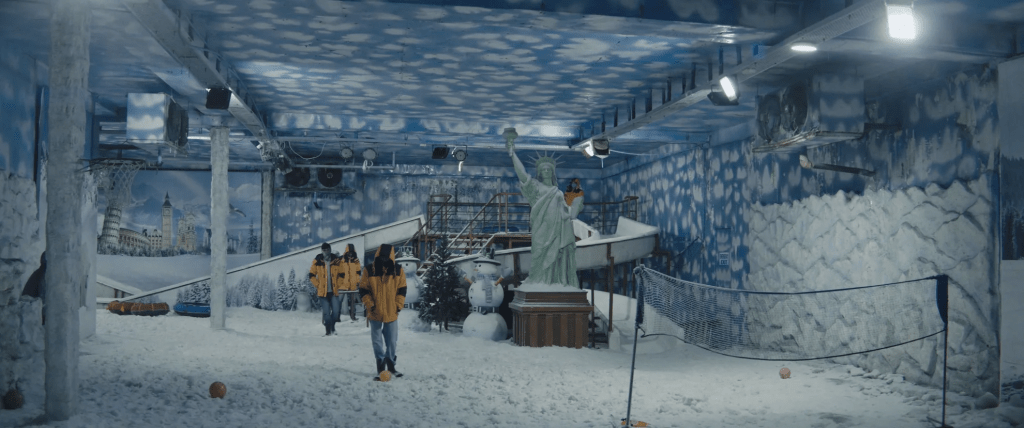
Based on the trailer for Social Landscapes, I was intrigued but also worried that what might work in a short format would be smug and glib if stretched out to over an hour. There is some of that here – but, honestly, in the end I almost prefer the moments where the film is glib, because then at least it feels like it has something to say. For most of its running time, Social Landscapes is a perfectly fine screen onto which the audience can project its own thoughts and feelings, but there’s little here of substance. Whenever something potentially interesting emerges in the juxtaposition of images and words, the film moves on to the next topic that isn’t really developed much either, so that the result begins to resemble a wannabe philosophical game of Mad Libs whose continuous tenor is a stoned-sounding “… makes you think, doesn’t it?” What is perhaps most frustrating: this is a film that’s (purportedly) about our culture’s commodification of looking, but it doesn’t seem to spare a single thought to its own role in this. If any self-reflection went into Social Landscapes, it doesn’t show on the screen at all.
— Matt
Letty Lynton (1932)

Letty Lynton finally saw the light of day after ninety years recently. This early Joan Crawford vehicle has been stuck in a legal limbo since not long after release – mainly because the plot of the film all too closely mirrored that of an existing play that the studio had attempted to buy the rights to. After they’d failed to acquire the ability to turn the play into a movie, they went ahead and made a thinly disguised rip-off: a disguise that proved so thin that the courts quickly saw through it. As a result, Warner Brothers had to bury the film, so it sat in the vaults, unseen, for nearly a century. However, now that the play being ripped off has entered the public domain, the studio can finally screen the film again. Which it’s doing in a limited number of venues, alongside a brand new Blu-ray release.
I managed to catch the film, and it’s pretty good. Worth watching but not quite a lost classic. In fact it feels like the first draft of a type of film that the studio would soon perfect. The story is fun without being memorably witty, the story is dramatic without quite becoming super engaging. Even Joan Crawford doesn’t quite feel like the finished star yet. But the flashes of promise are all there. As someone who first learnt about Crawford from her hagsploitation era output and the controversial claims of Mommie Dearest, it’s fascinating to go back to her days in 1930s cinema and watch her amazing talent as it becomes iconic… and realise there is so much more to her than those final years.
— Alan
Masters of the Universe (2026)
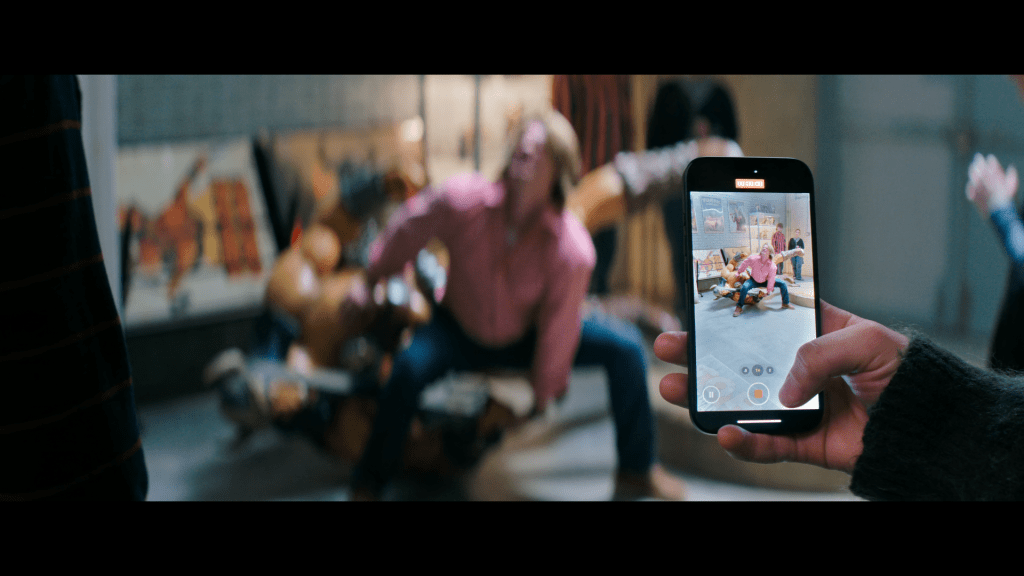
Growing up, us kids only had national network TV until cable came around in the early ’90s. It was slim pickings: a Thundercats here, a G.I. Joe there, and then there was He-Man. Featuring a bronzed, chiselled dude swinging a huge sword while riding an armoured tiger, it was a window into a different world that kids waited for every week to see. There was something about people with muscles the size of boulders bashing into each other that just captured the tween zeitgeist (and awakened a fair few of them, too). There’s not really been anything like He-Man since, and I doubt the market that exists today captures that sensibility; kids these days are more omnivorous, with names like Fortnite and Jujutsu Kaisen often yelled in the same breath from my nieces and nephew. He-Man today, it seems, is mostly a relic of simpler times for Millennials and the last Gen X’ers.
It is with some little nostalgia, then, that I watched this new Masters of the Universe entry, and a little fondness for the simplicity of an idea born to sell a toy line. Travis Knight directs and blocks every scene meticulously with a technicolour eye: while the fantasy design is not original, it is lush and punchy and well-staged, as one would expect from a veteran animator and director of his calibre. Most of the cast is clearly having a good time, both indulging in and mocking the innuendo baked into the franchise – Fisto fists people, Ram-Man is hurrahed to “give them head”, Skeletor waxes eloquent about Adam’s long, dangling sword, and so on until it’s all a bit too Thor: Love and Thunder and the quips get grating. Jared Leto plays Skeletor as a sneering, campy Disney villain with a foppish English accent, channelling Scar from The Lion King by way of Terry-Thomas. It’s an odd choice given Skeletor’s just your standard cackling villain in the cartoons, but I welcome the image of a muscle-bound skeleton demon with laser-pointer eyes throwing tantrums and flouncing around when people don’t get him. Given this reboot exists in the Year of Our Lord 2026, it’s gotten a bit of an update: Prince Adam is fwoomped to Earth as a kid after his first encounter with Skeletor, where he grows up over 15 years into a normal dude working in a corporate HR team, and absorbs ideas like establishing dialogue and empathy for conflict resolution. If it’s not already clear, MotU doesn’t take itself very seriously, but also attempts to touch upon serious topics at the same time for the kids watching who grew up; that dichotomy lends it a confusing aura when, in the end, one must bash through most of their problems anyway. It is good old-fashioned fun when it wants to be, but pulls its punches when it approaches knottier issues. I’d say the film’s comic heart wins out in the end, but it’s a close call.
— Eric
 A Damn Fine Cup of Culture