Welcome to Six Damn Fine Degrees. These instalments will be inspired by the idea of six degrees of separation in the loosest sense. The only rule: it connects – in some way – to the previous instalment. So come join us on our weekly foray into interconnectedness!

There’s something fun about discovering a show via word of mouth. When friends who know you well start asking if you’ve seen the latest thing on television because, in their opinion, it’s “very you”. And then the subsequent joy when you finally get round to watching it and discover that it is indeed “very me”.
When Jonathan Creek was first broadcast in the UK back in 1997, I was just out of university and flat sharing. I also very much lacked the money for my own telly, and very much lacked the confidence to try and commandeer the house’s rickety old Cathode Tube monster and get everyone on board with what I was suggesting we watch. So I just didn’t – and all the TV shows around this time passed me by.
And then multiple people started asking if I was watching Jonathan Creek. They mentioned it was funny, which sounded great. That it focused on the solving of impossible crimes and locked room mysteries. Also promising. That it was steeped in dark and grisly evocations of death, another big tick. And that it even had a vague Doctor Who vibe. Oh – that was me sold. I was definitely watching it.
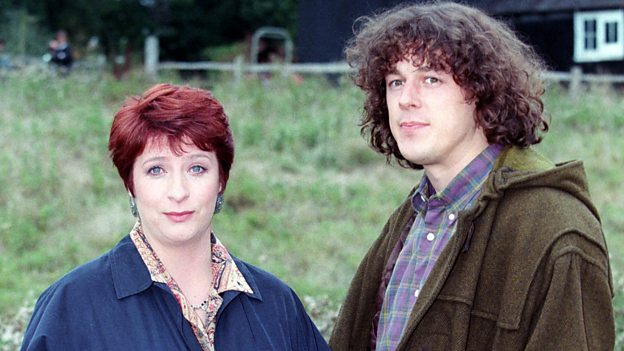
I think I caught the final episode of that first series and then, this being the age before streaming, had to wait for the next run of episodes the following year before I could catch any more. But I enjoyed it all tremendously. The comedy of it all just seemed perfectly pitched, and took the edge off the crime element when it sometimes got a little too silly. And as the titular detective comedian, Alan Davies managed to capture both an enjoyable level of casual detachment and intelligent engagement. Which very much did have a vague Doctor Who vibe to it.
The basic set-up to the show is that Jonathan Creek is a guy who invents magic tricks for a famous stage magician Adam Klaus (played in the first season by Anthony Head before he left to go make some show by the name of Buffy The Vampire Slayer and was replaced by Stuart Milligan). Thanks to a well-tailored plot contrivance, he meets and is recruited by investigative reporter Maddie (Caroline Quentin – and more on her later) to help her solve the murder of a famous painter Hedley Shale (Colin Baker, very much making that connection to Doctor Who complete).
And of course, once they work together and solve this mystery – they get set up to solve more. Once an episode, a seemingly unsolvable crime is shown, teasing the audience with no real possible answer. Creek and Maddie turn up. Investigative hijinks ensue, before Creek works it all out, delivering an outlandish but credible solution by the end of the episode. How did a dead body end up in a previously empty wardrobe? what’s the significance of a 60W light bulb in a 120W light bulb box at a murder scene? In the best episodes the solutions to these sorts of question are both delightful and satisfying.

A lot of that success to down to the talents of the show’s creator and writer David Renwick. A British TV writing veteran, he had a long and impressive CV primarily in the world of comedy. When he created Jonathan Creek, it was off the back of enjoying huge success with One Foot In The Grave, a brilliantly witty sitcom that nonetheless had its own moments of melancholy, absurdity and dark humour alongside some sharp intricate plotting. He seems to have taken those skills, and rejigged them for this show. It has the dark drama of a murder but the investigations themselves have a nice line in comedy. It’s a sarcastic, deadpan comedy, with occasional flashes of slapstick and the surreal. So you’re hooked by a mystery – but also entertained by one-liners and amusing set-ups. The talent he had shown for intricately building sitcom plots towards glorious punchlines and reveals now devised fiendish crimes, murders that it would be tricky to solve while watching the show but still felt impressive when revealed.
It’s a fine line to draw between a murder mystery you need to take seriously, and a generally comic tone and – truth be told – the show doesn’t always quite manage it. But it really doesn’t matter because the chemistry between the two leads is so entertaining. Their interplay isn’t really the conventional “will they, won’t they”, but a spirited back and forth between two people who don’t quite know how they feel for each other, but it’s enjoyable to watch them stumble along.
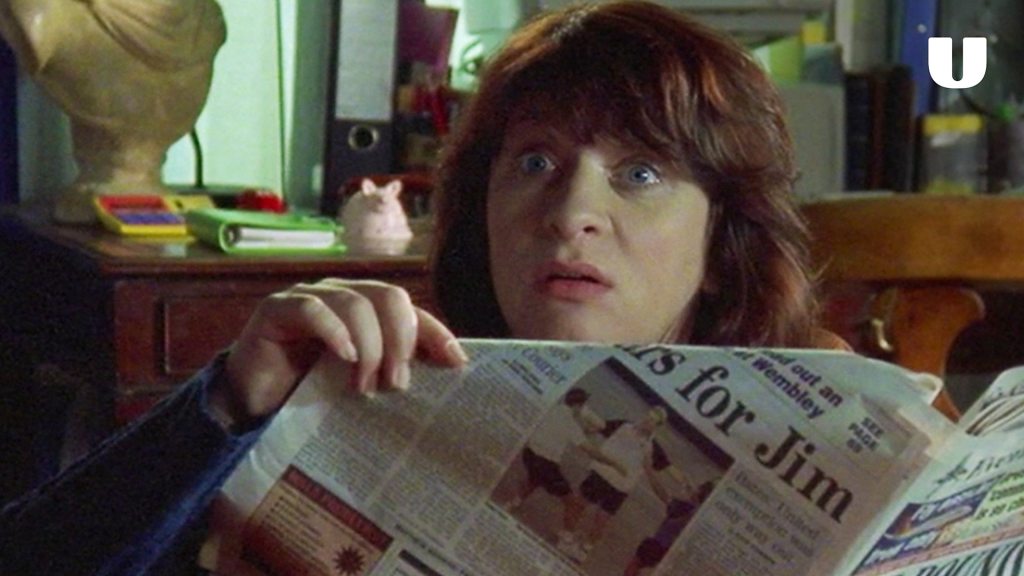
Indeed, watching those early episodes again, it’s increasingly clear to me that the show’s absolute MVP is Caroline Quentin. She’s key to stitching all the different elements together. But even more than that, she is so utterly charming on screen, you don’t really spot quite how many cracks in the production she’s papering over. In order to drive plots forward, or to create a comedy set-piece, the writing will make her jump between being stupid, jealous, petty, reckless – with a curiosity switch that seems to flick on and off at will when the story demands it. On paper she’s quite a mess of a character – but Quentin somehow, brilliantly, makes it all work. For all the character’s flaws, you can’t help liking her. And when the plots become too contrived, or the tone too jarring, the fact she’s on screen keeps it watchable.
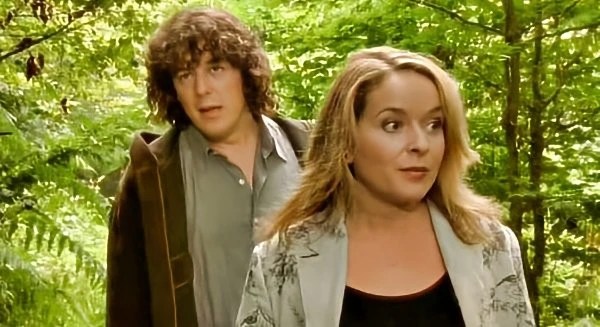
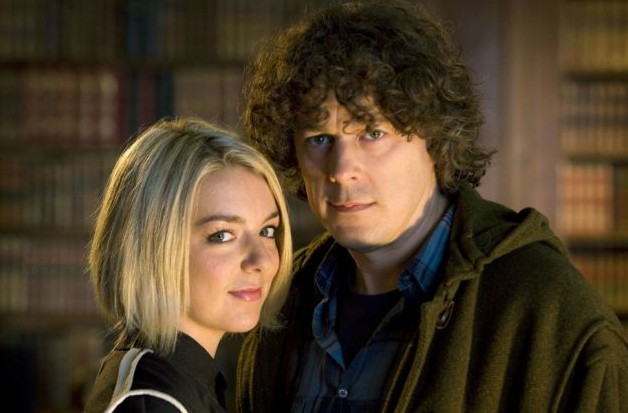
And there’s no greater illustration of this than watching episodes of Jonathan Creek after she left the show. In the year 2000, Quentin had a number of TV hits under her belt and so ended up signing an exclusive deal with the UK’s ITV network. Unfortunately, Jonathan Creek was made for the rival BBC, and the production didn’t really want the hassle and paperwork that might come from all the new agreements required to keep her on the show. And so Maddie was written out. And in came Julia Sawalha as TV host Carla Borrego for the fourth season. Then, after a five-year break, the show returned with a set of specials with Sheridan Smith as Joey Ross, a paranormal investigator, before a brief final series and one-off specials introduced Sarah Alexander as Jonathan’s wife Polly.
And none of these characters quite work. In part because, suddenly, it’s possible to see how clunky the writing of the show’s creator David Renwick could be. These characters become just as irrational, or just as petty, or just as dumb as Maddie was – but they lack the certain something that Quentin had that covered up just how contrived these character changes were. Suddenly, when they seem jealous that Creek has a lady friend, it just seems like horrible behaviour. When they decide to teach him a lesson, it just seems pointlessly mean. When they decide to abandon all logic and walk into danger, its just frustrating telly to watch. And this is all stuff the scripts made Maddie do, but Quentin combined a comedy and dramatic genius to make it all work.
And once the two leads aren’t entertaining enough to paper over the cracks, you start seeing writing problems everywhere. The amoral, arrogant superstar magician Adam Klaus gets subplots that increasingly leave a bad taste in the mouth. That smart tonal balancing act between comedy and serious crime becomes lost, and bad taste jokes and shockingly ill-judged “comedy” plot lines involving the likes of sexual assault and the white slave trade appear in the episodes. It’s crazy that the show wasn’t made that long ago but its now hard to recommend it without rather large caveats for some of its content. It also starts to become clear that the writer might also be running out of clever plot resolutions and is relying on convoluted crimes that just too absurdly byzantine. Even the comedy setups feel contrived without being that funny.

Throughout the show Renwick clearly mines from his many years in the TV industry, mocking the way it works. The cynics, the hucksters, the bad ideas that thrive under the bad decisions of ignorant producers – all get mocked throughout the series’ run. But as it progresses the sharp satire of the early episodes gets increasingly replaced by an unsubtle blunderbuss of pure spite. Developments like Reality television or overly pretentious TV magicians become (deserving) targets, but all too often it feels like Renwick is satirising a media landscape he no longer fully understands. And so he struggles to make any sort of coherent sub-plot around them. The result being that none of this world seems remotely real anymore, and it becomes impossible to care.
The final massive misstep for the show is the fifth and final season. It came off the back of a disappointment for the showrunner. He’d been pitching a new comedy drama: one in which a guy who has to move in with his stepmother after the death of his father. Relocating from the city to an eccentric country town where mysteries and hijinks were to ensue. Renwick ended up walking off the show late in pre-production, tired of fighting endless battles with the producers. (Something that already feels like a Creek subplot in itself)
He then decided not to waste the scripts and retool them for a new run of Jonathan Creek. And it’s a mess. Creek doesn’t feel like Creek. The character of the stepmother – rewritten to be his new wife – doesn’t feel like anyone Creek would want to spend time with. And the mysteries within the village are too pedestrian or just far too absurd to be in any way dramatically satisfying. This final season has a bad reputation, and it’s deserved. A few years later, Creek returned for one final special in 2016 that captured hints of the show’s original magic but little more. And then that was it.
Ok – this is all very harsh. But the reason I find it so disappointing when the show misfires is that I know how good it can be when it’s at its very best. Despite being a mystery show, the fun in the script and the cleverness of the best solutions make the peaks of the series endlessly rewatchable. My own personal favourites include “Danse Macabre”, where a killer in a Halloween costume is cornered into a locked garage and seems to disappear. (An episode that also features Peter Davison for another touch of the Doctor Whos). “The Scented Room” about a stolen artwork which is possibly the closest one to being solvable by the casual viewer. “Mother Redcap” has two neat little murder mysteries, and the episode does a great job connecting the two satisfying solutions with a plot that happily mixes the humour with tension. “While Miracle on Crooked Lane” has absurd levels of convoluted twists but remains an entertaining story, playing with the supernatural idea of life somehow continuing after death, before Creek’s keen mind once again explains the seemingly inexplicable.
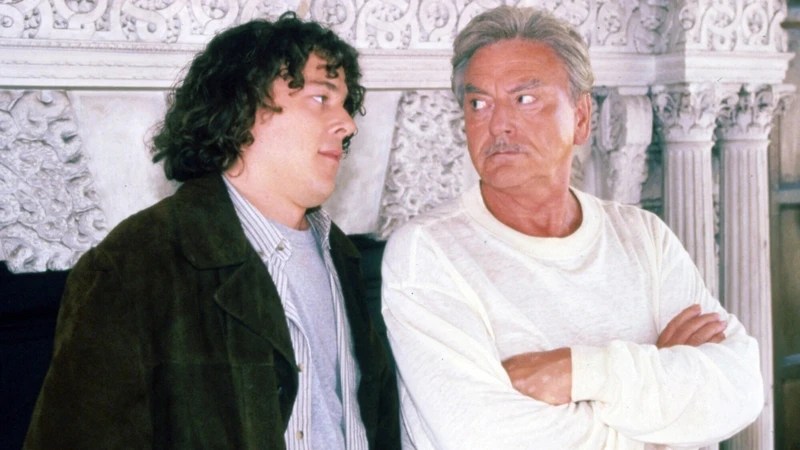

Even through the declining later episodes there are some glorious twists and solutions in episodes like “The Seers of the Sands” and ‘The Judas Tree”, alongside some great one-liners. Enough to keep me watching, right to the end, even as the quality declined to the extent that I’m not sure I was even enjoying it anymore (and just as I typed that – another Doctor Who connection gets revealed!). It still feels like an idea for a TV show that could work today, especially with the increase in popularity of the supposedly supernatural and all the cynical exploiters who peddle its illusions.
I could even imagine a full reboot and recasting of the lead. Davies is great as Creek, but he wasn’t the first choice. David Renwick had originally written the part of Nicolas Lyndhurst, a sitcom veteran most famous for playing Rodney in Only Fools And Horses. Watching the first episode, you can even see it – the lead role feels tailor made for Lyndhurst’s ability to play both socially inept and weary at the world he lives in. Davies quickly makes the role his own, less an uptight recluse and more someone just weary at the stupidity of the world, an investigator who is more amiable yet pensive. All of which suggests that there are different ways to play the lead role. (or am I just bringing my love of Doctor Who into the mix here too?)




Or maybe I’m ultimately just hankering for more as an excuse to bring back Caroline Quentin in a role she excels at. Her funny, flawed and charming Maddie is the type of character there isn’t enough of on television. And if she ever does come back to the role, I hope I can spread the word of mouth and hook new viewers into a show worth discovering.
 A Damn Fine Cup of Culture