Welcome to One Best Picture After Another – where I attempt to watch all the winners of the Academy Award for Best Picture, starting at the very beginning. And attempt to answer two simple questions – is the film still actually any good? And why did it win?
10/10
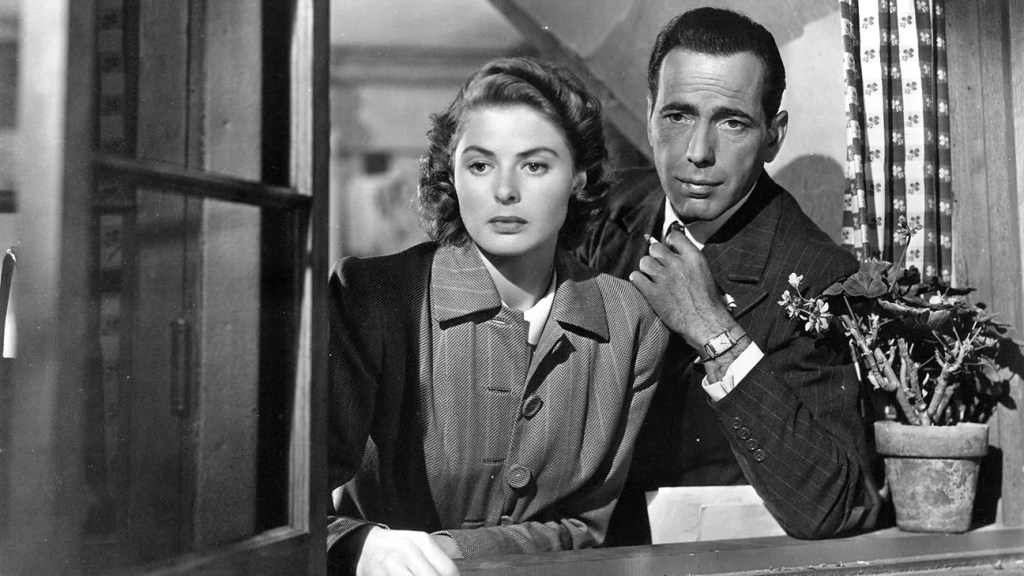
What is there to say about Casablanca that hasn’t been said before? As a film, it exhausts superlatives, and there are whole libraries concerning its fascinating production and the talented stars that fill the cast list. It was great to rewatch just for this blog, digging it out from the shelves of my own film collection. Not that I would need to: such is its lasting fame that you can pretty much guarantee that, at least once a year, it’ll show up on the big screen somewhere in my native London.
Rewatching it in the context of going through all the Academy Award winners, it’s striking just how much fun it all is. It shares a key theme with the previous year’s Mrs. Miniver: the importance of small-level sacrifices made by ordinary people in the face of a vast war. But its take on that theme feels more modern, more cinematic and – in the end – more entertaining. It’s the first winner since arguably It Happened One Night nine years earlier that has dialogue that really sparkles – the verbal wit of an era defined by sharp scriptwriting – finally making it past the Academy voting panel.
One of the writers, Julius Epstein, accurately described the script as having “more corn than in the states of Kansas and Iowa combined”, and he’s not wrong – but it’s fascinating to watch how the production makes that corn work. Firstly, it’s contained within a tight screenplay where every single scene moves the story forward in such an engaging way. Nothing feels superfluous: we’re introduced to characters we want to know more of, a storyline that we want to see resolved, and every single scene takes us further along that journey. Who cares if the line is corny if it delivers on that score? Actually, it’s better than that: a celebration of the simple, direct melodrama of the corny that helps make this journey feel so effortless.
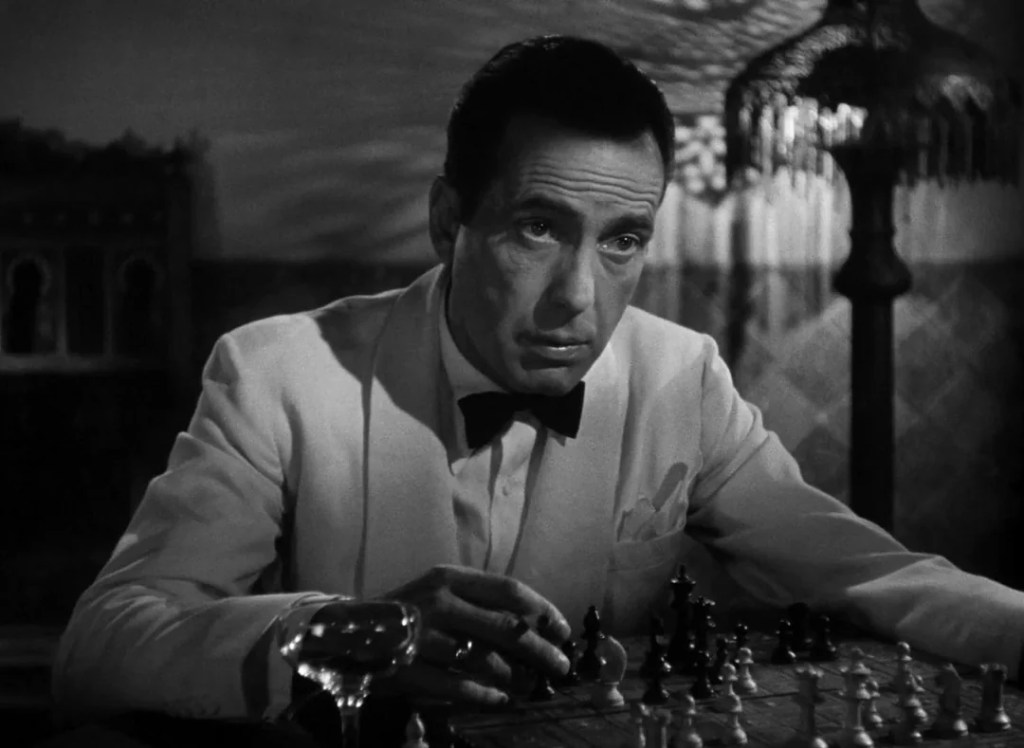
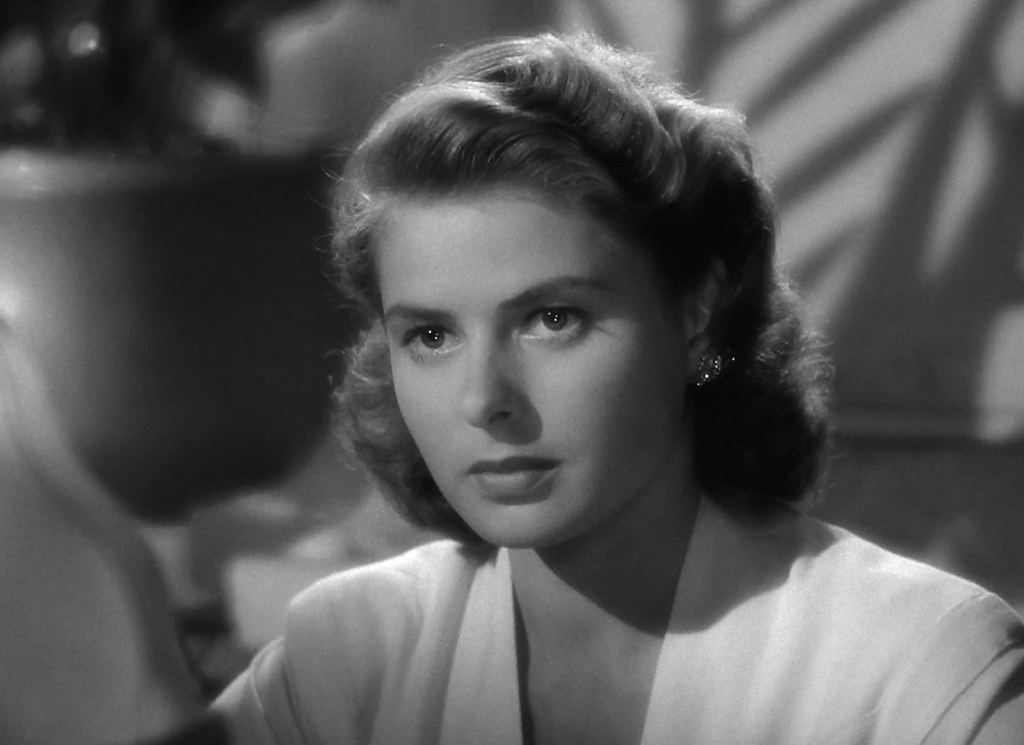
It also doesn’t hurt in the slightest that the production is full of actors who absolutely know how to sell this material. All the main roles seem so perfectly tailored for their talents as cinema actors. Bogart gets to play the heroic cynic, Bergman the melancholy romantic. You can work your way down the cast list, and even the minor characters are instantly recognisable as character types, performed by actors who can play that beautifully. Everyone can land a corny line, so it feels real that their character would actually say it in real life.
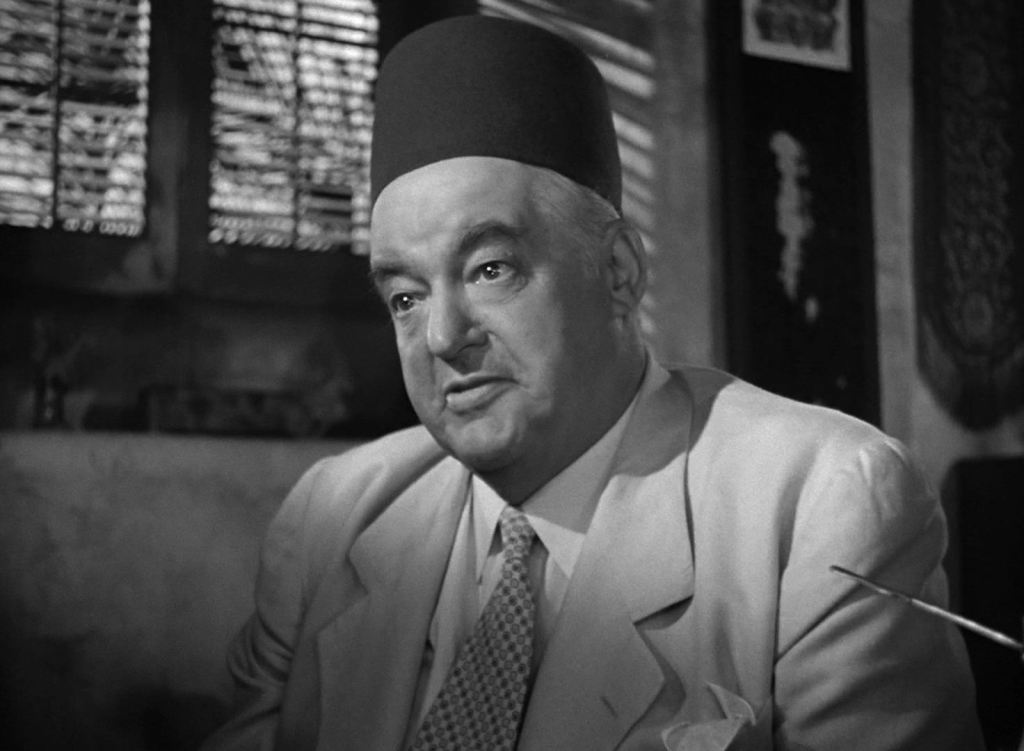
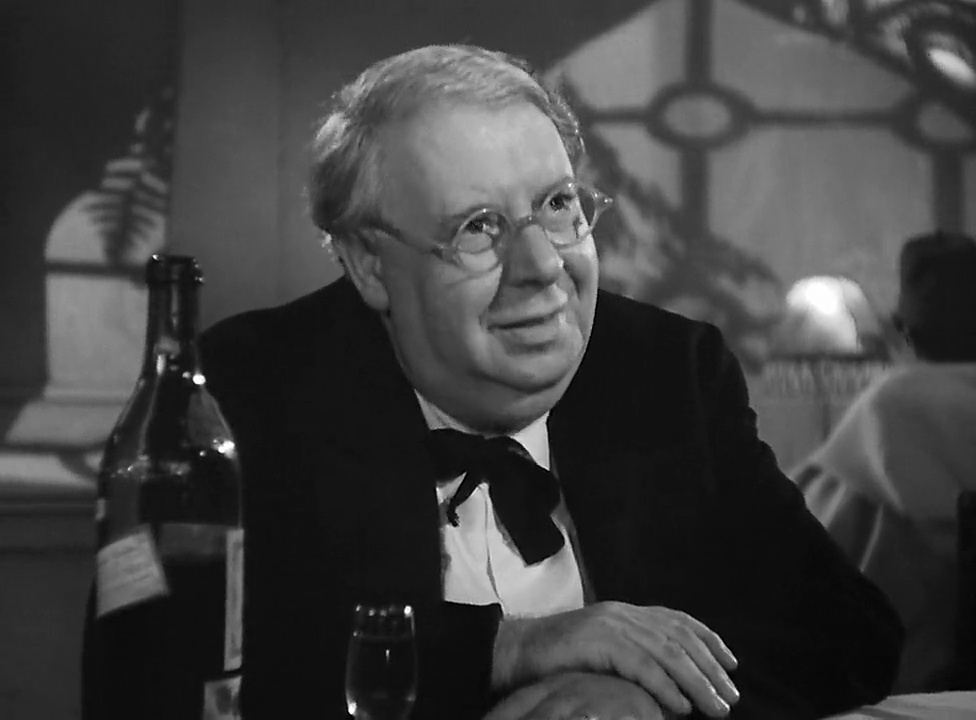
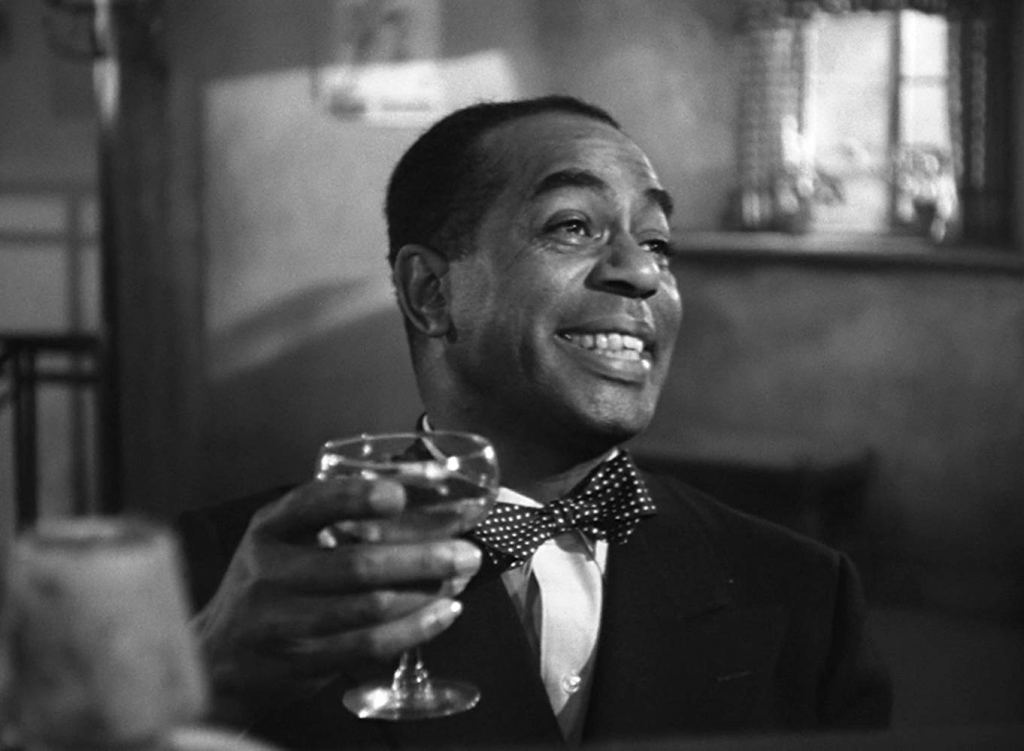
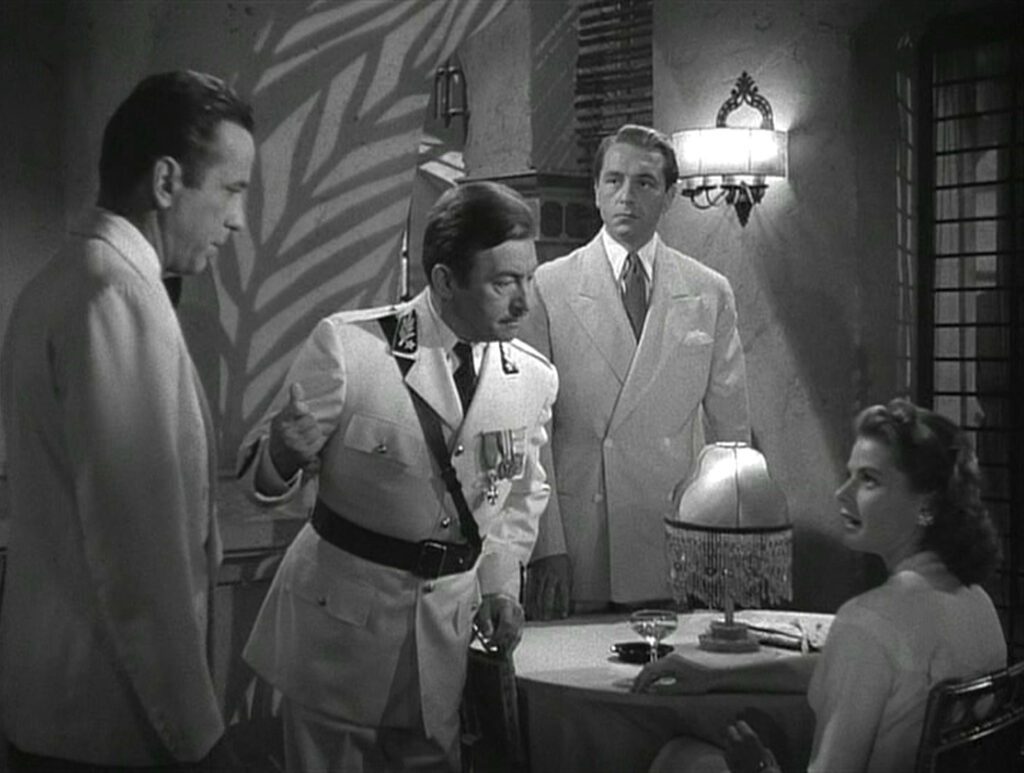
Of course, the star player in all this is Claude Rains. It’s a masterstroke to throw his Captain Renault into a Hollywood love triangle. His corrupt, happy character contrasts brilliantly with the three main leads, while clearly fancying each and every one of them. He gets a whole host of wonderful lines, and it’s like his character is relishing them just as much as Rains must have done when he first read the script. And yet: as a comic character he doesn’t simply exist outside the love triangle plot as occasional light relief. He’s integral to driving the story forward – putting the predicament of the leads into sharp focus. There’s a brilliant moment in the film where the audience is faced with a young woman desperate to escape, and it becomes clear quite how Renault hopes to exploit that desperation. For all his comedy flourishes, this is a film that still has a darkness that feels credible.
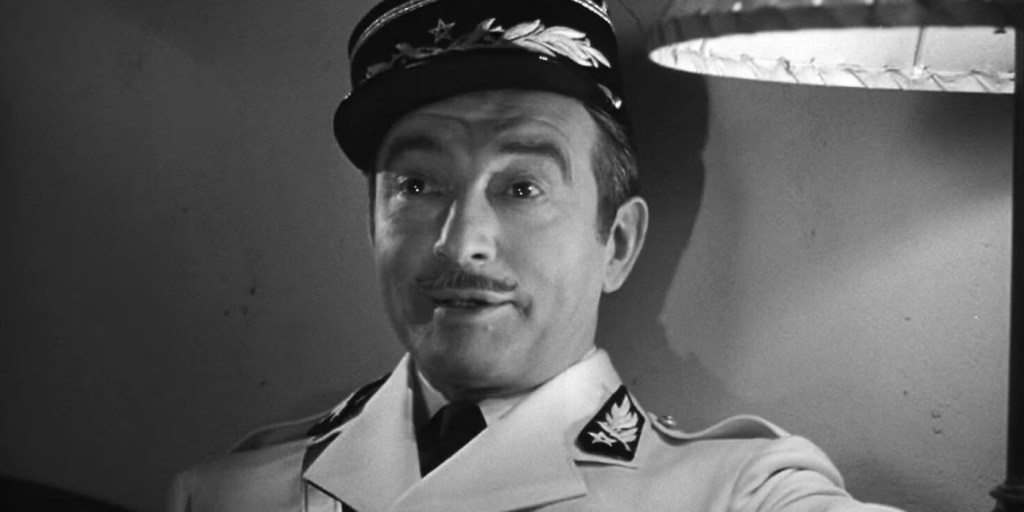
His last-minute turn to the side of good is, perhaps, the film’s clunkiest moment, but that’s mainly in its execution. On the rewatch, it’s interesting to see how much Renault’s constant assertion that it is Rick who is the secret idealist is perhaps more of a self-examination. He knows he can exist like this, corruptly in a compromised free France, but he doesn’t yet know which way he will go when the chips are down.
Finally, I think the reason why all the corn of a love triangle actually works here is that the three leads involved are all so insanely, relatably adult. They are not at loggerheads over the mechanics of a family saga or possessive jealousy. They are three human beings trying to deal with grown-up emotions. Emotions that are going to lead them to have to make difficult decisions and sacrifices. Which I think must have struck a chord with audiences at the time. This isn’t the stoic passivity of dealing with the tribulations that come at the start of a war, as seen in Mrs. Miniver. This is proactively choosing to do the right thing when other options are available. The message is less one of getting the US to join the war, but convincing the audience that it is morally right to keep at it and help those who deserve help.
This capacity to spread the right wartime message probably helped endear it to the Academy, who even bent their rules to allow a film that had technically been released at the tail end of the previous year to be included in this one. Its healthy box office draw didn’t hurt either. More than that, many of the cast had been appearing in very successful films for the last few years that the Academy had not awarded much, even though they were already being hailed as great. After not awarding The Maltese Falcon an award a couple of years earlier, here was a good chance to reward Bogart and his populist, well-regarded output.

