Funny how? What’s funny about it?

I like Ian McEwan. Atonement is one of my favourite novels of the last ten years. Enduring Love has stayed with me, as has On Chesil Beach. I even enjoyed Saturday, which was given not so much a panning as a resounding “Hmm” after Atonement was loved by pretty much all the critics.

I just don’t think he’s a particularly funny guy.

Back when his Amsterdam received the Booker Prize in 1998, I remember many people saying that they were making up for not giving him the year before, for Enduring Love. Obviously Arundhati Roy’s God of Small Things was more than deserving, but there was definitely something that felt off about giving McEwan the Booker for Amsterdam – a book both slight (more a novella than a novel) and, at least in my opinion, not particularly good.

Amsterdam feels a bit like one of those Roald Dahl stories for adults – people who aren’t particularly nice getting themselves into shitty situations and digging themselves in further the more they try to extricate themselves, doing damage to themselves and to those around them who are usually as unpleasant as they are. There was even a nasty twist in the tale that felt very Dahlish. The thing was, though: Dahl’s stories, while nasty, are also funny. McEwan’s attempt at a joke felt too elaborate, overwritten, and simply not particularly amusing. It felt snide, smug and not a little self-satisfied… and essentially forgettable.

Fast forward twelve years, and it feels like McEwan’s pulled another Amsterdam – though one that dresses itself in topicality. Solar is about a physicist, ageing, fattening, roundly unpleasant but with enough of the hypocritical charm that Brits of a certain class seem to have to bed a number of fairly attractive women. For better or for worse, he ends up occupying himself with climate change and trying to make his name in the growing eco-business. Oh yes, he also frames an innocent man for murder, goes on an Arctic expedition, steals a dead man’s research and generally makes the reader – well, at least this reader – wish that he’d get eaten by a polar bear.

I’ve read articles that described Solar as “laugh-out loud funny”. A friend at work read and loved the novel. And, as I mentioned above, I generally like McEwan a lot. He’s a smart, usually subtle writer – not necessarily original, but great at his craft. But again: when McEwan aims for satirical humour, his writing falls flat for me. Solar displays his craft – McEwan can turn an elegant phrase – but it feels as smug as Amsterdam. The targets of his satire are obvious, his humour considerably less clever than it seems to consider itself; there’s an unpleasant feeling of the novel going, “Did you see that? Wasn’t that funny? Wasn’t that clever?” Solar is neither sharp and nasty enough to be good satire, to my mind, nor does it have an interesting plot or characters to keep me going. I finished it, of course, since a novel almost has to throw up all over my Criterion DVDs to make me put it aside without finishing it, but this overlong, heavy-handed, one-note joke of a novel overstayed its welcome roughly 20 pages in. Perhaps I don’t have enough of a sense of humour, or perhaps I should avoid Mr McEwan’s humoristic writing like the plague, but one Amsterdam was enough for me… and at least that one was only about a third of Solar‘s length.

On the more positive side, though: I recently re-read Kazuo Ishiguro’s The Unconsoled and didn’t like it any more the second time around – but I’m warming a lot more to his Never Let Me Go. Part of me wishes I’d been able to read it unspoiled, but even knowing what I do about the novel’s plot I’m enjoying it a lot, much more than either some of Ishiguro’s earlier work or McEwan’s attempts at amusing me. Here’s hoping that this doesn’t mean my next read afterwards has to be another failure!

P.S.: I wasn’t amused to find the old, worn out crisp/biscuit-eating anecdote in Solar, but I did like the meta-absurdity in which it’s developed in the novel – and I was happy to see Douglas Adams (R.I.P.) referenced.

One for the road…

No, this isn’t another post on The Road. (I’ve written interminable entries about one Nick Cave-scored film, I don’t need to add another one at this time.) It’s about the book I’ve just finished reading: Must You Go?, a memoir by Antonia Fraser about her life with Harold Pinter. I’m usually not much into memoirs and biographies – I’m very much a fiction reader – but this one was a present from a friend, and a fitting one; I’d directed that friend in a student production of Pinter’s The Dumb Waiter 13 years ago.

Fraser’s book is eminently readable, even if during the middle third or so it feels like it consists primarily of encounters with famous people and praises of Pinter’s writing – though obviously one wouldn’t go to a widow’s memoir for an in-depth appraisal of an author’s literary output. Must You Go? is also a sad book, as its final 100 pages lead up to the death that answers its titular question in the depressingly affirmative. But throughout the book there are passages that made me smile, grin and every now and then even laugh out loud. And there’s something so wonderfully British about the diary entry that describes what happened after Antonia Fraser told her husband at the time, Hugh Fraser, about her affair with Harold Pinter:

In the end I summoned Harold round. He drank whisky, Hugh drank brandy. I sat. In a surreal scene, Hugh and Harold discussed cricket at length, then the West Indies, then Proust. I started to go to sleep on the sofa. Harold politely went home. (p. 23)

On serendipitous finds

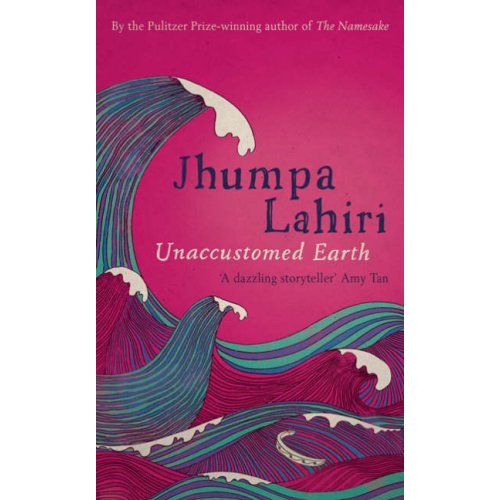
So there was the book, on top of my “to read” pile. An uninviting purplish-pink (dare I say ‘magenta’?), with some turquois waves, looking a bit as if it had been designed on an old CGA screen. The title was a bit more intriguing: Unaccustomed Earth, by Jhumpa Lahiri. I’d read some Lahiri years ago when preparing for an exam, or at least I thought so, but I couldn’t remember the first thing about it. For all I knew, I’d put the book on my reading list and then forgot all about it. Just as I’d forgotten why I had this book. Did I buy it, and if so, why? Had it been given to me as a present? (… perhaps by someone reading this blog, in which case I will be duly embarrassed?)

I picked it up and started to read it, more due to a vague sense of obligation than anything else. My bleeding heart pinko liberal Spidey senses were telling me that it’d be good for me to read this, as it’s good for me to eat spinach and the like.

Unaccustomed Earth, I’m confident to say after having read it, is one of the best books I have read in the last ten years. Lahiri’s use of language is economical but never stingy, precise but not fussily so. Her characters feel real, but not because of the accumulated weight of details that you get with other writers; she deftly sketches their personalities with an elegance that is humbling. And her plots, while deceivingly simple, often carry a sting that is quite devastating.

I have an ambivalent relationship with short story collections. They’re often moreish, like a pack of Toffifee – one is so short and light that you’re sure another one won’t hurt… and then another, and another. And then you’ve had too much and feel faintly sick. There was no such moment with Lahiri’s stories – also because, unlike some other collections, it doesn’t feel like she’s belabouring a theme. There are motifs that are touched upon in all the stories, mainly because the majority of characters are the children of Indian migrants, but the book is definitely not dully monothematic.

Most of her stories are sad. They’re not grand tragedies (except, perhaps, for “Hema and Kaushik”, the final three-part story that almost qualifies as a novella), but loss runs through all of them, and more than once did I find my breath taken away by the feelings Lahiri evoked.

If you haven’t read any Jhumpa Lahiri, or if – like me – you’ve read her before but simply can’t remember whether you like her or not, give yourself a gift. Buy Unaccustomed Earth. Put it somewhere on your “to read” pile, preferably towards the bottom. Forget that you ever got the book and come upon it as if by accident. Give it a chance. I’m willing to bet you won’t regret it.

P.S.: If I did get this book as a present from someone reading this blog: thank you, thank you, thank you!

P.P.S.: After this one, I will definitely have to revisit The Interpreter of Maladies, if only to find out whether I did indeed read it. If so and I found it forgettable, the pre-exam pressure of “Gotta read x books by the weekend! No time to enjoy!” may have been to blame.

Insert guest blog here: David Nicholls

The following blog entry was written by that most elusive of creatures, mege1, whom you may remember from blog entries such as this one. Unfortunately, tech gremlins prevented him from posting the entry himself, so I’m doing it for him, in between holidays. I’ll be back for good in a little over a week, at which point I’m hoping to post something witty, insightful and not at all redundant about Seven Samurai and The Magnificent Seven. The Goofy Beast – Always Ahead Of The Curve When It Comes To Being Behind.

Let’s get one thing out of the way first: Yes, David Nicholls’ books all have the same basic plot: Boy and girl seem to meet and to start liking each other, but there are obstacles and pitfalls. Hackneyed, you say? So what? You see, there’s that book about a mad captain who goes after a white whale. Oh, and another one tells us about a guy on who is stranded on an island. Boring, isn’t it? On the other hand, do you really read books for their plot? If you dismiss each and every book on the grounds of it being another love story, then an angry mob consisting of irate live readers, dead writers and led by Will Shakespeare and Jane Austen wants to seriously haunt you.

It is also blindingly obvious that David Nicholls and Nick Hornby are perfectly comparable: Both borrow heavily from contemporary music, film, and pop culture trivia; both know how to bring in a joke whenever they feel like it. Both are not likely to end up on any serious reading list, but what of that? They don’t aspire to be, I imagine.

Nicholls’ debut, Starter for Ten, is about a teenager leaving home and going to University and falling for a rather posh and glib beauty. They both end up on the hopeless team for that game show, University Challenge, and it’s clear from early on that his clumsy courtship will go unanswered. But man, can Nicholls tell you a story. The whole book is full of comedy, but at the same time, all the characters are believable and right there on the page. My main delight is the scene during that night when the teenage lover-boy is invited to the girl’s parents’ holiday cottage, gets stoned and goes for a glass of milk in the middle of the night. For reasons better left explained by the novel itself, mum and dad turn up naked in the kitchen. It could have been raucous, it could have been clumsy and slapstick-y and awkward, but Nicholls handles that moment with wit and grace – as much as there can possibly be, anyway.

The Understudy uses a lot of Nicholls’ first-hand experience as an actor. (Nicholls has pretty much given up on acting and has switched to writing screenplays – and novels, obviously). The man from the title plays extras like corpses and bystanders and is also the understudy of a conceited movie superstar who plays Lord Byron in a London stage play. The understudy falls in love with the star’s wife while keeping quiet about the star’s flings. Again, the plot may not prompt you to pick up that book; it’s in the telling. Nicholls gets a lot of the backstage atmosphere of a theatre right, at least as far as I can tell. He is not afraid to show wayward or obnoxious traits of a protagonist you are supposed to like for most of the time. The understudy starts lying, not because he’s selfish, but he wants to protect someone else and so digs himself deeper into the Pit of Failed Actors. And that, as we all know, is a deep pit indeed.

Nicholls’ latest novel, One Day, seems to be all the rage. Nicholls himself has taken on the noble task to turn it into a Hollywood screenplay, a situation he has rendered with all the acerbic wit necessary in his previous novel. One Day, again, is about a girl and a boy who almost sleep together on the night after their graduation; the novel goes on to tell us about what happens every 15th of July for twenty years. That’s quite a good concept to avoid lengthy bits, and it also allows the author to bring in all kinds of pop trivia. This novel here is more serious in tone, although there are enough comic elements left. While the first two novels can be read during a longish train ride, One Day has the good instinct to delve into the two protagonists’ psyches. All three novels are great reads, by themselves, but also if you’ve come out of some serious reading of Literature with a capital L, like I have. Go on now, have some fun. Any day now, David Nicholls’ novels will be part of pop culture. You’ll know when his name or the name of one of his novels are the answer to some question on some televised game show.

You know, for kids!

Alice in Wonderland (and its sort-of-sequel, Through the Looking Glass) is an odd book, and my memory of it is just as odd. I can remember liking it, but when I try to remember the book, what comes to mind is John Tenniel’s illustrations, images from the Disney movie, scenes from Jan Svankmajer’s surrealist dream/nightmare – or, more recently, American McGee’s Alice with its twisted, dark Wonderland and music by Chris Vrenna.

Anything, but not the actual Alice in Wonderland. The original has become a sort of collection of memes: the Mad Hatter, the Cheshire Cat, the Jabberwocky. It’s a hypotext whose influence throughout literature, cinema, comic books, video games etc. is strong, but Alice itself has become distorted and murky behind all the copies, pastiches and parodies.

Tim Burton’s most recent film is called Alice in Wonderland, but it’s less of a direct adaptation than a hodgepodge of half-digested ideas and images from over 100 years of Aliceology. Like most of Burton’s films, it looks gorgeous, but like too many of his recent movies it feels like warmed-over Burton, down to the Danny Elfman score. The visuals are admittedly cool (and I have to admit that I watched the film on a BA transatlantic flight – small, fuzzy screens aren’t the best way to appreciate a Tim Burton film), with some fantastic character design, but the plot is predictable, the dialogues leaden and most of the acting vanishes behind the CGI. It’s as if Burton was given a beautifully surreal world but basically decided to tell Generic Fantasy Story X in this world. Despotic ruler, check. Chosen one, check. Needs to discover her powers and believe in herself, check. Special blade, check.

It’s a shame that such a creative, talented cast and crew could have come up with something that combines Lewis Carroll’s original story and Tim Burton’s sensitivities in weird and wonderful ways – but Burton’s sensitivities at this point seem to be a pale shadow of his earlier creativity. Worst of all, the man seems to have gotten old the way that Steven Spielberg has gotten old, meaning that in creating something that should burst with childlike energy and wonder, he’s come up with something that feels like a director in a midlife-crisis trying to pander to what he thinks is youthful and energetic. The worst example of this is the dreadful dance the Mad Hatter does towards the end of the film: even Johnny Depp with his considerable talent and charm can’t make it into anything other than an awkward attempt by the film to be ‘cool’ and contemporary.

Anyway, enough about Alice in Wonderland. I may get back to my 12 hours of blurry free films at a later date, but for now I want to leave you with this strange, strange video telling the Complete History of the Soviet Union through the lens of Tetris:

Fool me once…

Yup, I know… For one thing, it’s been ages since I last posted an entry. Shame on me. For another, April 1 has been and gone, so this is pretty late. Still, it bears reposting for the sheer geeky awesomeness: comic book publisher Top Shelf posted the following update on Alan Moore’s League of Extraordinary Gentlemen last Thursday. Shame it’s a joke.

Here’s the blurb they came up with:

When war-hero-turned-handyman Kesuke Miyagi is found drained of blood, it becomes clear that the occult gang known as the Lost Boys are targeting the only individuals that can stop them from complete domination of America. It’s the perfect case for the League of Extraordinary Gentlemen–except that their government contact, Oscar Goldman, disbanded the team in 1979 after they defeated Mr. Han’s army of the living dead.

Now, disgraced scientist Emmet Brown has to put together a new team to combat the growing threat of the Lost Boys and their leader, a newly resurrected vampire kingpin Tony Montana: Transportation specialist Jack Burton, ex-commando B.A. Baracus, tech wizard Angus MacGyver and the mysteriously powerful femme fatale known only as “Lisa.” But will Brown be able to stop the Lost Boys before time runs out?

On a somewhat less fun note, apparently the next real chapter of LOEG has been delayed until 2011. Bother.

Love, death, life and the silly sublime

To be fair: watching The Fountain recorded from digital TV, the compression turning any dark scene into black (“none more black”) with a handful of flecks of light, isn’t really the best way to see the film for the first time. Darren Aronofsky’s follow-up to his much-lauded Requiem for a Dream, the kind of film even I can’t describe as bitter-sweet, is intensely visual, and if the first five minutes turn into a frantic game of “It’s a… it’s an elephant, I think. A black elephant. At night. No, it’s a spaceship. At night. And it’s black. Is the TV on?”, the film suffers. (Or, depending on how you look at things, the audience suffers.)

The rare moments when I could not only see what was going on on-screen but actually saw enough of the image to appreciate it, the film definitely proved to be a feast for the eyes. And it wasn’t just pretty – much of what Aronofsky shows us is evocative and beautiful. (Pretty is to Beautiful as Liv Tyler is to Cate Blanchett, if you ask me.) There’s one image in particular, Queen Isabella’s chamber lit by hundreds of tiny lamps hung from the ceiling, that I found quite stunning.

Kitschy or sublime? You decide.

But while some of the imagery is sublime, some – especially in the last half hour of the film – are plain silly. I don’t mind the latent (or not so latent) ‘New Ageyness’ of The Fountain, because as a visual poem on love, death and a man’s inability to let go the film works for me. But then you got bald yoga master Hugh Jackman in the lotus position, floating towards some cosmic birth canal, and awe is replaced by incredulous giggles. Same goes for the scene where Jackman, as a Spanish conquistador, is consumed by flowers sprouting from his torso as if he was the world’s sexiest, silliest Paul Daniels magic trick. I get what the scene’s trying to do, but it just looks… well, naff. Combine that with the film’s po-faced tone and the film doesn’t do itself any favours.

At some point I hope to watch the film again, with subtitles (so I can figure out what those Spaniards are shouting in the rain) and adequate visual quality. I expect that it’ll pull me in more, which in turn might make me forget (or at least forgive) the unintentional humour of scenes that would have had Dr Manhattan raise one implacable, blue eyebrow. Clint Mansell’s lyrical score will definitely help – it did the first time, to the extent that I was more captivated by the end credits than by what had been going on ten minutes before.

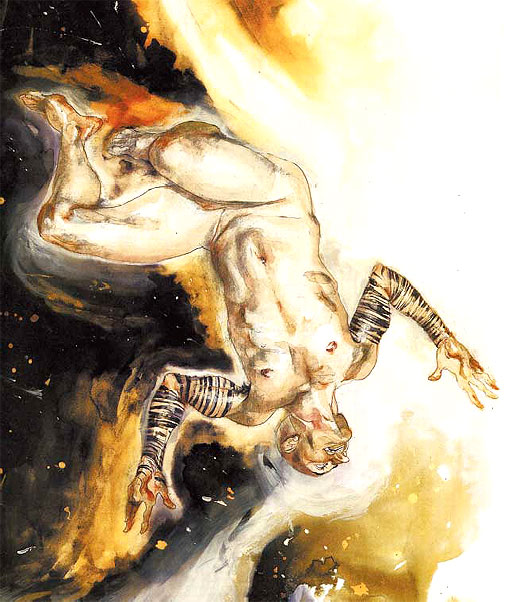
Right now, though, I think that The Fountain works much, much better as the comic book version, which the script was turned into after a first attempt to film it failed. It has all the elements of Aronofsky’s movie, but what looks silly in the film works much better in the stylised drawings (somewhat reminiscent of Dave McKean’s work on Arkham Asylum, although less abstract). It still borders on New Age kitsch, but as far as I’m concerned it pulls it off. Perhaps the best thing would be to read the comic while listening to Mansell’s soundtrack. And, if that’s your cup of tea, fantasising about Hugh Jackman.

Naked dude floating in space. Trippy.

P.S.: Much more nudity in the comic. (Both Rachel Weisz and Hugh Jackman remain chastely dressed throughout the film.) But it’s artistic nudity (“and in the end, isn’t that the real truth?”). And not even close to the full-on pornography of a Lost Girls.

Spiraling down towards madness

I don’t really know much manga. Yes, I’ve read Akira, and I quite enjoyed Osamu Tezuka’s Buddha, but other than that I simply haven’t read much. In addition, other than the original Dark Water I’m pretty ignorant about Japanese horror (other than having read reviews, and reviews of the American remakes – I don’t know anything, basically, I just meta-know!).

When I read about Junji Ito, though, I was intrigued. I don’t know what it was – the chills that his works evoked among the people who had read him, the single panel someone had posted? Perhaps it was just that I had time on my hands.

So I checked out Uzumaki. And I’m glad I did. But yes, some of it will haunt me.

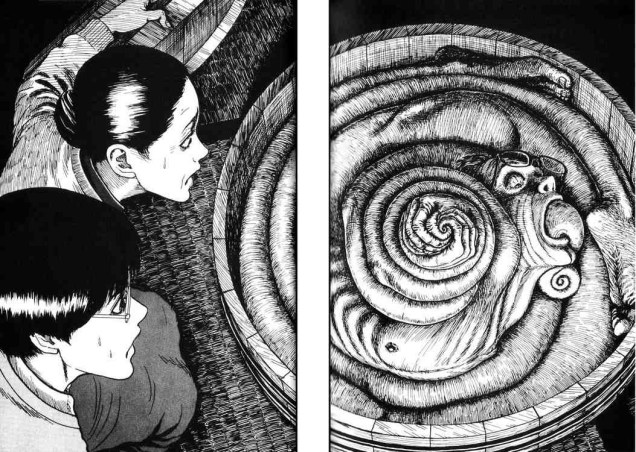
Differently from the Western horror I’ve watched or read, Uzumaki doesn’t go for full-on naturalism that is then invaded by some uncanny creature of the beyond. From the first, there’s something weird and uncanny about his stories. Is it that the people who become obsessed with spirals in the story are going mad, or is there something more to it? There is something obsessive in the storytelling itself, as each chapter takes us further down the spiral.

There are bits that are gruesome and gory (in moderation), but those aren’t really what had most of an effect on me. It’s the surreal that somehow becomes frighteningly compelling as it invades every aspect of the manga – there are overtones of Kafka, as people turn into giant snails, but there’s also something creepily funny about some of the chapters. It’s unsettling, to say the least.

So, if you’ve got time on your hands, you may want to check out Uzumaki. Beware, though – it is addictive, it is unsettling, and it may just burrow into your mind and leave little, spirally holes, as if someone had taken a corkscrew to your frontal lobes.

I made that last bit up...

Or did I?

Geek gratification… oh, and braaaaains!

Geek affectation is annoying as hell. It’s as annoying as the person at a party who thinks that quoting Monty Python for hours, doing the voices and accents and all, counts as conversation. It’s as annoying as mistaking nostalgia for actual quality, and going on about how The Goonies deserves a sequel. It’s getting all hot and bothered about something because it’s got pirates or ninjas in it.

Or zombies. The shuffling undead are one of the hallmarks of geek affectation, as if there was something inherently fantastic about something just because it featured some walking corpses moaning forlornly for brains.

And yet, the latest book I’m reading is World War Z: An Oral History of the Zombie War. And I’m enjoying it a lot more than what I read before (some book by Bill Bryson about some English writer – hey, it was a present!). Thing is, World War Z is a much better read than it ought to be. It sounds like a cheap cash-in on one of the geek affectations du jour, even more so when you hear that it was written by Max Brooks, the same guy who wrote The Zombie Survival Guide (and, coincidentally, is Mel Brooks’ son).

WWZ takes an interesting approach: it’s written as a series of interviews with the survivors of the zombie apocalypse (hell of an apocalypse if there were survivors, if you ask me…). You’ve got a few dozen different characters telling their little part of the bigger picture: soldiers, politicians, scientists, civilians. There’s none of the expected “Will they make it?”, which means that Brooks can concentrate on effective vignettes and on providing a rich playground for our imagination.

For the largest part, the book’s vision of a world surviving, just barely, the rise and onslaught of the living dead is compelling because it is believable. There’s also the zombie genre’s staple smattering of social criticism. This is perhaps the book’s main weakness, though: when Brooks gets critical, he sometimes veers towards broad satire, at which point the narrating characters turn into stereotypes. And since the believability of the writing and its documentary style is its main asset, those sections break the fourth wall as Brooks winks at us, believing himself more witty than he is. Another, smaller weakness, is that there isn’t quite enough material for the 300+ pages – a shorter, leaner World War Z would have been a better World War Z. (That’s the big risk in catering to a specific audience (e.g. zombie geeks): veering into fan service.) Still, this is a zombie book that has bite and is surprisingly successful at gnawing into your cerebrum.

Och fasa, och fasa…

… or whatever the Swedish use for “The horror, the horror”.

I missed Let the Right One In at the cinema, but I made sure to catch up with this well-received Swedish horror movie (that old chestnut!) as soon as possible. And I’m glad I did. It’s one of the most poignant, disturbing films I’ve seen in a long time.

In many ways Let the Right One In felt familiar: the look of the film – the faces, the clothes, the haircuts – was that of an urban Astrid Lindgren without the nostalgia. Critics with a thing for Freudian theory could probably have a field day talking about heimlich and the uncanny and the like; for the purpose of this blog, suffice it to say that Tomas Alfredson’s movie uses the familiarity and banality of the setting to great effect.

And it’s always great to see a film where the main characters are kids that are both well written and well acted, something that only a handful of directors can do. (Danny Boyle comes to mind.) The two protagonists, Oscar and Eli, are two of the most credible children I’ve seen in a movie, which is saying something considering that one of them is a vampire. Let the Right One In especially gets one thing right: its young protagonists are not idealised. Oscar’s reaction to being bullied viciously is a set of violent revenge fantasies not at all uncommon to boys of his age; I know that at times I was one good bullying away from going all Travis Bickle on some of the kids at my elementary school. Eli, the trickier character of the two because there’s no real template (there aren’t too many eleven-year-old-but-they’ve-been-eleven-for-a-long-time vampire girls-who-might-actually-be-castrated-boys that could have acted as consultants for this film), but the writing, the direction and the acting make her work. She’s both utterly believable as a girl (and it’s clear why someone like Eli would fall for her, possibly his first real love) and immensely unsettling as a vampire.

What I appreciate most about the film is how bravely it maintains its ambiguity. The relationship between Oscar and Eli is touching, and the feelings between them seem genuine, but there are enough hints suggesting that the old man Hakan that Eli travels with was once an Oscar. How much of Eli’s actions is actual love, and how much is her manipulating the boy into becoming what she needs him to become? In fact, with her forever stuck at eleven, how much of their continued fate together is inevitable, as long as they stay together? There are hints of Interview with a Vampire‘s Claudia in this thematic strand, but Let the Right One In arguably does something deeper, more poignant with it.

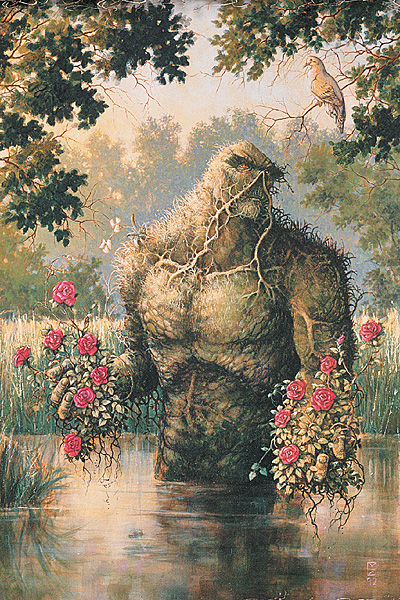
While we’re on the subject of horror: after League of Extraordinary Gentlemen: Century: 1910, I decided to give in to my Alan Moore cravings and got myself the first three volumes of his run of Swamp Thing. It’s fascinating to read these, because you can pick out themes and motifs that Moore later used, usually to better effect. At the same time, while Moore’s Swamp Thing (both the comic and the character) are complex, with richly metaphysical overtones, I have similar problems with it as I have with much of the first volume of Neil Gaiman’s Sandman. Both take the old staple of the horror comic and infuse it with mythology, deeper characterisation than you’d expect from the genre, and a degree of relevance, moving away from pure escapism, but they’re still both caught in the confines of the genre. The end result, at least for me, is a comic that tries to be more than just horror but just about not succeeding.

Still, it’s bound to be better than Wes Craven’s Swamp Thing movie. When all a film has going for it is Adrienne Barbeau’s breasts, well, then…

Swamp Thing (duh duh, duh duh!), you make my heart sing!