 Tune in for episode 7 of A Damn Fine Cup of Culture, most of which we spend with Moonee, Jancey, Halley and Bobby at the Magic Castle motel, discussing Sean Baker’s The Florida Project. We also stop by Charlotte, Tennessee for a quick chat about Logan Lucky and take a quick glimpse at the upcoming Academy Awards. Continue reading
Movies
When has a stitch ever saved anyone?

Phantom Thread one of the best-looking movies this season. Since it’s set in the 1950s British fashion scene, it’s certainly the best-dressed movie, without flaunting its lavishness. The dresses, often also the people and the atmosphere of the movie, have a kind of gorgeousness about them. The film feels like it was made decades ago, but it is far from dated. There is a love story at the core of the film, between a high-end middle-aged fashion designer called Reynolds Woodcock and a clumsy French-speaking waitress named Alma Elson. Reynolds is immediately smitten with Alma; while most other men would want to undress her, he is thinking about dressing her up, already sketching clothes for her in his mind. Continue reading
A Damn Fine Cup of Culture Podcast #6: The Last Jedi
Tune in for episode 6 of A Damn Fine Cup of Culture podcast, which returns us to a long time ago (all together now!) in a galaxy far, far away: what did we think of The Last Jedi? What role did that mega-franchise play in our childhood? And has Rian Johnson ruined or renewed Star Wars? Also, some thoughts on The Leftovers – the novel, not the series – and on Yorgos Lanthimos’ The Killing of a Sacred Deer.
Punishment, sadism and open-heart surgery
Even before bad things start to happen, it’s clear that something is seriously off in The Killing of a Sacred Deer. There’s a cringy neediness to teenaged Martin who goes to see cardiologist Steven at the hospital every single day, but it’s more than that: without ever spelling it out, he demands the older man’s attention and care, as if the heart surgeon owed him. As if the young man had something on him. There’s more than a hint of blackmail in the daily visits, the disproportional gifts he gets from Stephen, the teenager’s wheedling but insistent voice – and the complete absence of any resistance on Steven’s part. It’s as if he already fears the punishment that might follow.

Dope, anyone?
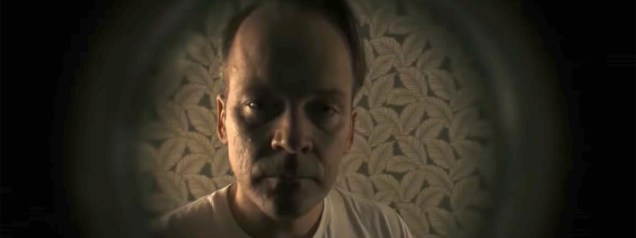 It’s somewhat surprising that Errol Morris’ Wormwood seems to be the first documentary to combine a cast with big names for the dramatic scenes with the traditional doc-staples of talking heads, collages, home movies and grainy photos. It’s a balancing act in more ways than one, and here, it seems to work, if only just. Wormwood is about the death of Frank Olson, who seemed to have fallen out of a 13th story hotel room window in New York and died on the sidewalk in his underwear. He was a CIA chemist who worked for the U.S. army and did research for biological warfare. For years, the story went like this: Olson, together with some of his workmates, was drugged with LSD in November 1953 for a new project about mind control, had a bad trip and finally committed suicide ten days later by leaping to his death. It was an accident, the CIA said, and they were sorry, and the Olson family got to meet President Johnson, who apologized for the tragedy, and the CIA promised to stop all mind-control projects, and that was that. Continue reading
The legend is dead – long live the legend
It’s been a while since Star Wars had the ability to surprise me – and in part that was its appeal: being the galactic equivalent of comfort food. Pop in a Star Wars episode and you generally know what you get, namely an epic fairy tale with farm boys destined to greatness and cloaked space wizards of the good and evil variety. You get secret weapons blown up after a one-in-a-million plan pays off. You get grand revelations, redemption and heroics.

Along comes The Last Jedi, and guess what – Star Wars has the ability to surprise me again. Continue reading
Year of Good and Bad
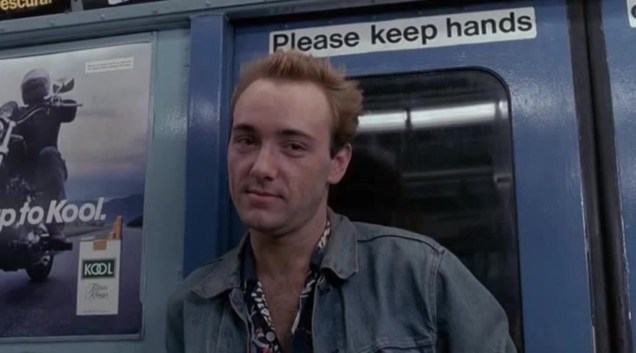 2017 has been a difficult year. I’ve realized that, since the news about them broke, I have avoided all films starring Kevin Spacey or produced by Harvey Weinstein. Same goes for Woody Allen, Bryan Singer and others. I would like to say that it was an unconscious decision, but I have to confess that it was largely intentional. Used to be a time when I could easily divorce an artist’s stupid statements or antics from his or her outstanding artistic performance. The fact that Morgan Freeman appears in a Turkish Airlines ad makes him look like an idiot, but it probably won’t keep me from watching The Shawshank Redemption again. With sexual threats or abuse by Weinstein, Spacey and far too many others, a line has been crossed. I can no longer sit there and watch John Doe do his grisly work without thinking of Spacey and his crimes. So how to react? Should I really stand before my movie shelf and start throwing out Seven? The Lord of the Rings trilogy? Anything ever produced by the Weinstein Company and Miramax? All the Tarantinos? The English Patient? How do Woody Allen fans react to such abuse? Fans of X-Men or The Usual Suspects? I know, of course, that the harm done to the abused persons is not limited to the movie business, and that the damage they suffered weighs far more than the harm done to cinema and acting, but since movies are a crucial way of storytelling, at least to me, and since storytelling has the human condition at its center, I suspect that those movies will play differently to me when (if?) I watch them next time. Something, a kind of honesty in storytelling, will be lacking. Continue reading
A Damn Fine Cup of Culture Podcast #5: #blackfilmmatters
Tune in for episode 5 of A Damn Fine Cup of Culture podcast, in which Mege and Matt discuss recent and upcoming films and TV series by and about African Americans – from Get Out and Loving to Black Panther and Dear White People. Also expect a mention of anarchic comedy (and surprise relationship drama) The Lego Batman Movie, the inventive The Good Place, a blast from the past with Freaks & Geeks and a return visit to 19th century Canada with Margaret Atwood’s Alias Grace.
Detroit goes down
 Detroit is a miss. The beginning and the ending are weak bookends to a middle that is strong and impressive cinematically, but the movie as a whole lacks two basic ingredients: a moral point of view, and a minimum of Detroit-specific context. I don’t think either of these flaws are the director’s fault: Kathryn Bigelow knows how to place her audience in the middle of a scene involving crowds, be it a war or a riot. My guess is that the lack of context comes from the screenplay by Bigelow’s frequent collaborator Mark Boal, who wrote The Hurt Locker and Zero Dark Thirty, also directed by Bigelow. Continue reading
All hail the God of Silliness
If you had told me a year ago that a Thor film would be one of my favourite Marvel movies in recent years, I would have looked at you like you were touched in the head, possibly by a mythical hammer. For me, the two first Thor films were firmly at the bottom of the MCU, kept company only by Iron Man 2. In fact, I would have said that the character Thor was my least favourite of all the main characters in Marvel’s cinematic universe (though I am not including the TV series in this reckoning, because, well, Danny Rand). Yes, thanks to The Avengers I could see that the big, blond lug had some potential, but mainly as a supporting character and as the butt of a bunch of jokes.

After Thor: Ragnarok, though? Well, let’s put it like this: if you’re looking for story or theme in an MCU film, the latest adventure of the God of Thunder won’t make you a convert. If you’re expecting a plot that is significantly different from, oh, pretty much every single Marvel movie since Iron Man, you’re out of luck. If you want a movie that fully embraces the silliness inherent in this ever-growing comic book universe translated onto the screen, though? Then hell, yeah – Thor: Ragnarok is an embarrassment of riches.
 A Damn Fine Cup of Culture