 Tune in for episode 5 of A Damn Fine Cup of Culture podcast, in which Mege and Matt discuss recent and upcoming films and TV series by and about African Americans – from Get Out and Loving to Black Panther and Dear White People. Also expect a mention of anarchic comedy (and surprise relationship drama) The Lego Batman Movie, the inventive The Good Place, a blast from the past with Freaks & Geeks and a return visit to 19th century Canada with Margaret Atwood’s Alias Grace.
Movies
Detroit goes down
 Detroit is a miss. The beginning and the ending are weak bookends to a middle that is strong and impressive cinematically, but the movie as a whole lacks two basic ingredients: a moral point of view, and a minimum of Detroit-specific context. I don’t think either of these flaws are the director’s fault: Kathryn Bigelow knows how to place her audience in the middle of a scene involving crowds, be it a war or a riot. My guess is that the lack of context comes from the screenplay by Bigelow’s frequent collaborator Mark Boal, who wrote The Hurt Locker and Zero Dark Thirty, also directed by Bigelow. Continue reading
All hail the God of Silliness
If you had told me a year ago that a Thor film would be one of my favourite Marvel movies in recent years, I would have looked at you like you were touched in the head, possibly by a mythical hammer. For me, the two first Thor films were firmly at the bottom of the MCU, kept company only by Iron Man 2. In fact, I would have said that the character Thor was my least favourite of all the main characters in Marvel’s cinematic universe (though I am not including the TV series in this reckoning, because, well, Danny Rand). Yes, thanks to The Avengers I could see that the big, blond lug had some potential, but mainly as a supporting character and as the butt of a bunch of jokes.

After Thor: Ragnarok, though? Well, let’s put it like this: if you’re looking for story or theme in an MCU film, the latest adventure of the God of Thunder won’t make you a convert. If you’re expecting a plot that is significantly different from, oh, pretty much every single Marvel movie since Iron Man, you’re out of luck. If you want a movie that fully embraces the silliness inherent in this ever-growing comic book universe translated onto the screen, though? Then hell, yeah – Thor: Ragnarok is an embarrassment of riches.
Is this the real life? Is it just replicants?
Perhaps it doesn’t need to be said – after all, the film is exceedingly well reviewed – but I want to start by saying it anyway: Blade Runner 2049 is a gorgeous piece of visual art. I wouldn’t go so far as to say that Roger Deakins has surpassed himself; his portfolio does include The Assassination of Jesse James by the Coward Robert Ford, after all. Nevertheless, there are few films this side of the turn of the century, or even this side of the original Blade Runner, that offer as coherent and as gorgeous a window into a world that is at once excitingly different and eerily familiar. And the praise isn’t just Deakins’: the artists that worked on all the individual puzzle pieces that make up the look of Blade Runner 2049 may just deserve most of the awards that exist and some that don’t. I don’t think the film will necessarily become as influential as the original Blade Runner, which pretty much defined what dystopian cityscapes of the near future look like, but aesthetically it manages the almost impossible, reconciling the iconic neo-noir with a more modern, almost anthropological sensitivity and creating something that both recalls the original and adds to it in startlingly original ways.

Just consider this: after the endless night of the original film, Blade Runner 2049 is largely set in daylight scenarios – and it pulls it off.
Fear, jealousy, sheep and death
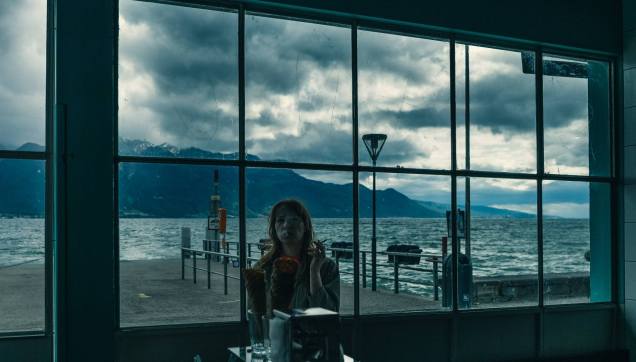
There are good starting points when it comes to getting away from it all with your husband for six months in the Swiss mountains. Having the strong suspicion that your husband is having an affair isn’t one of them – nor is running over a sheep less than a day into your trip. And what definitely doesn’t help is finding that your reality is fraying at the edges and there’s a creepy black cat telling you to kill your husband before he does the same to you.
Everybody was kung-fu fighting
Roughly halfway through the first episode of American Gods, the TV adaptation of Neil Gaiman’s novel, its protagonist Shadow finds a large, bearded Irish American calling himself Mad Sweeney getting right in his face. The self-described leprechaun keeps goading Shadow, newly released from jail and trying to keep out of trouble. Finally, Mad Sweeney finds the right button to press – and gets exactly what he wanted: a fist in the face and a shit-kicking bar fight.
Afterwards, as the screen cut to black, my wife turns to me and says, “Now that is how you do a fight scene.”

The loneliness of the modern-day cowboy
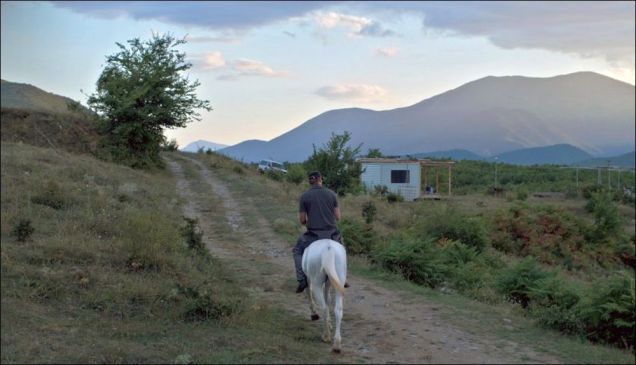
The man doesn’t talk much. Mostly he smokes his cigarette and looks out over the untamed land. He’s come as part of a group planning to harness nature, to bring electricity and industry to these apparent outskirts of civilisation – one of several men who never question their right to be where they are and take what they want – yet he stands apart from them. They are not his tribe. He rides a horse into the small town where the natives eye him, not quite knowing what to make of the man. They don’t share his language and he doesn’t understand theirs, but that’s unimportant. Perhaps it’s even the point. The frontier feels like home to him.
It is 2017. The frontier is the Bulgarian-Greek border, and the man is one of several German construction workers employed to build a hydroelectric power station. The film is called Western – a surprisingly apt description for a surprising movie.
Holy Mother of…
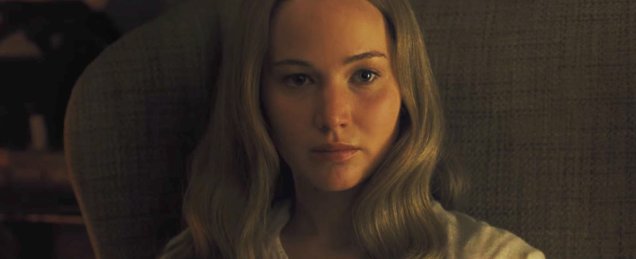 Let’s face it: Darren Aronofsky’s mother! is not the best nor the worst movie of the year, or the decade, or of all of movie history. It’s an average piece of art from a filmmaker who, after making Noah in 2014, has used another narrative from the Bible, i.e. the Garden of Eden, mixed it with ecological concerns, and made a mildly interesting story out of it. The main problem I have with mother! is its lack of surprise for all of its two hours. Once you get that the Jennifer Lawrence character is some kind of Eve and ecological earth mother whose universe is the house she lives in, the rest sort of falls into place. The movie has only three kinds of scenes: Lawrence’s point of view, Lawrence in the frame, or shots over her shoulder. It’s the earth mother’s story and how her realm gets invaded by careless, selfish humans. She has built that house herself and will never leave it – the porch is as far as she will go. She can feel the house’s beating heart getting poisoned by unwanted intruders. The invasion is gradual, but unstoppable, and you know well before the end that we will be back at the beginning, where the house is in flames, with the earth mother dying in it, and her husband placing a diamond on its little altar so that the house can heal again. And so on. Continue reading
Every inch a King
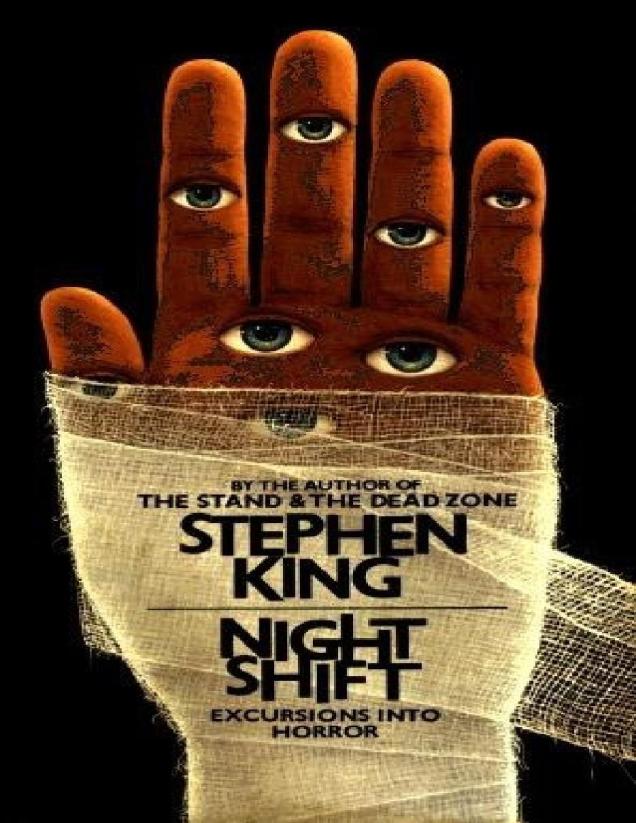
As this blog as much as the many BILLY shelves in my living room stacked with DVDs and Blu-rays can confirm, these days my main media are probably film and TV. However, when I was young, and well into my 20s, I was very much a librophile first and foremost, which is also what determined much of my education and my early professional path. And while he wasn’t there when I got started on a lifelong love of books pretty much as soon as I learned how to read, Stephen King was probably the first writer I obsessed over.
I don’t know when I last read one of King’s novels, but it’s definitely been at least ten years. I don’t much feel the need to return to his world, to visit our old haunts in Castle Rock and Derry. Although it may sound arrogant or pretentious, I’d say I’ve outgrown him – but, and perhaps more importantly, I’d also say that I grew up as a reader in the company of Stephen King.
Blood takes guts
 On the outside, Julia Ducournau’s Raw seems like an endurance test. There are reports of audience members fainting and vomiting, interrupted screenings and official complaints. And all of these people have seen the R-rated version, not the original, unreleased NC-17 version. During the show I was in, a guy left twice, his girlfriend stayed on, but all three of us fidgeted and squirmed more than once. Yes, Raw is hard to watch, but once you think you can cope with the blood and guts, you will find one of the best-told horror flicks in a long time. Like Lady Macbeth last week, Raw is a feature debut in a double sense: Julia Ducournau directed her own feature-length screenplay, and Garance Marillier, who plays the main role of Justine, is a newcomer. (SPOILERS AHEAD) Continue reading

