Welcome to Six Damn Fine Degrees. These instalments will be inspired by the idea of six degrees of separation in the loosest sense. The only rule: it connects – in some way – to the previous instalment. So come join us on our weekly foray into interconnectedness!
Welcome to Six Damn Fine Degrees. These instalments will be inspired by the idea of six degrees of separation in the loosest sense. The only rule: it connects – in some way – to the previous instalment. So come join us on our weekly foray into interconnectedness!
Among the many ways popular American blockbusters have been commercialised and marketed, the theme park ride at locations such as Disneyworld, Universal or Warner Studios literally made rollercoaster rides out of movies designed to shake and thrill their audiences at cinemas to begin with. Jaws (1975), considered by most to be the first true summer blockbuster, still has its legendary spot in Universal Studio City, which I was able to witness this summer going back to L.A.: somewhere along the studio tour and just after passing the original Bates Motel does one drive by remnants of Amity Island, mostly small houses and a pond, in which a scuba diver gets suddenly and unceremoniously eaten in front of visitors’ eyes, just before ‘Bruce’ the shark himself unexpectedly pokes up his mouth out of the water for a quick but intense fright.
Welcome to Six Damn Fine Degrees. These instalments will be inspired by the idea of six degrees of separation in the loosest sense. The only rule: it connects – in some way – to the previous instalment. So come join us on our weekly foray into interconnectedness!
I’ve been to the Europapark with my favourite daughter, and she had the good idea to go take the Valerian ride because she sort of liked Cara Delevigne in the Luc Besson movie. It’s with a virtual reality ride with a sturdy yellow helmet, but it is basically the Eurosat ride inside the silver globe, so that was a great ride for slightly nervous older geezers like me. It was also Luc Besson who co-wrote the series of Arthur and the Minimoys, and he was consulted for the park ride of the same name. It’s for the kids, but it was a pleasant change from the panic-inducing hellride called Blue Fire.
Welcome to Six Damn Fine Degrees. These instalments will be inspired by the idea of six degrees of separation in the loosest sense. The only rule: it connects – in some way – to the previous instalment. So come join us on our weekly foray into interconnectedness!
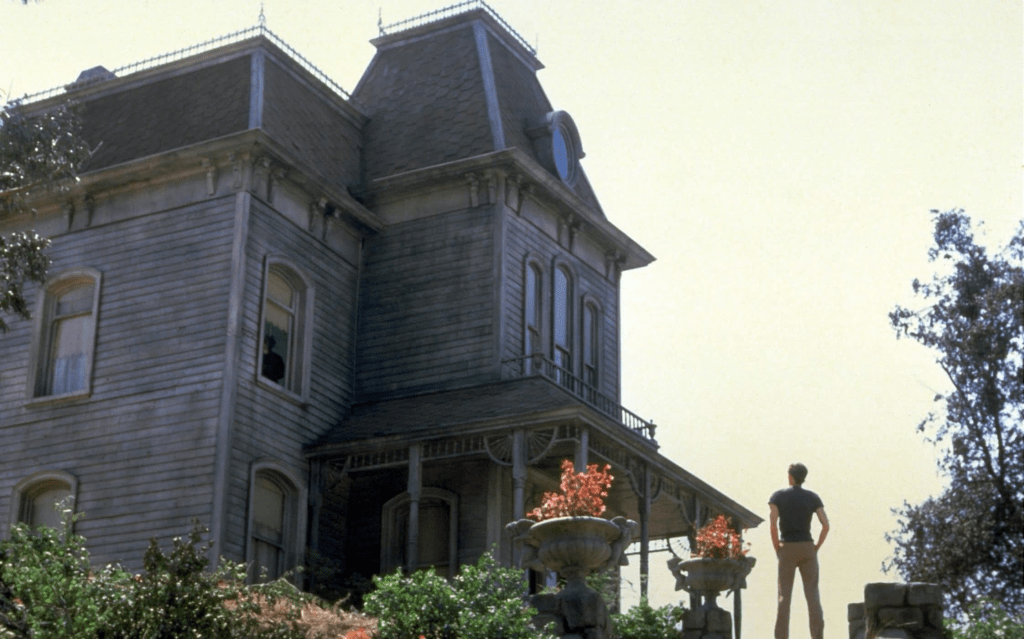
When Alfred Hitchcock made Psychoin the late 1950s, did he ever consider that his film, that most classic of slasher movies, would spawn four sequels (one of which would ignore its two predecessors to then be ignored in turn by Psycho IV), a shot-by-shot remake, and a five-season TV series focusing on the young Norman Bates? Then again, in the world of horror movies, that’s not all that impressive: there’ve been six Scream films to date, and a seventh is in the making. There’ve been three Exorcist films followed by two versions of the fourth film (one by Paul Schrader, one by Renny Harlin, obviously two directorial peas in a pod), and a new trilogy is about to launch in a week or so with The Exorcist: Believer. Everyone’s favourite homicidal doll Chucky got his murder on in eight films so far. Freddy Krueger has ruined teenagers’ dreams nine times so far. Bad, bad things have happened to vulnerable bodies ten times in the Saw franchise. Michael Myers (no, not that one!) has folded, spindled and mutilated the folks of Haddonfield and beyond in (wait for it) thirteen films. (Okay, that is not 100% correct, but that is something for another post, and probably not one written by me.)
Welcome to Six Damn Fine Degrees. These instalments will be inspired by the idea of six degrees of separation in the loosest sense. The only rule: it connects – in some way – to the previous instalment. So come join us on our weekly foray into interconnectedness!
You’ll almost certainly have seen Psycho. Alfred Hitchcock’s 1960 early slasher horror classic. And you’ll also probably have seen enough horror sequels in your time to know the score that, if there is one thing that virtually all such follow-ups are guilty of, it’s predictability. The studio will have realised that there’s a market for a certain type of terrifying carnage so they’ll cut and paste those visceral thrills into the sequel.
Welcome to Six Damn Fine Degrees. These instalments will be inspired by the idea of six degrees of separation in the loosest sense. The only rule: it connects – in some way – to the previous instalment. So come join us on our weekly foray into interconnectedness!
I was a teenager when I first watched Alfred Hitchcock’s iconic Psycho – though at the time I’d already picked up much of the plot through cultural osmosis, including that twist. As a result, there was little in Psycho that surprised me, except for this: even with me knowing who’d get killed how, why, and by whom, the film was still supremely tense. And that’s still true now, dozens of years later: as much of a cliché as the shower scene has become, for instance, it still works. It’s still one of the best scenes of its kind, and it’s difficult to top.
Welcome to Six Damn Fine Degrees. These instalments will be inspired by the idea of six degrees of separation in the loosest sense. The only rule: it connects – in some way – to the previous instalment. So come join us on our weekly foray into interconnectedness!
An Ennio Morricone-scored movie that exists in a variety of versions? When reading Alan’s latest insightful piece on the many cuts initially made to Sergio Leone’s Once Upon a Time in America, I couldn’t help but be possessed by my teenage memories of watching that infamous sequel to a great horror classic, Exorcist II: The Heretic (1977) and learning about the many different re-edits it had gone through – to no avail: The movie was a massive critical and commercial failure and, despite releases of all kinds of versions, has found few friends since.
Welcome to Six Damn Fine Degrees. These instalments will be inspired by the idea of six degrees of separation in the loosest sense. The only rule: it connects – in some way – to the previous instalment. So come join us on our weekly foray into interconnectedness!
There’s a lot that gets written about lost Director’s Cuts. Original versions of films that the studio took, re-edited, ruined and then released to mostly audience indifference. Many film fans would queue around the block for a chance to see Billy Wilder’s original version of The Private Life of Sherlock Holmes or David Lynch’s original take on Dune. But occasionally there’s another version of a film that’s the tricky one to find. The maligned, original studio cut.
Welcome to Six Damn Fine Degrees. These instalments will be inspired by the idea of six degrees of separation in the loosest sense. The only rule: it connects – in some way – to the previous instalment. So come join us on our weekly foray into interconnectedness!
Welcome to Six Damn Fine Degrees. These instalments will be inspired by the idea of six degrees of separation in the loosest sense. The only rule: it connects – in some way – to the previous instalment. So come join us on our weekly foray into interconnectedness!
I was wrong about Barbie. I should have been right. First off, it was Great Gerwig directing it, also writing the screenplay together with Noah Baumbach, which should have been the first sign that things would not be all pink plastic and brainless banter. And I don’t think Margot Robbie has the heart to say yes to any even mediocre project. I am still not entirely sold on Ryan Gosling, but Robbie is so very good in I, Tonya that she cannot do much wrong anymore in my book.






 A Damn Fine Cup of Culture