Welcome to Six Damn Fine Degrees. These instalments will be inspired by the idea of six degrees of separation in the loosest sense. The only rule: it connects – in some way – to the previous instalment. So come join us on our weekly foray into interconnectedness.
Question: Do you think this is actually Audrey Hepburn singing the wonderful “Moon River” from Breakfast at Tiffany‘s (discussed inlast week’s post by Alan)?
Welcome to Six Damn Fine Degrees. These instalments will be inspired by the idea of six degrees of separation in the loosest sense. The only rule: it connects – in some way – to the previous instalment. So come join us on our weekly foray into interconnectedness.
Watching classic cinema for the first time on the big screen can be a fabulous experience. Firstly, you’re getting to see how the makers intended you to see it. Secondly, the audience in the type of cinemas that play old movies tend to be incredibly well-behaved. No loud phone calls mid-movie or bored kids kicking the back of your chair.
Welcome to Six Damn Fine Degrees. These instalments will be inspired by the idea of six degrees of separation in the loosest sense. The only rule: it connects – in some way – to the previous instalment. So come join us on our weekly foray into interconnectedness.
You know how sometimes there are these strange cases of cinema serendipity, where within a year you’d get not just one but two big films about, say, asteroids heading for Earth and teams of astronauts sent on a mission to destroy them. Or CGI comedies about ants. Or biopics about legendary Scottish freedom fighters.
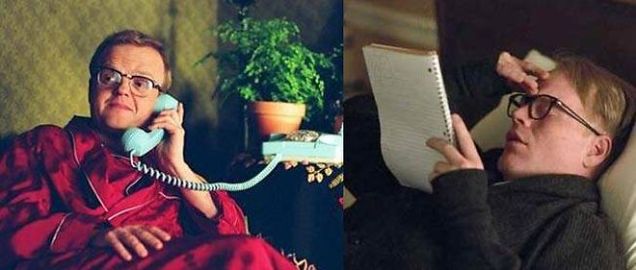
Perhaps the strangest of those pairs of ‘twin films’, as the phenomenon is called on Wikipedia, is the 2005 film Capote and 2006’s Infamous, both of which told the story of Truman Capote’s writing of his 1966 book In Cold Blood. Capote received wide acclaim and won its lead actor Philip Seymour Hoffman an Academy Award. Infamous, though, was barely noticed – beyond the comparisons to the film released earlier. And this extended to the actor who played Infamous‘ version of Truman Capote: Toby Jones.
Welcome to Six Damn Fine Degrees. These instalments will be inspired by the idea of six degrees of separation in the loosest sense. The only rule: it connects – in some way – to the previous instalment. So come join us on our weekly foray into interconnectedness.
You can dismiss it as juvenile dross, and you would not be entirely wrong, but The Hunger Games (2012) gets one thing admirably right: it is very able to balance its theme of mass media voyeurism showcasing a random group of soon-to-die game show contestants with the fact that we, the audience, are watching their imminent demise alongside the anonymous masses in the film. We are made to be voyeurs, too, not entirely against our will, and yet we are asked to side with the contestants – or victims, let’s call them, for that is what they are. And since we are not heartless, we empathize with them.
Welcome to Six Damn Fine Degrees. These instalments will be inspired by the idea of six degrees of separation in the loosest sense. The only rule: it connects – in some way – to the previous instalment. So come join us on our weekly foray into interconnectedness.
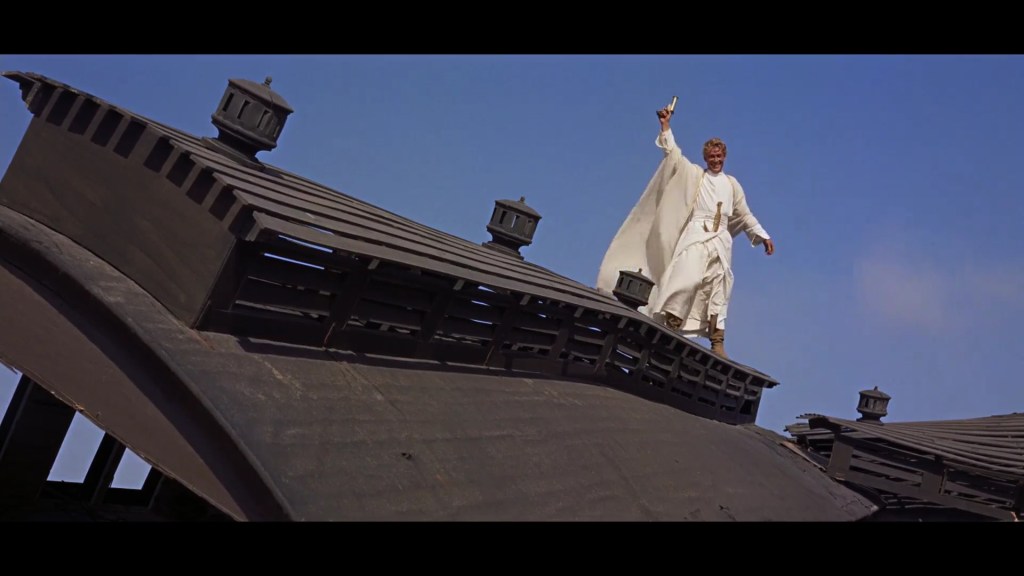
If there is one film, just one, that should be seen on the big screen in unadulterated 70 mm, it has to be Lawrence of Arabia.
Welcome to Six Damn Fine Degrees. These instalments will be inspired by the idea of six degrees of separation in the loosest sense. The only rule: it connects – in some way – to the previous instalment. So come join us on our weekly foray into interconnectedness.
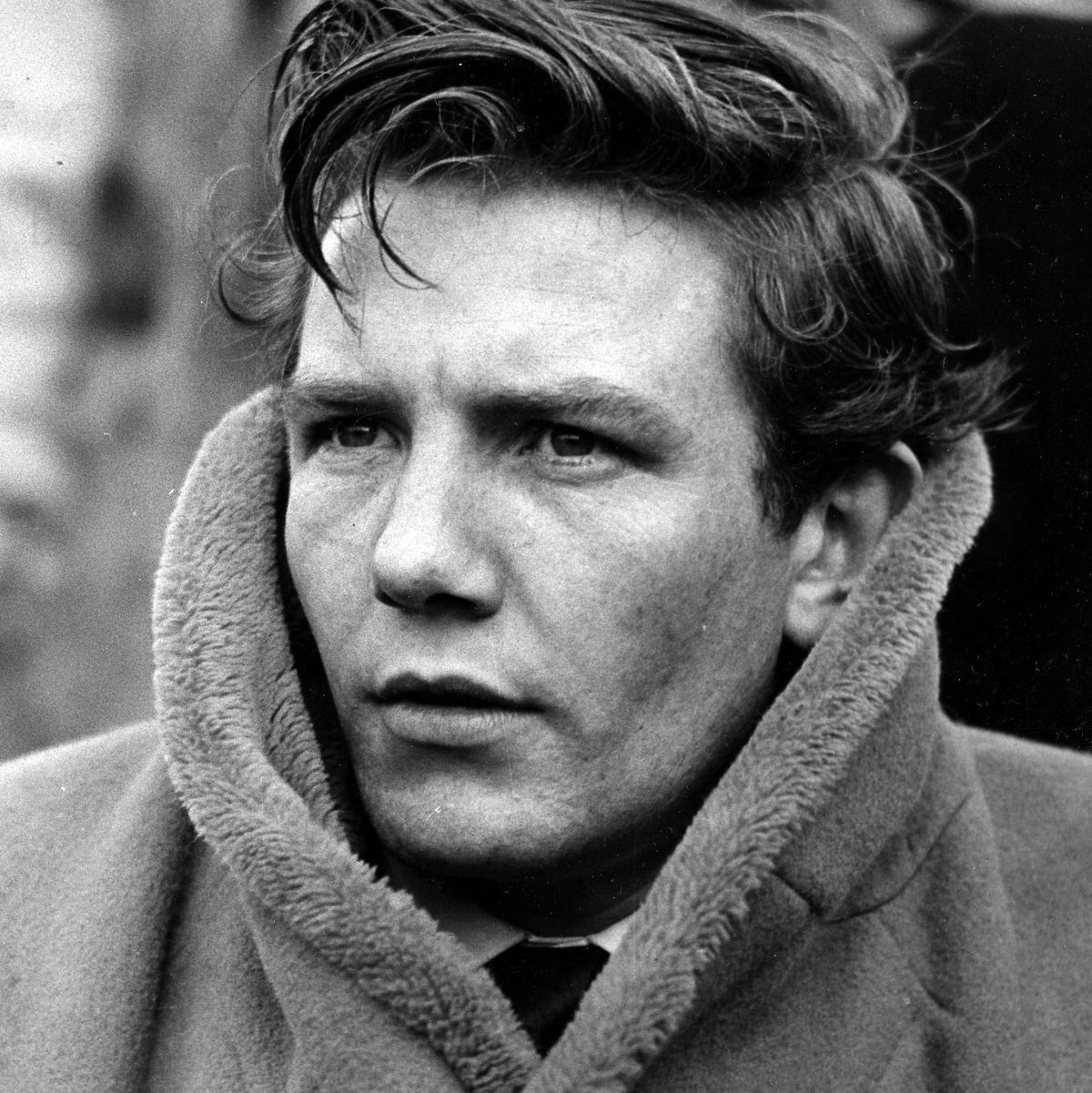
I have yet to see his romantic performance alongside Audrey Hepburn in Two for the Road, which Matt so vividly described inlast week’s post, but there has been so much evidence of enormous versatility in his career, that I wanted to dedicate my post to him (who left us only two years ago, on 7th February, 2019, just two weeks prior to Stanley Donen, director of Two for the Road). To me, he will always be the actor with that special edge – the incredibly talented Mr. Albert Finney.
Welcome to Six Damn Fine Degrees. These instalments will be inspired by the idea of six degrees of separation in the loosest sense. The only rule: it connects – in some way – to the previous instalment. So come join us on our weekly foray into interconnectedness.
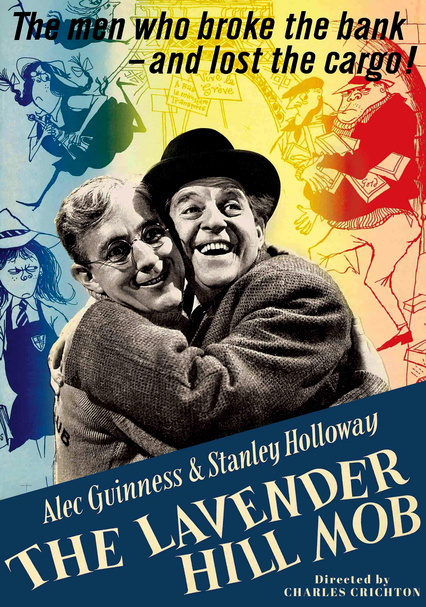
In 1951, when she had a small appearance in The Lavender Hill Mobas Chiquita (sadly not having seen the film, I cannot tell whether this means she played an actual banana), Audrey Hepburn wasn’t yet the movie star that she would later become. Roman Holiday was still two years away, then came Sabrina, War and Peace and Funny Face, and in 1961 she made her iconic appearance in Breakfast at Tiffany’s. Much has been written and said about what exactly Hepburn’s character in that film, Holly Golightly, is exactly: is she merely selling companionship needy men, or is she selling sex? Truman Capote, who wrote the novella the film was based on, called her an “American geisha”, but he didn’t exactly answer the question.
In any case, for all of Hepburn’s tremendous charms and attraction, she never struck me as particularly sexual in her performances; her characters were largely cute as the cutest of kittens, but also oddly innocent, almost to the point of sexlessness. On screen, she always came off as something of an anti-Marylin Monroe.
So consider my surprise when I found out that she was in a film written by Frederic Raphael, whose other works include Eyes Wide Shut. Yes, Stanley Kubrick’s last film. Yes, the one with the orgy that caused Warner Bros. to digitally alter the respective scenes, Austin Powers-style, to avoid an adults-only NC-17 rating.
Welcome to Six Damn Fine Degrees. These instalments will be inspired by the idea of six degrees of separation in the loosest sense. The only rule: it connects – in some way – to the previous instalment. So come join us on our weekly foray into interconnectedness.
There’s a moment in 1951’s The Lavender Hill Mob that captures an important truth about the best of the Ealing comedies: our two genial leads, having nearly successfully executed the gold heist of the century, suddenly realise their plans are in trouble. They need to swiftly descend the steps of the Eiffel Tower or evidence of their crime might fall into the wrong hands.
The two men start awkwardly racing down the spiral staircase. As their speed increases, and their need to reach the ground fast overcomes their vertigo they both start laughing. At this tense moment in a heist film, with all their schemes about to awry, two middle-aged men beginlaughing and hollering with giddy abandon.
Welcome to Six Damn Fine Degrees. These instalments will be inspired by the idea of six degrees of separation in the loosest sense. The only rule: it connects – in some way – to the previous instalment. So come join us on our weekly foray into interconnectedness.
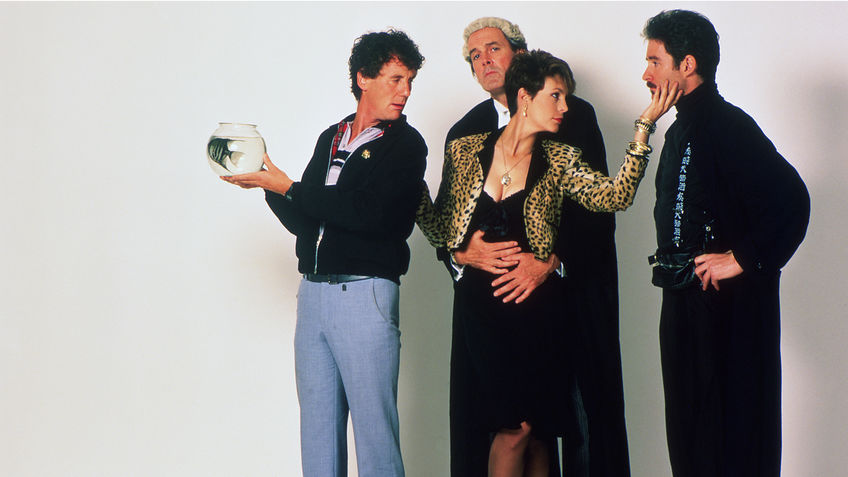
One of the ironies of life is that John Cleese, responsible for some of the most (in)famously absurd sketches in Monty Python’s Flying Circus, is more renowned for his work on comparatively unadventurous, straight comedies, two of them being Fawlty Towers and A Fish Called Wanda. And yet, it’s no accident that both are revered: they’re deliciously funny and incredibly mean-spirited, yet brimming with an inimitable charm nonetheless.
Welcome to Six Damn Fine Degrees. These instalments will be inspired by the idea of six degrees of separation in the loosest sense. The only rule: it connects – in some way – to the previous instalment. So come join us on our weekly foray into interconnectedness.
Would you have guessed who the young and apparently artistically gifted man in the image below is? Well, reading about him in the last Six Damn Fine Degrees post by Julie, I was reminded of how often this enormously talented actor has been a saving grace and the secret star of so many movies and TV shows I love. And therefore I decided to dedicate this eleventh post to him!



 A Damn Fine Cup of Culture