Welcome to Six Damn Fine Degrees. These instalments will be inspired by the idea of six degrees of separation in the loosest sense. The only rule: it connects – in some way – to the previous instalment. So come join us on our weekly foray into interconnectedness!
It has been a little forgotten, hasn’t it, that little gangster flick called Donnie Brasco (1997)? It hasn’t anything as iconic to offer as The Godfather‘s ascent to power or The Godfather: Part II‘s empty shell of a mob boss, although it does have Al Pacino at its center, too. It’s not a Scorsese-style hellride that could make us like or at least weirdly admire the hard men of organized crime we are supposed to condemn outside of a movie theater.
Welcome to Six Damn Fine Degrees. These instalments will be inspired by the idea of six degrees of separation in the loosest sense. The only rule: it connects – in some way – to the previous instalment. So come join us on our weekly foray into interconnectedness!
In Rocky, Talia Shire does a great job of depicting a character that is painfully shy and seems exceedingly mousey at first, but who reveals depths of emotion and loyalty as the film progresses. She’s a good fit for Sylvester Stallone’s Rocky, also a character who doesn’t fit the bill of archetypical heroic lead at first. Whatever the Rocky franchise turned into, both the movies and their leads started off at a point where they were downright antithetical to what they’d become later – not least in Rocky IV, in which the title character was pretty much the embodiment of Reagan’s America during the late stages of the Cold War. Rocky and Adrian were engaging characters, but as depicted by Stallone and Shire their charisma wasn’t readily apparent.
Fast-forward 39 years, to 2015 and to Creed, a quasi-sequel or spin-off to the original Rocky series. Yes, I can already hear you: did the world of cinema need to continue turning that particular dead horse into a punching bag? That’s pretty much what I thought – and then I saw who was involved: Ryan Coogler, pre-Black Panther but post-Fruitvale Station. Michael B Jordan, who has come so far since he played poor, doomed Wallace in the first season of The Wire.
Welcome to Six Damn Fine Degrees. These instalments will be inspired by the idea of six degrees of separation in the loosest sense. The only rule: it connects – in some way – to the previous instalment. So come join us on our weekly foray into interconnectedness!
Alan’s shining pieceon why Shelley Duvall is the true star of The Shining, Stanley Kubrick’s masterful Stephen King adaptation, reminded me of another late ’70s star almost forgotten for the emotional impact she had on audiences while staying in the background of strong male leads – and doing it twice in the most successful and critically acclaimed films of the decade: Talia Shire in The Godfather and Rocky series of films.
Woman in the shadows, but always at the very heart of each of her Rocky outings: Talia Shireas Adrian.Continue reading →
Welcome to Six Damn Fine Degrees. These instalments will be inspired by the idea of six degrees of separation in the loosest sense. The only rule: it connects – in some way – to the previous instalment. So come join us on our weekly foray into interconnectedness!
In the inaugural awards ceremony for The Golden Raspberriesback in 1980, Shelley Duvall was nominated for her performance as Wendy Torrence in The Shining. This fact is a useful reminder as to how mixed to hostile the critical reception was for the film on its initial release. And that the annual exercise in lazy trying-to-be-cool snobbery that is the Razzies really don’t know what they’re talking about.
Welcome to Six Damn Fine Degrees. These instalments will be inspired by the idea of six degrees of separation in the loosest sense. The only rule: it connects – in some way – to the previous instalment. So come join us on our weekly foray into interconnectedness!
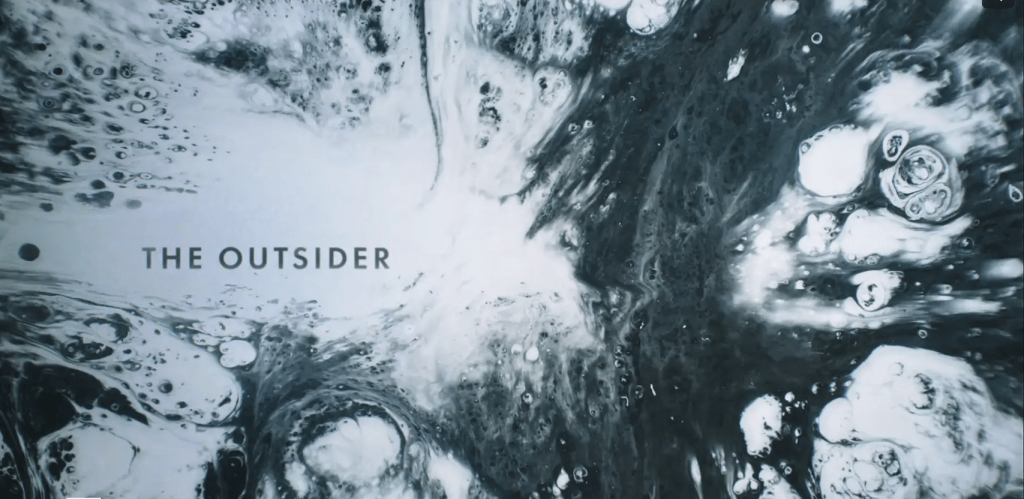
After the first two episodes of The Outsider, you might be forgiven for thinking it is meant as a meditation on relentless anguish. The cinematography alone is so bleak – if it isn’t nearly pitch black, it is almost sepia – you can almost feel the crushing weight of it, even with the sound off.
Welcome to Six Damn Fine Degrees. These instalments will be inspired by the idea of six degrees of separation in the loosest sense. The only rule: it connects – in some way – to the previous instalment. So come join us on our weekly foray into interconnectedness!
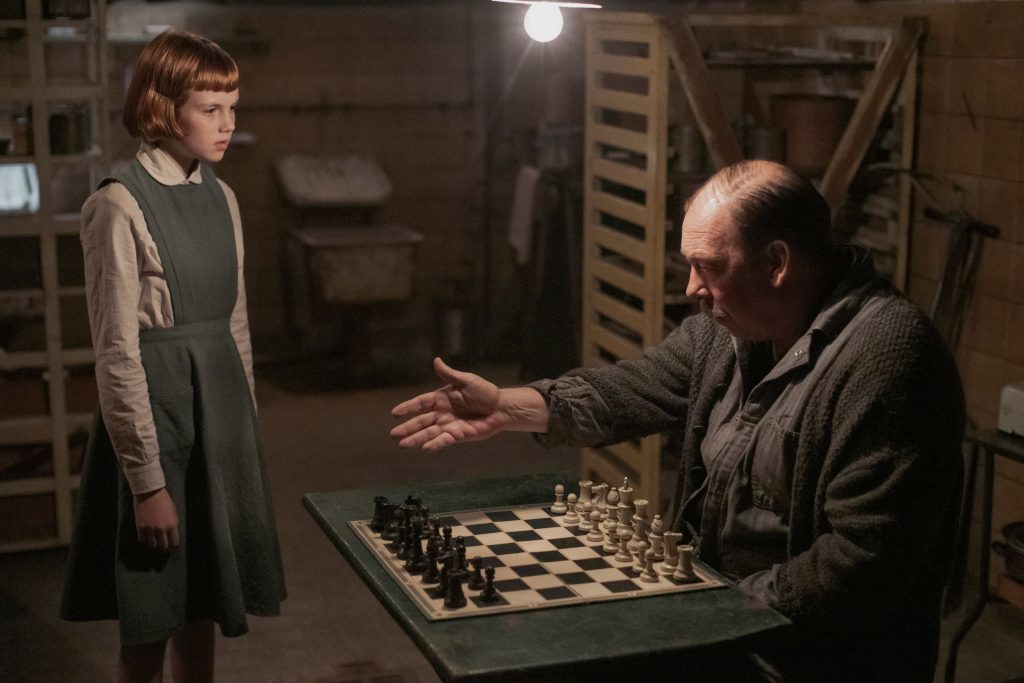
I admit I am probably slightly more name-driven when it comes to picking my movies. Plus, if there is a face popping up in several different genres, I might get hooked. Bill Campseems to pop up in very diverse movies; it is really rather ironic that, for all the various genres, he often plays an unlikable character, or at least one with an impossible task or a hidden agenda. I have never consciously seen him cheerful or happy or anywhere near exuberant. It is to his credit that I never thought of him as anywhere near typecast. Speaks to the quality of his acting.
Welcome to Six Damn Fine Degrees. These instalments will be inspired by the idea of six degrees of separation in the loosest sense. The only rule: it connects – in some way – to the previous instalment. So come join us on our weekly foray into interconnectedness!
Camp, adj. - Ostentatiously and extravagantly effeminate (typically used of a man or his manner); ... deliberately exaggerated and theatrical in style. (Definitions from Oxford Languages)
For the longest time, I would shy away from a lot of media that I associated with camp. From what little I could see, I thought it was tacky, in poor taste and attention-grabbing: “Look at me! I’m in your face! I’m different – and I’m unafraid to be different!”
I’m still not automatically a fan of things that I consider ostentatious and in-your-face, and I guess there is a lot of camp that leaves me non-plussed. But that’s true for a lot of art – and it’s not necessarily a bad thing. If I’m entirely honest: looking back, I wonder how much of my negative reaction to it was that, as little as I like to acknowledge it, young Matt was a teensy bit of a homophobe.
Welcome to Six Damn Fine Degrees. These instalments will be inspired by the idea of six degrees of separation in the loosest sense. The only rule: it connects – in some way – to the previous instalment. So come join us on our weekly foray into interconnectedness!
Last week’s fascinating look by Alan at previously coded gay relationship between Marvel cartoon characters made me once again fully aware of how secretively (and also inventively) homosexual characters and relationships were allowed to feature in mainstream popular culture before the proper arrival of LGBTQ+ cinema in the past two or three decades or so.
Welcome to Six Damn Fine Degrees. These instalments will be inspired by the idea of six degrees of separation in the loosest sense. The only rule: it connects – in some way – to the previous instalment. So come join us on our weekly foray into interconnectedness.
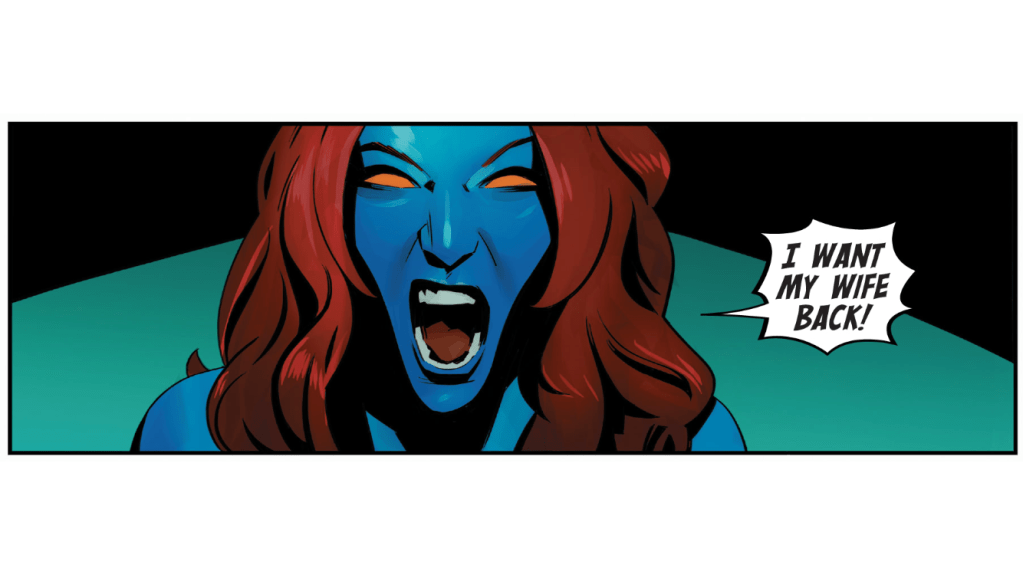
It’s only in the last couple of years that Marvel comics have finally acknowledged the truth about one of their oldest coded gay relationships in its superhero universe. In 2019, the characters finally got to share an on-panel kiss and at the beginning of 2020 the first ever direct reference to their exact status made it to a published comic. Nearly forty years after the supervillains Mystique and Destiny had first appeared in a comic together (and thirty years after the latter’s demise), that they had been a homosexual couple was made unambiguously clear.
Welcome to Six Damn Fine Degrees. These instalments will be inspired by the idea of six degrees of separation in the loosest sense. The only rule: it connects – in some way – to the previous instalment. So come join us on our weekly foray into interconnectedness.



 A Damn Fine Cup of Culture