Welcome to Six Damn Fine Degrees. These instalments will be inspired by the idea of six degrees of separation in the loosest sense. The only rule: it connects – in some way – to the previous instalment. So come join us on our weekly foray into interconnectedness!
Welcome to Six Damn Fine Degrees. These instalments will be inspired by the idea of six degrees of separation in the loosest sense. The only rule: it connects – in some way – to the previous instalment. So come join us on our weekly foray into interconnectedness!
I think many people remember the first time that they discovered music that really fired the imagination. Music that wasn’t just the signature to a tale, but an integral part of the experience. If you wanted to imagine the other worlds of a tale – just a few bars of a theme and your mind begins to inhabit a whole new universe.
Welcome to Six Damn Fine Degrees. These instalments will be inspired by the idea of six degrees of separation in the loosest sense. The only rule: it connects – in some way – to the previous instalment. So come join us on our weekly foray into interconnectedness!
Like Alan, I reada lot of histories. Well. Narrative histories. Unlike Alan, who seems to have a theme and some actual focus to his reading, I’m an inveterate magpie and will flit from medieval England (Helen Castor’s books The Eagle and the Hart and She Wolves, are particular favourites), to a biography of J. Edgar Hoover (G-Man, Beverly Gage won a Pulitzer for that one), to the magnificent Höhenrausch by Harald Jähner (evoking, unforgettably, the interbellum in Germany), and many more. No obligation for me to go through a formal curriculum and do things like put in the actual, systematic, scholarly work. There are fantastic, conscientious writers who have done it all for me, and whose books I will happily, and gratefully, devour.
Welcome to Six Damn Fine Degrees. These instalments will be inspired by the idea of six degrees of separation in the loosest sense. The only rule: it connects – in some way – to the previous instalment. So come join us on our weekly foray into interconnectedness!
As a teenager, I read a lot of genre fiction – but, perhaps more importantly, I read a lot of bad genre fiction. Not only: I loved the likes of Lord of the Rings or the iconic novels of Arthur C. Clarke (mind you, his prose wasn’t always brilliant and his characters often paper-thin, but the ideas were fascinating), but I’d read whatever I could find at the library that had spaceships and aliens, or dungeons and dragons. I think that, even at the time, I was aware that much of what I read in the realms of fantasy and sci-fi was generic and derivative at best, pulp designed to be mass-produced and sold to kids like me who wanted their reading matter to transport them to other worlds. But, hey, those books did transport me to other worlds, even if those worlds seemed a lot like Middle-Earth or a galaxy far, far away, just with the serial numbers scratched off.
Welcome to Six Damn Fine Degrees. These instalments will be inspired by the idea of six degrees of separation in the loosest sense. The only rule: it connects – in some way – to the previous instalment. So come join us on our weekly foray into interconnectedness!
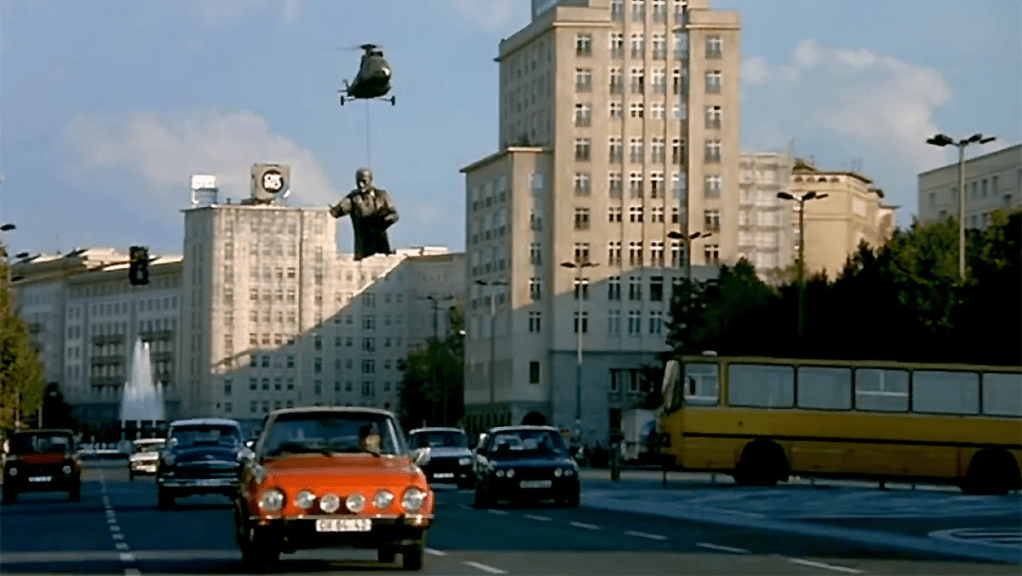
At first glance, Berlin hasn’t quite been as cinematic a city as, let’s say, romantic Paris, foggy London, cosmopolitan New York or sunny L.A. However, its tumultuous history during the first 100 years of cinema has made it an ideal space for movies that used it as more than just a postcard background. Arguably, the number of times Berlin’s cityscape felt like an active participant in the plot has to be significantly higher than the myriad establishing shots of the Eiffel Tower, Big Ben or the downtown zoom shot of the Hollywood sign used elsewhere.
Welcome to Six Damn Fine Degrees. These instalments will be inspired by the idea of six degrees of separation in the loosest sense. The only rule: it connects – in some way – to the previous instalment. So come join us on our weekly foray into interconnectedness!
Note: mild spoilers ahead. Though nothing of substance is spoiled in this post, you may want to see the movie first.
Welcome to Six Damn Fine Degrees. These instalments will be inspired by the idea of six degrees of separation in the loosest sense. The only rule: it connects – in some way – to the previous instalment. So come join us on our weekly foray into interconnectedness!
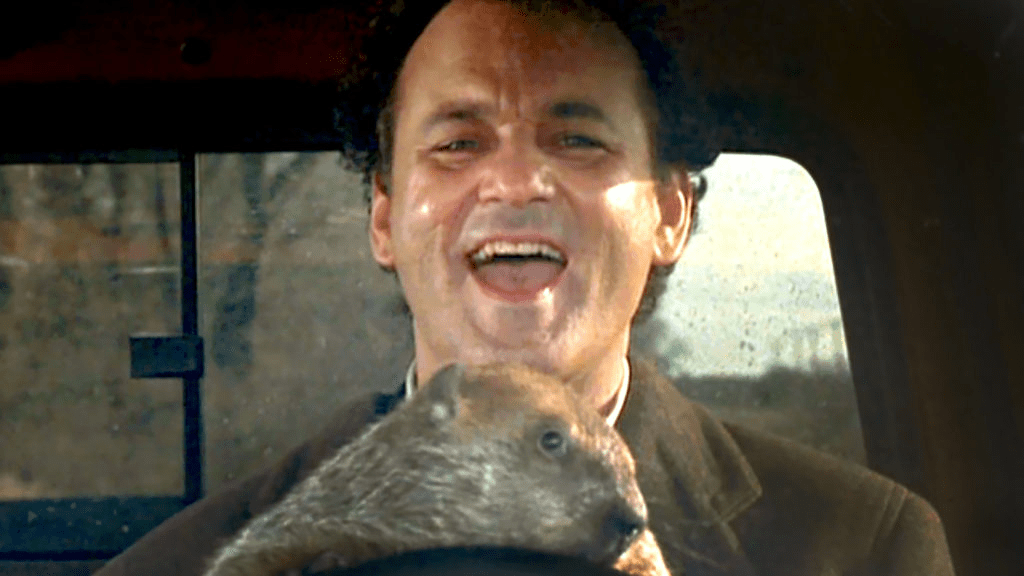
Time loop narratives are almost always power fantasies. Sure, there’s a comical element about them, but that’s part of the fantasy: the protagonists of time loop stories are caught in an existentialist Looney Tunes short, but whenever they step on a rake or have a bomb blow up in their faces, they go back to start with added knowledge: if they cut this wire instead of that one, if they push this button rather than pulling that lever, if they jump to the right two seconds after they hear the car horn, they’ll survive. And thus, step by step, they master their situation.
In that sense, time loop narratives are the kind of power fantasies that are typical for video games.
Welcome to Six Damn Fine Degrees. These instalments will be inspired by the idea of six degrees of separation in the loosest sense. The only rule: it connects – in some way – to the previous instalment. So come join us on our weekly foray into interconnectedness!
Bai Jing Ting (left) and Zhao Jin Mai (right) star as soulmates in an endlessly harrowing meet cute
Last week, Mege hit us with “I didn’t like Oppenheimer. That’s largely because I didn’t understand the second half of the movie.” In its bluntness, this is one of my favourite Six Degrees posts so far, and Mege is spot on. The funniest thing (to me) is that he went right back to watch it again and still didn’t get it, and now he’s apparently seriously contemplating watching it a third time. Noooooo. Cut your losses, Mege!
Welcome to Six Damn Fine Degrees. These instalments will be inspired by the idea of six degrees of separation in the loosest sense. The only rule: it connects – in some way – to the previous instalment. So come join us on our weekly foray into interconnectedness!
I didn’t like Oppenheimer. That’s largely because I didn’t understand the second half of the movie, wherein, somehow, Oppenheimer gets the upper hand over Strauss. I didn’t understand what was there for the getting, nor did I understand what the bone of contention was. To the very small extent that I got the situation between them, I didn’t much care. As I understood it, it took a smallish statement by the Rami Malek character during the hearing to push Strauss off his pedestal. And that was it. What had just happened?
Welcome to Six Damn Fine Degrees. These instalments will be inspired by the idea of six degrees of separation in the loosest sense. The only rule: it connects – in some way – to the previous instalment. So come join us on our weekly foray into interconnectedness!
When Nick and Charlie touch, little squiggly cartoon flashes of electricity appear around them and you can literally feel the sparkles going off between them in the air. What seems just like an original reference to its graphic novel source material, Alice Oseman‘s Heartstopper series, proves to be symbolic for the runaway success this Netflix show has enjoyed far beyond the queer community: its truly feel-good approach is heartstoppingly essential for the present moment.





 A Damn Fine Cup of Culture