The Rear-View Mirror: All the President’s Men (1976)

Each Friday we travel back in time, one year at a time, for a look at some of the cultural goodies that may appear closer than they really are in The Rear-View Mirror. Join us on our weekly journey into the past!

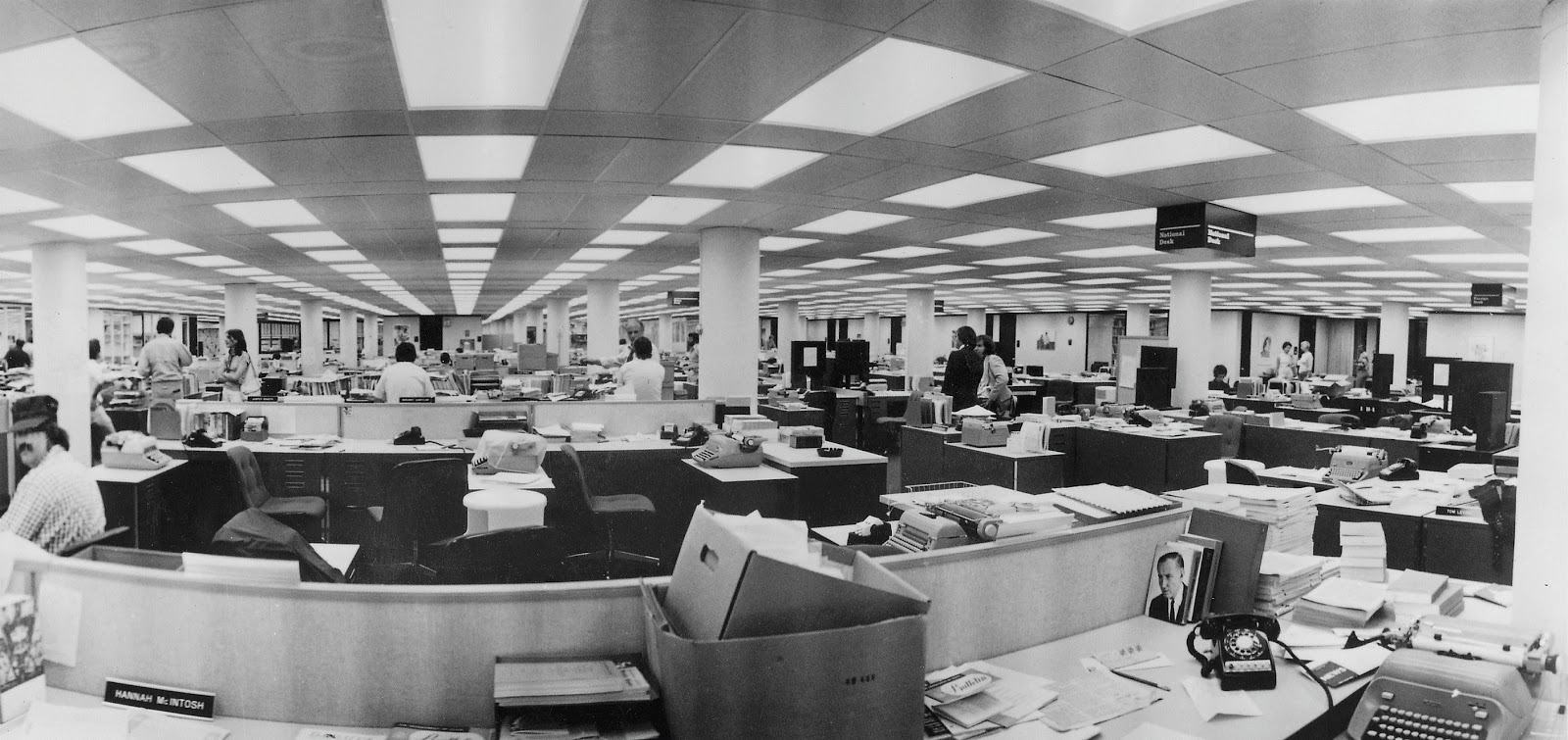
The Watergate scandal and its complexities holds many stories worth telling. The story of how Martha Mitchell tried to blow the whistle and got ridiculed, or the story of democratic candidate Edmund S. Muskie who was undermined by the Nixon administration and lost his cool. Or the story of the hilariously monikered whistle-blower “Deep Throat” – yes, after the Linda Lovelace porno – who was finally outed in 2005 as Mark Felt, FBI associate director. All the President’s Men is the story of Bob Woodward (Robert Redford) and Carl Bernstein (Dustin Hoffman), or “Woodstein”: two journalists who tried to make the public aware of the scope of Watergate, as if anyone at the time really cared. Later Gore Vidal would famously quip to Dick Cavett that he “…must get my Watergate fix each morning”.
AllTHePresidentsMen 4
Continue reading

The Rear-View Mirror: Dispatches (1977)

Each Friday we travel back in time, one year at a time, for a look at some of the cultural goodies that may appear closer than they really are in The Rear-View Mirror. Join us on our weekly journey into the past!

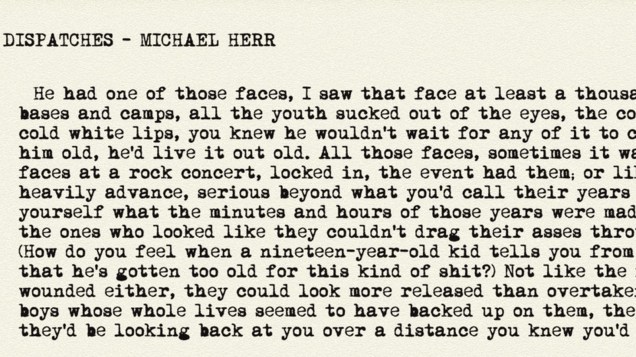
Michael Herr’s Dispatches is a slim book, but it’s so densely written that I couldn’t get through it in one day. It’s his own personal diary from the Vietnam war, condensed into such sparse prose that you will have to set it down eventually. Herr throws you into the the mess of war and explains only what is crucial for the rest of the text so that the reader is set to feel very much like a newly drafted soldier joining the conflict – you have basic training, but no clue about the area they drop you in. The reason for that immediacy might be that Herr is not really a novelist, but a journalist. He volunteered to go to Vietnam, joined the reserve there in 1967, returned to the US, had a nervous breakdown, couldn’t write anything for five years and finally published this book in 1977.

Continue reading

The Rear-View Mirror: Halloween (1978)

Each Friday we travel back in time, one year at a time, for a look at some of the cultural goodies that may appear closer than they really are in The Rear-View Mirror. Join us on our weekly journey into the past!

Psycho never scared me. I think the main reason for this is that I came to it too late: by the time I saw Norman Bates dressed as his mother, stab-stab-stabbing his way through various cast members, I’d seen all the quotes, echoes, parodies. (You can’t be a teenager watching several seasons worth of The Simpsons without seeing an average of 17.3 parodies of Psycho. It’s a scientific fact.) To some extent, I ended up watching the film and feeling that, meh, it’s all been done before – which is unfair and inaccurate, because so often and in so many ways, Psycho did it first. I still enjoy the film for the sheer craftsmanship that Hitchcock and his collaborators put into the film, and for the impish glee with which they establish the female lead – only to kill her off. But no, Psycho never scared me.

Halloween, though? Halloween scared the living daylights out of me.

Halloween
Continue reading

The Rear-View Mirror: Alien (1979)

Each Friday we travel back in time, one year at a time, for a look at some of the cultural goodies that may appear closer than they really are in The Rear-View Mirror. Join us on our weekly journey into the past!

alien screenshot I

Alien turns 40 this year, and due to (or despite of) its low-tech special effects, it has aged well. In 1979 the film was meant to benefit from Star Wars‘ success, and became a classic in its own right. Sticking with a female lead for a franchise is not unprecedented, but it was (and is!) rare enough for Alien to be studied for its feminist message. This is by no means the only subject which has been studied through (or sometimes projected onto) Alien. From post-humanism to themes of giving birth and even rape, the amount of scholarly and academic articles which have been written about this sparse sci-fi thriller is improbably large. For all the scholarly probing, though, Alien is an accessible film, and still an easy film to love. Scott says it was meant to be an “unpretentious, riveting thriller, like Psycho or Rosemary’s Baby”.

Continue reading

The Rear-View Mirror: Housekeeping (1980)

Each Friday we travel back in time, one year at a time, for a look at some of the cultural goodies that may appear closer than they really are in The Rear-View Mirror. Join us on our weekly journey into the past!

There is no other year that has such a wealth of movies to choose from than the year 1980. I could fill the whole post just with movie titles, but I will give you only a short list to start from: Raging Bull. The Empire Strikes Back. The Shining. Airplane!. The Blues Brothers. Berlin Alexanderplatz. Ordinary People. Breaker Morant. Altered States. Coal Miner’s Daughter. Atlantic City. Friday the 13th. Used Cars. Shogun Assassin. Little Lord Fauntleroy. Le Dernier Mètro. Fame. Private Benjamin. American Gigolo. ffolkes. La Boum. And of course the immortal classic Werner Herzog Eats His Shoe.

Continue reading

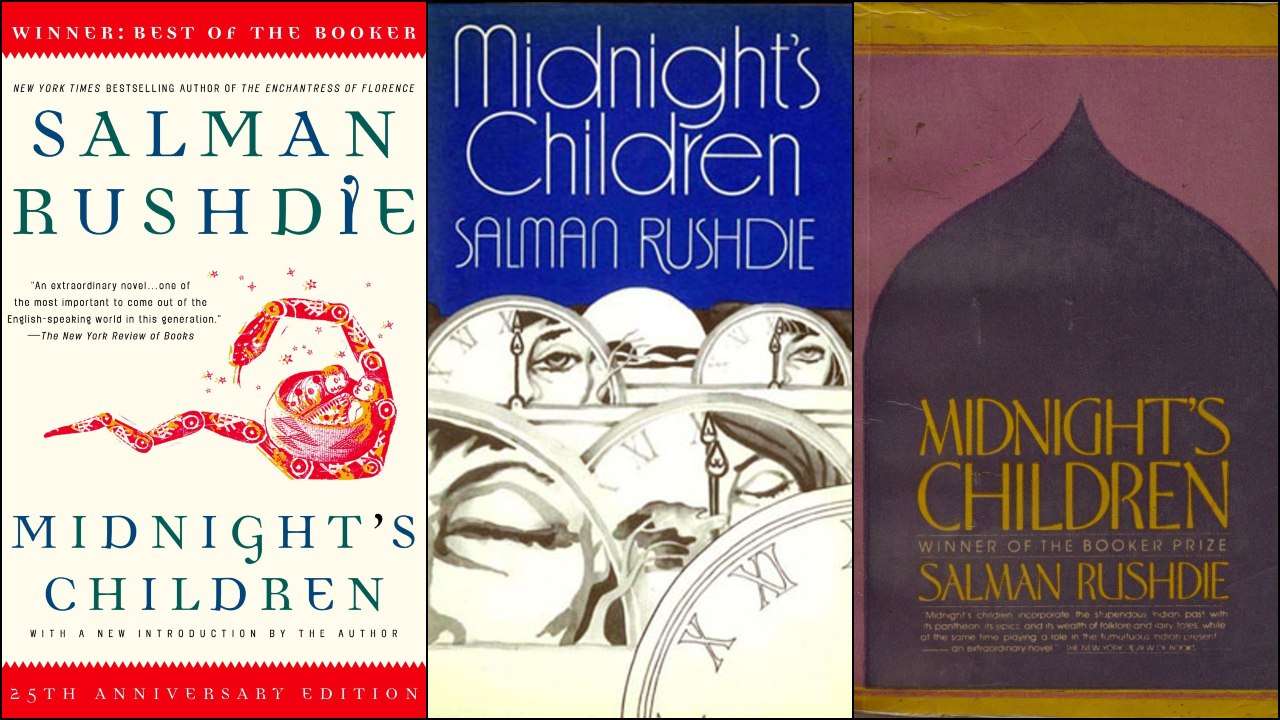
The Rear-View Mirror: Midnight’s Children (1981)

Each Friday we travel back in time, one year at a time, for a look at some of the cultural goodies that may appear closer than they really are in The Rear-View Mirror. Join us on our weekly journey into the past!

I have this thing where I sometimes prefer a later, arguably derivative variation on a theme to the original. I enjoy Tom Stoppard’s Rosencrantz and Guildenstern Are Dead considerably more than the Beckett plays it is clearly, heavily inspired by. I find Frank Miller’s The Dark Knight Returns grating and much prefer some takes on Batman that take their inspiration from Miller but do their own thing with it.

Midnight's Children

Similarly, although in so many ways it looks to Günther Grass’ seminal The Tin Drum (1959), at times almost to the point of plagiarism, I would choose to re-read Salman Rushdie’s Midnight’s Children, published in 1981, over Grass’ novel any day of the week. Have at me, German Studies PhDs!

Continue reading

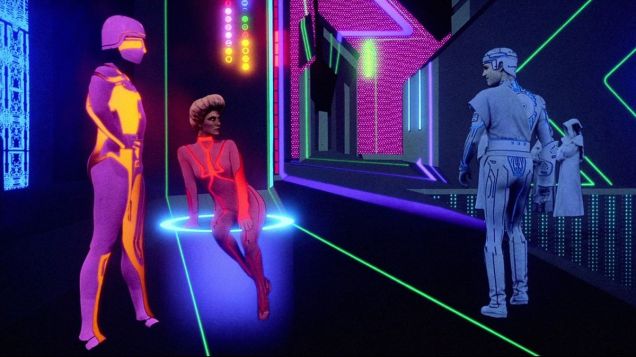
The Rear-View Mirror: TRON (1982)

Each Friday we travel back in time, one year at a time, for a look at some of the cultural goodies that may appear closer than they really are in The Rear-View Mirror. Join us on our weekly journey into the past!

Like Wargames a year later, TRON tried to get behind that new and slightly unsettling thing called computer. And the more fearful among us somehow thought that that machine would treat us the same way that the first picture cameras would treat us: they would steal bits of our souls. Not that we told anyone that we were afraid of them, but hey, if you get sucked into them (by ways not quite clear), then the frisbee of death would kill you. Or you would get erased. A whole new world of danger.

Continue reading

The Rear-View Mirror: The A-Team (1983)

Each Friday we travel back in time, one year at a time, for a look at some of the cultural goodies that may appear closer than they really are in The Rear-View Mirror. Join us on our weekly journey into the past!

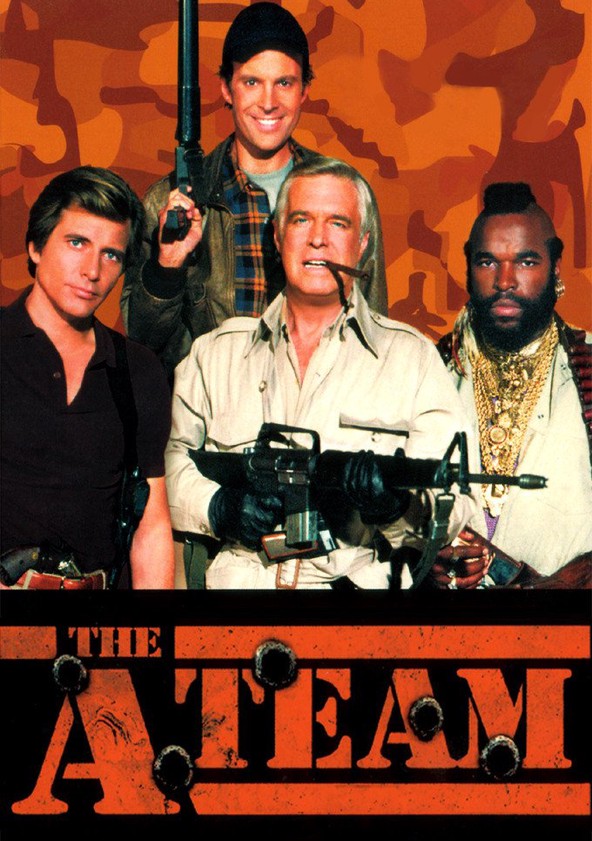
The A-Team

In 1984, when they visited The Netherlands, they were received like superstars. Dwight “Howling Mad Murdoch” Schultz, Dirk “Face” Benedict and Laurence “B.A. Baracus” Tureaud (a.k.a. Mr. T). The A-Team (Cue theme). They even met our Queen. George “Hannibal” Peppard was absent. According to Schultz and Benedict, because he considered himself too big of a star (he had, after all, been in the classic Breakfast at Tiffany’s, opposite Audrey Hepburn).

Continue reading

The Rear-View Mirror: Amadeus (1984)

Each Friday we travel back in time, one year at a time, for a look at some of the cultural goodies that may appear closer than they really are in The Rear-View Mirror. Join us on our weekly journey into the past!

It is a riveting scene, and one that at a glance would seem entirely uncinematic: the younger man, sick, pale and sweaty, lies in bed and dictates music to the older man, who scribbles musical notes onto paper as if it was a race against time – which it is. The brilliant composer will not live much longer. It is a scene that doesn’t seem to need the big screen: it could just as well be performed on stage, and this is in fact where it originated. None of this seems immediately cinematic – yet it is one of the great moments of 1980s cinema: Mozart and and his bitter, envious rival Salieri racing against death to get his final masterpiece, the Requiem in D minor, K. 626, out of the dying man’s head and onto paper so it would be preserved for posterity.

Amadeus
Continue reading

The Rear-View Mirror: Back to the Future (1985)

Each Friday we travel back in time, one year at a time, for a look at some of the cultural goodies that may appear closer than they really are in The Rear-View Mirror. Join us on our weekly journey into the past!

It’s the day after Valentine’s Day, and in the spirit of society’s collective post-venereal fugue, I’m going to come clean: I thought it would be cheeky to write a Rear-View Mirror post about a movie that literally stars a time-travelling car.

Because, let’s face it, there’s no more obvious vehicle for one of popular culture’s most famous movies than the DeLorean that, in a beautiful visual gag, tips up and takes to the sky at the end of Back to the Future. But first, in the spirit of the movie, let’s rewind.

Continue reading