The Leftovers, S1E4 – B.J. and the A.C.

Episode 3 raised the stakes for Fater Jamison losing his church to the GR, didn’t it? I was almost sure that whatever would come after that episode wouldn’t match the clerical odyssey, but even judged on its own, this episode was a qualified disappointment.

HS-speech-300x195

It’s December, and someone steals the little plastic baby Jesus from the nativity display. I felt slightly sorry for Kevin Garvey because it looked like it was his turn for an odyssey. He has to find the doll or buy a new one with cash from Mayor Warburton while making sure the GR don’t cause any ruckus during the local Christmas dance. His car goes dead on him (an electrical malfunction that could well be from Lost), and he has to use Dean the dog-shooter’s truck still parked in the Garvey driveway. Kevin, in desperate need of some success, wants to find the original doll. Whodunnit?

The usual suspects must include the Guilty Remnant. Garvey tries to come to an agreement with a mute Patti because the holidays are the time when people want to blow off steam and be with their families. Patti, smirking, cruelly stabs back by writing that “there are no families.” Wow. The GR come across as seemingly peaceful, but relentless in their presence. Here, Patti is downright cruel to Garvey, and such cruelty is new. If it is the new M-O. for the GR, watch out Mapleton, you have a problem.

bodies

Tommy and Christine are definitely not suspects, trying to find their way past the authorities and eventually back to Mapleton. We see them again in what looks like a hospital admissions room or cafeteria, where an all too naked guy throws a tantrum in front of Christine, yelling about why she appears in his dreams: “You walk over the dead. They are all in white.” I half feared that this referred to the GR being dead and walking among the living. Bad flashback to the ending of Lost – remember? This is what lazy writing will do. The twist was cheap then, and it would be cheap now. It’s only in the second hospital that we learn that – damn you, Wayne – Christine is pregnant. Does he feel that the world owes him a child? Without appearing in this episode, Wayne has become even more despicable. (And no, I won’t let him off by mentioning immaculate conception.)

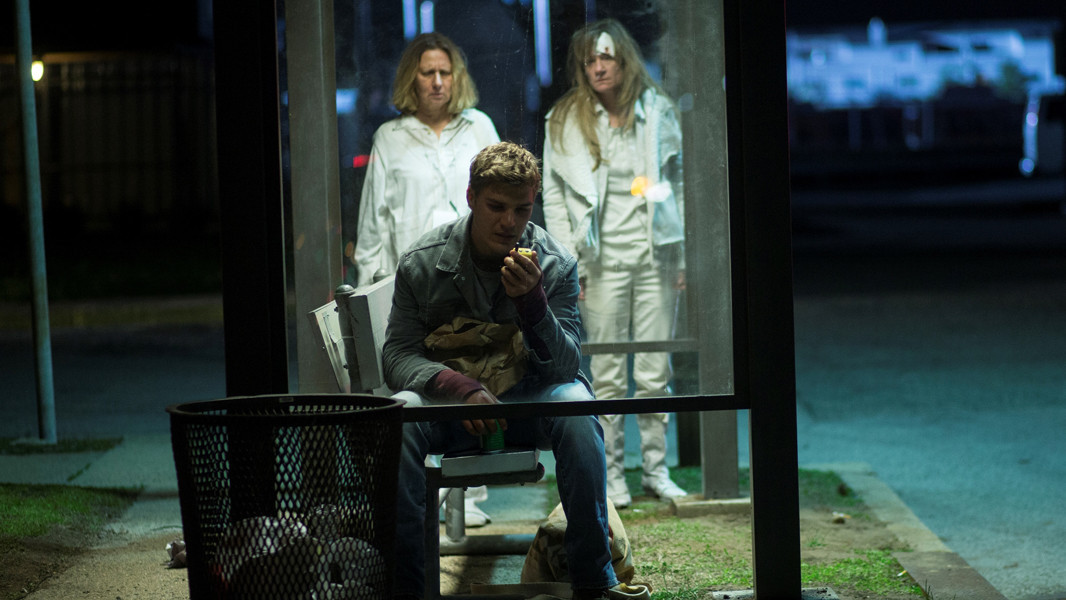
Tommy thinks about running away, leaving Christine on her own. While he waits for the bus home, there is a random visit from two GR members who hand him a leaflet that says: “Everything that matters about you is inside.” He opens the leaflet and stares at a white page. That scene is raw and well-played, but it ends in a technically unclean way: Tommy sees the bus pull up, but wishes that Wayne would call for instructions. The phone rings, and it’s a taped ad, asking if you have lost someone. It’s unclear if that is from the GR or maybe even the insurance company Nora Durst works for. Shame, because it’s such a tense moment. I felt for Tommy, which is a first, but I also wanted to know who was behind the ad.
zap-the-leftovers-season-1-photos-20140710-025

Tommy returns to Christine, shoeless and with a bull’s eye on his forehead. It’s weird enough that he seems to start his own cult, but it’s superweird that he makes an underage pregnant girl walk barefoot through the snow. The next scene with them should be a punch in the stomach, but it’s merely puzzling and slightly eerie: The bus that Tommy and Christine are on jolts to a halt because a blue shipping container is blocking the road, its doors burst open, and shrouded human bodies scattered all over the street. It’s here that Christine walks among the dead who are all in white. I should have felt jolted by that scene because it’s the first hint at where some of the disappeared might have disappeared to: They are dead, but at least their mortal coils are still around and can be examined, buried, and said goodbye to. Instead, that scene felt like put there for lack of anything else to do with the storyline. It was out of rhythm with anything else in this episode and lacked any serious build-up.

Jill Garvey is a suspect. Christmas prank from the troubled teenage fraction – why not? When her dad flat out asks her if she took the doll, we get the impression that she is innocent. We even pity her a little later. The scene starts when Garvey comes home and finds Laurie and Meg on his front porch. I guessed immediately why Laurie was there – Kevin must have thought this was some attempt at smoothing things over. Poor fool. Megan reads Laurie’s letter, and you immediately know she is asking for a divorce. Jill looks and listens until they see her. That scene is well-played, but it’s so darned hackneyed. A divorce? Is that supposed the emotional twist of the episode? Didn’t work for me. Its a weak plot-point, and although Amy Brenneman’s face is a marvel, she cannot save that scene. It gets worse: Jill gives Mom her Christmas present – a zippo lighter. It’s so utterly forseeable: divorce, pregnancy, a zippo lighter. Even the scene where Laurie retrieves the lighter from a storm drain is so unimaginative is deeply mediocre afternoon drama TV.

baby-belt-648x336

Turns out Jill stole the baby, and you probably guessed that as well. That she refuses to give it a mock sea burial does not make her the smartest teenagers, just the least silly. Jill, please smarten up. It’s okay to have Aimee as a goofy friend, but if you are dumb enough to make the twins deliver the baby to your doorstep when your dad is still home, you also need smarter friends.

Ah, almost forgot the dance. Garvey can finally present the found-again baby to the community, if only to luke-warm applause. Out in the hallway, he meets Nora Durst taking a break from dancing. It’s an intriguing scene between two strong characters who haven’t met before. Nora somehow feels compelled to tell Garvey that her husband cheated on her. Garvey retaliates by admitting that he cheated on his wife. In-between the need for confession and the subconscious flirtation, there is something happening here, but these two are not yet sure what to do with their mutual frankness.

vlcsnap-2014-07-21-15h19m30s49

Outside the town hall, the GR line up on the edge of the town hall grounds so as not to trespass. Garvey has some of them arrested anyway, but when he sees Patti’s smirk again, he realises that Laurie and a lot of the other GR are not even here, so the real stuff is happening elsewhere: They break into people’s homes and take all the photographs they can find, leaving behind empty frames and fridge magnets. Breaking and entering is bad enough, but they steal people’s memories, their keepsakes, their mementos. The memory of the disappeared among them will fade. That, to my mind, is unforgivable. Talk about Patti being cruel.

This episode could have ended well at least for Garvey, but he finds Father Jamison at the nativity with a spare baby Jesus, so on the way home, Garvey throws the doll out of the car window. That’s symptomatic for a lot of what happened in this episode: no-one is really at a new point of the storyline, and even the scenes themselves weren’t interesting. With the exception of the Garvey-Durst flirt, evey supposed highlight lacked impact. Shoddy writing, bad editing, no pace, no rhythm, no build-up, no payoff. Next episode can only get better.

The Leftovers, S1E3 – Two Boats and a Helicopter

First of all, I thank my fellow blogger and altogether excellent friend who explained this episode’s title to me. This title and the one from last episode remind me of Lost with its polar bears and planes and boats and other means of transportation, and I am sure a helicopter is in there somewhere. It’s my own personal joke that some of the disappeared have boarded an Oceanic flight and have crash-landed on a strange island. Which is not a complete coincidence, because Lost as well as this series are master-minded by Damon Lindelof. Lost was co-created by him, whereas Leftovers has its origins in Tom Perrotta’s book of the same name.

the-leftovers-matt-jamison

Perrotta is also the novelist behind Little Children and Election, so he might know how to combine the personal with the political, two aspects of existence that keep on crashing into each other in The Leftovers. (This is a good place to tell you that I haven’t read Perrotta’s novel and will only talk about the TV series episode for episode. I don’t know more than you. There are spoilers, but fewer than in other blogs.)

Fans of Christopher Eccleston have reason to rejoice, because this episode is mainly about his character Matt Jamison. We’ve already seen him handing out leaflets at Heroes Day, and he and Nora Durst seem to be friends.

My impression that he is a man of the cloth are confirmed in this episode. He is a dedicated Episcopalian priest, his wife Mary got severely hurt in the car crash from the pilot episode and is now in a waking coma. The pews in his church are far from full. His take on the disappearance is that it was not a rapture: some of the disappeared were bad people, and he feels he must distinguish the sinners from the good people by printing leaflets about the crimes of the former, and people need to know. Some of them feel compelled to punch him, and some will. Observe the pit boss at the casino – he has Matt’s whole appearance figured out in two seconds.

leftoversjamisonflyer

Matt is broke personally, and his church is threatened with foreclosure. To him, that might be the same thing. Nora Durst is willing to help him on condition that he stop printing his leaflets. He replies by telling her that her husband Doug had an affair. Some people are better off not knowing everything about their loved ones, but there you go. Nora seems… relieved.

Matt lies down to sleep beside his unresponsive wife when he has an idea from above how to get money to save his church. He drives to Kevin Garvey’s house, where Garvey Sr. has buried a jar some time ago with a wad of money for Matt (which hints at another, older story). It’s interesting that he sees Laurie sitting on a swing in the backyard of the place she once called home; apparently she’s there for old times’ sake, but asks Matt to not tell anyone. That might work because Matt is not supposed to be there either. He takes the cash to the casino, where he keeps winning. I could go on about the plot, but that’s a thing that I will leave to the viewer to discover. Let me just say that it is a terrible thing to see a man’s dedication turn into hate.

leftoversintro

If I remember correctly, Lost often dedicated one whole episode to one of the main characters. This third episode works the same. I have to say I quite like it, if only because I don’t have to remember at which point we’ve left this or that character. There are a few characters who can carry the series on their own, and I hope we get to see a whole episode about Nora Durst or about Laurie Garvey. My guess is that there will be a point at which we get to know more about what happened on that fateful October 14 – a metaphorical hatch buried in the ground, if you like. But not yet. Let the characters evolve. For now, following Father Jamison on his odyssey has been the series’ highlight. I’d like more of that, please.

The Leftovers, S1E2 – Penguin One, Us Zero

Welcome to episode two of The Leftovers. We know now that the Amy Brenneman character is Laurie Garvey, a member of the Guilty Remnants and, more importantly, Kevin’s wife. To Kevin, that’s another form of loss, hardly better than a disappearance. And we also know that Meg Abbott has joined the Guilty Remnants, at least provisionally.

s1e2lauriegarvey

An organisation called AFFEC has some inside skinny on Wayne, and our worst fears are confirmed: he has lost a kid, has recruited his mainly young followers in shopping malls and on campuses and claims to be able to hug the pain out of people, but needs to recharge his batteries by using teenage girls of preferably Asian descent. What a bastard. He is wanted for statutory rape in another state. No wonder that the AFFEC raids Wayne’s retreat by shooting on sight. It’s a bloodbath, although Wayne, Tom Garvey and his latest victim Christine are able to escape. I don’t think the AFFEC are a governmental organisation, so who are they? A special force to deal with the paranoid aftermath of October 14?

s1e2tommyandchristine

We get to see the intro to the series, which looks like a modern version of Michelangelo’s Last Judgment. That intro gives the whole disappearance issue a religious streak which, for some of the characters, is precisely wrong, but at least the segment looks haunting, if only because of the slighty weird nudity.

Kevin Garvey might see people who aren’t really there and ask stray deer if they broke into his home, so it’s hardly surprising that we see him on a shrink’s sofa. That shrink is not really worth his money, so Garvey does not tell him about his latest dream: he is woken in his bed by a half-naked Aimee, his daughter’s best friend, who leads him outside into the wintry woods, where the dog-shooter has upgraded his game and now shoots at little children. Then Garvey discovers that his feet are on fire. He wakes. Captain, you have more problems than you might realize. Get a new shrink. (There is also a toy penguin in the shrink’s practice, but that doesn’t fully explain the episode’s title. Maybe it means that rage wins every time against any other feeling.)

We also learn more about Nora Durst. Jill and Aimee discover that she has a gun in her purse and uses her sad popularity to get free coffee. The two teens follow Nora to a house where she is ringing the bell. She works for an insurance company and has to conduct interviews on camera so that the leftover people qualify for “departure benefit”. There is an abyss of pain in that seemingly simple scene where Nora is interviewing that elderly couple whose son has disappeared. Nora (Carrie Coon) is intriguing: she could have left Mapleton, but is still around, and even conducts interviews that must bring back the pain of her own family’s disappearance. Why is she still doing this? I want to know more.

nora-durst-1024
This episode is full of surprises. The first surprise is that we get to see Kevin Garvey Sr., former police captain until his meltdown and now an inmate of the psychiatric ward, played by Scott Glenn. He insists he is sane, but hears a voice from someone who isn’t there, telling his son that help is on the way. I’m sure Junior will keep that in mind. Another surprise is that the Mayor (Amanda Warren) is his girlfriend. The surprise is not that she is much younger than he is, but that the Mayor still visits the ward so she can see her boyfriend, the former police captain. You would think that a political high-flyer would choose her partner more carefully, if only for PR reasons, but no. That Mayor Lucy Warburton doesn’t care if anyone sees does make her rather more sympathetic in my eyes.

Next surprise: The dog-shooter’s car turns up in Garvey’s driveway. Then the dog-shooter turns up on Garvey’s doorstep with a six-pack, wanting to be Garvey’s friend and stating that they are doing God’s work. Garvey sends him away, but is relieved when he realises that Jill can see the shooter, too. You realize life is brittle when your sanity depends on the existence of two bagels.

s1e2scottglenn

I might have lost count of all the surprises, but there are lot of them. Another good episode, but I am expecting somewhat more. Three moments that stand out: Tom refuses to be hugged by Wayne who has just killed, kissed and licked a guy (in that order) who looks like his former bodyguard, and Wayne’s reply that Tom is “all suffering and no salvation.” Did Wayne shoot him? Garvey almost slips on the false teeth of his neighbour’s missing brother, and I surprised myself by thinking that it is somehow very touching that people disappear, but may leave their false teeth behind. And the Mayor tells Garvey Jr. that she never should have told him “to watch the fucking Wire” when she sees his elaborate info-boards about the Guilty Remnants. Shieeeet – HBO, I even know what y’all are talking ’bout.

The Leftovers, S1E1 – Pilot

One fine October day, two percent of the world’s population disappear. There are no warnings, no explanations. One moment, people go about their daily business, and the next second, beds, chairs and cradles are suddenly empty, orphaned shopping trollies trundle downhill in the parking lot, and driverless cars cut into oncoming traffic. This is the starting point of HBO’s new series The Leftovers. Everything else follows from there.

justin-theroux-leftovers
Three years later, no-one is the wiser, but society has changed profoundly. Everybody is looking for answers: politicians instrumentalize the disappearances, cults have sprung up, scientists are bewildered. Was it an act of God? If so, what did God intend? Can we know what that intention is? Some people try to rationalize the event by repeating that two percent are not that much, at least compared to an epidemic, and while this is mathematically true, it is still almost a lie. People are missing. They are gone. Where the hell are they? Fuck math. The numbers aren’t the point – not knowing is.

Ironically, we see life now through the eyes of the Garvey family from Mapleton, who haven’t lost anyone, except maybe each other. We meet Kevin Garvey, captain of the local police force, played by Justin Theroux, an actor who is really good at playing unstable. The police have their work cut out for them: the Mayor has declared that the third anniversary of the disappearance is called Heroes Day, with a meeting in the town park and the unveiling of a statue, but some people are against that meeting because some of the disappeared were said to be idiots, not heroes. Garvey is also against the meeting because he can foresee clashes between townsfolk who want to mourn their losses, and the cult of the Guilty Remnants.

giphy
The GR are a piece of work. They dress in white, never speak and constantly smoke as a proclamation of their faith, which seems to consist of feeling guilty and humble. The picture frames at their headquarters are eerily empty. Their only activity seems to be silently standing in your driveway, smoking, as a means of recruiting you. In this pilot episode, they are trying to get at Meg Abbott (Liv Tyler), without much initial success.
The storyline of the daughter, Jill Garvey, is not exactly a disappointment, but she does the usual teenage stuff: staying out too long and going slightly too far with the wrong boys. Tom Garvey, on the other hand, is trapped as the left hand of a slick, violent cult leader called Wayne (Paterson Joseph). This is an intriguing storyline. Wayne has a reputation of being able to “take your pain away,” whatever that means. We have yet to see how he does that, but even an out-of-state Congressman comes to see him and feels unburdened afterwards. Tom Garvey starts out as the driver for Wayne’s, erm, customers, but gets, erm, promoted to being Christine’s bodyguard because she is very important to Wayne. Christine is a 13-year-old teenager. Wayne is a creep, and I don’t care what his method is, he is a phoney, and nothing healthy can come from him. The fact that Christine loves him makes him even creepier.

The-Leftovers-season-1-episode-2-annie-and-wayne
I could criticize the series for introducing not just one, but two cults, but at least they differ vastly from each other. The GR are essentially humble and repentant, while Wayne is a rapist and abuser. Both seem to have their origins in October 14.

These are trying, painful times. Watch how Nora Durst is holding her speech on Heroes Day. She has lost her husband and her two kids. That’s 75 percent – don’t even think about talking to her about how two percent are almost nothing. And then the GR interrupt Heroes Day – they can be outspoken if they want. There is a bloody scuffle, and the GR lose because they seem to renounce violence. Somewhere in the throng, there is Christopher Eccleston telling people that this wasn’t a rapture, and distributing leaflets about a woman who deserved to disappear because she beat her kids. Is he talking about someone we already know? There are many open questions, but this is a pilot, and so the answers must wait.
I am impressed with the pilot. I am mainly cast-driven, and there are a lot of names in this series that are on my wish list: Justin Theroux, Amy Brenneman (more of her next time), Ann Dowd, Paterson Joseph. One other plus is the list of celebrity disappearances on the TV in the pub where Garvey drinks his beer. Who would want to live in a world without Bonnie Raitt? How am I ever going to listen to Nick of Time without thinking she has left this world? And I like that bartender – he is the only one who is still able to quip about the disappearance.
There are two weak spots in these 72 minutes: Meg Abbott is mainly just sad without knowing why, and I really need something more here than just Liv Tyler looking sad. The second is Jill Garvey’s storyline, which, at the moment, is not much more than generic teenage drama.

hbo-warner-bros
The pilot ends with Garvey changing his mind. I like the roughness of the scene, and there is the underlying thought that just when you think you are trying to protect and to serve one way, you might just as well do the opposite and still do your job. And protect you must, because the opposite is unthinkable to you. The mourners on Heroes Day, the GR, everyone who has lost anyone has some kind of point, according to you. How do you stay just and neutral? How don’t you let your personal worries get in the way of the law, or in the way of justice? Here, in Mapleton, as anywhere else, protection or justice is hard to come by, and sometimes both, or all, sides need protection. Another homepage has called this series post-apocalyptic. That’s true in a way – it’s just that you can’t see the devastation. There are no smouldering ruins, no conspirators, no trials, no nuclear fallout, no peace treaty. It’s been three years, and nobody is anywhere near getting better in any way.

From Brighton to Croydon

Here’s a question for you: Do you think that movies can thrive on their limitations? I think they can. The series 24 takes place in real time – Jack Bauer is very aware of the tick-tock of the clock. The movie Buried is set entirely in a coffin. The movie Russian Ark consists of one single 99-minute shot. These limitations are technical, wilfully compressing their stories in temporal or spatial ways and also in the way they get made. It’s a risk: if you don’t like watching a man lying in a coffin for feature lenght, then you won’t like the whole movie. There is no B-story here.

locke1

Of course, there can also be dramatic limitations. The movie Compliance is about the staff of a fast-food restaurant where the shift manager gets a phone call from a cop who tells her to detain one of her employees because she might have stolen the purse of one of their patrons. The cop asks more and more of the manager, the employee keeps insisting that she is innocent. It’s basically two women in a backroom, one of them receiving orders over the phone. The movie loses all tension when the cop is made a visible character in the film.

Movies with such huis clos situations need perfect casting. Robert Redford is great in All is Lost. Jack Bauer is saving London, and it’s his ninth day. Buried is a good enough movie, but I don’t think Ryan Reynolds is the right choice for the role. Ann Dowd and Dreama Walker are fantastic in Compliance as long as the cop is only a voice over a phone.

Locke-Movie

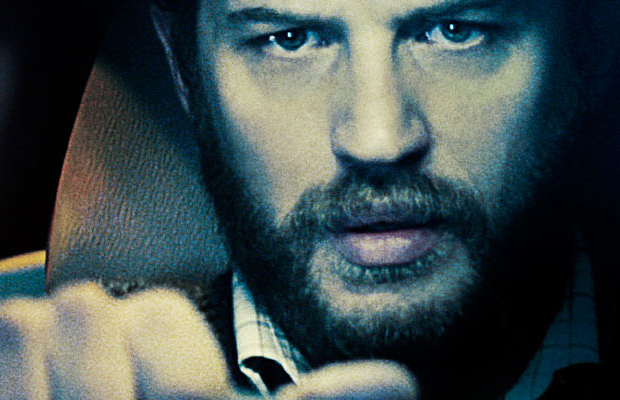
If you like Tom Hardy, then Locke might be a movie for you. It shows you a character by the name of Ivan Locke, probably named after the syndrome, because he is the only visible character you are going to see in the next 85 minutes. He is a construction manager, driving in his car from Brighton to Croydon. The only communication he has is over his carphone. On a very basic level, that is all that happens: a bloke driving and talking over the phone. It’s Tom Hardy’s acting that turns Locke into a really good movie.

Locke seems very detached at first, almost distant. He backs out of his job, takes care of the woman he got pregnant and then tells his wife about his affair. All in his car, all over the phone. It sounds pretentious, and in about 38 ways, it could all be handled the wrong way. Tom Hardy finds the right mood; I never got tired of looking at him or listening to the conversations he has. I wanted to know what he did next. Some people think that the plot is too thin and everyday. I disagree. The movie does not push your credibility, but it leaves you to think about what you would do were you behind the wheel.

locke-poster

There’s another thing Locke made me aware of. Going in, I knew that Olivia Colman would be one of the voices I was going to hear. I thought she would play Locke’s wife. I was wrong. I was also surprised by who played Katrina, Donal, and Gareth, and Eddie, and Cassidy. I only realized whose voice I had been listening to when I read their names in the end credits. Which just goes to show that we mostly rely on someone’s looks first, and their voice second.

If Locke has a flaw, it’s that it shows us slightly too many blurred traffic lights and half-lit cityscapes, but that’s a minor thing for a movie that decides to use very few resources and does a lot with it.

The Limits of Detection

This blog entry is partly a reply to Emily Nussbaum’s article Cool Story, Bro. The Shallow Deep Talk on True Detective, which appeared in the New Yorker on March 3, 2014. That artice can be found here: http://nyr.kr/1eosEyD

truedetective_010914_1600

I would really, really like to see a series that takes stuff from the film noir genre – the lies, the sex, the crimes, the shadows – and then casts two female detectives in the lead roles. It could be written and directed by women so we are spared the male gaze. That would be a new thing. If it already exists, then I don’t know about it. Maybe the second season of True Detective will bring us something like that. Jessica Chastain’s name is attached to the project, and I personally could see Michelle Forbes as the other lead.

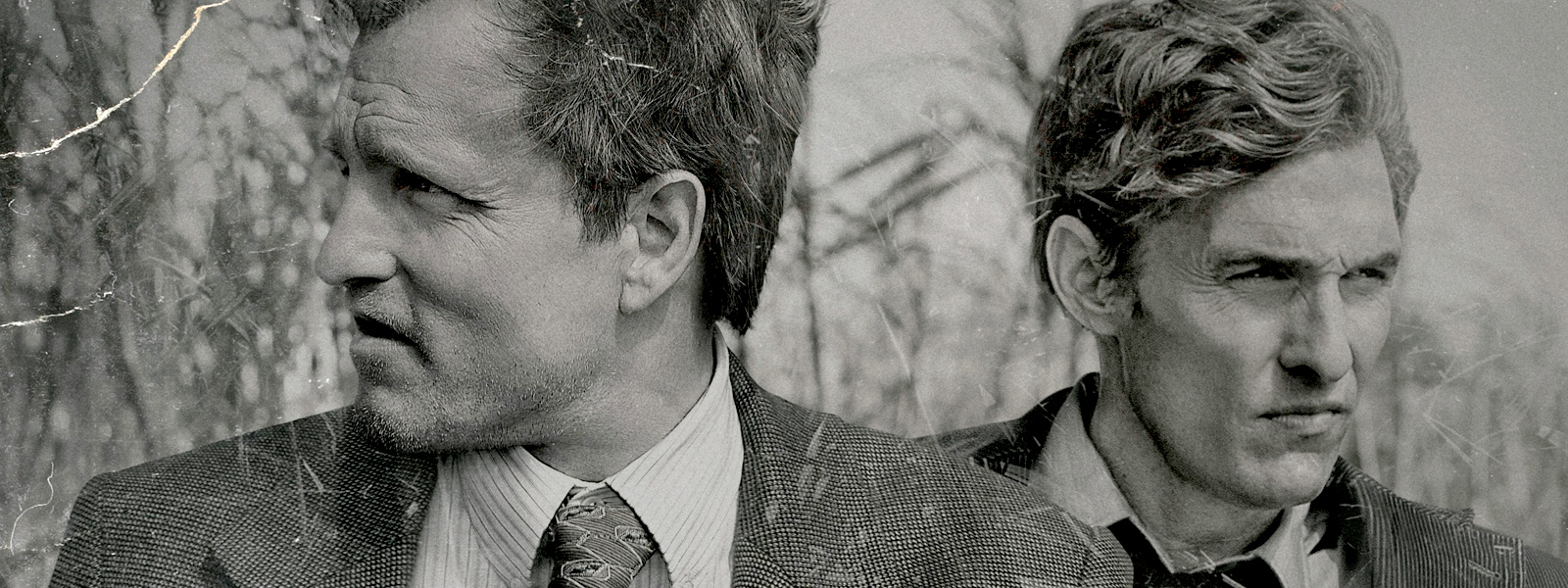
Meanwhile, we have the first season of True Detective to watch. To me, TD is not a police procedural or a whodunit, but a character study of Marty Hart (Woody Harrelson) and Rust Cohle (Matthew MacConaughey), two guys who might cross the street or the state line to avoid each other in everyday life. It took me half the series to see that it is not about the Yellow King or Carcosa, but about their relationship. If anyone keeps watching it as a whodunit, prepare for disappointment: the last episode is by far the weakest one. I restarted the series and watched all of it as the study of two very different guys. And while it won’t ever pass the Bechdel test, it worked very well. It’s certainly flawed , but there are only a couple of other series I liked better these last few months.

images

I disagree with Nussbaum’s label of the series as macho nonsense. Marty Hart has a strong tendency to rule over his family and often tells women what’s what. While that is certainly macho, he is also a horrible liar and a pathetic adulterer. He is weak, but instead of accepting his weakness, he pleads with his wife for more credibility, and as soon as he has it, he delves into that self-styled schizophrenia that lets him believe that if he lets off steam with some anonymous pussy, he can be much more caring and loving at home. For Marty, sublimation won’t work for much longer. His wife sees through him every time. To be clear: It’s the character that has macho tendencies, not the series.

Rust Cohle, on the other hand, is nowhere near a macho. He uses work as self-harm, and may be very close to do some real harm to himself. There is that nihilistic stuff he mutters forth, and these monologues are actually the highlight of the series for me. Unlike Marty, he does not have any defense mechanism. He knows exactly what is wrong with him, but he cannot climb out of his black hole, and so he blames the whole world. Those monologues are sometimes wafer-thin, but they often need to be. Can there be any grand-standing, any redeeming speech from a guy who could jump from a bridge at any moment? Rust doesn’t have to make sense because he doesn’t have to make sense to himself, either. It is to his credit that sometimes, he really does make sense, which renders his existence that much worse. With that guy, the wiring shows. As with Marty, life does not go on for much longer like this.

Rusty can come across as an arrogant asshole by the time Gilbough and Papania come around asking questions. That could be interpreted as macho, but to me, it is all self-protection. Rust the nihilist is still in there somewhere, preserved in a barrel of cheap beer.

reggieledoux

Yes, the victims in True Detective are all female. But they all die off-screen, and there is very little violence going on in real time. Compare that to The Fall, and then tell me that the latter series does not make you cringe for all the stuff done to women. (I can’t shake the impression that Helen Mirren referred to The Fall when she criticised the fact that most victims in film and TV these days are girls and women.) The Fall shows you women alive and well, then being assaulted, bound, gagged, raped, dying, dead, and disposed of. Repeatedly. And all is made well by that one phone call between that brilliant female police detective and the male killer in the very last minute of the last episode? Does Nussbaum really think that this is any consolation for those people in the audience who cannot take the immediate violence of the episodes before that last scene?

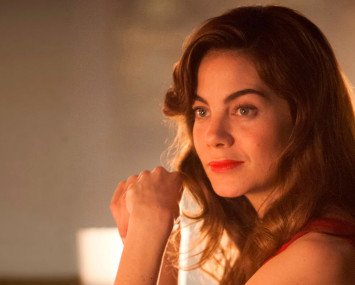
The women of True Detective are not paper-thin. It is true, however, that the most prominent woman, Maggie Hart (Michelle Monaghan) could be much better written, and given more of an active role to play. What I don’t get is that Nussbaum can say that the betrayal of Maggie sleeping with Rust has no weight. Rust is thrown off balance, while Maggie sees it as the mistake it is, but not entirely. There is something new about her afterwards, something empowering. Maybe it is not so much the sex, but the fact that she has slept with him, not him with her.

Michelle-Monaghan-True-Detective-Portable-355x285

The other women are far from thin, too. Marty’s fling Lisa (Alexandra Daddario) could bring down his marriage and his job with just two anonymous phone calls. For a long time, I thought that something like that has happened to Marty in the missing years. Lisa has legal training, so she is one of the best educated characters in the show. And those memorable scenes with Tess Harper? Ann Dowd? Come on. While the men are still trying to figure out stuff, the women already seem to know something.

What I don’t get is that Nussbaum can describe a series initially as stylish and complex and let some sort of reluctant admiration shine through, and then makes a U-turn and uses the rest of the article for telling us how it’s full of macho nonsense and that it’s really the female asses and the nice bouncy racks telling the real story. The whole season contains maybe four or five nude scenes, and brief ones at that. That may not even be average. So what is it going to be – deplorable macho nonsense or likeable lady parts? You can’t have both.

All the world’s a sound stage

Holy Motors is not a film for those looking for a strong storyline or for conventional entertainment. It’s not a film for the artistically squeamish or for those with no time to give to experimental cinema that is unconcerned with pleasing its audience and often downright absurd. It is one of the more exhilarating cinematic experiences I’ve seen in the last year or so – although it is definitely not for everyone.

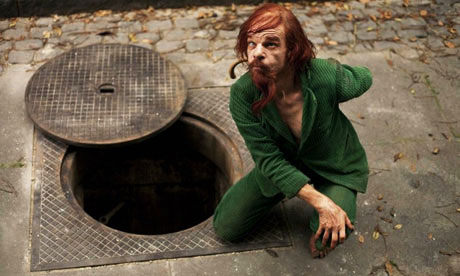
A plot summary is relatively easy to give yet beside the point to some extent, because the film’s effect mostly lies in how it does what it does. A man named Monsieur Oscar is driven from one mysterious engagement to another – nine, all in all – by his elderly female chauffeur. In the spacious back of the stretch limousine he puts on make-up and one costume after another, slipping into wildly different roles: an old, possibly Romanian beggar woman, a motion-capture actor in an altogether too fetishistic rubber suit, an anarchic sewer-dwelling troll-like creature, a scarred killer – as well as his lowlife mobster victim – but also a middle-aged father driving his daughter home and an old man dying in his bed. Even when he goes home at night, his home is another fiction entirely different from the home he left in the morning, his family (in a disconcertingly funny revelation) made up of chimpanzees. Everything is a part, it’s fictions all the way down. Is there a real Monsieur Oscar beneath the masks, the make-up and the (for the most part ostensively stylised) scenes he plays? Does he even know himself? (The ambiguity of that question was unintended, but it is quite fitting.)

Holy Motors

It’s not only the protagonist’s ontological state that is questioned; only one scene makes explicit that the person Monsieur Oscar interacts with is also an actor (possibly with her own stretch limo and chauffeur, unless these are reserved for the more seasoned actors), but the strangeness of the different scenes and the reactions of the people whose lives cross with his at least make us wonder whether most if not all the people in the universe of Holy Motors are simply moving from one acting engagement to the next. Now you’re a photo model. Now you’re a receptionist. Now you’re a lover. Now you’re a mourner. Now you’re dead (your gravestone linking to your personal website in one of the film’s offbeat jokes).

The film has been interpreted as being about cinema, although its director Leos Carax has denied this interpretation. More likely, at least to my mind, it is about how our lives are made up of roles and how in many of them we have precious little agency of our own. We put on our costumes, our masks, and we act what we think is required of the part. Not particularly new or original, I grant – but then, as I mentioned earlier, Holy Motors works largely because of its verve and energy, the conviction with which it and its main star Denis Lavant throw themselves into the different episodes. An art house film this is, obviously, but not the po-faced or even the self-consciously, needily quirky kind of film that sometimes feels as generic and by-the-numbers as the latest Bayfest or Snyderama. Holy Motors‘ energy is more anarchic, at times downright punk, though it is not in your face in every single scene.

In one sequence, the film indeed aims for something more poignant. Its themes of alienation and loss of identity (if indeed there ever was an identity to lose) may already hint as such poignancy, but it comes to the fore when Monsieur Oscar comes upon another stretch limo, finding in its back a former lover called Eva, played by Kylie Minogue. The two, having half an hour between engagements, talk about the twenty years they have to catch up on, and Eva sings a sad song about the people they once were before she sends Monsieur Oscar away. As he exits the building where they talked, he sees that Eva apparently has committed suicide by throwing herself off the roof. The sequence and especially Minogue’s song is superficially affecting, but it suffers from the films ontological twists and turns: we’ve seen the protagonist get stabbed and (apparently) bleed out, yet character death only meant that it was time for the next role. Why shouldn’t Eva get up, brush off the dust and hop into her limo the moment we’re not watching any more? What makes one death more real than another – and if death isn’t real for these actors, what is the point of the sequence and its underlying sadness? Holy Motors seems to come down heavily on the side of nothing being real, everything being an act, but then it can’t really have its cake and eat it.

Except it could. On stage more often than on the screen, I’ve seen performances that held the brittle balance between emotional authenticity and obvious artifice, where a character’s death mattered even while you are fully aware of the actor living and breathing. We are capable of buying into a fiction with our hearts and minds while knowing it’s a fiction. Holy Motors could have done this, and as a result the Kylie Minogue sequence would have gained a resonance that is hinted at but finally remains out of the film’s reach. However, as a result the film might have lost some of its anarchic energy: part of what makes it work is that it doesn’t take itself all that seriously, that it revels in its own ridiculousness. As it is, Monsieur Oscar’s meeting with Eva is something of an irritating foreign body in the film: it is streaked with sadness, yet Holy Motors would seem to render this sadness a non sequitur. (In fact, other than the actors’ words, we have little evidence that this is not another one of Monsieur Oscar’s engagements, although one that adds an even more pronounced metafictional turn of the screw.)

Regardless of this, which others seeing the film might respond to altogether differently , Holy Motors is well worth checking out. It is inventive, evocative, often funny (if you like your humour absurd), and it may just have the most rousing entr’acte in all of cinema. And that’s not even mentioning the gratuitously grotesque prosthetic hard-on, which is a more believable special effect than anything encountered in Sharknado.

Love, loss and Lauren Bacall

The beginning of Jonathan Glazer’s Birth is odd. There is a voice-over from a man, probably a scientific lecturer, who says he doesn’t believe in reincarnation. Then he goes for a run through Central Park during dusk. It’s winter. He stops, falls down, and dies. Then there’s a baby being born.

kidmanBirth

Ten years later, his widow Anna (Nicole Kidman) has an engagement party, because she finally said yes to Joseph (Danny Houston). They live next to Central Park, in a very expensive apartment. There is Anna’s mother, played by Lauren Bacall, and Anna’s pregnant sister Laura and her husband Bob (Alison Elliot and Arliss Howard). There are family friends, among them Clara and Clifford (Anne Heche and Peter Stormare).

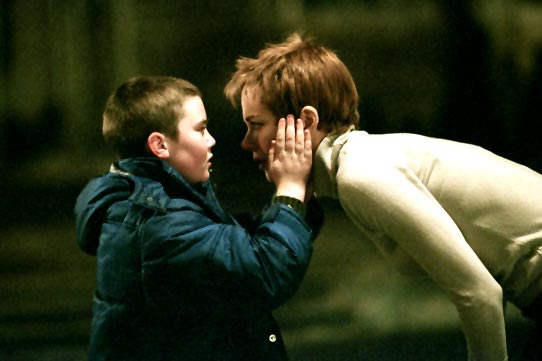
And then there is that boy, played by Cameron Bright. He’s not cute, but there is an earnestness about him. He first follows Clara into the park and then turns up at the party, claiming that he is Anna’s dead husband Sean, and that he doesn’t want her to marry Joseph.

The party treats him as a joke, and Anna wants to send him away, but finds that she cannot bring herself to do that. The boy is adamant, unflinching, and although Anna tells him not to lie, she cannot forget his words, and the way he looks at her. Then he faints, and she sees it. There is a scene at the opera where the camera looks at Kidman’s face for several minutes, without interruption. I’m not sure about what happens to Anna, but some kind of realization seems to take place.

2004_birth_013

It doesn’t matter that part of Anna is convinced that Sean’s story is bogus. It only matters that what that boy tells her fills her longing to see Sean again. That the person making that impossible dream come true is a ten-year old is a small obstacle towards happiness that seemed out of reach for good.

The thing is that the boy is really called Sean. His parents tell him to stop hassling that nice lady. He tells his mother that he is no longer her stupid son. There is no telling what the heck is going on here. The movie treats the boy as a boy, and takes him seriously. The adults don’t panic, but try to cope with an impossible situation as best they can. Anna’s brother-in-law Bob questions the boy. Sean gives surprisingly intimate answers, and he knows stuff only Anna’s husband would know. He isn’t scary or spooky or a threat – he just insists that Anna is his wife. There are no guns, no blood, and no madness tucked away in a corner of someone’s mind.

cameron-bright

The movie consists of muted colors, lots of black and brown and grey. It tries very hard to feel black and white. The apartment and Nicole Kidman’s hairstyle bring to mind Rosemary’s Baby. Birth is a horror film, too, but it is scary because it treats its theme seriously. In movies, when we ask ourselves what the hell is going on, the explanation at the end is almost always a disappointment. The better the build-up, the bigger the jerk we get when the third act plants us firmly back on the solid ground of reality. The explanation is either too much, or not enough. Not here. There is a reason for all this, and it contains some sort of emotional logic.

Apparently, Jonathan Glazer is unable to make a boring film. He did Sexy Beast in 2000, then this one in 2004, and Under the Skin last year. He is the director of many TV ads and music videos. Everything he does is different from anything else. Watch his Levi’s ad featuring Nicholas Duvauchelle, using that famous Sarabande by Händel.

Anna desperately looks for ways to convince herself that this is not her dead husband. People tell her so, but to no avail. She is afraid that she might fall in love again. She cannot win: if the boy is her dead husband, she is still attached to him. If he isn’t, then how crushing can it be to lose your husband twice?

The road to hell is a circular track

Joon-ho Bong’s Snowpiercer is about a very long and seemingly unstoppable train running all over a post-apocalyptic snowscape. The movie based on the comic Transperceneige by Jacques Lob, Benjamin Legrand and Jean-Marc Rochette. Its passengers are the last survivers on Earth, and they must live in their own microcosmic class system inside that rattling ark. The wealthy ones live comfortably near the front, the lower classes live in squalor and poverty in the tail end. They only meet when the wealthy ones come and take another kid with them. Nobody knows where those kids end up.

Image

There are schools, prisons, food processors and water purifying systems on board. The best scenes of the movie contain Mason, played by Tilda Swinton, who speaks in the name of the creator of the train, a man called Wilford, who may or may not be along for the ride. Snowpiercer races on a gigantic circular track, so is a driver really necessary?

Mason declares the train’s engine to be sacred, and is absolutely clear about who belongs where. Her twisted explanations are the highlight of the movie. Her appearance reminded me of Maggie Thatcher, which cannot be a coincidence. There is a malignant glee in Swinton’s whole performance that saves a lot of scenes.

Image

There is unrest, led by Curtis (Chris Evans) and organized by an old man called Gilliam (John Hurt) who seems to know a lot about the front end. With them are a security expert (Kang-ho Song), who helped design the doors of the train, and his daughter (Ah-sung Ko). There are also a mother and a father of two of the missing kids (Octavia Spencer and Ewen Bremner), and a hothead named Edgar (Jamie Bell). They all fight for a just distribution of food, water and space and want to make their way to the front of the train so that all passengers can be made equal.

Fights ensue, as I guess they must, only they go on for too long and are too violent. The lower classes get decimated more and more, and it is only for a few chosen ones to reach the sacred engine. What happens there is not for me to reveal, but although the dialogue about the necessity of the class system is cruelly logical, that scene could have been handled a lot better.

Snowpiercer never quite finds its own rhythm. There should have been a breathtaking establishing shot of the train in its entirety, since that is what the movie is all about. Instead, there is a first shot of the tail end, then we are inside again. That’s a missed chance to wow us with the enormity of the vehicle, all the more because the few glimpses of the train we get throughout the movie are really convincing CGI. I have a suspicion that the movie got cut and re-cut until the pacing got screwed up.

Image

There are glimpses of greatness, though. I liked the scene where they find the showers and are able to wash properly after months, if not years. The first time they eat real food again. The moment they realize they are touched by the rays of the sun through a window, and they don’t know if the window or the natural light is the bigger miracle for them.

I especially liked that the apocalypse wasn’t anything to do with nuclear war, but was brought about by people who thought that they had the solution to global warming. They turned the environment in such a hostile place that those who tried to escape the train stand frozen in place as statues to their own stupidity and can be seen from the train as a reminder. And there is a morbidly cheerful performance by Alison Pill as the schoolteacher.

The ending is crap. It does not make much sense, and the movie cowardly abandons its characters. Instead of having a wide open ending, it ends with the beginning of another movie.

Vows and confessions

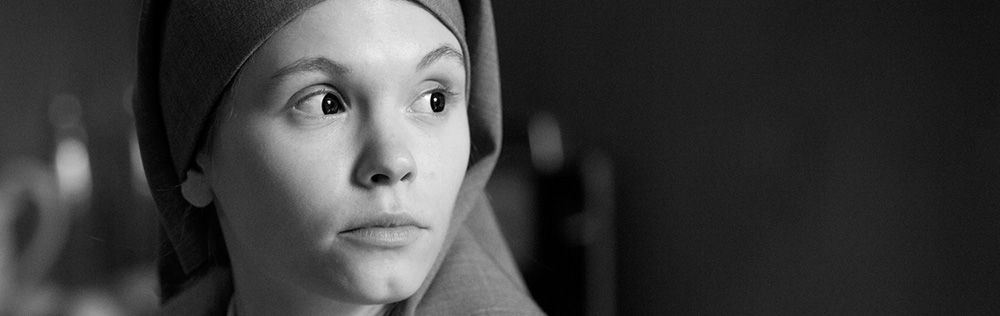
Pawel Pawlikowski’s Ida is one of the quietest, subtlest movies around. Anna, its heroine, looks out of a pair of the deepest, darkest eyes I have seen on screen lately. She is about to take her vows as a nun when the Mother Superior tells her that she should say goodbye to her relatives. Anna replies that she is an orphan, brought up in the convent. She learns that there is an aunt who knows of her existence. Anna goes and visits her.

Image

The movie takes most of its strength from the relationship between those two women. Anna wears her grey habit like armor. Aunt Wanda is a hard-drinking, chain-smoking Communist judge who doesn’t hide her one-night stands from Anna. It’s hard to imagine anyone more different from her niece. Wanda tells Anna that her real name is Ida and that she is Jewish. Anna/Ida just looks at her aunt with those eyes of hers. There is no telling what she is thinking. Agata Trzebuchowska, who plays Ida, is a newcomer, while Agata Kulesza must be one of Poland’s busiest actresses. Here, they are a match.

They go on a road trip to find the place where Ida’s parents and Wanda’s sister lived before the war. The scenes that follow are intriguing. They find the place, a farm. Other people live there now. This movie tells us in simple black and white pictures what has happened, to whom, and why. The movie doesn’t gasp, but it doesn’t flinch either. There are no flashbacks, but it’s clear all the same. There is unexpected humor and unexpected sadness in those scenes, both of which are somehow what is called for.

Image

There is a lot of tension in the fact that a Jewish female judge dished out death sentences in the name of a Communist government, so much so that she got the nickname Red Wanda. She has lived with her secret all her life, whereas for Ida, it’s a revelation. She must deal with the fact that she has a very different religious background. The question is what she will do with that information. I wish the movie would have told me more about Ida: How does she feel about it? Is becoming a bride of God still her lot? Is it a choice she makes, and is it an easy one at that? Is she able to forgive her aunt for what she has done? In a way, Ida should be forgiving because of her vocation.

Story-wise, these are two interesting characters in that they both lead impossible lives. I wanted some more answers, but instead, Ida embarks on a short affair with a saxophone player that is clearly not as interesting as her relationship with Wanda. This part of the movie feels like a cop-out.

At the same time, the movie is beautifully shot. It features the rare 1.37:1 format, turning a rectangular screen into more of a square one. It is shot entirely in black and white, and strictly chronological. Things happen at the edge of the frame, or in a corner. Some shots depend on mood, not plot. The lack of color could have turned it into a leaden exercise in sadness, but it’s Ida’s face and Wanda’s stubbornness that make it all worthwhile. I would have liked to know more of both of them.