Join us every week for a trip into the weird and wonderful world of trailers. Whether it’s the first teaser for the latest instalment in your favourite franchise, an obscure preview for a strange indie darling, whether it’s good, bad, ugly or just plain weird – your favourite pop culture baristas are there to tell you what they think.
This week on Six Damn Fine Degrees, Alan reminisced on Memories of Murder– though since we featured the trailer not too long ago, here’s something else instead: Tony Zhao’s “Every Frame a Painting” video essay on Bong Joon-ho’s masterpiece.
Welcome to Six Damn Fine Degrees. These instalments will be inspired by the idea of six degrees of separation in the loosest sense. The only rule: it connects – in some way – to the previous instalment. So come join us on our weekly foray into interconnectedness.
Welcome to Six Damn Fine Degrees. These instalments will be inspired by the idea of six degrees of separation in the loosest sense. The only rule: it connects – in some way – to the previous instalment. So come join us on our weekly foray into interconnectedness.
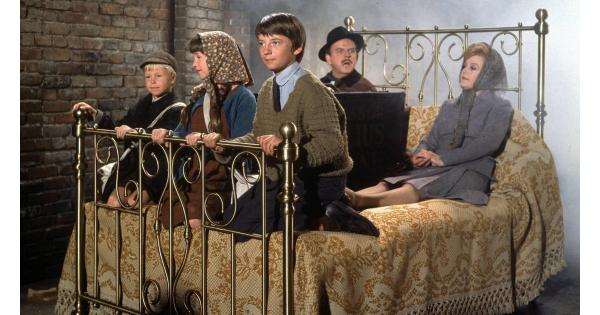
When looking at the vast filmography of family Disney films there is undoubtedly a top tier. The likes of Mary Poppins, Frozen or Cinderella. These are the iconic movies that helped define Disney as a brand globally. The songs have entered the popular culture, while images from these films have been marketed so aggressively they probably have more widespread recognition that most trademarks.
Much as with Pringles, the problem with musicals is this: once you’ve enjoyed one or two, you can’t just stop. Earlier this month, Sam and Matt gave two movie musicals a second chance: A Chorus Line and Dancer in the Dark. While they didn’t necessarily come away from this with a renewed appreciation of those films, it felt to them that their conversation ended way too soon – so they went back to the well to talk about their formative experiences with the genre. Which musicals did they watch growing up? How did they come to appreciate the genre? How have they experienced the difference between musicals on screen and on stage? From Jesus Christ Superstar to Aladdin, from Fiddler on the Roof to Cabaret and Victor/Victoria: how did Matt and Sam learn to stop worrying and love a good musical?
For a while, I’d catch all new Pixar releases at the cinema. I missed out on Toy Story, their first feature film, when it originally came out, but I remember enjoying A Bug’s Life and Toy Story 2, and I loved The Incredibles when it came out (though I have to confess that I never enjoyed Finding Nemo as much as most people did). At the time these were something we’d not seen before, not in this quality. Obviously Pixar’s artistry was amazing, in a genre that, when the first few Pixar films were released, was still fairly new – and with each film, the company would introduce new innovations. The fur in Monsters, Inc. (apparently there were over two million hairs on Sulley that needed to be animated), water and the way it was lit in Finding Nemo, the way musculature behaved on human beings in The Incredibles: Pixar were technological innovators as much as they were artists, but above all, they were storytellers. Their movies were technological marvels from the first, but most people aren’t wowed by textures or shaders alone: if these aren’t used to tell interesting, engaging stories, the films that use them won’t be remembered. I mean, how many people still talk about Final Fantasy: The Spirits Within?
Imagine a series, a spin-off, whose protagonist is a character that originated in a film more than 40 years ago. He is a fan favourite because he has a certain mystique and, let’s face it, he looks cool. Imagine that series stripping this protagonist of his mystique (and, for much of the running time, his iconic outfit) by taking away pretty much every characteristic they had. And now imagine the series dumping its protagonist halfway through in favour of another character from another series that himself was clearly inspired by the original character.
Yes, I know how that sounds. Convoluted and nonsensical barely begins to cover it. Still, that’s pretty much what happened with The Book of Boba Fett, the most recent addition to the Star Wars canon. What’s going on here? Were they playing with our expectations? Was the series supposed to be subversive? Was COVID-19 to blame for this mess?
A new year, a new slew of Marvel movies and TV series! After 2019’s grand finale Avengers: Endgame, what felt like an infinite number of new films, shows, characters and storylines were announced – and then a certain virus that shall not be named thwarted the plans of Disney. 2020 came and went without a single new MCU movie, but 2021 more than made up for this, with four films – starting with Black Widow and ending with Spider-Man: No Way Home – and various Disney+ series continuing the ongoing adventures of the Marvel heroes and heroines. Join Alan and Matt as they talk about the franchise and their response to it. What were their expectations after the big snap-and-back climax of Infinity War and Endgame? How did they bridge the one-year gap caused by the pandemic? Were they excited by the upcoming Marvel avalanche, or was it all getting to be too much? And how do they feel about where the franchise is now, leading into 2022?
By the way, this is a Very Special Episode of the Damn Fine Cup of Culture podcast: for the first time ever, it was recorded in front of a live studio audience with everyone on the podcast not only in the same country but the same room, talking into the same microphone! Which means that Matt’s Christmas wish did come true. How better to start 2022?
Join us every week for a trip into the weird and wonderful world of trailers. Whether it’s the first teaser for the latest installment in your favourite franchise, an obscure preview for a strange indie darling, whether it’s good, bad, ugly or just plain weird – your favourite pop culture baristas are there to tell you what they think.



 A Damn Fine Cup of Culture