Nazis. I hate these guys.

In the meantime, we’ve finished watching Band of Brothers. Since I’d avoided it at the time, thinking that it would probably be Saving Private Ryan extended over 10 hours (due to Spielberg and Hanks’ involvement), I must say that I am positively surprised and very impressed. Yes, there was some pathos and sentimentality, but these need not be bad. The series does try to give an impression of what it was like for the soldiers, and there is room for these emotions. It’s silly and not a little arrogant to condemn all instances of sentimentality in war-related films, series and books, as some European critics would seem to do.

Clearly, the winning countries would seem to be more comfortable with war nostalgia, and at its most extreme I do find it rather distasteful – and dishonest. Rhetorics of “honour”, which usually go along with war sentimentality and nostalgia, so often gets in the way of an honest, complex discussion that addresses the darker aspects of the winning side’s engagement as well.

This is one thing that Band of Brothers does really well. Especially the last episode makes it clear that, yes, there is heroism in the men who fought, but that doesn’t make them infallible good guys. You get Liebgott going off on vigilante missions, shooting the people suspected of having been involved in the running of concentration camps. You understand his anger and hatred, clearly, but even Webster (whose occasional glee at killing ze Germans has been chilling at times) can’t bring himself to go along with Liebgott’s making himself into judge, jury and executioner.

At this point, after the German army has surrendered, many of the men have become their own worst enemy. But then, throughout the series, the Germans as such haven’t really been the enemy. The soldiers on the other side of the line – the people who will kill you if you don’t kill them (and it’s the same for them) – are the enemy. The sheer randomness of artillery fire, explosions, whizzing bullets is the enemy. Bad commanding officers, bitter cold, gangrene – those are the enemies. In that respect, the series has been consistent in providing the perspective of the men fighting – a perspective curiously, at times uncomfortably unaware of the larger context.

Which is why the ninth episode, “Why we fight”, was so important and so uncomfortable. It’d be too reductive to call it “the concentration camp episode” (echoes of “They call me Concentration Camp Erhardt!”, but that might just be me). It’s the episode that addresses the Germans’ culpability, the way none of the civilians, when facing the soldiers, seem to have been Nazis or Nazi sympathiser. They all claim to be innocent bystanders. But faced with the incomprehensible horror the American soldiers find when they happen upon a work camp (not even one of the more gruesome concentration camps), it’s difficult to swallow that line of “It wasn’t us, it was the others, the bad Germans, and anyway, we’re as much victims as them!”

What made the episode, and the series, for me is how Band of Brothers very rarely makes explicit comments and judgements. It leaves that to the viewers. In the last scene of “Why we fight”, as Nixon watches the German civilians bury the decaying corpses (some of the Germans clearly physically sick, others crying – some still children, some too old to have done anything much) , he sees the proud, if not even arrogant elderly woman he’d happened upon earlier. There’s defiance in her face as she looks back at him. Does she judge him for this collective punishment? Is she telling him, “Yes, I accept our culpability. Would you do the same?” Is she simply showing him that she – and by extension, Germany – can’t be broken? Or perhaps a combination of all of these? We don’t know, Nixon doesn’t know, perhaps she doesn’t even know.

The last episode has a similar moment – not quite as strong perhaps and rather simpler in terms of good/bad/right/wrong, but still very effective. The US soldiers watch as a German general addresses his troops. The general’s demeanour is arrogant, yet what he tells his men (in German, translated by Liebgott) strikes a chord in the paratroopers: “Men, it’s been a long war, it’s been a tough war. You’ve fought bravely, proudly for your country. You’re a special group. You’ve found in one another a bond, that exists only in combat, among brothers. You’ve shared foxholes, held each other in dire moments. You’ve seen death and suffered together. I’m proud to have served with each and every one of you. You all deserve long and happy lives in peace.”

Out of context, the speech may come across as “Yeah, we know, yadda yadda, blah blah”. Within the episode, and coming at the end of ten episodes, it works – and it is interesting that it was put in the mouth of a German general, speaking to his soldiers. At first this way of melding the two sides – Allies, Axis – felt uncomfortably apolitical to me, but I’ve accepted that the series chose to represent the perspective of the fighting men, and that perspective is different from that of the history graduate looking over from a comfortable distance of fifty years.

I’m very curious about the follow-up project that HBO is working on now, covering the war in the Pacific. I remember many of the (sometimes angry) reviews of Letters from Iwo Jima, denouncing Eastwood’s inadequate relativism (see for instance the Salon.com review). But the discussion of why it’s worse to humanise the Japanese soldiers than the Germans will have to wait for another time. Otherwise we’ll still be here by tomorrow…

P.S.: I apologise for the lack of photos – there simply don’t seem to be any good pictures of the last two episodes to be found, and I didn’t have time to make screen captures. If I get around to writing a short review of Iron Man, though, there’ll be pics and videos. Yay!

Airborne, tumbling down…

I resisted watching Band of Brothers for a long time, just as I still haven’t seen Saving Private Ryan and am not planning to do so any time soon. While I acknowledge Spielberg’s skills as a director, I tend to mind those films of his that purport to be “important”, because usually he mistakes pathos for importance. (I’m excluding Schindler’s List from this, though.) Band of Brothers came out in the wake of Spielberg’s Omaha Beach Party, and I assumed that it would be more American WW2 pathos.

When we watched the first episode, I was afraid that my expectations would be proven true. The main theme of the series, without the context of the actual episodes, dripped with solemn, righteous pathos, like a particularly constipated John Williams on Fourth of July. The episode itself neither confirmed or rebutted my fears, though: it concentrated on the battalion’s training in England, so there was little space for outright heroism. The episode was interesting enough, although it was hampered a bit by casting David Schwimmer as a bullying instructor. Schwimmer did a good job, but it’s more or less impossible to look at him without thinking “Ross! From Friends! and wanting to smack him in the gob.

bandofbrothers1_396x222.jpg

It was only in the second episode, “Day of Days”, that I came to realise that my fears were unfounded. Yes, there may still be lots of soldierly pathos in the remaining eight episodes, but there was little to none of that here. It’s extremely difficult for a war movie – even for a supposed anti-war movie – not to make scenes of warfare exciting, so the implication is “War is hell… but it’s a bloody adventure, innit?” Instead, the first scenes we get of the characters involved in an actual battle is them sitting in the planes, waiting for the jump, as flak fire shoots several planes to bits. The soldiers are powerless, and whether they live or die isn’t down to their heroism but rather to sheer luck.

We were eating lunch when we started watching the episode, but both of us stopped digging into our sandwiches pretty soon as horrible, frightening, saddening things started to happen on the screen: as a plane went up in flames, and you saw little human specks on fire tumbling from the conflagration to fall to their death. The surviving soldiers’ first direct encounter with the enemy was no more heroic, as they shot a group of Germans on a horse cart from the safety of an ambush, riddling the horses as much as the enemy troops with gunfire. At this point, you got the impression, wartime reality for these men was probably not that different from that of the German soldiers: you point your gun at the guys in differently coloured uniforms and you hope that they die before you do.

This impression that even the Good Fight is a pretty crappy fight became even stronger when Sgt. Malarkey gets to talk to a prisoner of war, a German-American born in the States whose parents decided to move back to the Fatherland. Just after he stops chatting to the young man who, but for the accident of family might have been wearing the same uniform as him, all the POWs are rounded up and shot. Can’t waste time and men on protecting these prisoners.

Right now I’m impressed at the lack of “Rah, rah, Allied Forces!” pathos and very curious as to how the series will continue. After a pretty gut-wrenching second episode, will it be able to maintain this level of intensity?

And, perhaps more importantly, will I manage to remember the names of all the soldiers (looking so similar under their over-sized helmets, where you haven’t even got hair colour to go on) before we get to the end?

P.S.: Talking of distracting cameos by TV comedians – there was this little guy in one of the scenes in the first episode, and I thought, “Man, he looks just like Shaun from Shaun of the Dead… but it can’t be him, because why would they want to cast a Brit for an American?” Well, turns out that Simon Pegg is far from the only Brit playing a US soldier in Band of Brothers. Is this payback for all of those villainous Germans played by British actors?

Tell us something pretty, HBO

Phew. Remember the first and second season finales of Deadwood? Basically happy endings, complete with mercy killings and stabbed Cy Tolliver?

Don’t expect that sort of cheery capper to season 3. Expect, instead, to curse and swear at your television – standing in, of course, for the Powers that Be at HBO. For cancelling a TV series intended to run for four seasons, and a brilliant written, acted, directed, filmed TV series at that, after it’s run for three of those seasons. In a world where another HBO series about old-fashioned romanticism dressed up as postfeminism gets a big screen outing, it’s more than just a shame that we’re not likely ever to see Deadwood end as would befit the series. It’s a crime. And it makes me think that Al Swearengen should be let loose with his knife in the dreams of those HBO cocksuckers (as he might put it if he was in a good mood) to put the fear of Al into them.

Daniel Plainview, eat your black heart out

No, it’s not that Deadwood ends on an exclusively bleak, depressing note. There are lots of small moments that are beautiful, little smiles and touches that show some hope. Sol and Trixie. Richardson and Aunt Lou. Even E.B. standing on the roof of his hotel, bless his little cotton socks. But on the whole, the good (and not so good) people of Deadwood have been beaten, for the first time. They’ve been kicked in the kidneys. There has been blood, and for once, it’s less than clear whether any scrubbing will get rid of that blood.

So, until tomorrow I’ll try to get over my pissed-off-ness with the hoopleheads at HBO. Expect some lines on No Country for Old Men soon. At least that one’s got a two-time Deadwood veteran…

P.S.: Apparently, the person who was supposed to play Al Swearengen at first was one Ed O’Neill. Photo given below. No joke.

Can’t… joke… about… this

Suffer the little children

I missed Monster’s Ball when it was on at the cinema, and I never really went out of my way to see it on TV. There’s no particular reason for this – except, perhaps, that there seemed to be more talk about the fairly explicit sex scene between Halle Berry and Billy Bob Thornton than about anything else. Okay, a good sex scene can make a film better (Don’t Look Now, I’m ogling you!), but there’d better be something beyond copulatory goodness.

Marc Forster, the director of Monster’s Ball, is one of the few Swiss people who’ve made it big in Hollywood – so big in fact that he’s now doing the new James Bond movie. He seems to be comfortable in many different genres and he gets in the good actors.

Stranger than Fiction

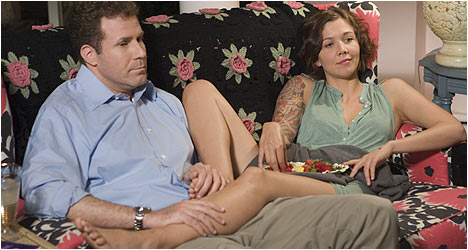
And yet. I wasn’t too keen on Stranger than Fiction, a film that desperately wanted to be more clever than it really was. True, Will Ferrell put in a fairly poignant performance, and I always enjoy watching Maggie Gyllenhaal, but all in all the movie felt like Charlie Kaufman Light, turning its metafictional veneer to the service of an essentially trite Carpe Diem story. And what was worse (at least for me): the book that the critically acclaimed author played by Emma Thompson was writing was drivel of the worst sort. It wasn’t even a parody of literary fiction – it was the sort of thing that a decidedly mediocre first-term creative writing student might cobble together, feeling awfully proud of himself.

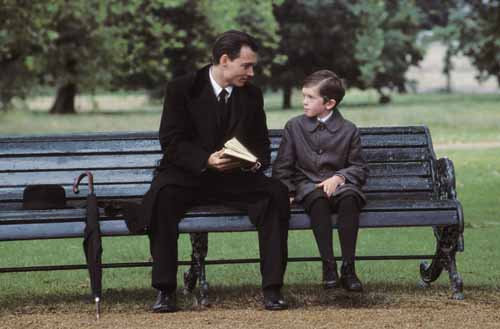
Last week we watched Finding Neverland. Again, Forster’s assembled a lovely cast of actors: Johnny Depp, Kate Winslet, Julie Christie, Dustin Hoffman. The film is well crafted, obviously. But the story and dialogues render their work disappointingly toothless. Most of the performances are adequate, but let’s face it: it doesn’t take much to get an adequate performance from these actors. It’s more difficult to get a bad performance from them. But what can they do, when their characters can all be summarised in two sentences without being reductive?

Finding Neverland

There are small joys in both films. Dustin Hoffman is understated but great fun, both as the theatre impressario and as Stranger than Fiction’s literary critic. (I just wish he’d say what is so blatantly obvious – that the book Will Ferrell’s character is in is badly written rubbish.) And Freddy Highmore (who went on to play with Johnny Depp yet again in Charlie and the Chocolate Factory) is great. Not only is his acting subtle and moving, his character is probably the only one in the film who is ambivalent, who has depth, who doesn’t fit comfortably into a well-worn cliché.

Talking of children: perhaps the strangest, sweetest sight in any Deadwood episode is that of the school children lined up behind Joanie Stubbs and Calamity Jane holding hands, walking down the thoroughfare to their new school. For a few moments, the scheming and bloodshed comes to a complete halt as the inhabitants of Deadwood come out to watch the children. I have a feeling, though, that “Amateur Night” will be the last episode of the season (and, sadly, series) that will allow for such peace and quiet. Something is going to happen, and it’s going to happen sooner rather than later. I’ve rarely seen a series that managed as well to ratch up the tension. Somehow I have the distinct impression that the title of a recent P.T. Anderson film will describe the last three episodes of the series quite accurately.

And no, I don’t mean Punch Drunk Love.

You can’t take a picture of this – it’s already gone

For all of those who thought that after weeks and months of me going on about Six Feet Under you were finally rid of wafflings about the Fisher family, I’m afraid you were popping the champagne corks too early.

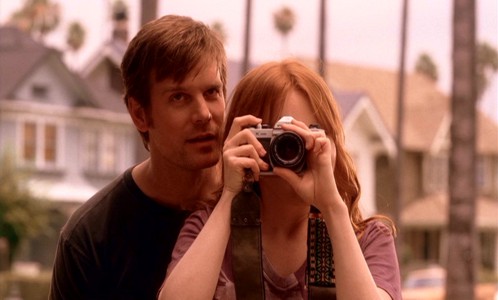
So, what brings on this bout of raising the dead? Frankly, I’m not quite sure. I’ve been in a strange mood all day, and the last few minutes of “Everyone Waits”, the final episode of Six Feet Under, kept coming to my mind. Mostly in fragments: a bit of Late Nate Jr. singing “I Just Wanna Celebrate (Another Day of Life)” against a blinding white background, a bit of Sia’s “Breathe Me”. But mostly one short scene: as Claire says farewell to her family, she takes out her camera to take a picture. As she looks at them through the viewfinder, Nate stands behind her, telling her “You can’t take a picture of this; it’s already gone.”

You can’t take a picture of this - it’s already gone.

And it’s this line that’s been running around in my head. Taken out of context – by which I mean the whole scene, the episode and indeed the entire series – it’s nothingy. It even seems trite at first, like a slightly reformulated Seize the Day-type motto. But there’s more to it. The context adds layers. Is it about Claire’s constant attempts, as an artist, to capture something; call it the truth, the spirit of the moment, or just pretentious twaddle? Is he telling her not to hold on to moments, because those moments become the past immediately, and while you’re busy trying to hold on to it, you miss out on life? Is he telling her that life is fleeting? We all could drop dead from a brain aneurysm, be shot, die in a car accident, or have our heads crushed by blue ice falling from a plane passing overhead?

Probably there’s something of all of these in Nate’s cryptic sentence, but what kept coming back to me isn’t just what he says or how he says it. It’s the fact that Claire, after Nate has said his bit, takes the photo anyway.

What is it about this moment that keeps coming back to me? On the one hand it’s the sentence itself, and if I try to reformulate what it means to me, it just becomes trite. On the other hand, it’s Claire’s defiance: yes, the moment is fleeting, yes, tomorrow we shall die, yes, sooner or later we will lose everything we have to time (there I go, getting all trite, even though I said I wouldn’t…) – but she takes the photo anyway. Against hope, against reality, against her better knowledge, she tries to hold on to the moment. A lesser series would have had her take the photo, and only then Nate tells her that what she just did was futile. So much of Six Feet Under was about defying that futility – to hold on to what we have already lost, and to honour it in everything we do in the present. It’s already gone – and personally I dread the moment we accept that and move on without looking back. I hope with all my heart to know fully well that I can’t hold on to the present moment, and nevertheless to do so.

P.S.: Next time, more HBO – and Peter Pan, by way of overrated Swiss directors. At least that’s what I’ve got planned. Yes, I actually plan these things in advance. Sad, isn’t it?

Soap gets in my eyes

I’ve admitted this before: I watch Grey’s Anatomy. And here comes an even bigger admission: no, I don’t just watch it because my girlfriend does. In fact, I like it – or rather, I used to like it. I liked the characters, especially Bailey and Christina.

Throughout the third season, though, I’ve started to find several of the characters kickable. In some cases that’s because they’re snivelling, self-righteous idiots. Which is fine, really; I don’t need everyone in the series I watch to be 100% likeable. I’d even say that series that try to make their characters too likeable will quickly become insipid.

They’re expecting me to speak those lines? And in front of other people?

What I mind, though, is how some characters have been reduced more and more to one-dimensional cardboard cutouts of their former selves. The worst offender in that respect is Izzie. She’s never been the most complex character – but within the confines of the genre of medical soap, she had some depth and even genuine tragedy.

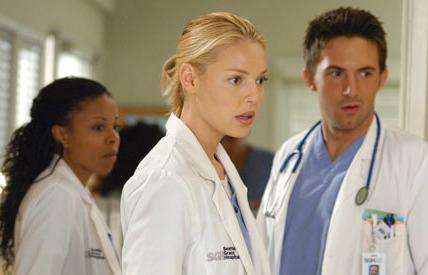
Lately, though, her character has been reduced to one thing, and one thing only: pining for George. I don’t mind her pining, but I very much mind this being her only characteristic. (And no, saving Bambi does not make her a fuller, more interesting character.) Some actors can pull off two-dimensionality well and even make it into something more interesting – Bailey isn’t a cool character to watch because her writing is so much more complex, but Chandra Wilson turns the scripts into a living, breathing human being. When her material is good, Katherine Heigl does well, but with the sheer insipidity that she’s been given throughout the last ten episodes or so Izzie is becoming more and more ridiculous and unbelievable as a character.

And I can’t believe that I’m getting worked up about a medical soap! Gotta go watch some HBO, gotta go watch some HBO…

Fangs for all the memories

Eugh. Okay, I admit, that one was quite atrocious. Still, it fits, I’m afraid. 

So, how does one replace Six Feet Under as the weekly Sunday morning programme? Does one go for something equally HBO – The Sopranos or Carnivàle? Or indeed The Wire? Well, the last one wasn’t an option, since a friend of mine has the DVDs at the moment.

For reasons that I won’t go into in great detail, we chose Buffy the Vampire Slayer. Perhaps it’s the whole death/funeral/cemetery thing. In any case, I’ve been watching Buffy for a while, usually while working out, and I’ve just started season 7. My love hasn’t seen any of the series, so we just watched the pilot. Here are some of my thoughts on revisiting Buffy:

  • My god, they’re all so young! And not just the usual suspects, like Buffy, Willow or Xander. Giles looks younger than I am! And they definitely played up the “British pansy” bit much, much more at the beginning. Can’t wait for him to become his later snarky self.
  • Cordelia? Nope, still don’t particularly like her. At least not in this series. She works better in Angel. (Yes, I watch Angel too. I never said I wasn’t a geek.)
  • Eric Balfour is dangerous to hang out with, at least if you’re a highschool student. Either he’ll turn into a crazed druggie juvenile delinquent (only to turn up a year later, blissfully dead) or he’ll become a vampire and much cooler than you, at least until you drive a stake through his heart.
  • I don’t think David Boreanaz is a particularly good actor. He works okay in his Angel role, mainly because he’s grown into the character. But in his first few scenes in Buffy? Ow. Ow, ow, ow.
  • And: they’re all so young!

 So, for all of those who hate Sarah Michelle Gellar’s guts or who couldn’t care less about teen/twen angst dressed up in vamp metaphor, combined with some of the coolest character work Joss Whedon did before the much-mourned Firefly, you may want to give future Sunday blog entries a miss. In which case I may just have to hunt you down and drive a stake through your heart. And then make a witty quip about it. While looking good in miniskirts. You’ve been warned.

… so young…

Wrapped in plastic

When I was 16 or 17, I had a crush on Laura Palmer. Not Sheryl Lee – Laura. And not because I’d actually seen Twin Peaks, but because of the little photo of her in the Twin Peaks soundtrack by Angelo Badalamenti. Yes, it’s sad – but somehow it also fits the series. The little town of Twin Peaks has a clear image of who Laura is, symbolised by the framed photo of her as Homecoming Queen. They’re in love with that Laura, and many of them have no clue of what’s going on behind that all-American façade.

She’s dead, Harry… wrapped in plastic

It’s been years since I last watched the series, and coming back to it now is weird. I watched the pilot yesterday, and my emotions were intertwined so strongly with nostalgia from the first note of the title tune and the first shots of the sawmill that I found it difficult to step back and look at it somewhat more objectively. I didn’t want all my feelings towards the series to be copies of my earlier feelings, reheated moods from the early ‘90s. Especially since television has come a long way since then: back when it first came out, Twin Peaks was clearly revolutionary, but nowadays, there is more varied, more unconvential television. (HBO, I’m looking at you! Don’t screw it up!)

The series still looks surprisingly good for television. Even at 4:3 format, it’s clear in the pilot that Lynch put a lot of effort into framing his visuals. There’s none of the stagey flatness of much of ‘80s television (American television, that is – there are some real gems of English miniseries at the time). In short, Twin Peaks still looks good.

What looks less good from a distance of 15+ years is some of the acting. I never watched the series for its acting, but I don’t think I was quite that aware of how badly acted Bobby Briggs was, for instance, or Shelly and Leo Johnson, or James “Nomen est omen” Hurley. Obviously, Twin Peaks is the wrong place to look for naturalistic acting – but there’s a difference between stylised acting that works (say Kyle Maclachlan’s Dale Cooper or Russ Tamblyn’s Doc Jacoby) and the thespian crime you get from Eric Da Re, for instance.

Special agent, in every sense of the word

Nevertheless, the series still holds up pretty well, and that’s mainly thanks to the strong undercurrent of, well, Lynch. There’s a dreamlike intensity even to the first episode which is rather short on the director’s trademark weirdness. It’s not as strong as in his most cinematic work – Twin Peaks does feel like Lynch Light – but it’s there nevertheless. It’s there in the shots of douglas firs swaying in the wind or of lone traffic lights at night. It’s there in the train waggon where Laura died. It’s there in battered, bloodied Ronette Pulaski stumbling across the railway bridge in her torn chemise. And it’s there in the synthetic sounds of Angelo Badalamenti’s unforgettable soundtrack.

Her name is Bambi?

Nope, but it might as well be… Okay, what on earth am I talking about? Grey’s Anatomy season 4, which just started over here.

I’ll get it out of the way first and foremost. I basically like Grey’s Anatomy. I like watching many of the characters, and usually, when it gets too soppy, I just bite my tongue until the next time Christina or Bailey are back on screen and then I’m okay. However, I got very tired of the non-medical soap opera in season 3. And the season 4 starter didn’t much convince me that change was inevitable, however much Meredith rambled on about it in her voice-over.

And what I really mind, not specifically about this series but about so many soap operas in general: I don’t want to be told who to like and who to dislike. I want to figure that out for myself. And I especially dislike being told (implicitly, of course, but not very subtly) that I’m supposed to like character A when I’ve just come to the conclusion that character A is an idiot and is wasting my time. And no, just because a character is made out to be all cute and adorable doesn’t mean that I can’t dislike her.

Yes, I’m looking at you, Lexie Grey.

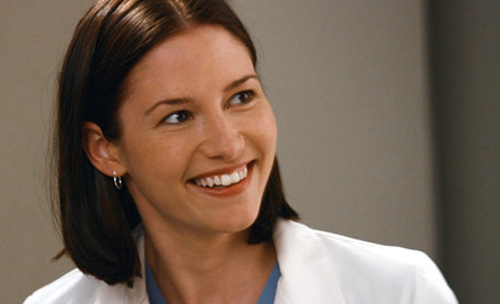
Yes. She’s cute as a button. I hate her.

(Warning: If you’re tired of my “I love HBO” sermons, this is where you go and read that other blog. You know, the one by that guy who writes about these things. And there are pictures and stuff.)

That’s one of the things I love about Six Feet Under, The Sopranos and Deadwood, or even Battlestar Galactica (okay, that one isn’t HBO). No one tells me that I have to like Tony Soprano or Alma Garret or Nate Fisher. In fact, it’s absolutely okay for me to dislike Starbuck (which I don’t – but I could!) or Claire or Carmela. And, what is more important, the characters are deeper, more real – they can’t be reduced to Good Guys and Bad Guys. You may feel understanding for them, but that doesn’t stop you from shouting at them in the next scene, telling them to stop being so fucking stupid, goddamnit, cocksuckers!

Okay… perhaps I should try to reduce the weekly dose of Deadwood.