My partner-in-blog has written about his year in pictures, so I’ll end 2014 with three videos: two about the main thing that keeps us going here at Château Goofybeast, i.e. film, and one bonus one that barely qualifies as a video, but damn, if the music ain’t pretty. Here’s wishing each and every one of you a great 2015, with lots more films, books, comics, games and whatever your eyes, ears and hearts may desire!
Month: Dec 2014
Things I’ve seen in 2014
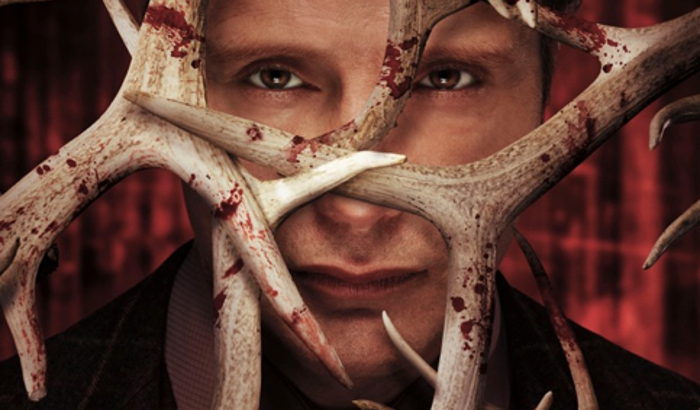
It’s been a year of good series. The palatable horror of two seasons of Hannibal, which is much, much more than a retreading of the Thomas Harris books. The creepiness of Les Revenants, an elaborate French ghost story. The film-noir style and jarring relationship between the two cops in True Detective. The first season of The Fall with its head-to-head between a cop and a serial murderer. The first season of Utopia in which five comic-book fans try to decipher their favourite graphic novel. (The Fall and Utopia clearly turn for the worse in their second seasons.) Happy Valley. I also found good things in Broadchurch, The Leftovers, and Top of the Lake.


Movie-wise, it was a year of diminished returns, but I would like to point out The Salt of the Earth, Nightcrawler, Everyday Rebellion, and Blue Ruin. I’ve written elsewhere about Ida and Locke, but the annual movie cake must go to the excellence of Under the Skin. I’ve praised Jonathan Glazer’s movies elsewhere, but I’ve seen this one first drunk, then sober, and it works both ways. Some scenes are so strong that they have become part of my movie-going DNA.

In some respects, Under the Skin is a horror movie, but there is really only one moment where you might jump out of your seat. At its core, it’s a story about… well, an alien visiting Earth, for whatever reason or to whatever end. She (she?) is very busy trying to get to know the human race in a lonely, isolated Scotland. She lures males into a pool of black quicksand, and since she looks like Scarlett Johansson, there are several willing victims. She’s not evil, but seems to imitate what she thinks is female human behavior. To her surprise, she discovers in herself a kind of empathy, until she no longer has the upper hand.
Since this is the point where one chapter ends, I would like to thank Matt K. for Les Revenants, and Patrick M. for Southland. Another chapter will begin soon: I am looking forward to Inherent Vice and Birdman. Countless surprises await in the rectangular dark. We’ll see.
Death and betrayal
I found it practically impossible to watch A Most Wanted Man without constantly being aware that the man I was watching on the screen was dead and this was his last film. Philip Seymour Hoffman was one of Hollywood’s most unlikely stars and often one of the best things about the films he was in; this swansong, based on a John Le Carré novel, may not be one of the ones Hoffman will be most remembered for, but it is definitely a worthy final addition to his filmography.
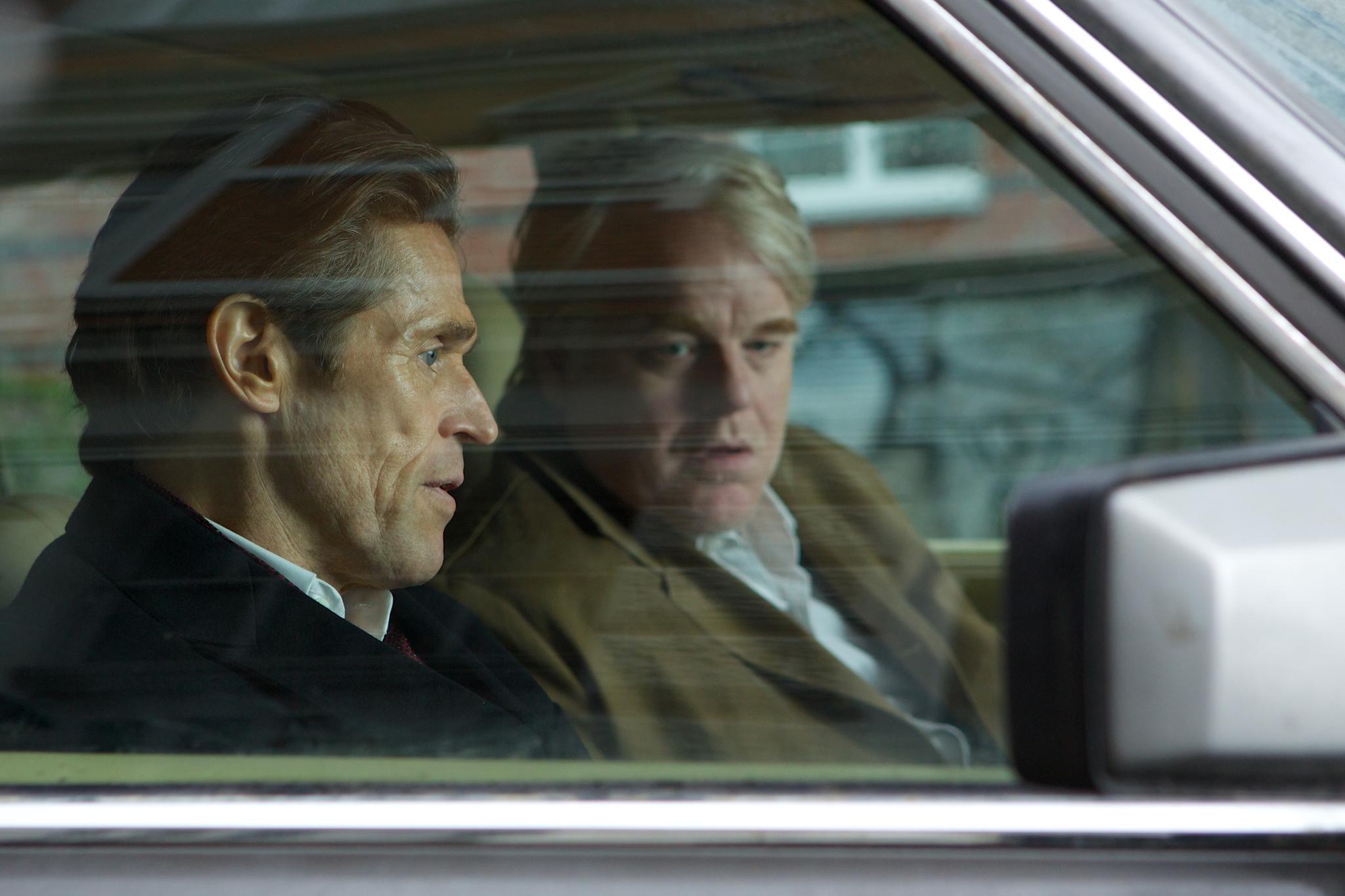
As with many of the films based on Le Carré’s works, A Most Wanted Man is not so much a spy thriller as a drama, with a distinct tendency towards tragedy. Hoffman plays a jaded German espionage operative keeping an eye on the Muslim community in Hamburg, and when a former Chechen radical enters his hunting grounds illegally he hopes to use him as an asset in his investigation of a Muslim philanthropist with possible ties to Al Qaeda. While the film doesn’t present us with as much of a quagmire of connections, motives and plots as a successful other recent Le Carré adaptation did – and Hoffman’s operative is a descendant in spirit of George Smiley – it is about similar themes. Years ago the Swiss magazine Du published an issue on John Le Carré titled “All Sorts of Betrayal”, and apparently this is still what the author keeps returning to. All of these betrayals, whether of friends, lovers, or of organisations and countries, are finally private at heart, and A Most Wanted Man sees its main character trying to weigh betrayals, to tempt, bully and cajole others to violate trust to prevent a bigger, more final betrayal.
Except, of course, in Le Carré’s world there is no such thing as a lesser evil, and most definitely not one that can be trusted to end up being lesser. Even more, Hoffman’s body language, the way he looks at people and practices a studied cynicism, all these make it clear that A Most Wanted Man will not end happily for anyone. And this fatalism is in part why this is a good but not a great film: only in rare moments is there the urgency that comes from hoping, and even believing, that this may not end in tears. There is a grain of… faith in something other than jaded pragmatism, perhaps? Belief that even in espionage people, organisations and countries can still hold on to vestiges of a soul? And this belief keeps the main character going, but the tone of the film is as hangdog as Hoffman himself, though without his occasional sparks of hope and of righteous anger. As an audience, though, it’s difficult not to know better: this will end badly, so why commit emotionally? If anything, the film prompts us to be even more jaded than its protagonist, and this works against A Most Wanted Man.

As may the real-life circumstances: Hoffman’s death hanging over the film may make it more poignant, but this poignancy is not in sync with the film. I was prompted to sadness, though not by Le Carré’s story so much as by knowing that this is the last time we’re seeing a lead performance by an actor gone too soon. A Most Wanted Man is a good film, it’s crafted beautifully, its performances are consistently strong, but its greatest tragedy may be that it serves most as a reminder of a different tragedy that has nothing to do with the film itself. Perhaps it will be easier to see it for itself in five to ten years, when it no longer feels quite as much like a obituary.
Murder is in the details
Serial is the most successful podcast around these days. At its core, it’s about the 1999 death of a Baltimore County high school student called Hae Min Lee, about her ex-boyfriend Adnan Syed, who is serving life in prison, and about Jay, the guy who testified in court that it was Adnan who killed Hae.

All this is told in weekly instalments by journalist Sarah Koenig. The material she presents is intriguing, but I think Koenig herself is the key to Serial‘s success: she asks the right questions, provides smart answers, and is unafraid to confront many of the people involved. After twelve months of researching Adnan’s case, she does not claim to know the truth – she still isn’t sure if he is guilty or not. Her point is: the trial was too weak for Adnan to be convicted. I agree. There are too many unanswered questions, too many incongruous details.
And she avoids the greatest of pitfalls: she doesn’t sensationalize. She’s simply curious about what has happened, and we are allowed to come along. She has the right kind of voice for this – at times, she is annoyed, surprised and suspicious just as her audience must be.
I don’t have a particular problem with a real-life murder case being used for entertainment – if it comes along smart and knowledgeable like this series here. Koenig and her team could not have foreseen the success that Serial has now. And if it leads to pressure for a re-trial or to a case review, why not? I only have a problem with those amateur sleuths who gain access to trial documents and then publish the names and details of persons who are connected to this case whose names Koenig withheld intentionally. Adnan’s family also gets pestered by people who want to know if they think that Adnan is a psychopath.

Dramatically, Serial is a risk. This is about real life, and it won’t bow to conventional storytelling. Koenig has gotten so many donations that there will be a second season – maybe about another crime with its open questions and incongruities. Meanwhile, Adnan Syed’s case has been taken on by a group of lawyers connected to the innocence project, so whereas Serial will definitely come to its end next week, the case might go on. So be it – this might well turn into a podcast that has an impact on the US legal system. Imagine that.
In space everyone one can hear you feel
Interstellar pushed many of the right buttons for me, primarily the big one labelled “Sense of cosmic wonder”. I was the kid who had a poster of the solar system on his bedroom wall for an embarrassingly long time; I loved anything to do with space, but I reserved a special love for space exploration, especially of the supposedly authentic kind. Sure, I wanted to fly an X-Wing, but that thought never felt as wondrous as that of NASA journeys, of the Apollo missions or the Space Shuttle. Wormholes and black holes? Accretion disks? Count me in.

That sense of wonder was definitely there when I watched Interstellar, and the film captures it well. What it captures less well, though, is human emotion – which is a problem, since for all its space age imagery the film is essentially about sentiment much more than it is about physics. It’s not the emotions themselves that are the problem; thematically, Interstellar uses its premise and setting to tell a very human story. The problem is that the Nolans are much better at telling a different kind of story – one that is conceptual, that tends to be about puzzles. At their best, the Nolan-directed and -penned films are interested in the feelings of their characters, but they don’t focus on them head on. Their protagonists are often emotionally repressed, in denial or simply unable to access or express their feelings, and the stories tend to derive poignancy from this inability. Interstellar, though, wears its heart on its sleeve. Its characters talk about their emotions, they cry quickly and freely – and while the actors are more than capable, they can’t overcome that the words they’ve been given are often clumsy, overly explicit, explaining things too much. The worst scene in this respect has a teary-eyed Anne Hathaway trying to impress on her fellow astronauts that love is a force transcending space and time. Done differently, written better and allowing for some ambiguity, this could work, but in the film it feels like a NASA-themed Hallmark card. Those moments very much suggest that when it comes to the Nolans’ dialogue, quite literally, the less said, the better.
It is this tendency to overexplain, to make things too literal, that hobbles some of Interstellar‘s central scenes as much as its clumsy handling of emotion. Late in the film, the story bends causality back on itself in a classically sci-fi way, but where Christopher Nolan often finds striking images for settings and situations, here they turn faintly ludicrous, and they fire rockets full throttle into silliness the more the protagonists explain what is happening. All fiction, including speculative fiction, engages in some narrative handwaving, leaving gaps with respect to what is happening or how precisely it is happening, because the exact mechanics are irrelevant to what the story is about. Interstellar, however, tangles itself up in knots by trying to fill in the blanks, when it should well have left alone. Trying to elaborate on what is happening, the expository dialogue is hamfistedly literal, drawing attention to what is arguably least important, and raising questions about its feasibility that shouldn’t come up in the first place. (One can only imagine a Nolan-penned 2001: A Space Odyssey, giving the Monolith a -logue to explain to Dave Bowman what the last 20 minutes meant.)
When I first saw the Interstellar trailer, I was intrigued, but I was equally worried that this would be Nolan’s Contact, an intriguing sci-fi tale that takes a turn for the sentimental: daddy issues in space. It isn’t quite that bad, and there’s a lot to like about the film. It is ambitious, it is often beautiful, and Matthew McConaughey has vastly improved as an actor since the giddy days of 1997. Interstellar is a compelling illustration of both the strengths and the limitations of Nolan’s filmmaking, though, and it is frustrating in how it could have been a better, more subtle and more convincing film. This isn’t a complaint along the lines of “Waiter, there’s some sentiment in my sci-fi soup!” I don’t think that hard sci-fi, or any sci-fi, needs to lose the human element. What it does need, though, is a human element that’s done with the same skill as the visual effects. Interstellar excels at showing us the surfaces of alien worlds, but its telescope is flawed when pointed at the human heart.
Unhappy happy valley
Poor Catherine Cawood. She is police sergeant of a small Yorkshire village. She sleeps with her ex-husband. She looks after her sister, a recovering heroin addict. She takes care of her grandson because his mother, her daughter, has committed suicide after being raped. The man responsible has returned to the valley, and Catherine is very, very alert, up to the point of breaking a few police rules. Happy Valley might just be the misnomer of the year.

The reason I want to admire this six-part series is the main performance by Sarah Lancashire. She plays her scenes matter-of-factly, but without being hardened or cynical. She is so good that the scenes she is not in feel slightly off. It will be hard to watch her in anything else and not think of this series. On the whole, Happy Valley might not be as even or as suspenseful as Broadchurch, but Sarah Lancashire is more memorable than most of the coppers on TV lately.
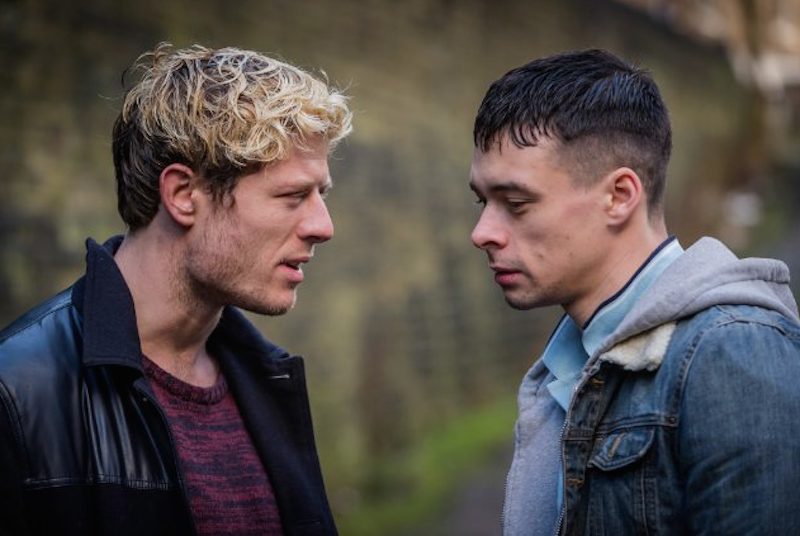
Unlike Broadchurch, Happy Valley is not a whodunit. The audience has to wait for the police to latch on to the fact that someone has been abducted. It’s also bleaker and gorier than Broadchurch, but nowhere near The Fall. I like Gillian Anderson as much as Olivia Colman, but it’s Lancashire’s performance that stands out. There is a drunk guy who wants to set fire to himself. Sergeant Cawood arms herself with a fire extinguisher and a pair of sunglasses and goes to talk to the man. Just in case.
Episode 5 is a slight disappointment because there are too many moments of soul-searching and too many family resentments coming to light. Episode 6 is slightly too neat and, at the same time, too undecided about how it wants to end. Never mind – Catherine Cawood is as interesting as was Jane Tennison in her time.
Playing the beautiful song
One of the pleasures of having played computer and video games since, oh, the heady days of 1982 is that I’ve been in a position to observe their development almost from the beginning. As with any medium, there’s been more than a fair share of absolute garbage, but as cultural artefacts games have proven to be vibrant, creative and surprising. Certainly, the big money tends to go to mainstream behemoths like Call of Duty, the equivalents of the latest summer blockbuster movie, but you also get surprise successes such as Minecraft, arguably the Lego of gaming in several ways. These days, indie gaming has freed up developers to be visionary as opposed to keeping a constant eye on the bottom line, and while some visions may be pretentious, confused or simply result in bad games, others have done more than just hint at the potential inherent in the form.

Supergiant Games is not exactly the prototypical indie, but there’s definitely a strongly independent streak to their games to date, and this year’s Transistor bear few of the traits of mainstream gaming. The game’s production values are downright gorgeous, but there’s no pandering to what executives might think sells well – for instance, Transistor‘s protagonist is female, yet she isn’t sexualised in the sort of facile way that’s designed to appeal to a young male demographic. This is just one indicator of how, while the game echoes other examples of the medium, as a whole it is quite unique.
All in all, while in terms of gameplay Transistor isn’t necessarily my cup of tea, it’s a fantastic example of how the medium of games has come a long way: it is aesthetically creative and confident, evoking a world that can perhaps begin to be described as The Matrix filtered through a Gustav Klimt-inspired Art Nouveau/Art Deco sensitivity with a touch of anime. Its writing does not suffer from the tendency towards excessive exposition and over-explanation, instead being elegant and elliptic. The music is beautiful and stirring, more than worth a listen outside the game – but like all of Transistor‘s elements, it complements everything else exceedingly well. The game’s aesthetics, tone, soundscape, writing and atmosphere all come together to form what could easily be called a Gesamtkunstwerk, a total work of art, that is more than the sum of its already considerable parts. And it all works so well as a game; the visuals and acoustic design would fare well in any medium, but interactivity and choice add to Transistor, down to small touches that are full of personality. I mean, this is a game where pressing one of the controller buttons results in Red, the main character, humming in harmony to the music that’s playing.
Transistor won’t appeal to all: one person’s artistic triumph is another’s pretentious mess, the gameplay’s mix of action RPG and turn-based strategy won’t be to everyone’s taste, and many reviewers have criticised how much Transistor‘s writing leaves to the imagination. It trades broad appeal for a voice of its own (ironically, as aside from her humming Red has been stripped of her voice). A medium that’s capable of producing such works, I’d say, is definitely healthy and one I’m excited to keep following.
 A Damn Fine Cup of Culture