Each Friday we travel back in time, one year at a time, for a look at some of the cultural goodies that may appear closer than they really are in The Rear-View Mirror. Join us on our weekly journey into the past!
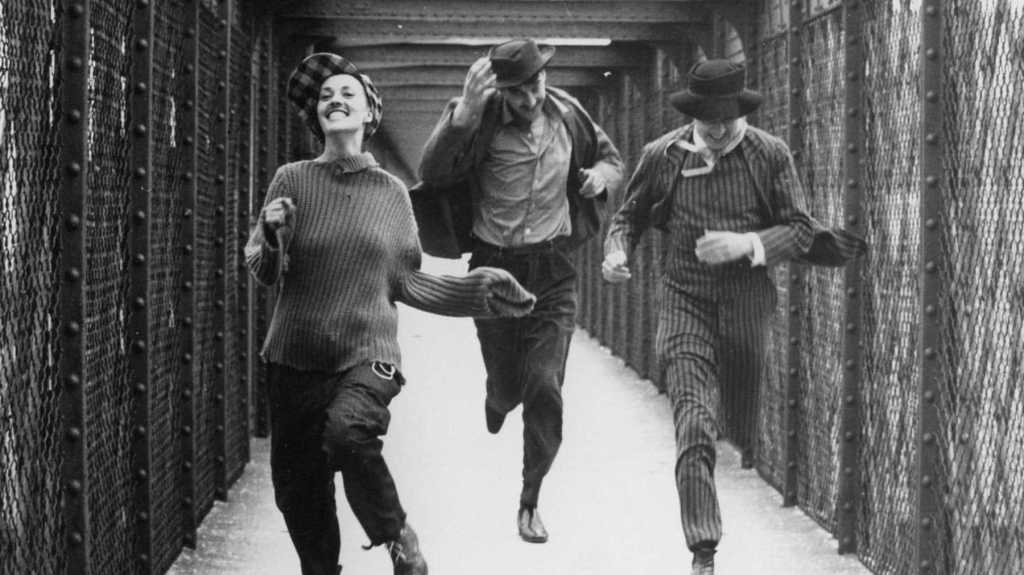
Jules et Jim (1962) wasn’t my first film by François Truffaut, but it might as well have been: while I saw The Last Metro (1980) earlier, it didn’t fully register that this was a film directed by Truffaut, one of the founders of the French nouvelle vague, and I only remembered The Wild Child (1970) very, well, vaguely. In fact, I was more aware of Truffaut in Spielberg’s Close Encounters of the Third Kind (1977).
 Maybe I am not the ideal audience for Martin Witz’ Gateways to New York. On the one hand, it’s a documentary about some of the bridges of New York. Since I have absolutely no spatial orientation, I was at a loss as to where these bridges are and which two areas they connect. Here’s an easy question: what does the George-Washington Bridge connect? I only faintly remembered that the answer is New York and New Jersey, maybe because of The Sopranos. And what does the Verrazzano-Narrows Bridge connect? Aha, see? I have no clue, and if you are not from the Eastern Seaboard, or an acolyte of architecture, you might be as lost as me. There are maps in Witz’ documentary, but they are gone before you can really grasp which bridge we are talking about now.
 Road movies are, in a way, like interconnected short story collections, no? You learn of a reason to take to the road – first story. You get to another place because it’s the way to get to your destination – second story. And another place, and another, a seemingly random sequence of loci, until you reach your destination, which makes for your last short story. Yeah, I know, my analogy holds up only roughly, but my point is: there should be an arc from the first to the last story, otherwise you get accused of fillers. And no-one, no filmmaker, no author, wants to get accused of producing fillers.
 From the Weimar Republic child murderer of Fritz Lang’s M (1931) via Reverend Harry Powell from the dark fairy tale The Night of the Hunter (1955) to Hitchcock’s seminal Psycho (1960) and its twitchy Norman Bates: what better way to celebrate summer with your cultural barristas than with a chat about some good, old-fashioned classic films with and about psychopaths?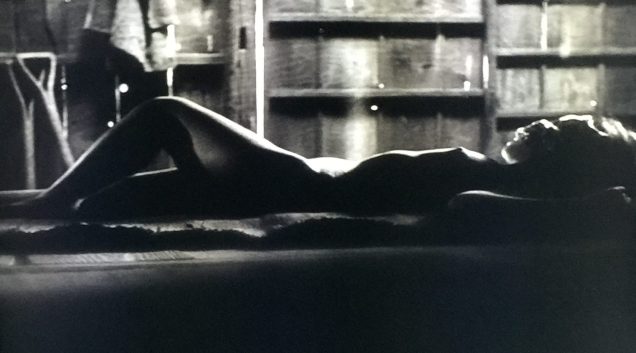


 A Damn Fine Cup of Culture