Welcome to Six Damn Fine Degrees. These instalments will be inspired by the idea of six degrees of separation in the loosest sense. The only rule: it connects – in some way – to the previous instalment. So come join us on our weekly foray into interconnectedness!
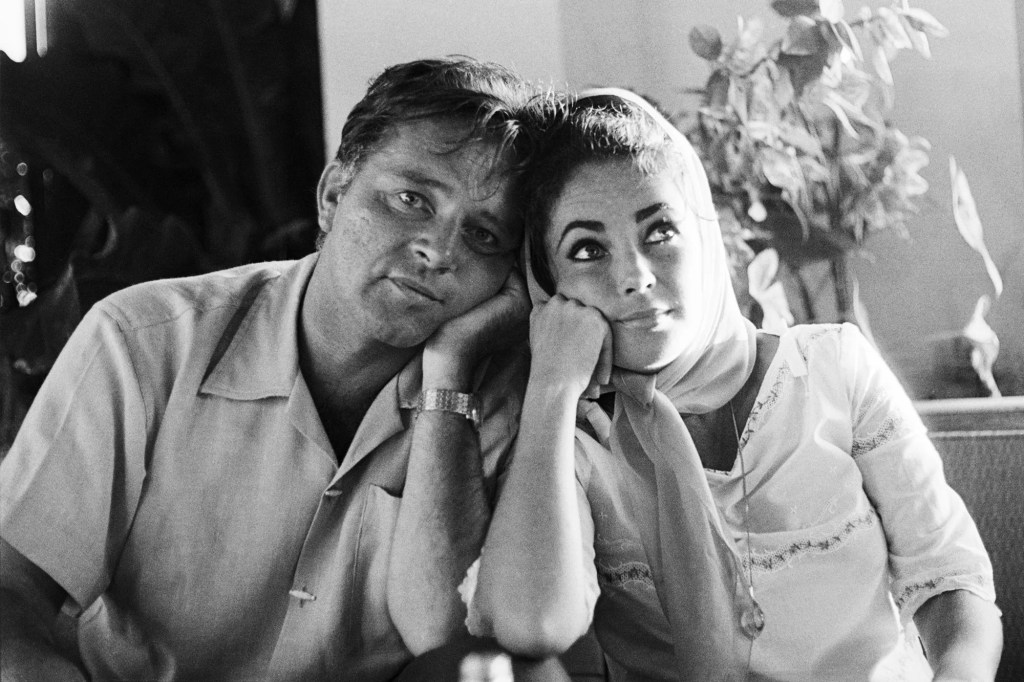
Name me an icon of the screen, and I’ll bet one of the names that spring immediately to mind is Elizabeth Taylor. The American Film Institute has her in the top 10 of greatest female screen legends. Her roles are many and varied, and some of them are indelible. Whether you remember her for Tennessee Williams’ stifling Suddenly Last Summer opposite Monty Clift, or as Maggie the Cat in Cat on a Hot Tin Roof, or even – perhaps especially – as Martha in Who’s Afraid of Virginia Woolf?: well before she was embraced for her camp-value, she was not just one of Hollywood’s most glittering stars: she was also one of the canniest. But for someone like Liz Taylor, it was her personal life that became as much a part of her legend, perhaps even more so than her roles. She was glorified, vilified and ultimately mocked, as her turbulent private life was allowed to increasingly play out in public. While the studio system had previously hushed perceived scandals and tried to exert complete control over their stars, Elizabeth would willfully defy everyone. And the studio system, leaky as it already was, and despite their attempts at constant supervision, could do very little to put a lid on the many scandals surrounding her, one of their most bankable, often controversial and frequently tempestuous stars.
She had been a child star for MGM, and had managed to transition from popular teen idol to more sophisticated roles, notably in 1951’s A Place in the Sun. Widespread critical acclaim, as well as commercial success, followed with 1956’s Giant, Cat on a Hot Tin Roof and Suddenly Last Summer. It is in these films that we see Taylor do some of her most shattering work. As it was with the equally enthralling Natalie Wood, fact and fiction seem to meld to such an extent that at certain points they appear to wholly blend together. The distance between Liz’s own emotion and her roles narrows to the point of discomfort, which is what makes her best work so heartwrenching. It is as if Liz Taylor lived her roles, an impression heightened by her tendency to quote from them, to refer to her lived reality. (“In a way [I] became Maggie,” is one of her quotes). The biography Furious Love* calls it a kind of inverted method acting: Taylor’s emotion was not so much invoked to portray a specific role, it was the role itself that seemed to draw her out. She was often called “a natural”, but that also meant she had precious little technique to shield her from that vulnerability.
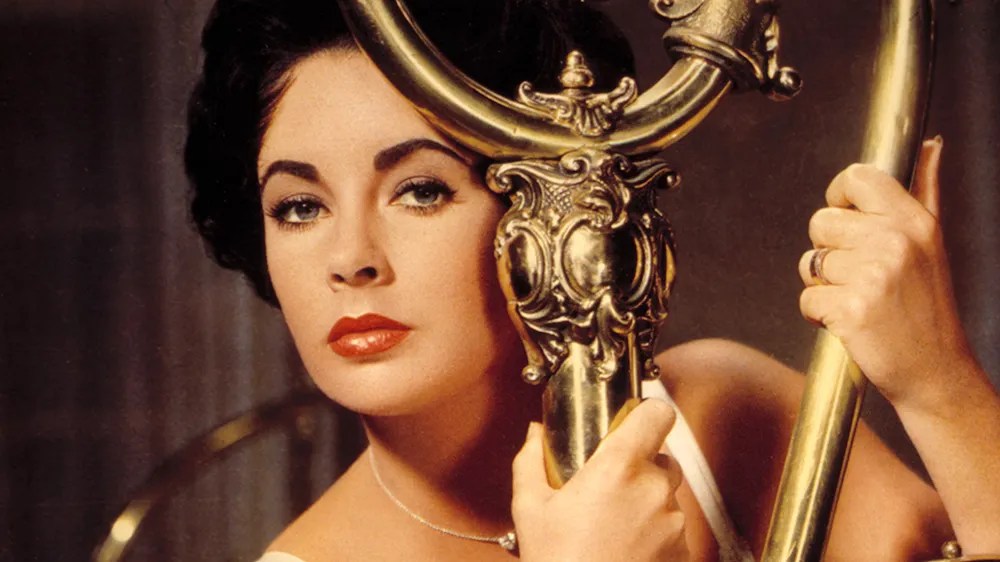
Elizabeth herself considered her role as Maggie the Cat one of her career high points, wrenched as it was from her pain after the sudden and shocking loss of her husband Mike Todd in a plane crash. She heroically managed to finish the shooting despite her devastation, but an Oscar proved elusive. The fact that she had started an affair, during this difficult period of mourning, with Eddie Fisher who, inconveniently, was married to Debbie Reynolds at the time, undoubtedly contributed to the snub (Hayward won for I Want to Live!). However studio-managed and lifeless the Reynolds/Fisher marriage undoubtedly had been: that did nothing to soften the cruel perception of Elizabeth as a vamp and a home-wrecker. She did end up marrying Fisher, but, in her own telling, did so mainly propelled by grief.
The epic Cleopatra famously nearly sank the studio, due to massive overspending. Not that, frankly, the studio hadn’t already fallen on hard times. And not that, due to many misfortunes and mismanagement, the film was already descending into a production nightmare. It is, however, undeniable that Taylor negotiated an incredibly good deal for herself, and it is equally undeniable that she suffered from frequent, persistent, and sometimes life-threatening health issues which interfered, inevitably, with the production. The bronchitis, which halted shooting, turned into pneumonia so severe that she became comatose. To save her life, she had to undergo a tracheotomy. Liz would credit the scar it left for the sympathy vote that landed her the best actress statuette for Butterfield 8, a film she thoroughly disliked. As she had improbably managed to survive the whole ordeal, she would not now shrink from putting it to use. That, too, was Liz Taylor. Valiant though she certainly was, if she wanted something, she’d go after it without flinching. After her convalescence, it would be Liz’s top directorial choice Joe Mankiewicz who replaced Mamoulian as director of Cleopatra. And it was Mankiewicz who unwittingly made the fateful decision to replace Stephen Boyd as Mark Anthony. His new casting choice was a dazzling stage actor, bought out at huge expense of his Broadway commitments as King Arthur in the long-running Camelot. His name was Richard Burton.
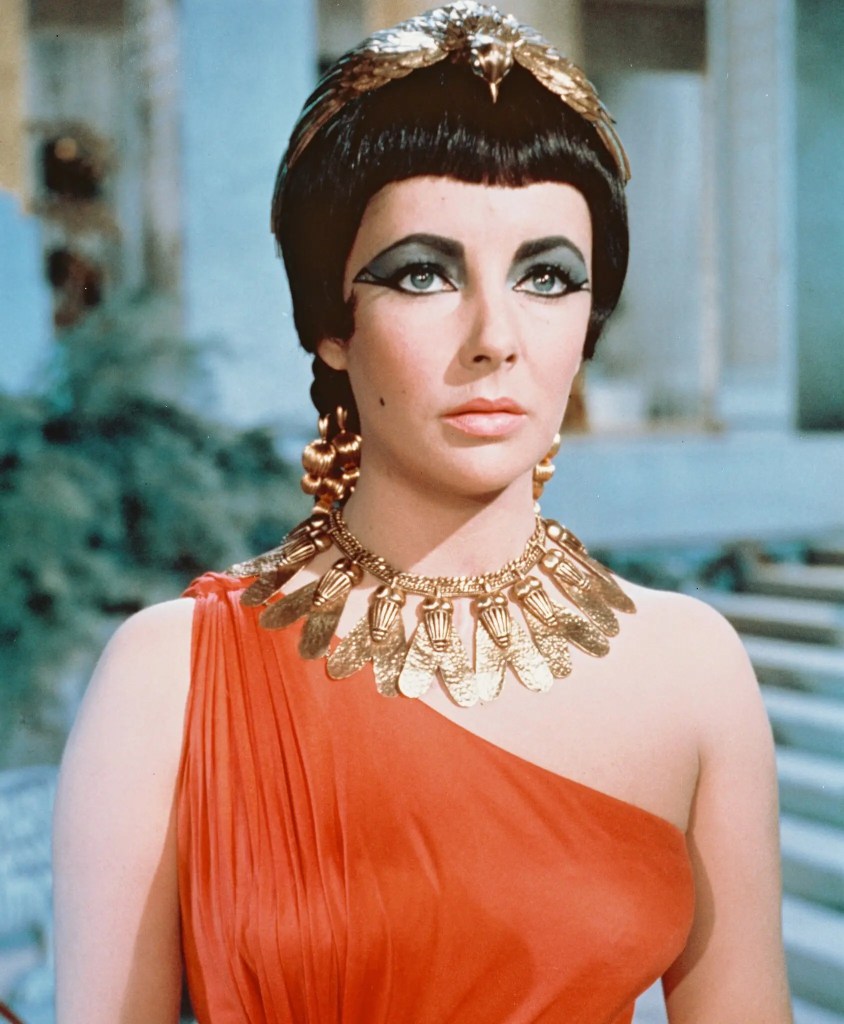
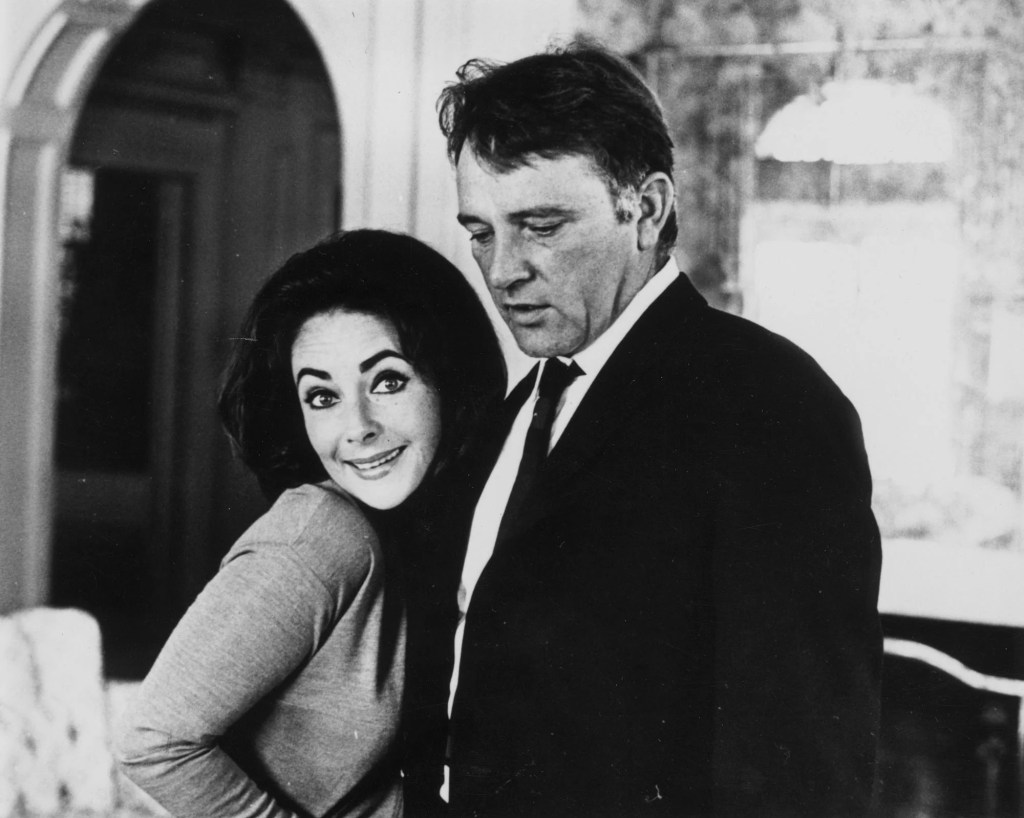
The scandal their affair caused was such that it reached the very Vatican. Burton was married, adulterous though he famously was, to the smashing Sybil Burton (née Williams), actress, a great friend to many, and apparently beloved by almost everyone. “The energetic English type that wants everybody to have fun”, as Andy Warhol would later characterise her. Initially, the belief friends and associates held, was that he’d return to her. He’d done so many times before, after all. But it was “Liz and Dick” that became the item, on screen as well as off.
Due to the “Liz and Dick” notoriety of their tumultuous affair, marriage, divorce, remarriage and the all-consuming fervour of the relationship, the part of it which was lived out publicly became an entirely separate entity from the intimate bond they unarguably shared. From Burton’s letters, it is abundantly clear he adored Liz to the point of obsession. She may have divorced him, but she was never really more than a phone call away. The trouble, of course, to a large extent was drink. Burton had a hard time coping with this strange, floating existence sober, and Taylor seemed to have trouble accessing her emotions at all without the fortification. On the other hand, as Burton himself incisively put it, there was always an excuse for a drink. Hardship or success, a drink was always to hand. And then another, and another: lather, rinse, repeat. For all the high drama of their life: it is hard to ignore they essentially loved, fought, and shared their voracious sexual energy in a fog of alcohol. And while initially their relationship was one of the biggest scandals to haunt Hollywood – a scandal of which they were apparently never quite absolved in the eyes of the community -, it later became, in the eyes of the world at least, barely more than a sad little caricature: a joke. All this amidst a whirlwind of truly staggering consumption, the diamonds, the parties, the houses. A lifestyle that became very much looked down on in the Hollywood of the Sixties, and which gave them an aura of being out of touch. Overindulgent and outdated, as the studio system Liz grew up in collapsed in upon itself: and the new filmmakers of the Sixties made a go of changing cinema for good.
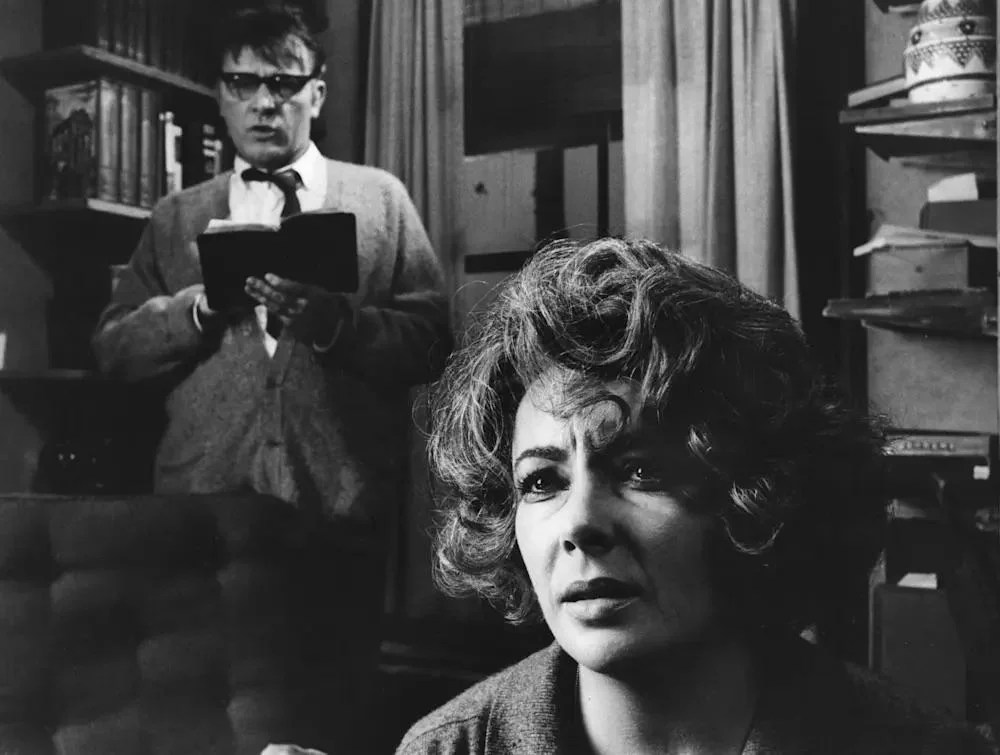
When Elizabeth donned her ageing make-up in Edward Albee’s blistering Who’s Afraid of Virginia Woolf?, both she and Burton sensed that this was their chance to reclaim the narrative. And the sensation of Burton and Taylor – of all people – in the lead roles of the warring George and Martha, proved irresistible. It is still a stunning watch, even without the context. Somehow it all works – and it is arguably the performance of her career. Burton himself would later state: “I am George,” but he looked so far from the part of poor, emasculated, put-upon George, there were doubts about even casting him at all. Again, the “Liz and Dick” narrative trumped the reality of their lives, their career and even their age. She was only 33, and Burton was not yet 40. The film would go on to win five Oscars, and although Taylor won one, Burton did not. He never would, in fact, win one. He died at 58 and would always remain associated – despite their final divorce – with his world-famous ex-spouse. “‘If I retired tomorrow, I’d be forgotten in five years,” Burton wrote in his diaries, “but she would go on forever.” Ironically, having to act out the toxic marriage of George and Martha in Who’s Afraid of Virginia Woolf?, even brought the Burtons closer together, and produced a modicum of relative peace in their home life. Well. For a time.
* Furious Love: Elizabeth Taylor, Richard Burton, and the Marriage of the Century, by Sam Kashner and Nancy Schoenberger, (Harper, 2010). My audio book was published by Harper (2010) and is read by Paul Boehmer.

