One of the things that video games can do magnificently is create worlds. These posts are an occasional exploration of games that I love because of where they take me.
Way back in 2007, the Ukrainian video game developer GSC Game World released Stalker: Shadow of Chernobyl, a game that some would describe as a diamond in the rough, while others called it masochistic Eurojank. The first Stalker game, based on the Strugatsky brothers’ classic sci-fi novel Roadside Picnic and influenced by Andrei Tarkovsky’s loose film adaptation Stalker, was soon followed by Stalker: Clear Sky and Stalker: Call of Pripyat. All three games were janky and brutal, offering not conventional power fantasies so much as gruelling expeditions into the Chernobyl exclusion zone surrounding the power plant at the centre of the 1986 disaster. They weren’t fun games – but they were unique, atmospheric, and different from pretty much all shooters at the time.
GSC Game World’s games weren’t for everyone, but they found a community of fans. A sequel was announced, then cancelled, until, in 2018, Stalker 2 resurfaced. The game was scheduled for release in 2022 – a schedule that proved impossible to uphold when Russia invaded Ukraine on 24 February 2022. In spite of setbacks, Stalker 2: Heart of Chornobyl finally came out in November 2024. Two years later, I got around to returning to GSC’s new version of the Zone: from the Strugatskys’ region pockmarked by objects left behind by mysterious aliens, via Tarkovsky’s wet, verdant purgatory, to the surroundings of the Chernobyl Nuclear Power Plant, a region populated by warring factions and mutant creatures, and strewn with reality-bending artefacts.
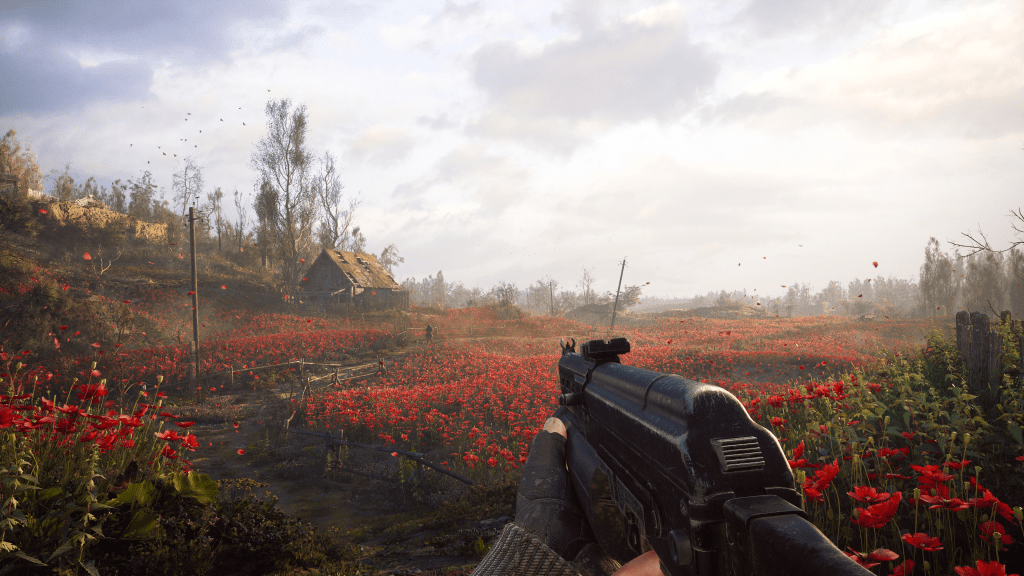
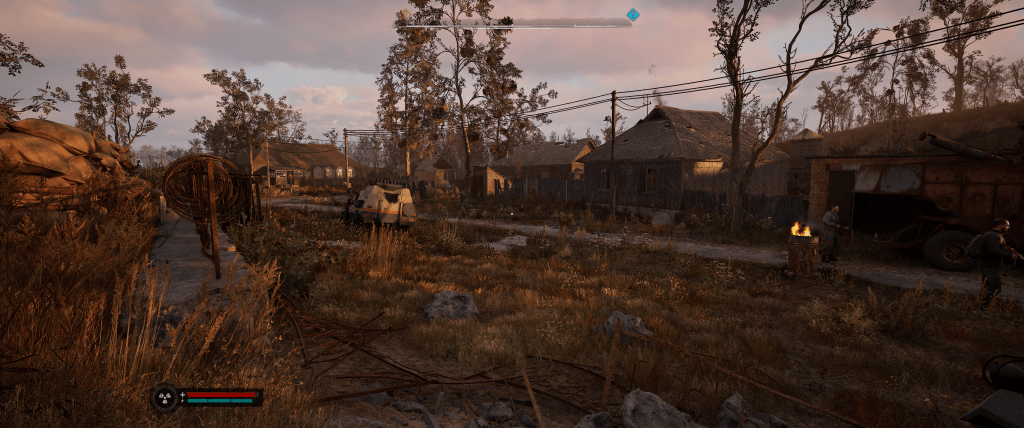
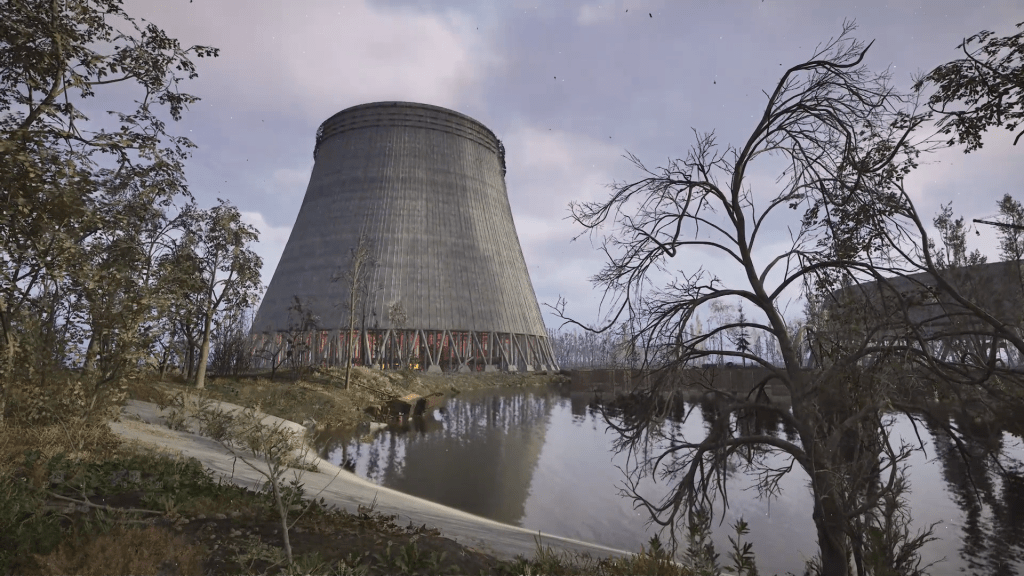
I was never a Stalker superfan, but I nonetheless loved what the series brought to gaming: here was a world that did not centre on the player and their wishes. The Zone did not care that those seeking out its wonders and challenges wanted. It might swallow you whole or ignore you – or worse. The faction wars of bandits, mercenaries, soldiers and zealots were secondary to an environment that was as beautiful as it was forbidding. It was mostly in their vibe that the Stalker games felt closest to Tarkovsky’s film: the entrancing, desolate landscape originally shaped by humans but abandoned by all except the most desperate and the most ruthless. Nature had mostly taken over the Zone, covering industrial, Soviet-style installations with vegetation, rust and a deep, abiding sense of unreality.
The original Stalker games were masterpieces of atmosphere, but they were also limited by the technology of the time. Stalker 2, built on a modern engine and running on current hardware, is something altogether different to behold – when it works. At its release, the game was reported to be even more buggy than the 2007 original, and its bugs were not limited to its visuals, which brought even top-of-the-line hardware to its knees. Its gameplay systems were also in many ways incomplete or even broken, making an already unfriendly game unplayable for some.
This is one of the benefits of playing a game more than a year after its release: unless a title is abandoned by its developer, there’s a good chance that the worst bugs are patched in the months after release. The engine (i.e. the basic system on which graphics, audio and gameplay are built) may be optimised and run a fair bit better. In some cases, the developers may even continue working on a game, not only fixing things but adding new gameplay that didn’t make the original release deadline.
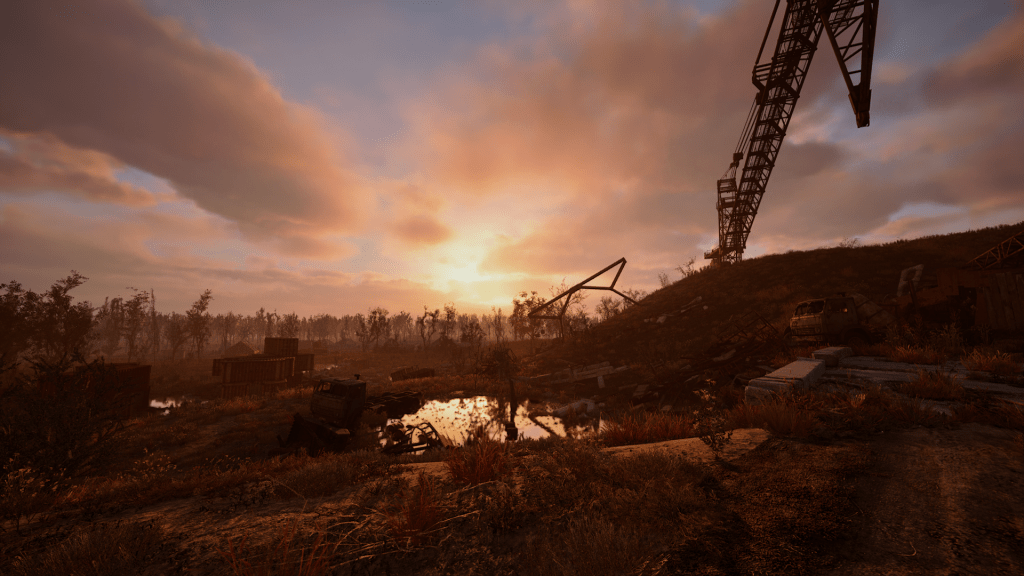
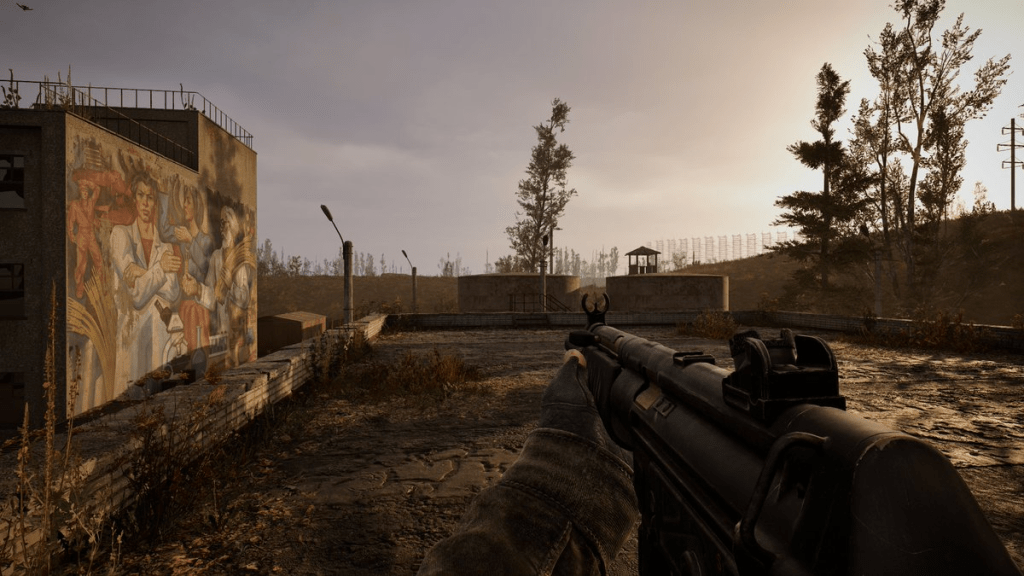
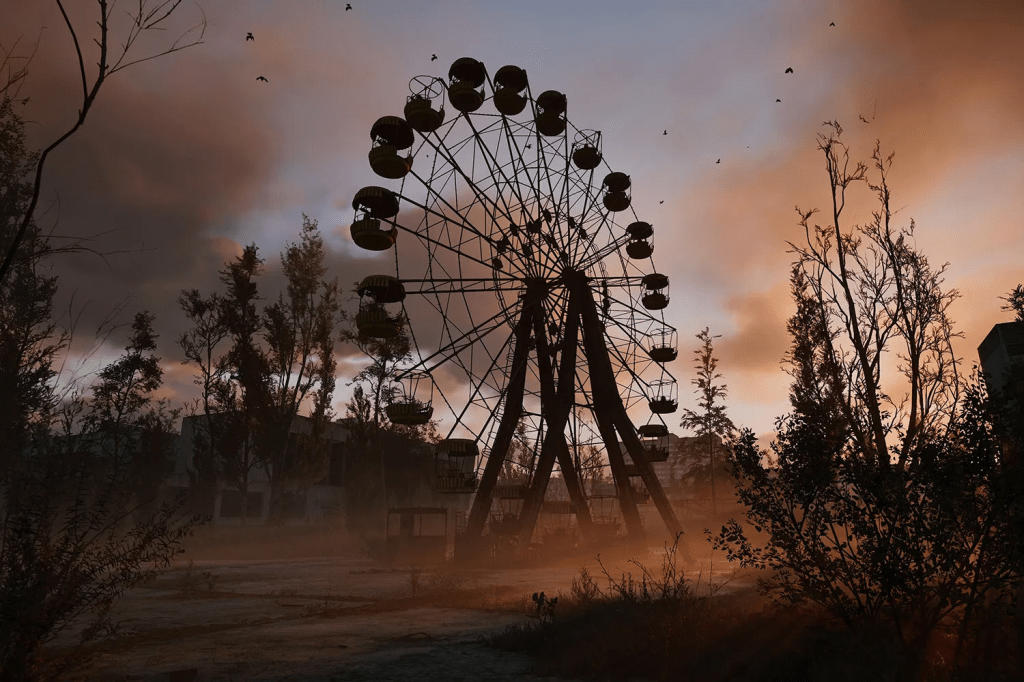
At this point in time, Stalker 2 is a better game than at its release in November 2024. It is undoubtedly a gorgeous game to look at: its Zone is a sublime wonder. It is darkly beautiful, from its desolate outlands, swamps and industrial ruins to the abandoned settlements and townships and the brutalist, retro-futuristic research installations. But as a game, it isn’t just brutal: all too often, it is badly designed. There is a lot of friction to the world and systems of Stalker 2, but the problem isn’t systemic: friction can make a game’s world more immersive, especially with a world as forbidding as that of the Stalker games. You, the player, don’t matter to the Zone, but you can learn to live with it, submitting to its rules and whims. In other games, you conquer; in the Zone, you come to accept that this world can and will hurt you, not because it hates you but because it barely knows you’re there.
The problem is when Stalker 2 goes beyond its systemic moment-to-moment gameplay and you enter one of its designed missions: too many of these are unfair to a point where I simply did not want to be playing anymore. You’re up against too many enemies that take too many bullets to die. In one mission, the player is tasked with escaping a facility that has been taken over by enemy soldiers. You find yourself in an elevator that opens on a large room filled with enemies. Can you defeat them and make it out of there? I’m not saying it’s impossible – but your survival depends largely on luck, and the odds are very much against you. The enemy soldiers’ shots may go wide, but there are so many of them that too many bullets will still hit you. earlier firefights in the game were frantic cat-and-mouse chases, with the player hiding in the dark, hoping that patrols would pass them without noticing, they were made up of short but risky exchanges of bullets, each of which tipping the odds just a teensy bit more in your favour. The player could choose an approach, react, improvise. The elevator death zone, though, left no meaningful room for such decisions: I could perhaps lean around the edge and pick off one or two enemies, but after that it was pure chance whether I would survive for more than ten seconds.
Roughly at the halfway point of what was a very long game, Stalker 2 started throwing more and more such scenarios at me: fights that I had to win, or at least survive, without giving me the tools to wrest control from the game in ragged little chunks. This left me with three options: 1) I could keep trying my luck, since ability wasn’t really much of a factor. 2) I could give up and stop playing, ending my experience in the Zone. 3) I could cheat my way through.
Reader, I chose option 3. I downloaded a trainer, a free piece of software made by fans of Stalker 2, that let me bend the game’s rules in my favour. God mode (i.e. I’d not take any damage), unlimited ammo and stamina, one-shot kills: these were just a few of the many options. The trainer made me functionally invincible.
And, in doing so, I killed the game for myself, just as much as the meatgrinder mission design hat threatened to do.
I deactivated the trainer once I was through that particular killzone, but the damage had been done. The fragile fiction of the Zone had shattered. Once I stopped suspending my disbelief, it was nearly impossible to buy into the fiction again. I knew that, at the push of a button, I could be invincible again – so the next time a mission felt unfair, I was all the more ready to curse the developers and their mission design and launch the trainer. Stalker‘s Zone no longer felt like a world: it felt only like a game.
The thing is this: for me, it is in no small part the friction I encounter as a gamer that gives me a sense of immersion. It’s the rules the world puts up that I am subject to, and the sense that I can become better at interacting with these rules. Not all games require immersion to work, but those that do work best when they don’t submit to my whims – but they must play fair. The Zone mustn’t be my playground, it can even be cruel, but there must be a tacit agreement between the game and the player that there is a chance that the latter can succeed, and that they have some influence on this. If a game aims at immersing its player, friction is a powerful tool at the developer’s disposal. Remove the friction, and the player becomes a tourist. Less than a tourist, really: with the trainer active, I became little more than a camera floating through a digital movie set pretending to be a perilous world. But put the player at the mercy of chance, with little in the way of agency to change the odds in their favour, and they will not see the point of being in that world.
I hope that GSC Game World isn’t done working on Stalker 2 and refining its base game. The foundation is intriguing, and the Zone is a uniquely moody environment. But its bleakness has to be tempered at least somewhat by a sense of fair play. If the developers can keep improving this aspect of their game, they will have a cult classic on their hands – as they did with the original Stalker trilogy. Otherwise, I suspect that many a stalker will decide in that elevator that there are good reasons to stay out of the Zone.
 A Damn Fine Cup of Culture