Welcome to Six Damn Fine Degrees. These instalments will be inspired by the idea of six degrees of separation in the loosest sense. The only rule: it connects – in some way – to the previous instalment. So come join us on our weekly foray into interconnectedness!
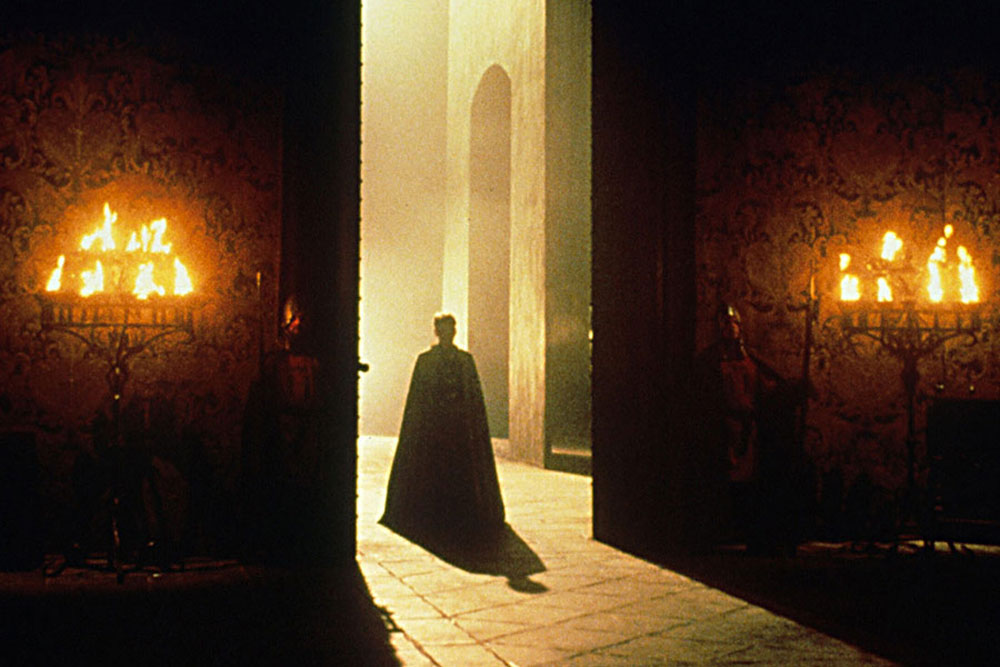
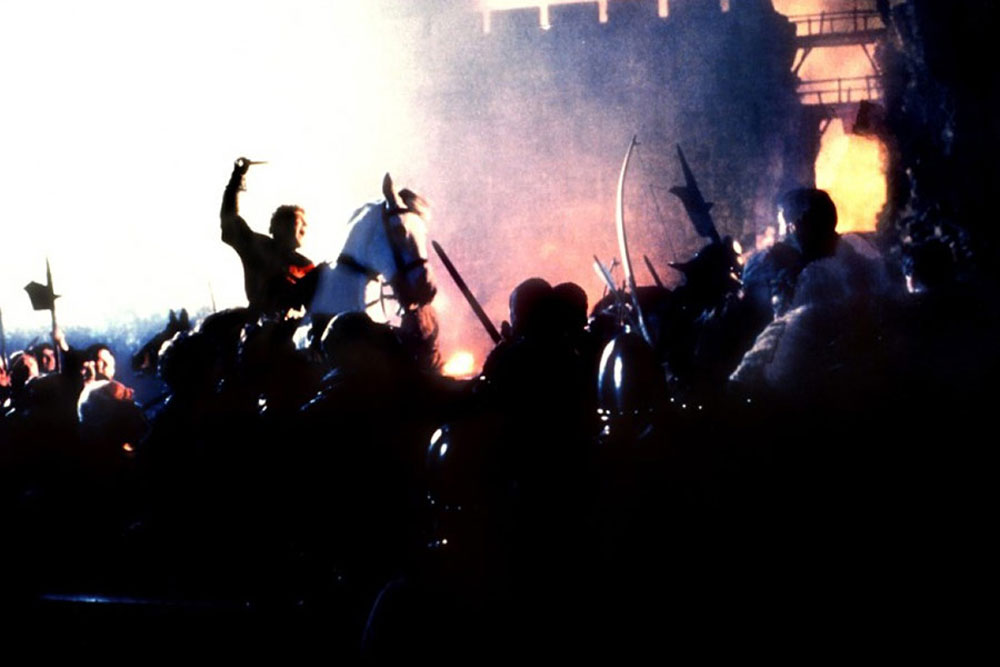
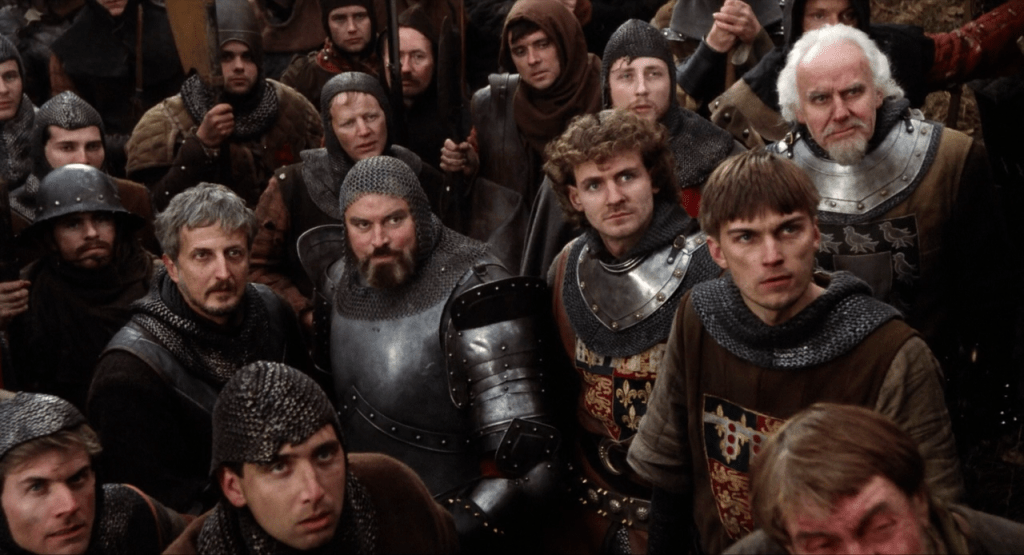
Sandwiched in between the troubled reigns of Henry IV, who deposed the tyrant Richard II and whose rule was consequently forever haunted by the spectre of usurpation; and the disastrous reign of Henry VI, whose ineffectual leadership would plunge Britain into civil war: there was Henry V. Depending on who you ask, generally considered one of the great leaders of medieval England. It is now impossible, of course, to consider Henry V at all but through the lens of Shakespeare’s history play. Whether you’re familiar with Shakespeare or not: you will inevitably have heard phrases such as “band of brothers”, that originate there. Branagh has a go at him, in the 1989 film version, which is one of the better Shakespeare adaptations generally, perhaps to be counted among the best to be put on film, period. The earlier one, by Laurence Olivier from 1944, which is faithful enough, was made as a bit of a morale boost for Britain towards the end of the war, and to my modern eyes, its framing of the play as a play-within-the-film, bookending the battle of Agincourt, seems rather distant and a bit alienating. Branagh’s film, while also in its way faithful to the original play – more on that later – is also very much a film of its time. The driving rain, the mud and blood and gore, are more reminiscent of the sort of epic films we’re familiar with in modern times. In contrast to the heroics on sun-drenched fields of more romanticized renderings: the battle of Agincourt (1415) itself, (in which a bedraggled bunch of sick and sodden English soldiers defeated superior French numbers, near the village of Azincourt from which the battle derives its name) may be famous: but that does not mean it was pretty.
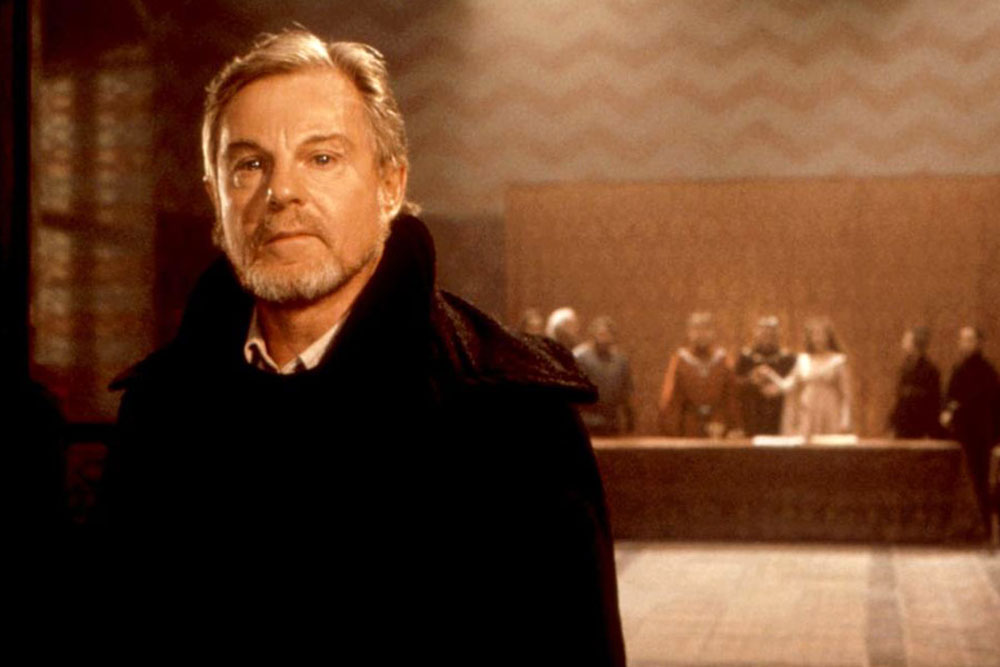
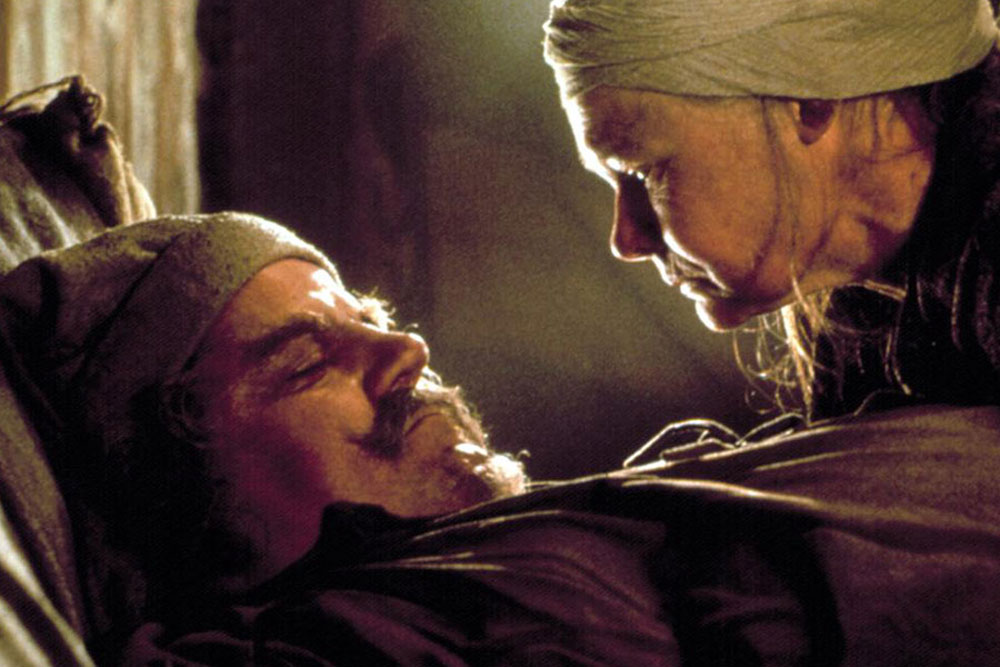
Branagh knows his stuff, especially where the acting is concerned. The cast list is dizzying and predictably everyone is superlative in this. To name only a few, we have Derek Jacobi (Chorus), Ian Holm (Fluellen), Brian Blessed (Exeter), Judi Dench, Paul Scofield, Emma Thompson… and that is only a handful of them. Branagh himself, as the lead, runs the gauntlet from flinty prince to speechifying general with tremendous confidence and grit: the over-familiar words, infused with genuine feeling, regain an ability to move. And his may not even be the best performance in the film. We can debate whether the directing is quite as good as the acting, or whether it’s just me who has trouble following the logistics of the drawn-out battle sequences and their pacing. But those are minor quibbles. What I love most about this adaptation in particular, is that – to my mind – Shakespeare is at his very best, and most moving, in the quiet sequences. The in-between spaces. And Branagh, the director, gives these their full due. The scene that deals with Falstaff’s passing (Act 2 Scene 3), for example, is a bit of a masterclass, and rather a gem all by itself. Ancillary, more comical characters are given a bit of well-deserved humanity and gravitas here, which also adds to the richness of the spectacle as a whole.
For an adaptation of this kind, Shakespeare’s text, though edited, makes it into the film reasonably unscathed. Branagh strategically swaps a few lines, and introduces flashbacks with bits that are not in Henry V but stem from Henry IV. (Mainly the bits surrounding Falstaff, deftly sketched here by Robbie Coltrane.) This to give us a sense of the sweep of Henry’s character-development and a sense of the over-all arc of his coming of age, without having to do all of the grind. Smart. Shakespeare’s dramatic masterclass, which takes us from the brawling party-prince Hal, as he metamorphoses just in the nick of time to become the flinty ruler that is Henry V, is fascinating to be sure. But Branagh is right to decide to at least touch on it, to give you the scope and context, and then leave the bulk of it alone for his audience to discover for themselves at some other time.
So while the film, inevitably, is long at 137 minutes, considering Branagh’s Hamlet (1996) – also very good, for the more intrepid – runs a whopping 242 (!) minutes, this epic flies by pretty quickly. It has all the favorite bits and bobs and familiar lines, for those who love the play: but should be accessible enough for anyone, featuring plenty of action. Branagh does not condescend. He trusts his audience to be able to keep up, and has enough clarity of vision as to the intrinsic appeal of the story, to not become didactic or make it into a chore.
As the 1944 Olivier version illustrates, Henry V is often thought of as a patriotic play, the St. Crispin’s day oration a call to arms against seemingly insurmountable odds. (Act 4, scene 3: “If we are marked to die, we are enough / To do our country loss, and if to live, / The fewer men the greater share of honour.” and so on). But it is also, however much Shakespeare tweaks the historical Henry to make him palatable for his audience, a history play. When Shakespeare has his Henry say: “And gentlemen in England now abed / Shall think themselves accursed they were not here, /And hold their manhoods cheap whiles any speaks / That fought with us upon Saint Crispin’s day”, while it can certainly be read as propaganda, it is also a kind of foreshadowing. The battle of Agincourt – and the matter of who was there, and who was not -, would continue to play an outsized role in England’s medieval politics, long after Henry V’s premature demise. For good, or ill. Make of that what you will: that’s Shakespeare for you. In this film, he is in capable hands.
All images © Renaissance Films / BBC, 1989 via virtual-history.com

