Welcome to Six Damn Fine Degrees. These instalments will be inspired by the idea of six degrees of separation in the loosest sense. The only rule: it connects – in some way – to the previous instalment. So come join us on our weekly foray into interconnectedne
To me when I was growing up, the anarchic sense of liberation that British humour offered on television was an essential tool to cope with the impending doom of the late stage Cold War world: Monty Python gave more than their middle fingers to conservative British society, their offspring (Fawlty Towers, A Fish Called Wanda) stretched the boundaries of propriety to the brink, and seemingly endless reruns of Rowan Atkinson in Black Adder and especially Mr. Bean cemented the sense of absolutely absurd, often silently physical comedy. I only discovered French and Saunders a bit later, but their spoofs of anything but the kitchen sink must have added another joyful layer to the rich cake that British TV humour became to me. There was a sense of security in having these characters and sketches available all the time, and their spread on YouTube and social media has made them even more timeless since.
By the 1990s and early 2000s, things seemed to take an even more extreme turn, especially with two series I watched. Dawn French and Jennifer Saunders co-wrote episodes and specials of Absolutely Fabulous between 1992 and 2011 (with a rather unfortunate cinematic outing in 2016). Their portrayal of uninhibited society ladies Edina (Saunders) and Patsy (Joanna Lumley) so deftly dabbled in illegal drugging, drinking and driving behaviours that protest groups soon stepped in to demand censorship. Their hilariously self-serving stunts and their abusive treatment of everyone in their path (especially Edina’s daughter Saphie, played by Julia Sawalha of Jonathan Creek) was nevertheless enjoyed by audiences far beyond Britain. Their camp repartee and endless supply of cigarettes, lipstick and champagne has also inspired drag queen characters and assured that the series became a queer cult favourite, even if the general audience taste might have soured on it since.

The second series to stand out from this time has certainly aged less well: when Little Britain first aired on the radio in 2001, few would have predicted the massive success its three seasons and several specials would enjoy between 2003 and 2006. However, their incredible cabinet of characters soon caught on to millions, at a time when media platforms were just starting out. Snippets of Vicky Pollard (“Norr but, yeah but, norr but…”), Andy Pipkin (“Yeah, I know”), Emily Howard (“But I’m a lady”) and Daffyd Thomas (“I’m the only gay in the village”) were immediate campus and canteen favourites. Creators Matt Lucas and David Walliams leaned heavily into the extremes, fat suits and make-up of their many performances and were supported by a handful of great players, among them Anthony Head (again of Jonathan Creek fame) as the British PM harassed by lovesick assistant Sebastian Love (Walliams). The obvious stomping on problematic issues like poverty, obesity, racism and sexuality must have felt as liberating as Monty Python did in the early ’70s. After all, that was the necessary joy of British humour, wasn’t it, that all bets were off, and laughing knew no bounds?
It’s so interesting to me, especially watching Little Britain again recently, how much that context has changed and to what extent scenes from the series are now used as illustrative examples of what used to be considered funny on TV in the past. It’s hard to say what played the biggest part in this: Years of polarising debates on what is politically correct, the vital discussions around #MeToo and Black Lives Matter, or even the cultural resets by Trumpism and COVID. It now seems that large swaths of audiences would either still find joy in the no-bounds humour like Little Britain and Absolutely Fabulous or they would see it as remnants of a distant past and examples of how bad mainstream humour had gotten and needed a reset.

It’s telling what comedy formats have come to the fore since and what faces have found their ways into social media echo chambers advertising them. One of the most prolific in my feed has certainly been comedian Diane Morgan, who has perfected the deadpan stoicism of her alter ego Philomena Cunk (in Cunk on Britain, Cunk on Earth and Cunk on Life over the past decade) and whose nonsense interviews with experts in any field have become a staple for clips and reels. Morgan has also been part of another couple of comedy hits since, especially Motherland (2016-22) and Ricky Gervais’ After Life (2019-22).
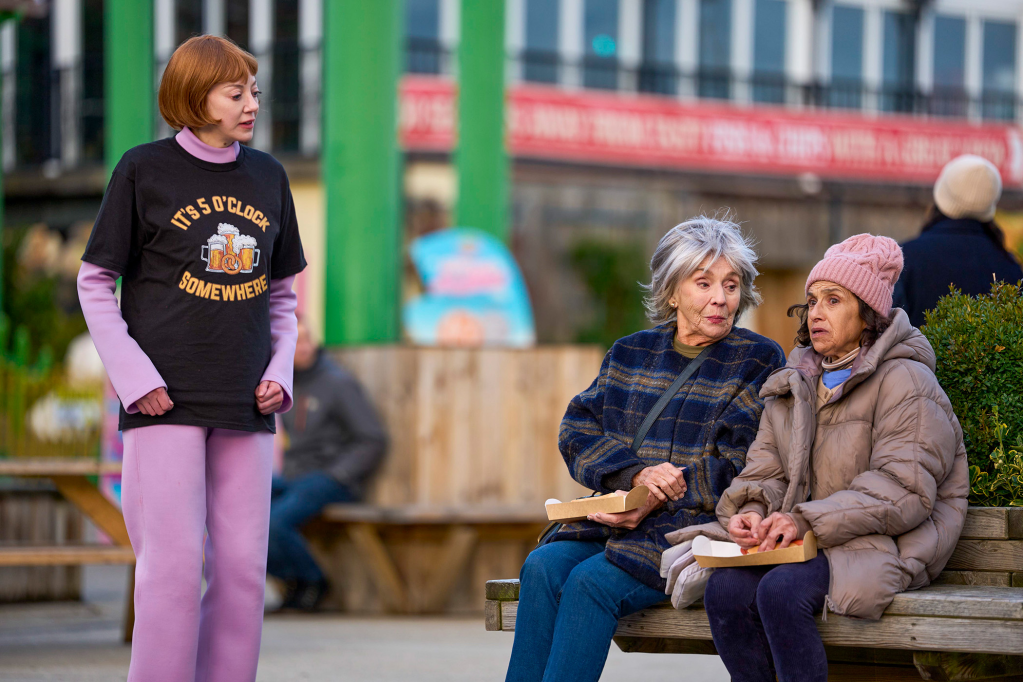
Morgan is now the star of the BBC’s Ann Droid, a lightly dystopic tale of the not-too-distant future in which an outdated model of carebot Linda (Morgan) is purchased to look after Sue (Sue Johnston, from The Royle Family, Brookside and Waking the Dead). The robot soon poses problems of all kinds: its system malfunctions, it poses potential threats to Sue and her family and provides faulty or hilariously useless information to anyone asking. The show’s criticism is only thinly veiled: the idea of our elderly looked after by robots because family relations and healthcare systems fail them might only be a stone throw away.
There is a warm heart to the comedy though, which sets it apart from the other shows discussed and puts it closer to predecessors like After Life: Sue finds connection with Linda eventually, employing her to break free from her solitude, reconnect with friends and lead a more fulfilling life than the grieving widow she has been at the beginning. It’s not necessarily that Linda becomes more human, it’s how Sue takes matters into her own life again and uses the AI in the carebot to her advantage. In that sense, it’s an almost joyful and quite touching tale of old age emancipation and self-reliance.
Ann Droid, despite its hilarious snippets fit for social media and trailers, thus seems like a far cry from the crudity, darkness and sharp edges of the British comedy hits from previous decades. Morgan’s comedy much rather harks back to Buster Keaton’s The General or Peter Sellers’ gardener in Being There. Its warmth stems from the bridges built between human beings across social groups and generations, with the robot as a facilitator of life – and laughs.

 A Damn Fine Cup of Culture