Once again, it’s time for our Shortcuts: what has the crew at A Damn Fine Cup of Culture been watching recently? Take one look at this image and guess:
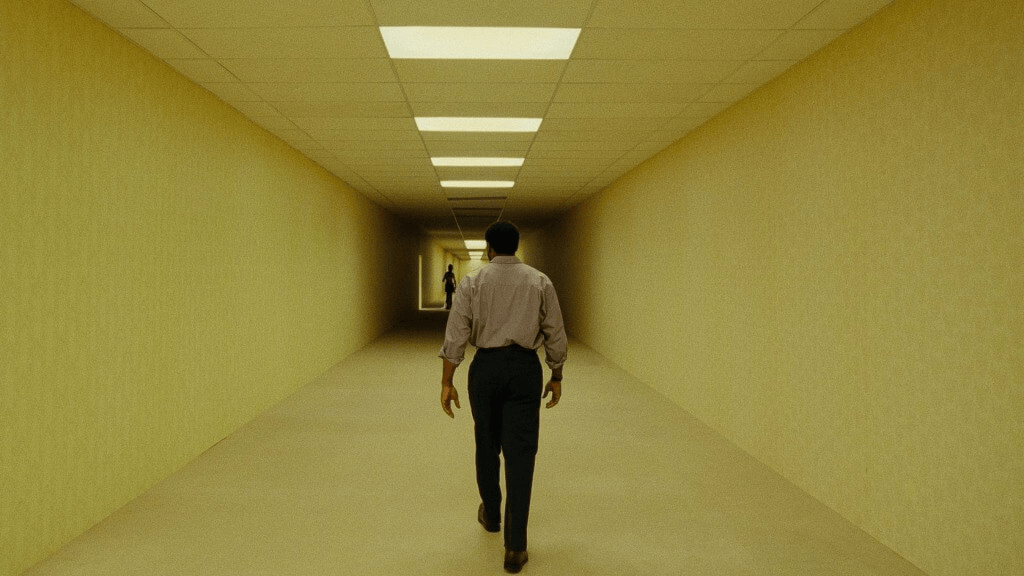
Backrooms (2026)
Much has been made of the Backrooms as an internet phenomenon and meme, starting from a viral photograph of an unadorned series of corridors, naked and unfinished, lit stark by fluorescents. It is an immediately uncanny image, because the brain expects more – furnishings, people, signs of life. Instead, they present as a mazey malformed dimension filled with architectural impossibilities, various bric-à-brac, and things that skulk and thump just out of view. And so, liminal horror was born.
It’s unexpectedly captured the public’s attention and operates in the current zeitgeist as a reflection of the things that terrify us – a slow realisation that coping with our reality requires retreating to a parallel dimension that belies the strength of our minds. The movie starts as such: narration by the movie’s deuteragonist, Dr. Mary Kline (Renate Reinsve), who tells us in therapy-speak that the mind makes loops to keep us safe as children, and those same loops prevent us from moving forward when we grow up. This is tellingly overlaid with the appearance of Clark (Chiwetel Ejiofor). It’s clear from the outset that both of them have issues they haven’t dealt with, and the backrooms that Clark stumbles upon operate as a space that houses their personal demons, and is even shaped by them. An A24 budget allows this to be realised with both wide and claustrophobic detail, as parts of the backrooms present as things rotated through a different reality and range from somewhat askew to absolutely fucked. There’s a section in the movie that delves into a grungy space that works as an analogy for the entire thing: essentially, the backrooms are the universe’s garbage collection, in programmer parlance, and the dank, grotty things we’d best like to forget and dispose of are housed in there. Unfortunately, while effective as a symbol of one area of the human psyche, this flattens the story and horror into something simpler and less interesting to contend with as Clark realises what his problem really is.
The story does not end with a lot of catharsis, but it ends with something approaching understanding, and perhaps the ability to move on. It does not do this with a deft human touch like the horror genre’s masterpieces, but it manages to elevate its subject matter to more than just an uncanny series of rooms, and that is a feat nonetheless.
— Eric
Late Fame (2025)
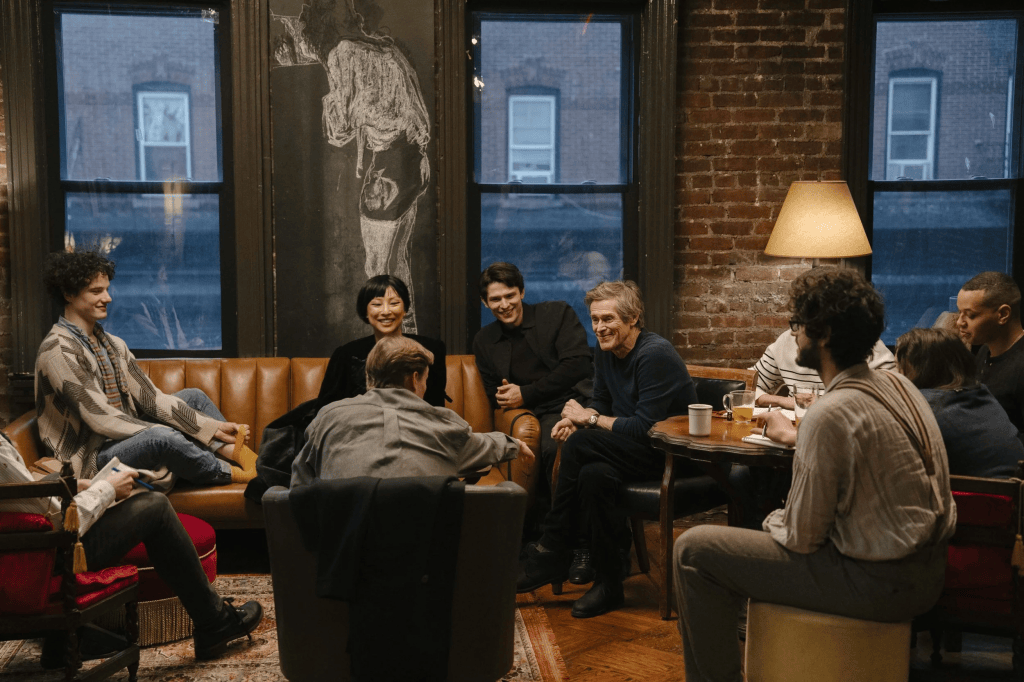
It’s interesting to see how well the works of Austrian author Arthur Schnitzler (1862 – 1931) seem to lend themselves to contemporary adaptations, judging from Stanley Kubrick’s final film Eyes Wide Shut – and now this: Late Fame, directed by Kent Jones (perhaps best known for his 2015 documentary Hitchcock/Truffaut) and written by Samy Burch, who weirdly enough also wrote the script for Coyote vs. Acme, the comedy recently rescued from being memory holed by Warner Bros. for tax reasons.
Late Fame is about Ed Saxberger (Willem Dafoe), who was a successful, well-known poet in the 1970s but has long since stopped writing. Ed is discovered by a bunch of rich-kid bohemian artists who make him their mascot of sorts, hoping that Ed’s artistic cred rubs off on them. There’s a glibness to Late Fame and its depiction of a hipster community of wannabes who want to be artists so much more than they want to put in the sustained work and effort that will make them artists. It also suffers from a plot that is quite obvious ten minutes into the film, so that there’s little along the way that is in any way surprising or novel – which, again, makes Late Fame more glib and superficial than I think it is meant to be. But it is a joy to watch Willem Dafoe in this part, and while Grace Lee’s character (the only woman who’s given any relevance in the film) is grating and cringe-inducing for much of her screen time, she is a fascinating actor and does good work with a character that could be little more than a one-note joke. The film is also shot nicely, though some of the directorial decisions fall flat. (One repeated sound cue feels like a po-faced version of a Simpsons joke.) Definitely worth watching for fans of Dafoe, but I’m not sure the film holds up particularly well beyond this.
— Matt
Salvation (2026)
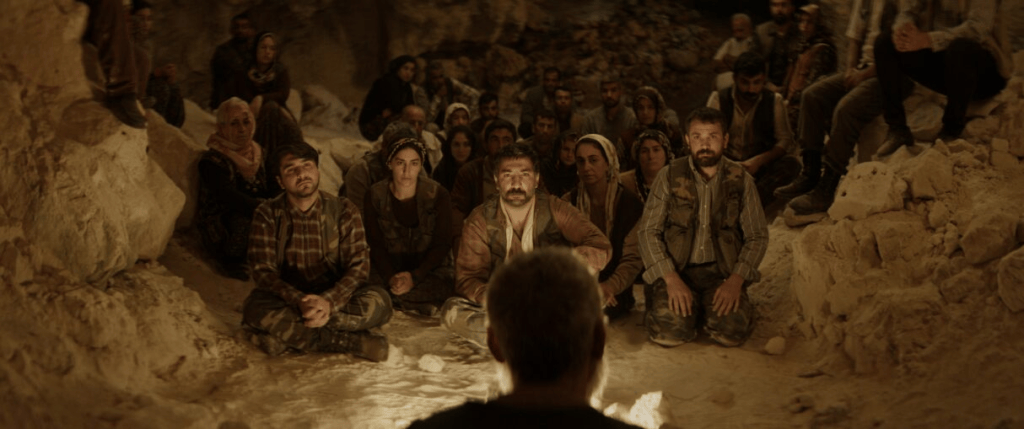
How does fanaticism escalate? How does a society choose a scapegoat and then work itself into a frenzy until the utter destruction of that scapegoat becomes its whole purpose? Salvation, by Turkish writer-director Emin Alper (whose 2022 film Burning Days was similarly stylish and thrilling), explores these questions. The film is deeply atmospheric, and on a moment-to-moment basis it’s effectively harrowing. I think the director wants it to be more than that, though: the film wants to say something about radicalisation, and I don’t think it does have all that much to say about the topic. The characters are well acted and convincing as types, but they are too uniform and one-dimensional to be very credible or interesting as characters. There’s even an extent to which this story about how a community drives itself into a murderous frenzy is oddly apolitical, depicting what lies behind radicalisation in only the most superficial ways, which makes Salvation better as a thriller/horror film than as a drama about the theme it purports to be about.
Also, if you keep throwing gotcha! dream sequences at me, at some point I’ll stop believing anything you show me to be real – which doesn’t benefit any film, really.
— Matt
Spider-Man: Brand New Day (2026)
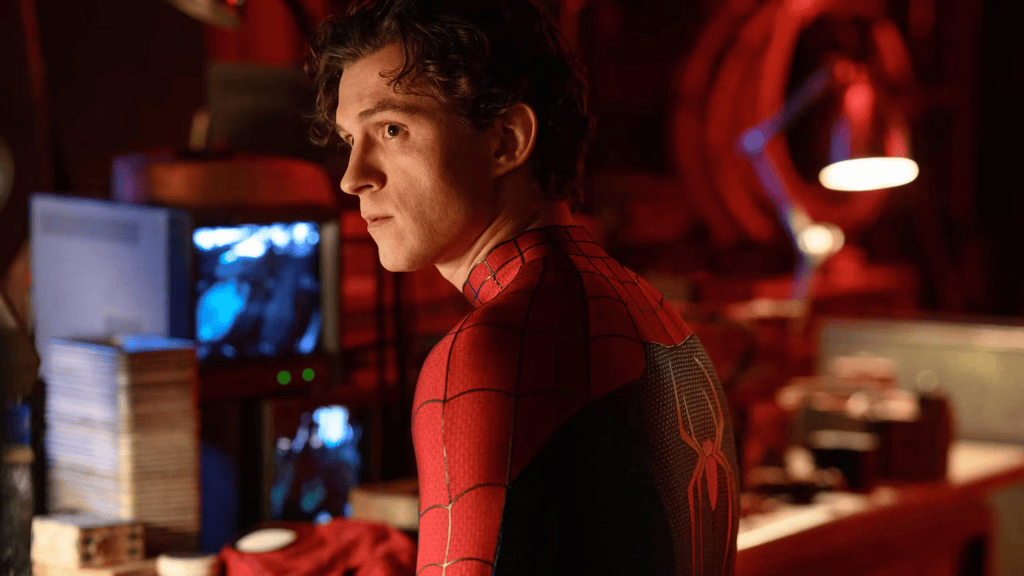
As Spider-Man: Brand New Day sails past box office records, I can’t help but think about what it means for superhero fatigue. For a genre that’s been written off frequently over the last few years, especially after Supergirl bombed – the runaway success of Peter Parker’s latest adventure is striking.
Not least because it challenges a lot of the received wisdom when it comes to why this genre is failing. The plot relies heavily on the events of the previous film where deep breath the wizard Doctor Strange cast a spell that made everyone forget who Peter Parker was in order to save the multiverse from collapse. It features the likes of the Incredible Hulk, the Punisher and Black Widow (the second Black Widow, the adopted sister of the first), and the plot clearly serves as a means to set up future Marvel movies. This convoluted continuity nonsense hasn’t done the film any harm at all.
Ultimately I think folk can get too lost in the details when trying to work out what might make something a hit. A popular actor playing the character in a well-liked way, alongside his equally popular real-life wife – and with some nicely executed action scenes, the bones of a plot that ignores explaining its complications to dwell on engaging ideas and elements. This isn’t rocket science. It’s a recipe that has helped make big successes for decades in cinema.
–Alan

