Welcome to One Best Picture After Another – where I attempt to watch all the winners of the Academy Award for Best Picture, starting at the very beginning. And attempt to answer two simple questions – is the film still actually any good? And why did it win?
8/10
Any list of Best Picture winners is often defined by the list of absences. You can look through a list of all the great films from the likes of Stanley Kubrick, Ernst Lubitsch, Fritz Lang and Howard Hawks: not one of them ended the night of the Oscar ceremony with the top prize.
Bizarrely, though, Alfred Hitchcock does have a picture on that list. Because of Rebecca. Or perhaps he should still be on the list, as the producer re-edited and reworked parts of the film after Hitchcock had delivered his final cut. Hitchcock was to subsequently disown the film, and so its status as his only Best Picture win feels like it needs a large David O. Selznick-shaped caveat.
Selznick was a super-producer at the time, and fresh from the success of overseeing Gone With The Wind, the appeal of adapting Daphne Du Maurier’s recent hit novel Rebecca made a lot of sense. Here again, he oversees the adaptation of a hugely successful novel with a female lead central to everything in the story. The handsome male lead in both tales does not conform to the conventional romantic lead, but rather exists in the story to be the focus of the main character. It was a formula that had worked and would work again, with Selznick putting himself front and centre of this prestigious endeavour.
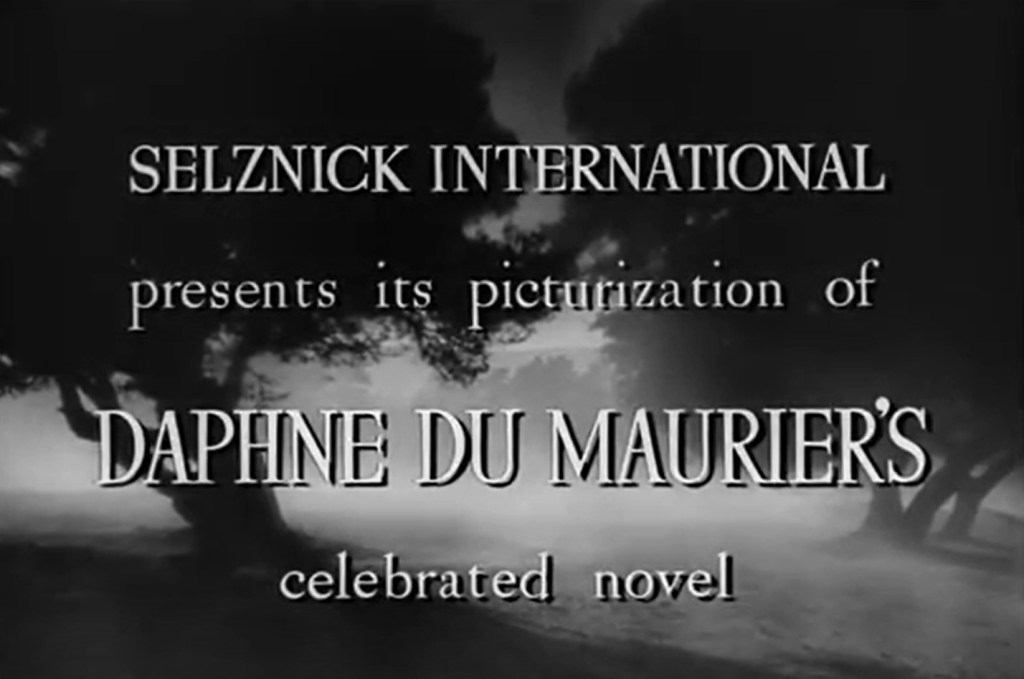
Much has been written about the saga of the film’s production, and of Selznick and Hitchcock’s different visions on what they wanted the film to be. There really isn’t anything I could add to it – so the key question for this post is simply this: is the film that won any good? My answer to this is a qualified yes. I can see, perhaps, why Hitchcock didn’t feel wholly satisfied by it, but I’m not averse to the Selznick element in all this. He knew the type of picture he wanted to make here, and broadly speaking it’s a very enjoyable one.
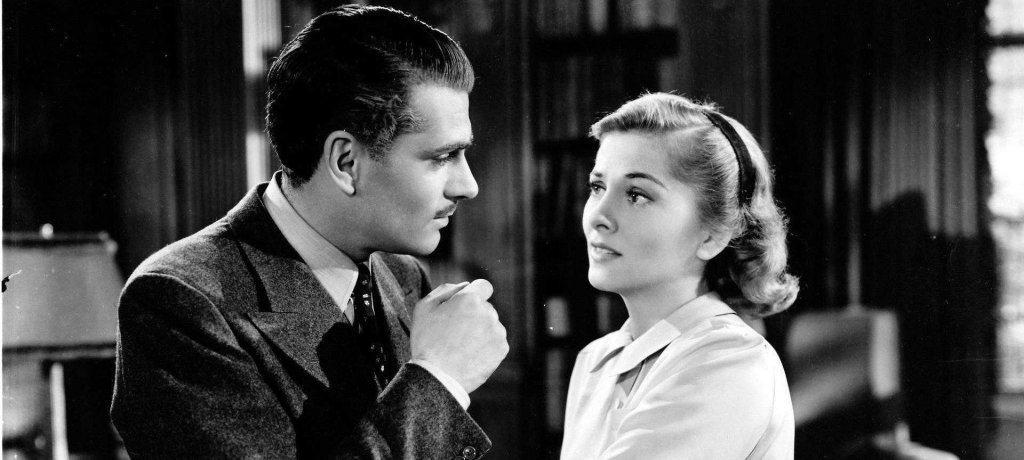
After a suitably mysterious opening sequence, the story settles down in Monte Carlo, focusing on two characters. Joan Fontaine’s unnamed lead is shy, awkward and self-effacing to a degree that seems slightly over the top. When she meets Laurence Olivier’s Maxim de Winter, he is part charming, part mysterious and part controlling. And, like her, just a little bit too much. Watching the first section of the film, it’s possible to think that this is a romantic film that hasn’t quite cast the two leads right. They clearly really like each other, but there’s something jarring that seems to stop them from connecting and having chemistry on screen.
But when the action moves to Cornwall and Max de Winter’s grand house of Mandalay, it becomes clear that this slightly jarring element is deliberate, because now the film is going to make the most of it, with two lead actors who really know how to make it work. An unsettling suspicion broods and grows as the second Mrs de Winter tries to learn more about her new husband’s past. Throw in a brilliant Mrs Danvers to stir problems between the two characters, and it works really well dramatically.
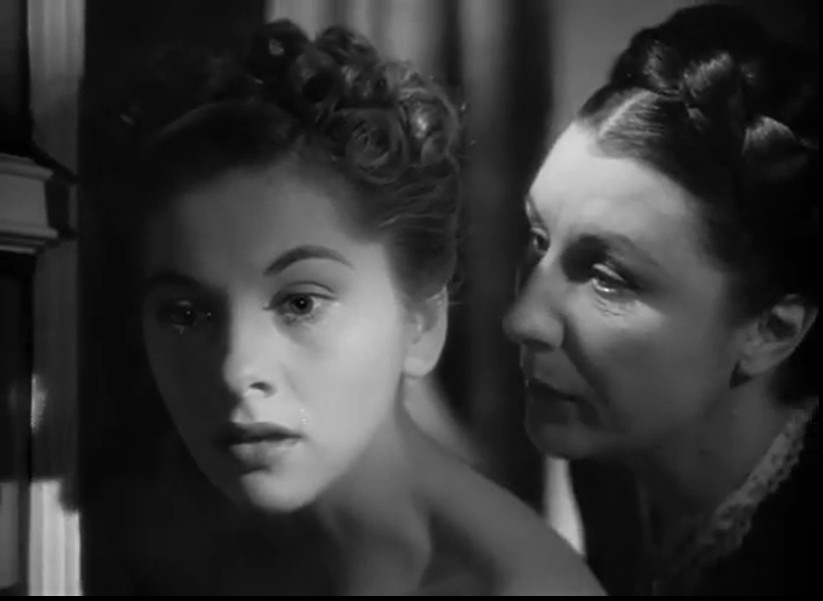
Hitchcock has a talent for building an atmosphere of mystery and hostility in this gothic environment, but the script is also a key reason for its success. Like a good horror story, a sunny, happy world is slowly revealed to have dark secrets lurking in the shadows. It also delivers a nice line in Hitchcockian wit: characters that get funny or silly character moments without totally killing the credibility of the drama. I will admit that watching Joan Fontaine play a character so absurdly modest and decent so soon after Gone With The Wind did make me miss a Scarlettian lead who could be petty, selfish and full of bad decisions.
That said, it’s during the middle section of the film that there are moments when it starts to drag. Maybe had Hitchcock been given greater reign with the script, he might have come up with moments that could have kept the energy up. That said, one idea of his that was nixed was to have the letter R formed out of the smoke from the fires of Mandalay at the film’s end, so it might be a case of ‘be careful what you wish’ for on that score.
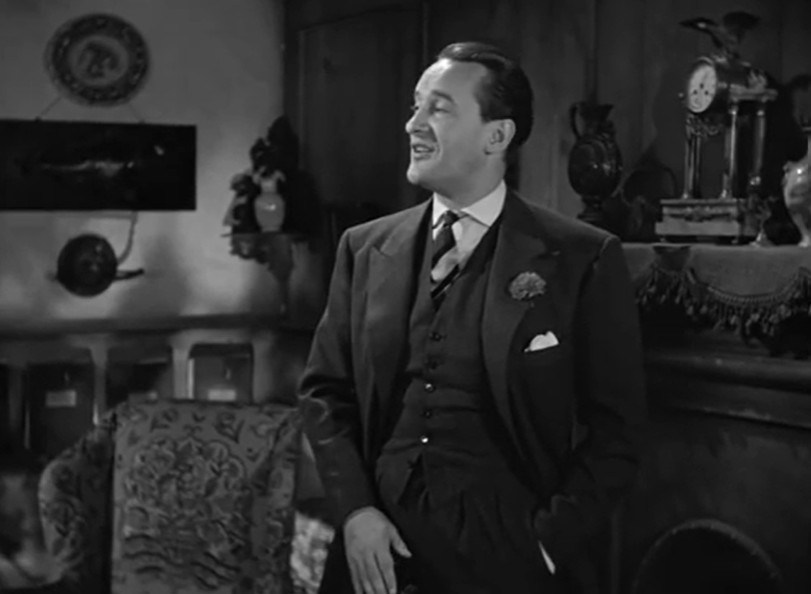
Ultimately, though, it never crosses a line into actually being boring, and then the final half hour reveals its secret weapon in the fabulous George Sanders as Jack Favell. Across his career, Hitchcock delivered numerous charismatic villains, and he belongs up there with the best of them. Louche, cunning and yet also utterly understandable in everything he does, he provides the final act of this film with the energy it needs to propel it thrillingly to the finish.
The Hollywood Production Code made it impossible for any character in a film who committed a crime to reach the end without being punished, and this leads to a pretty egregious change from the book. But while it arguably damages it as an adaptation, it still works within the alternative story the film chooses to tell instead. I’ve read arguments claiming that, because enough is hinted at on the screen, you can read between the lines and the original story is still there. I’m not wholly convinced by that, although it should be noted that Daphne du Maurier was a huge fan of this film.
Ultimately, regardless of how much of this film is thanks to Selznick and how much is thanks to Hitchcock, it’s an enjoyable film. It is well directed and scripted, and it has convincing and engaging central performances. Also, it was a commercial success. As with the year before, this seems to be very much what the Academy was after at this time. Excellent, conventional adaptations of hit novels that make money is a very understandable recipe for a Best Picture winner. But it’s also understandable why such a set of ingredients would not be what Hitchcock wanted to work with, or be known for.
Best Picture 1939: “Gone With The Wind”
Best Picture 1941

