 Frederick Wiseman has done it again. Two years ago, I wrote about National Gallery, a three-hour long documentary that brought us an all-encompassing view of the National Gallery in London. I’ve recommended it at the time, and I still recommend it. Now Wiseman has made an even longer movie about one of the best-known institutions in New York: Ex Libris: The New York Public Library. I have to warn you: it’s 197 minutes long, and it turns Wiseman’s completist tendencies into a disadvantage. Continue reading
Author: Mege
When has a stitch ever saved anyone?

Phantom Thread one of the best-looking movies this season. Since it’s set in the 1950s British fashion scene, it’s certainly the best-dressed movie, without flaunting its lavishness. The dresses, often also the people and the atmosphere of the movie, have a kind of gorgeousness about them. The film feels like it was made decades ago, but it is far from dated. There is a love story at the core of the film, between a high-end middle-aged fashion designer called Reynolds Woodcock and a clumsy French-speaking waitress named Alma Elson. Reynolds is immediately smitten with Alma; while most other men would want to undress her, he is thinking about dressing her up, already sketching clothes for her in his mind. Continue reading
Dope, anyone?
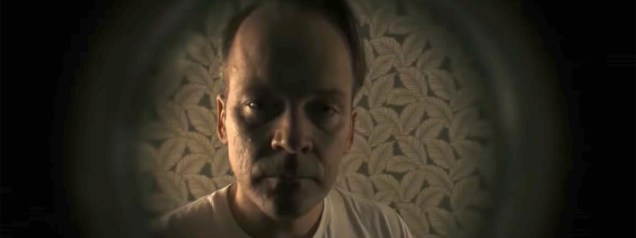 It’s somewhat surprising that Errol Morris’ Wormwood seems to be the first documentary to combine a cast with big names for the dramatic scenes with the traditional doc-staples of talking heads, collages, home movies and grainy photos. It’s a balancing act in more ways than one, and here, it seems to work, if only just. Wormwood is about the death of Frank Olson, who seemed to have fallen out of a 13th story hotel room window in New York and died on the sidewalk in his underwear. He was a CIA chemist who worked for the U.S. army and did research for biological warfare. For years, the story went like this: Olson, together with some of his workmates, was drugged with LSD in November 1953 for a new project about mind control, had a bad trip and finally committed suicide ten days later by leaping to his death. It was an accident, the CIA said, and they were sorry, and the Olson family got to meet President Johnson, who apologized for the tragedy, and the CIA promised to stop all mind-control projects, and that was that. Continue reading
Year of Good and Bad
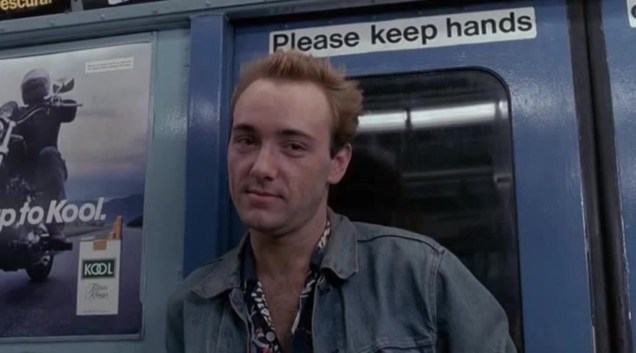 2017 has been a difficult year. I’ve realized that, since the news about them broke, I have avoided all films starring Kevin Spacey or produced by Harvey Weinstein. Same goes for Woody Allen, Bryan Singer and others. I would like to say that it was an unconscious decision, but I have to confess that it was largely intentional. Used to be a time when I could easily divorce an artist’s stupid statements or antics from his or her outstanding artistic performance. The fact that Morgan Freeman appears in a Turkish Airlines ad makes him look like an idiot, but it probably won’t keep me from watching The Shawshank Redemption again. With sexual threats or abuse by Weinstein, Spacey and far too many others, a line has been crossed. I can no longer sit there and watch John Doe do his grisly work without thinking of Spacey and his crimes. So how to react? Should I really stand before my movie shelf and start throwing out Seven? The Lord of the Rings trilogy? Anything ever produced by the Weinstein Company and Miramax? All the Tarantinos? The English Patient? How do Woody Allen fans react to such abuse? Fans of X-Men or The Usual Suspects? I know, of course, that the harm done to the abused persons is not limited to the movie business, and that the damage they suffered weighs far more than the harm done to cinema and acting, but since movies are a crucial way of storytelling, at least to me, and since storytelling has the human condition at its center, I suspect that those movies will play differently to me when (if?) I watch them next time. Something, a kind of honesty in storytelling, will be lacking. Continue reading
Dark Town, Gloomy Times
 It’s just about possible that this year’s best supernatural TV series comes from Germany. It’s called Dark, it’s available on Netflix since December 1st, so it probably won’t be on any best of lists for this year. It should be. Dark borrows from some of the most favorite horror TV series of the last two or three years; it takes what it can use from the recent Twin Peaks, Les Revenants, True Detective, Stranger Things and others, and distils those borrowed spare parts for long enough to turn into its very own material. There are two things that make it worth your while: it tones down the supernatural element and focuses on its characters enough so it doesn’t have to rely on its McGuffin too much, and it creates its own atmosphere so well that it’s easy to forgive it a few shortcomings. It’s a slow series, ten episodes of about one hour, but some scenes are almost bristling with intensity. Continue reading
Detroit goes down
 Detroit is a miss. The beginning and the ending are weak bookends to a middle that is strong and impressive cinematically, but the movie as a whole lacks two basic ingredients: a moral point of view, and a minimum of Detroit-specific context. I don’t think either of these flaws are the director’s fault: Kathryn Bigelow knows how to place her audience in the middle of a scene involving crowds, be it a war or a riot. My guess is that the lack of context comes from the screenplay by Bigelow’s frequent collaborator Mark Boal, who wrote The Hurt Locker and Zero Dark Thirty, also directed by Bigelow. Continue reading
Holy Mother of…
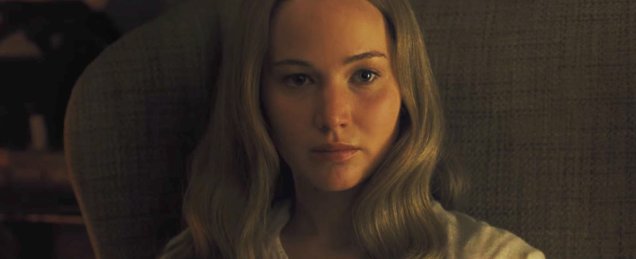 Let’s face it: Darren Aronofsky’s mother! is not the best nor the worst movie of the year, or the decade, or of all of movie history. It’s an average piece of art from a filmmaker who, after making Noah in 2014, has used another narrative from the Bible, i.e. the Garden of Eden, mixed it with ecological concerns, and made a mildly interesting story out of it. The main problem I have with mother! is its lack of surprise for all of its two hours. Once you get that the Jennifer Lawrence character is some kind of Eve and ecological earth mother whose universe is the house she lives in, the rest sort of falls into place. The movie has only three kinds of scenes: Lawrence’s point of view, Lawrence in the frame, or shots over her shoulder. It’s the earth mother’s story and how her realm gets invaded by careless, selfish humans. She has built that house herself and will never leave it – the porch is as far as she will go. She can feel the house’s beating heart getting poisoned by unwanted intruders. The invasion is gradual, but unstoppable, and you know well before the end that we will be back at the beginning, where the house is in flames, with the earth mother dying in it, and her husband placing a diamond on its little altar so that the house can heal again. And so on. Continue reading
Blood takes guts
 On the outside, Julia Ducournau’s Raw seems like an endurance test. There are reports of audience members fainting and vomiting, interrupted screenings and official complaints. And all of these people have seen the R-rated version, not the original, unreleased NC-17 version. During the show I was in, a guy left twice, his girlfriend stayed on, but all three of us fidgeted and squirmed more than once. Yes, Raw is hard to watch, but once you think you can cope with the blood and guts, you will find one of the best-told horror flicks in a long time. Like Lady Macbeth last week, Raw is a feature debut in a double sense: Julia Ducournau directed her own feature-length screenplay, and Garance Marillier, who plays the main role of Justine, is a newcomer. (SPOILERS AHEAD) Continue reading
Dark candle in a dark room
 Reader, we are not in Jane Austen country anymore. Any Austen adaptation must end in a marriage, whereas Lady Macbeth starts with one, not a happy affair, and it gets worse from here on out. The source of this story is, of course, that famous Scottish play, and then there is Nikolai Leskov’s novella Lady Macbeth of the Mtsensk District from 1865, which is said to be loosely based on a real crime. William Oldroyd’s movie, from a screenplay by Alice Birch, could have approached the character of Lady Macbeth from one of those angles. Instead, the movie shows us a young bride called Katherine who initially does not object to be married to a wealthy nobleman who resides in a bleak, solitary country estate. The troubles start during their wedding night: the husband is a gruff alcoholic and under his father’s thumb. He orders her to undress and face the wall, and then he puts out the light and goes to sleep. She discovers that he is impotent and wants to keep her indoors. The mood of the movie has more in common with Wuthering Heights than any Merchant-Ivory movie. Continue reading
From the School of Subtle Manipulation
 There is a wounded stranger in the music room of Mrs Farnsworth’s seminary, a Union soldier from Ireland, a deserter with a leg wound, a man, not exactly young, but handsome. What to do? He is a Yankee, they are all from the South, so shall they hand him over to the Confederate troops nearby, or should they do the Christian thing and dress his wounds first? Mrs Farnsworth herself, the head teacher Mrs Morrow and the five pupils all feel an undercurrent of fear because that deserter might bring the War to their school, a war they watch every evening through a telescope from the upper balcony of their mansion, and they see the black plumes of smoke just beyond the treeline. Sometimes the boom of cannon-fire can be heard. That’s the situation at the beginning of Sofia Coppola’s The Beguiled. It’s a must-see, because who tells stories about groups of girls or women better than Coppola? The movie is set in Virginia in 1864, but it resembles Coppola’s The Virgin Suicides (1999) in more ways than one. Continue reading
 A Damn Fine Cup of Culture