I have a confession to make: I was underwhelmed by 12 Years A Slave.
Don’t get me wrong, the film is extremely well made. It’s beautifully shot, the acting is impeccable, and I would go as far as to say that Steve McQueen’s latest may just be the best, most accomplished slave narrative on film. My problem with it is that I was entirely bowled over by his earlier two works, Hunger and Shame. Especially the former of these took me completely by surprise, its style amplifying its story to an almost unbearable extent, and Shame, while perhaps not being quite as immediately striking (no shit mandalas in this one, for one), was similarly effective. 12 Years A Slave deals with what I’d consider a historically more major issue, but the film didn’t surprise me. In fact, it felt weirdly predictable.
Not every film has to be surprising, and I can’t think of anything that 12 Years A Slave does wrong, but I came out of the film thinking that I’d basically seen a more cinematic, nearly perfectly executed version of the early episodes of Roots. There’s absolutely room for such a film, but McQueen being the director made me expect something, well, more, or perhaps rather something different. I expected something more unique – and I want to stress that this is my problem more than the film’s. However, I came away thinking that McQueen could have done more with what’s unique about the story he’s working with.
The big difference to other slave narratives is that the film’s protagonist, Solomon Northup, was born free in the USA and abducted into slavery. This is touched on in 12 Years A Slave: Northup, as played by Chiwetel Ejiofor, holds himself differently from his fellow slaves, he sees himself as separate from them for a long time. His situation, from his perspective, is immediately wrong to him in ways that the other slaves’ situation might not be in his eyes. This is alluded to occasionally throughout the film – but it is of much less interest to the film McQueen has made than the shared reality of what being a slave must have been like. There is clearly a purpose in depicting this universal reality, but I couldn’t help wanting more of what made Northup’s story different as much as what made it universal.
Does 12 Years A Slave deserve the accolades it gets? Absolutely. It is, as I have mentioned, a beautifully made, engaging film. It just isn’t the surprising, unique work that I expected from McQueen.
Well, fuck. I remember a few years ago, just around this time, hearing about Heath Ledger’s death and believing it to be some internet-era hoax at first. Yesterday was very similar: I quickly go to check Facebook and see a handful of posts that Philip Seymour Hoffman had been found dead in his apartment, and my first instinct is not to believe it. He can’t be dead. He’s too good. This is some sad internet joker’s idea of a good joke.
If it’s a joke, it’s definitely one of the worst I’ve heard in a long time – or the Great Big Casting Agency In The Sky decided to up its game considerably, because Hoffman was one of the strongest, most unique and least vain actors to come out of Hollywood. Here’s hoping he’s sitting next to Maximilian Schell right now, going through his lines with that half-amused, half-exasperated half-smile of his.
Like so many people, I first noticed Hoffman on my radar when I saw Magnolia. He’d been in earlier films and had a poignant part in Paul Thomas Anderson’s Boogie Nights that was indicative of the work to come, but Anderson’s Magnolia put him in one of the leading parts, and rightly so. There was something seriously weird about the performance, but not in the quirky indie style that we’ve become accustomed to; there was no trace of that cutesy self-centredness in him. Magnolia: now there’s a film that was almost impossible to act and act well, for all involved. In the wrong hands, its lines would be overblown melodrama. Its too-decent-to-be-true character Phil Parma, among many others, would fall flat. Not so in Hoffman’s hands.
By the time The Talented Mr Ripley came around, it felt like Hoffman had always been there. Even though it was only shortly after Magnolia, I remember looking forward to the film because, damn, Philip Seymour Hoffman, one of my favourite actors! The part was smaller, but it’s one of the most memorable performances in a film packed with unusually strong performances. And again, that weirdness: Hoffman could turn on the most disturbing brand of camp that shouldn’t ever work, but he made it work – more than that, he made it essential to the character and so right it hurt.
It would be difficult not to go through the man’s filmography and pick scenes from practically every single movie he’d been in; personally I’m partial to his shlubby teacher in 25th Hour, an underrated film and a beautifully judged performance, and he was fantastic in Almost Famous or providing one of the main voices in Mary & Max, but also in uneven and mediocre films like Red Dragon or Mission: Impossible 3. Charlie Kaufman’s Synecdoche, New York is a film that works better on paper than on the screen, but when it works it’s because Hoffman made its central character inject an almost unbearing humanity into a story that constantly risks being tripped up by the meta Chinese Boxes it leaves lying all over the place.
For me it started with Paul Thomas Anderson, so it’s only right it ends with him. I’m sure Hoffman’s performances after The Masterwere as watchable as everything he’d done, but his Lancaster Dodd is all the proof that’s needed that American cinema has lost one of its most unique, generous and powerful voices – and while we have many indelible performances to choose from, it’s difficult not to be greedy and wish we could have had many more.
Let’s get it out of the way: GTA V may just be the best Grand Theft Auto game. It may also be the most disappointing – and it is probably one of the dumbest games in the series. Credit where credit’s due: Rockstar Games do one thing amazingly well, better than anyone else out there, and that’s creating living, breathing worlds. Their obituary to the Old West, Red Dead Redemption, is one of my favourite virtual worlds bar none, the sort of place that I enjoy inhabiting and navigating, even without following the story or sidequests. Just being in the world covers so much of what I look for in games.
Red Dead Redemption also works in one key way that GTA V flubs, and that’s the character writing: yes, there are the joke characters, the broad caricatures of two-faced hypocrites, but Rockstar’s western knew when to take its cast seriously. It didn’t work all the time or with every single character, but by and large the dramatis personae of what could perhaps be called Grand Theft Horse carried the weight of its narrative. I understand that Rockstar might not want to write tragedies all the time – something that Red Dead Redemption ended up being quite effectively – but when it comes to humour the company’s writers tend towards the lazy, obvious joke… and then they flog it until way past its expiration.
I admit, there were moments in GTA V where I laughed out loud, and there were others where I sniggered. There are storylines in the game that work due to a combination of fine voice work and their sheer absurdity, but for each of these storylines there’s a character whose venality and stupidity is so drawn out, so overplayed it’s cringeworthy. What’s worse, perhaps, is that these characters are essentially all variations on the same theme: people who are smug and think they’re the best thing since sliced bread, yet they are essentially hollow. Which is fine until you realise that GTA V is 90% populated with such characters – and no, this does not strike me as a convincing parody of Southern California, and it’s most definitely not an interesting parody – and that the writing itself exhibits the same smugness. By comparison, Rockstar’s previous foray into Los Santos and surroundings in 2004’s GTA San Andreas (it’s already been ten years? now I definitely feel old) also had the broad jokes and the caricatures, but it brought together a band of mismatched characters that genuinely felt like family by the end of the game. By comparison, I don’t miss any of GTA V‘s cast of misfits and murderers, since with so many of them it’s clear that the punchline will always precedence over the character. There are exceptions: moments that show genuine wit and complexity, and jokes that don’t rely on the nth variation on the theme of “Haha, aren’t Californians/Americans/people stupid, vapid and easily fooled?”, but compared to Red Dead Redemption it all feels too much like a middling sitcom writer had watched The Sopranos and decided that they could pull this off.
Much was made of the lack of female protagonist in the game, especially since GTA V‘s main innovation is that there’s not just one but three playable characters. Seeing how limited Rockstar’s palette is in their latest, I have to say I’m glad they didn’t try to write their first female protagonist in this one. In fact, my main recommendation to the company would be this: they’ve pretty much perfected the creation of living, breathing worlds and mechanisms to enjoy being in that world. They have great artists, they choose fantastic music to add another dimension to their worlds, and they have ideas. What they should do is bring in new writing talent that doesn’t just do what they already do. They should get writers whose skills can shake up the by now rather stale mix of HBO Lite (imagine the worst moment in the weakest episode of The Sopranos) and Southpark-style loud parody. They don’t need to go for Greek tragedy or the Dickensian sweep of The Wire – but they should stop telling what is essentially the same joke. In brief, whatever they do next, I’d rather not think that it’s an improvement on their track record to date in every respect other than the writing. If that’s the case, I might just stay in GTA Online, because when the lines are provided by other players I don’t expect the writing to be good.
P.S.: For the record, GTA V‘s most maligned character, Trevor, is actually the most interesting at times. Yes, much of the writing is lazy and repetitive, but there are moments when his lines display a self-awareness that, while not particularly deep, does stand out compared to his usual lazy “Ooh, isn’t this edgy, offensive and craaaaaazy?!” shtik, the aftermath of the infamous playable torture scene (ah, to be a gamer in 2013…) being a case in point.
Well, that’s a lie. Obviously I can comment and I will. So there.
I’ve been watching the American remake? reimagining? resomething of House of Cards. On paper it seems a perfect proposal, updating the series and adapting it to the US context while giving David Fincher and Kevin Spacey something to get their teeth into. Critics largely agreed, on both sides of the pond. We’re now about half a dozen episodes into the first series, and I have to admit I’m not quite feeling it yet. I can’t even say it’s the series: my main problem at this point is that my memories of the BBC original (primarily the first series – the second and third got progressively worse in terms of writing and plot) keep getting in the way. I don’t have any issues with remakes on principle, but I keep thinking that BBC – no, scratch that, that Ian Richardson did it better. In fact, I think that’s my main problem so far: Spacey’s performance up to this point, or possibly the way his character is written, strikes me as somewhat lazy. He’s got the Spaceyisms down pat, but there’s no urgency behind it, no purpose. We’re told what this Frank Underwood wants to achieve, giving his machinations and manipulations a theoretical goal, but so far I don’t feel it. Manipulating people seems to be an end in itself to Underwood, whereas Richardson’s Francis Urqhart was a driven man, something his aloof, calculating irony sometimes covered but that was constantly seething under the surface.
I’m hoping I’ll learn to appreciate the Netflix House of Cards for what it is, rather than for what it isn’t and perhaps shouldn’t be. In the meantime, though, here’s a shoutout to Ian Richardson’s defining role, which he played to perfection even in the inferior second and third series. Is he the best neo-Richard III of all times?
Nope, I won’t be doing any lists. No “Best game that gamers feel insulted by, saying it’s not even a game, like!”, no “Best instalment of The Hobbit to date, even though it wastes Mikael Persbrandt” and no “Best mildly disappointing new League of Extraordinary Gentlemen comic”. Just one entry.
Or should that be entrée?
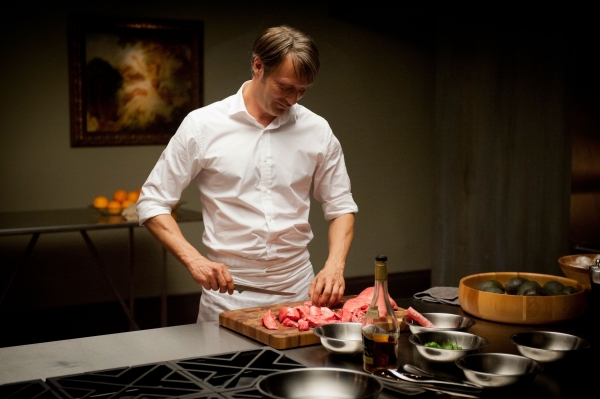
I’ve written about Hannibal before. It’s rare that my pre-release expectations of any media product are this different from my opinion of the result: when I heard that they were doing a TV series based on the Hannibal Lecter books by Thomas Harris, I scoffed audibly. Cannibalistic cash cow, anyone? I was wrong, though: Bryan Fuller and his band of assorted sickos, psychos and gourmets have created one of the most fascinating series in a long time. It’s no The Wire, Deadwood, The Sopranos or Six Feet Under – but neither does it suffer from that comparison. It’s something entirely different, and it’s remarkably different from the films based on Harris’ novels. There’s obviously an element of Grand Guignol in the artistic killings of the series, but at the same time we’re not supposed to titter and gawk at the imaginative imagery. Fuller puts a sense of terror and downright, metaphysical dread back into that most hackneyed of fictional figures, the serial killer.
Much of the credit must go to Fuller’s two leads. I expected Mads Mikkelsen to be good, but he’s better than I’d dared to expect. He is miles away from Anthony Hopkins’ increasingly hammy Hannibal: a cold, calculating, diabolical and utterly fascinating creature, one of the reasons why Hannibal freaks me out as much. If Hopkins is theatrical in his camp evil, Mikkelsen’s culinary villain offers a much more intellectual, sharp-as-a-knife theatricality with no hint of a wink at an audience that despite themselves roots for that darn rascal Hannibal.
Will Graham, played by Hugh Dancy as a permanent bundle of frayed nerves sending messages of pain to a fevered mind, could have been the boring straight man, but instead he offers the much needed polar opposite to the series’ Hannibal Lecter. His humanity could have been boring, cloying or preachy, but Dancy brings a taut, nervous energy to the role that is constantly interesting, always watchable. The rest of Hannibal‘s cast fares well, but it’s Dancy and Mikkelsen that make it work – together with the cinematography, that is, which manages to balance fascination with repulsion with a deftness I can’t remember having seen in a long time, and definitely not in any of the post-Silence of the Lambs serial killer movies.
There have been other interesting, worthwhile media events in 2013, but nothing has captured my imagination and haunted me as much as Hannibal, and for that I owe Bryan Fuller a dinner, at least.
He may just be the main course, mind you.
And on that yummy note: wishing every one of you a very happy 2014! Except you. No, the other one. Yes, you. Sorry.
The following is a guest post by Johanna Bucher, a friend and fellow gamer who has a keen eye for the potential of the medium. Thanks a lot to Jo for this end-of-year treat!
One aspect I love about video games is the potential for escapism. More so than film or literature video games enable you to be someone else, a powerful wizard, a Jedi knight, a bad-ass bomber pilot. In video games you fight dragons, fly spaceships, have super powers, and travel through time saving entire galaxies from impending doom. In short: you have a chance to do grand things you never can in real life. And the further away the setting of a computer game from the here and now, the better for me. Or so I thought.
Gone Home has none of the above. It takes place in the real world, it evolves around completely ordinary people leading ordinary, not to say, drab lives. Their fears and hopes are all too familiar. There is nothing striking about them at first, other than perhaps the big mansion they live in. So, what possible attraction could this game offer which puts you in the shoes of 20 year old Kaitlin Greenbriar, returning from a long trip to Europe, expecting to be greeted by her family only to find the house abandoned?
What the game “lacks” in grandeur or exotics it makes up in characterisation and attention to detail. Through audio diary entries at specific points in the game, notes and artefacts found in the house, the mystery (what happened to everyone?) slowly starts to unravel. Not all of the clues found in the house make sense at first but with each new room discovered, a more coherent picture can be drawn, of the goings-on and of the people involved in them. The rewards in this game, then, are not shoot-outs, levelling up or collecting loot, but picking up the threads of strangers’ lives and in the process of getting to know them discovering that you start to care for them and their small lives because, more often than not, they strike a familiar chord.
It is no coincidence that the game takes place in 1995: this is pre-internet, pre-cell phone. It’s the age of VHS, vinyl and audio cassettes, where people write notes and letters by hand, or maybe, if it gets really fancy, send a fax. This leap back into analogue times is more than a nostalgic walk down memory lane (although the game’s creators clearly revel in that.) It also sets a different kind of pace: it slows the game down to the sound of your footsteps pacing about the rooms, the rhythm of the written and spoken word (masterfully supported by wonderfully restraint music and great vocal acting). In a strange way the physical exploration of the space also becomes a mental one.
In a review to the game I read that calling Gone Home a video game is doing it a great disservice. And I agree, this game is not for everyone. It demands a certain amount of patience, the willingness to do rather a lot of reading and rummaging through drawers and armoires. But I would claim that although the game deliberately goes against many video games conventions it is the perfect and only medium to be told in. This story only fully comes to live through the narratology of video games.
Gone Home, then, is not so much about what the story is about and its conclusion (although the topic is not a trivial one and the conclusion is rather touching) but much more abut about how it is told. And summing it up would be the greatest disservice done to it. It has to be experienced. So, sod escapism, this time at least.
If you had to guess the screenwriter and/or director of a film featuring the line “Where is his scrotum?” with respect to a ginger cat, how long would it take you to come up with the name ‘Coen’? There are definitely many examples of the brothers’ trademark deadpanned quirks throughout Inside Llewyn Davis – at the same time, though, their latest is a remarkably low-key – and dare I say “mature” without sounding really old? – work, scrotum or no scrotum.
There are many things the film isn’t; for one thing, I wouldn’t call it original, as its characters and story beats are pretty familiar, nor is it as comedic as many of the Coens’ films, although it is frequently amusing. It is, however, a film that is crafted almost to perfection, knowing what it wants to be and how best to be it. This is nowhere as apparent as in Oscar Isaac’s performance as the title character, a singer-songwriter trying to find his place in the folk music scene of the ’60s. This isn’t an award-grabbing performance, remaining mostly internalised throughout, yet there’s not a single beat, line, gesture or lack thereof that could be changed without losing the character’s essential quality. Llewyn Davis is not an easy character to like, often exuding an understated mix of resentment, self-pity and arrogance underlying his lack of direction or drive, but Isaac, working with a strong script, makes him engaging – and that’s when he isn’t singing. When he is, you want to keep listening to Davis’ voice.
Just as essential to the film’s success as the central performance, the script and the music, is its beautiful cinematography, for once not by longtime Coen collaborator Roger Deakins but by Bruno Delbonnel of Amélie fame. I’ve long been annoyed with the nostalgia porn of so many films set in the ’60s or ’70s, but while Inside Llewyn Davis looks beautiful, it’s not the usual commodified attractiveness of the past that cinema tends to peddle. Delbonnel’s images are gorgeous to look at, but that doesn’t keep his New York and Chicago, his big city streets and smoky clubs, from being cold, dingy and unwelcoming. The film has an artist’s view of the ’60s, not a tourist’s.
So, in short, the film is surely one of the Coens’ most accomplished features – though I’m not sure the film will stay with me to the same extent that some of the Coens’ earlier works have; Fargo will always be special to be for being the first of the brothers’ films I’ve seen (and with my later wife, so it’s loaded with personal significance), and movies such as Barton Fink, The Big Lebowski and The Man Who Wasn’t There have probably left more of an imprint due to who I was when I saw them. As much as I liked Inside Llewyn Davis, it didn’t resonate with me the way that these other films did – but I wouldn’t hesitate to say that in the Coens’ oeuvre, Inside Llewyn Davis may just be the most pitch-perfect, beautifully made.
Ah, video games. The love that dare not speak its name, at least in many mainstream media. According to TV especially, gaming is about bleeps and bloops as well as about blood and guts. Games are inherently male, inherently adolescent, inherently about power fantasies – and lest the gamer protest too much, that’s how the medium likes to present itself, at least when it comes to marketing. Boys play video games where they wield massive guns that would have made Freud go “Hmm…”, girls play video games that are pink and feature ponies, right?
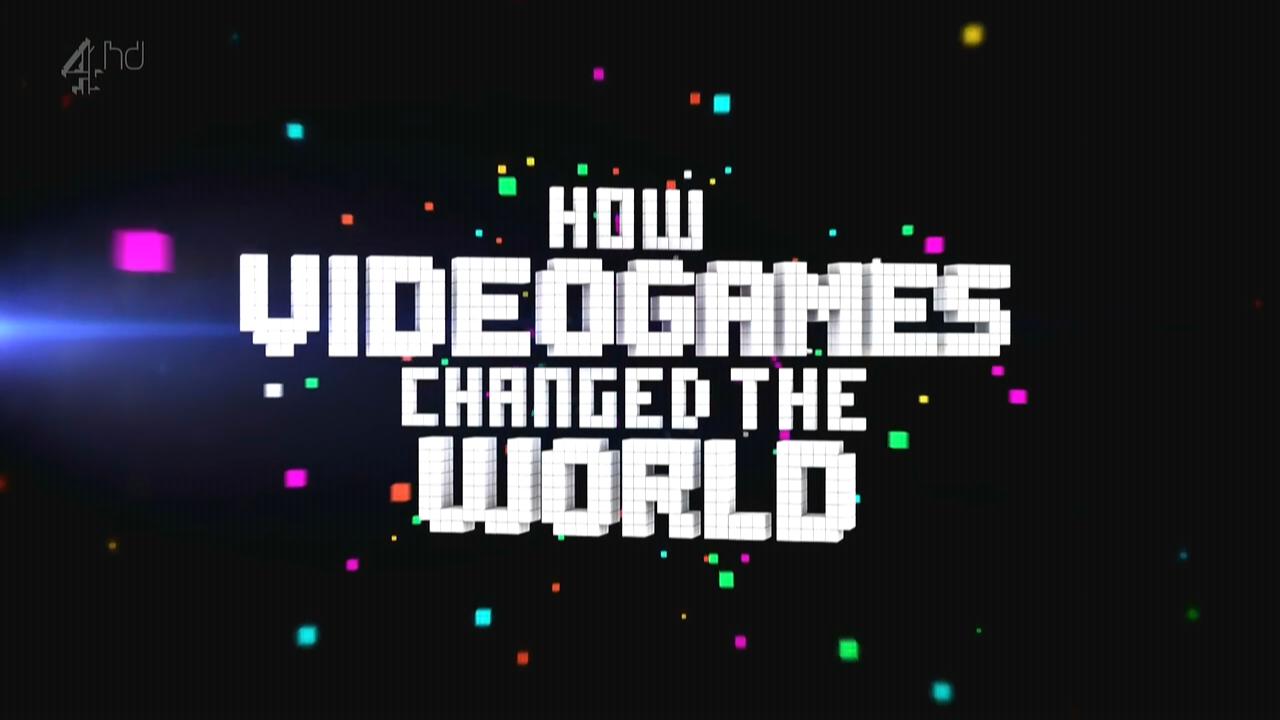
Charlie Brooker’s latest on Channel Four, the feature-length How Videogames Changed The World, was refreshing, mainly because TV seems to see games in very generic ways: either we get the embarrassing dudebro image of Call of Duty gaming, the stereotypical manchild living in his parents’ basement eating crisps and playing World of Warcraft, or we get handwringing worries about how gamers are desensitised by their chosen medium and turned into ticking timebombs just waiting to shoot up some high school. Brooker’s show looked as games as if *gasp!* they were a cultural good, for better or for worse, and should be seen as exactly that. Regardless of their cultural worth, games have become too big to ignore – and that may be one reason why they’re still presented as the sort of endeavour waiting for us to go 1 Corinthians 13:11 of them: “When I was a child, I gamed as a child. But when I grew up, I put away childish things, like controllers and such.”
Brooker, together with a whole bevvy of talking heads, took the programme’s viewers through games from their bleepy inception to their social-media-infused present day. Far from po-faced (or should that be Pong-faced?), HVCTW was largely about memories: from Peter “I voiced Darth Maul, so don’t you dare misspell my name!” Serafinowicz to Jonathan Ross, with various comedians and games journalists filling the ranks, talking about growing up on Space Invaders and GTA. One thing that was clear from the show: video games may slowly be growing up, dealing with issues more weighty than whether to shoot that terrorist in the face with an assault rifle, shotgun or grenade launcher, and that’s because video gamers and developers are growing up. A 30-something dev changing diapers on a nightly basis may make very different games from the guy in his 20s, and that’s definitely a good thing. The medium has become increasingly diverse over the last years, with a growing indie scene experimenting with what games can say and how they can say it differently from films or books.
For me as a long-time gamer – ah, those heady days of writing BASIC code in between bouts of International Soccer! – HVCTW was nevertheless a qualified success at best. It was great to see Channel Four taking the medium seriously, but Brooker and his team delivered a show that didn’t quite know what it wanted to be: was it meant for general audiences without much of an idea of the medium, or was it by gamers for gamers? It was each of these at different times, but as a result it often fell between two stools. I wonder how the programme was received by non-gamers, because I’d imagine that they lacked the context to make sense of, say, the ultra-gory Mortal Kombat footage, or to understand the importance of the rise of the indie scene as told by Brooker, yet gamers who’d lived through most of the games mentioned are likely to have found much of the show rather “been there, done that”. Perhaps this could have been averted by giving HVCTW more breathing space and turning it into a series, or by ending it with an actual conversation between gamers, developers, experts and (most importantly, perhaps) people who don’t see what all the fuss is about (as long as they’re not called Jon “You know nothing!” Snow). As it was, HVCTW was several things at the same time – documentary, primer, nostalgic look back – without being any of these altogether successfully. The programme may have worked better as a statement – that video games are culturally relevant – than as an argument supporting this statement.
Now, gentle reader, you may be wondering, “Can I watch this programme myself, so I can tell this Goofy Beast guy how he doesn’t know what he’s talking about?” You can – provided you’re in the UK, or your computer is suffering from MPD and believes it’s in the UK. Just follow this magical link. For those of you unblessed with UK residency, though, here’s a short clip:
P.S.: The true test of whether you’re a real O.G. (Original Gamer)? It’s this – does the Robocop theme tune (Gameboy or C-64, I don’t mind) make you wax nostalgic?
I’m afraid that this year autumn and the onset of winter got to me, much more than in other years and surprisingly so. The result was that the cold, grey weather sapped my physical as well as mental energy – which meant no blogging for the weary. Can’t say that my energy’s back, but I’m hoping to use this post as a gentle kick in the backside. Since it’s been a while, I thought I’d do a Variety Pack of sorts, on TV series for a change, so without much further ado…
Orphan Black
I read the AV Club reviews of this one when it showed in the States; even though it was a BBC co-production the Beeb only showed it months later. The AV Club gang loved Orphan Black, and there is a lot to like about this sci-fi-ish conspiracy thriller, first and foremost Tatiana Maslany. Her playing several different characters isn’t flawless, relying a bit too much (especially at the beginning) on dodgy accents and costume choices, but as she gets into the parts she quickly becomes the series’ main asset. By the fifth episode I wasn’t thinking about the seamlessness of the special effects any more – I just accepted that there were several clone characters on screen who all looked more or less the same but were totally different in most ways. The plot, while perhaps too convoluted for its own good, definitely drives the series along to its conclusion/cliffhanger. Having said all of this, though, I’m not sure Orphan Black deserves the hyperbolic praise it received on the other side of the Atlantic: in terms of tone, it’s not altogether surefooted, and various characters – even the occasional clone – remain flat, uninteresting and even annoying. I’m intrigued for season 2, but it’s nowhere near the top of my list of favourite series. Entertaining, yes, but I’m glad I didn’t go for the box set.
Sports Night
Is there a TV writer as readily recognisable as Aaron Sorkin? In some ways, Sports Night feels almost like someone has fed the writer’s mannerisms into a computer and turned up the Aaron-o-meter to 150%. The cast is more than capable, but even for someone who loved The West Wing the series can be formulaic as well as overbearingly smug and self-satisfied. Still, there are moments when it clicks – mostly thanks to the likes of Peter Krause, Felicity Huffman and the rest of the cast. (And yes, there are moments when the series brings out the worst in its composer, the improbably named W.G. Snuffy Walden.) Would I have watched The West Wing if I’d started with this? I’m not sure – but there are worse ways to while away 22 minutes.
And just for the heck of it, here are seven minutes of Sorkinisms:
Real Humans
I was a bit wary of this one; there was a big brouhaha in newspapers when they started showing it here, but to me as a former(ish) sci-fi geek it all sounded rather “been there, done that”, with the main inspirations being Asimov and Blade Runner. We’re now six episodes into the first season, and while the ideas in the series may not be the most original to anyone who’s been following the genre, that’s beside the point. Being Human takes a page out of True Blood‘s book, looking at what our society might look like if this one foreign element (androids in the case of the former, vampires in the latter) were to be introduced into it – but differently from True Blood it shows relatively little interest in its lore. Instead, there are elements of allegory, but never to the extent where the series’ so-called ‘hubots’ become a facile stand-in for oppressed group X. The social critique and satire are balanced by a plot that keeps things going smoothly and by characters that are fun to watch, from the sad-sack who, after being left by his wife, blames all his misfortune on the machines to the icy renegade hubot leader who’d give Rutger Hauer a run for his money.
And that’s it for now. I hereby solemnly promise that it won’t be as long yet again before my next post!
Gravity is a gorgeously shot film, no doubt. It’s a film by a director who knows what he’s doing; there’s not an ounce of fat on that movie. It’s a thrilling piece of cinematic craftsmanship, and one that has rightly garnered praise from critics and audiences alike. It’s difficult not to see some of the criticism as internet-age contrariness. Is the film’s plot simple? Perhaps. Is it too simple? Well, that point was ably countered by that patron of upper-case criticism, Film Crit Hulk.
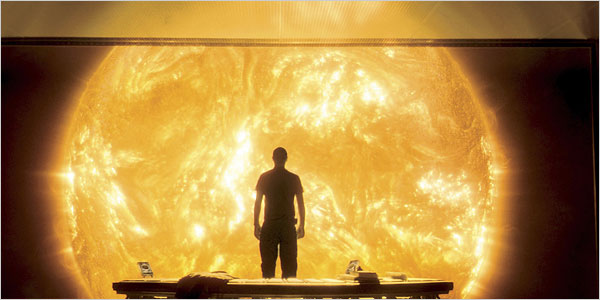
And yet, I came away from having seen Gravity being subtly disappointed. It’s a good film, definitely, and Cuaron does a great job – but already one or two days after having seen it, when I try to think about what I saw the images that come to mind aren’t Gravity‘s, they’re from Danny Boyle’s Sunshine.
Now, Sunshine… It’s a flawed film that’s almost sunk by its last third. It’s messy and confused. Yet it resonated with me to a much larger extent than Cuaron’s more accomplished, more consistent movie did. As a matter of fact, one of the reasons why I was somewhat disappointed with Gravity is this: I was immediately pulled in by the trailer, which evoked the visceral dread of floating off untethered into the infinity of space. The film itself didn’t bring back this dread, because of its structure: obviously Gravity wasn’t going to kill off Sandra Bullock, at least not before the final five minutes or so, which meant that there was little sense of risk. It’s possible for stories to solve this conundrum by involving their audience in a sleight of hand where they know a protagonist won’t die, yet they feel that they may just be wrong about that. Gravity didn’t do that, at least not for me, and I’m not sure it wanted to – its aim was to show Bullock’s character struggling and triumphing.
That’s the other thing, though: I did care about the character triumphing, but not much. Dr. Ryan Stone, first-time astronaut, works as an audience stand-in, especially in concert with the amazing cinematography (seriously, if Emmanuel Lubezki doesn’t get an Academy Award for this, the Academy should be shot into space!), but to be honest, I didn’t particularly care about her. Part of this is Bullock’s particularly American everywoman quality: a bit like a female Tom Hanks, there’s something to calculatedly likeable about her. She works well in Gravity, but I often find her (and Hanks) bland, compared to, say, the everyman characters of Jimmy Stewart that hinted at darker qualities under the folksy niceness.
Adding to this are my issues with Gravity‘s themes: Film Crit Hulk (and other critics) liked the rebirth motif running through the movie, but I found it somewhat hackneyed and distractingly obvious. By the time we get Bullock’s zero-G fetal position and realise that the line tethering her character to various space vessels doubles as an umbilical cord, the film is practically shouting its subtext at us in IMAX-sized captions: we’re witnessing her rebirth, get it?
Sunshine is hardly all that more subtle about its themes, but it’s less single-minded – it’s more messy, as I mentioned earlier – and for me this makes the film resonate more. It’s fair to say that Boyle’s movie doesn’t quite know what it wants to be, but the result is that Sunshine‘s themes aren’t as pushy. More than that, though, I cared about its characters and their plight much more than I did about Dr. Stone’s; she may be more likeable, but her likeability is largely predicated on the audience liking Sandra Bullock. Sunshine‘s characters are more flawed, more complicated, and to my mind more human. As a result, when those characters die it feels more like a loss, whereas Gravity‘s deaths were mostly forgotten a minute after they occurred.
There’s something else that Sunshine pulled off and that makes the film resonate more with me than Cuaron’s arguably more accomplished movie: both films have a metaphysical component, but Sunshine‘s goes beyond the individual level. It’s not just about the potential death of one audience stand-in, it’s about the possible death of mankind. It’s about the two directions in which playing God can go: the film’s protagonists are working on saving the sun and, by extension, mankind, while the antagonist wants to return us all to the stardust we came from. Both sides are torn between being flawed humans and aspiring to the kind of power that humans should not have. It is a shame that Boyle turns this metaphysical playground into a slasher movie, almost drowning the more interesting themes in a space-age retread of And then there were none, but the power of the filmmaking – always more disjointed than Cuaron’s, but for me more engaging in this – got to me to an extent that Gravity didn’t in the end.
Gravity is accomplished in ways that Sunshine doesn’t manage. It is the more coherent film, it gets more things right and fewer things wrong. But the things that Sunshine gets right – and even its noble failures – means that I’d rather sit in a tin can with Cillian Murphy, Rose Byrne and Hiroyuki Sanada than with Sandra Bullock and George Clooney. I’m glad that Dr. Stone made it, but for me her triumpant rebirth doesn’t even begin to touch Sunshine‘s final scene, which is confident enough to be simple and quiet – and all the more glorious for it.








 A Damn Fine Cup of Culture