The road to hell is a circular track

Joon-ho Bong’s Snowpiercer is about a very long and seemingly unstoppable train running all over a post-apocalyptic snowscape. The movie based on the comic Transperceneige by Jacques Lob, Benjamin Legrand and Jean-Marc Rochette. Its passengers are the last survivers on Earth, and they must live in their own microcosmic class system inside that rattling ark. The wealthy ones live comfortably near the front, the lower classes live in squalor and poverty in the tail end. They only meet when the wealthy ones come and take another kid with them. Nobody knows where those kids end up.

Image

There are schools, prisons, food processors and water purifying systems on board. The best scenes of the movie contain Mason, played by Tilda Swinton, who speaks in the name of the creator of the train, a man called Wilford, who may or may not be along for the ride. Snowpiercer races on a gigantic circular track, so is a driver really necessary?

Mason declares the train’s engine to be sacred, and is absolutely clear about who belongs where. Her twisted explanations are the highlight of the movie. Her appearance reminded me of Maggie Thatcher, which cannot be a coincidence. There is a malignant glee in Swinton’s whole performance that saves a lot of scenes.

Image

There is unrest, led by Curtis (Chris Evans) and organized by an old man called Gilliam (John Hurt) who seems to know a lot about the front end. With them are a security expert (Kang-ho Song), who helped design the doors of the train, and his daughter (Ah-sung Ko). There are also a mother and a father of two of the missing kids (Octavia Spencer and Ewen Bremner), and a hothead named Edgar (Jamie Bell). They all fight for a just distribution of food, water and space and want to make their way to the front of the train so that all passengers can be made equal.

Fights ensue, as I guess they must, only they go on for too long and are too violent. The lower classes get decimated more and more, and it is only for a few chosen ones to reach the sacred engine. What happens there is not for me to reveal, but although the dialogue about the necessity of the class system is cruelly logical, that scene could have been handled a lot better.

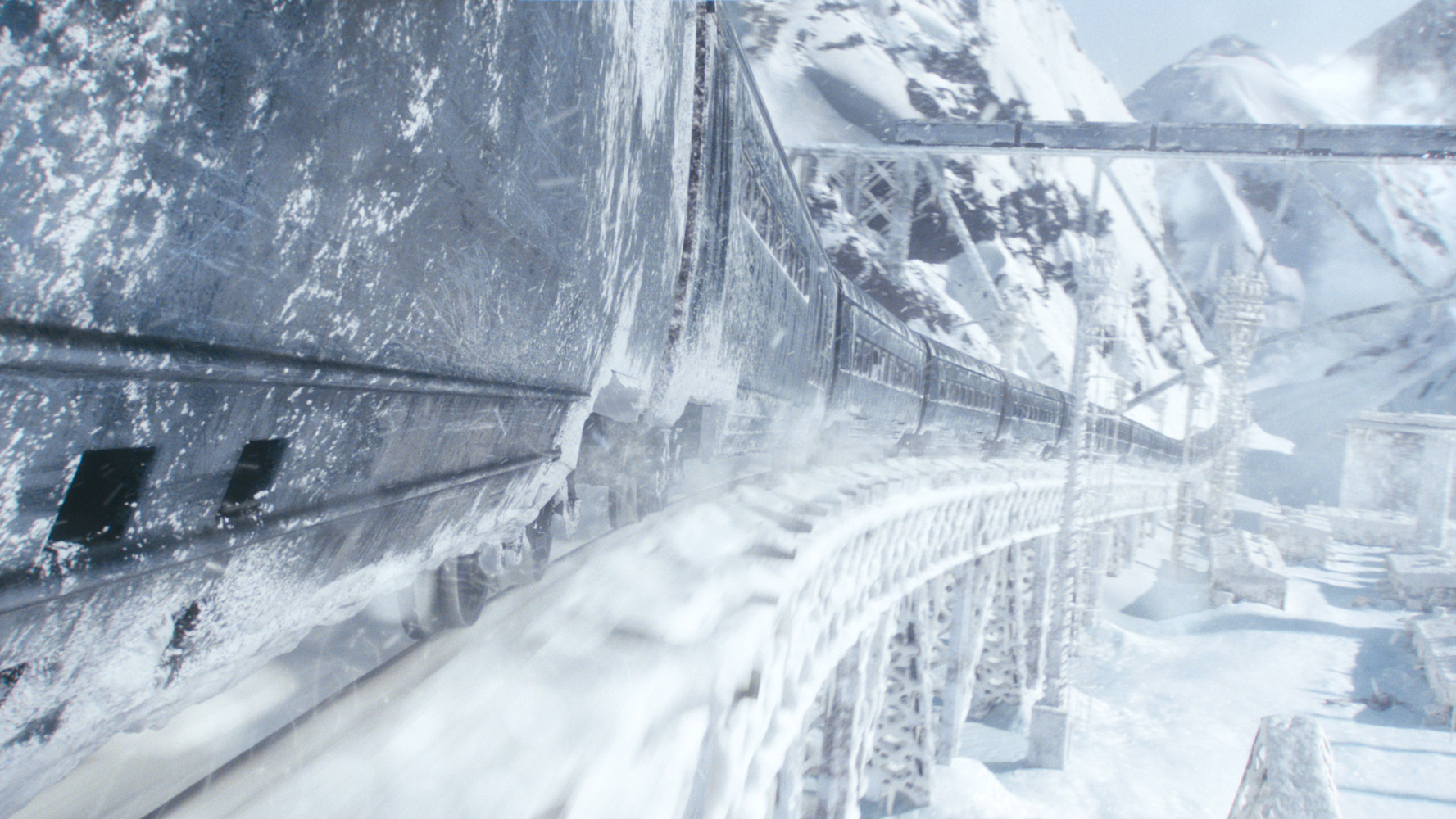
Snowpiercer never quite finds its own rhythm. There should have been a breathtaking establishing shot of the train in its entirety, since that is what the movie is all about. Instead, there is a first shot of the tail end, then we are inside again. That’s a missed chance to wow us with the enormity of the vehicle, all the more because the few glimpses of the train we get throughout the movie are really convincing CGI. I have a suspicion that the movie got cut and re-cut until the pacing got screwed up.
Image

There are glimpses of greatness, though. I liked the scene where they find the showers and are able to wash properly after months, if not years. The first time they eat real food again. The moment they realize they are touched by the rays of the sun through a window, and they don’t know if the window or the natural light is the bigger miracle for them.

I especially liked that the apocalypse wasn’t anything to do with nuclear war, but was brought about by people who thought that they had the solution to global warming. They turned the environment in such a hostile place that those who tried to escape the train stand frozen in place as statues to their own stupidity and can be seen from the train as a reminder. And there is a morbidly cheerful performance by Alison Pill as the schoolteacher.

The ending is crap. It does not make much sense, and the movie cowardly abandons its characters. Instead of having a wide open ending, it ends with the beginning of another movie.

“Overrated” seems to be the hardest word‏

There are some words used especially in internet discussions of films, books, TV series, games, albums and other media that are 99% certain to make me stop reading. One of them is “pretentious”, which is criticism’s analogue of Godwin’s Law – only the sturdiest of discussions survive its use intact.

The Art of FieldingWhile it’s not quite as bad as “pretentious”, I don’t like the term “overrated”, because usually it just expresses that the person using it doesn’t agree with the majority at the same time as believing that they’re right and the majority is wrong. It takes a certain amount of arrogance to believe that something is overrated… and yet, I’m about to desplay exactly that amount of arrogance, and possibly more.

When I read Chad Harbach’s The Art of Fielding, I couldn’t help feeling that it was pretty much the encapsulation of an overrated work. Like so many paperback novels, it starts with several pages of praise. Not just any bog standard praise, mind you, but superlatives along the following lines:

A dazzling debut… The Art of Fielding might be the best book you’ll read this year…

A triumphant first novel.

… the most delightful and serious first book of fiction that I have read in a while…

… a magical, melancholy story about friendship and the coming-of-age that marks the debut of an immensely talented writer… earnest, deeply felt emotion…

How to deal with such hyperbole? Do you just ignore it as the obvious sales ploy it is? I sometimes find it difficult not to take on a somewhat antagonistic attitude towards both the reviewers and the thing they’re reviewing: This is the best thing since gold-plated sliced bread that performs tasteful yet exquisitely exciting sexual favours? Prove it! Without the hyperbolic praise, I might not have read The Art of Fielding expecting it to either be amazing or fail to live up to those expectations – but then, I might not have read the novel, period. To be fair, The Art of Fielding is not bad – but this is where I will go into arrogant territory and beyond. The novel is pleasant, it’s an easy read. It’s great, for a while at least, if you’re tired and don’t want anything taxing. For a story that’s about a sport I find boring and the men who love it, it’s entertaining enough. Is it anything more than that, though? To be honest, I don’t see it. The writing is competent but not as clever as it seems to think. The characters are sketched quickly and deftly, but they never really become more than those sketches, and there are characters that come across as glib, smug cartoons that make me turn against the novel and its writer rather than against the characters themselves.

What bothered me most, though, may be exactly what makes the novel a pleasant read: it’s harmless. It has no edges whatsoever. It’s toothless. I don’t necessarily hold with Kafka’s dictum that “we ought to read only the kind of books that wound or stab us” – but Harbach’s novel never really gains characteristics beyond its pleasantness. There is something downright amorphous to it, an amoeba-like quality of having had all its edges sanded off. I like books that have personality, but this one never gains much personality beyond its generally sunny disposition, and as a result it felt vague and unconvincing when trying to convey stronger emotions. The drama it aims for in its plot lacks energy, conviction and the bite of real emotion.

Yet, going by the reviews the book wasn’t just generally liked, it was loved, a reaction I’m puzzled by. I can imagine people enjoying The Art of Fielding‘s pleasantness, but I cannot fathom anyone mustering the kind of strong reaction that the reviews hint at. Is this the flipside of the more usual, glib cynicism which makes it easier to tear into something than to praise it? I expect reviewers to have more of a range than either panning something or praising it as if it were the Second Coming. Or perhaps the fault, dear Brutus, is in myself – it is possible that as I am tone-deaf to the pleasures of baseball I am equally oblivious to what makes The Art of Fielding not just pleasant but great? Is the novel overrated… or am I overrating my own critical abilities?

No, this isn’t Facebook – but…

I know I’ve been sorely amiss with respect to new posts. This will be remedied soon – I’ve got four very special posts in the pipeline that should be of interest to anyone reading this who is into film, crackpot cults, milkshakes drunk from across the room, falling frogs and huge penises. (If that last sentence doesn’t get me tons of hits, I don’t know what will. People love falling frogs on the internet.)

However, this is more than just a “Coming soon” – it’s also me telling all of you to read the final interview with Iain Banks (published in The Guardian), the prolific and talented Scottish writer who died on 9 June (in a morbid coincidence also my birthday). Go, now, and read!

Rest in peace, Iain Banks

These Dead are made for Walking

Zombies. How’s that for unlikely media stars? I used to think it’s only geek culture that goes for zombies in a big way, with stuff like the Marvel Zombies series (seriously!) and with even the most unlikely games having to shoehorn in a mode where you battle the undead hordes.

But no, zombies have arrived in a big way, and they seem to be here to stay. Perhaps the biggest success in this respect has been Robert Kirkman’s The Walking Dead, a comic series started in 2003 which by now has generated not only a TV series that is currently in its third season – and an adventure game series by Telltale Games that is one of the most unexpected gaming hits ever. Adventure games are a bit of a zombie genre themselves; back in the ’80s and ’90s there were many best-selling series, from the Monkey Island games to Sierra’s countless Quest titles, but these days there simply aren’t any triple-A graphic adventures. Telltale, too, have not always produced sterling games, often resorting to tired genre clichés in various series of games trying, with varying success, to revive old franchises, including video game follow-ups to the Back to the Future and Jurassic Park series of films.

To be honest, I didn’t expect much from The Walking Dead. I read the comics but quickly gave up; they start well and are admirably ruthless at depicting a world after the zombie apocalypse where no one is safe from being chowed on by shambling corpses, but the writing is often clumsy and the plotting increasingly became about little other than escalating worst-case scenarios with a touch of sadism towards the characters. (I don’t expect the scenario to be all sunshine and lollipops, but ceaseless grimness and brutality quickly become boring.) The TV series seems well made enough, but zombie fiction tends to rehearse two plots over and over again: 1) the zombies are coming! and 2) man is wolf to man (oh, and the zombies are coming!). How much story can you squeeze out of the overall setup?

Telltale Game’s The Walking Dead doesn’t tell a story that is fundamentally new, but it succeeds at taking the shopworn premise and giving it a spin. For anyone who’s ever despaired at people seriously discussing how they’d fare in the undead apocalypse (and listening to the kind of guys who’d seriously claim that they’ve got it all figured out: “Man, all I need is a sharp katana and 500 tins of baked beans…”), the game puts you in the shoes of a survivor and makes you take some hard decisions. Do you save the person who’s most likely to be of use but who hates your guts or do you throw him to the undead in favour of the woman you’re kinda sweet on? Do you distribute your limited food and water among the group or do you keep them for yourself and the eight-year old girl you’ve taken under your wing?

The game was advertised on the strength of the choices it gives the player, but admittedly the plot doesn’t change in any major ways based on what you do. What does change, though, is how the characters feel about you and how you feel about the characters. What Telltale does magnificently is engage you in the story of a small band of characters – none of which fit the typical video game template (no super heroes, space marines and busty female archaeologists in this one!) – and make you feel the escalating dread and weariness. Whatever you do, you don’t end up saving the world. You might not even save yourself. In The Walking Dead, winning may mean making sure that Clementine, the little girl that ends up in your care, survives another day, that she gets to eat, and that you’ll manage to keep her and the dwindling group of survivors from losing not only their lives but indeed the will to live.

In the end, Telltale’s take on the Walking Dead universe reminds me of nothing as much as of Cormac McCarthy’s The Road. It doesn’t have the same beautifully sparse prose, but it has the same trajectory – and it effectively puts me in the shoes of The Road‘s father, desperately wanting to make sure that the child I’m looking after is safe but at the same time knowing that I must not do so at the price of my own humanity. The relationship between Lee, the player character, and Clementine is one of the most successfully executed relationships in any game I’ve ever played, and it beats most similar relationships in films and TV. Hell (on earth), even Mr Ebert might appreciate this one when he isn’t yelling for those damn brain-eating kids to get off his laaaaarrrrgh-

P.S.: My apologies for the pun in the title – the only thing that’s funny about it is its smell…

November Bookbag

With all the films I watch and games I play, do I even get around to that most old-school of activities, i.e. reading? I do, definitely – although I have to admit that I miss having a job where I could just spend an entire day (or even week, when I was lucky!) reading, whether it’s novels, plays, poems, articles or reviews. Them were good days!

That’s one of the things I enjoy most about holidays, and where I sometimes think that expensive travel is wasted on me: I often get most of a kick out of the travelling done in my head. During a recent vacation I got to finish not one but several books, so here are some thoughts on them for my first ever Bookbag!

Lights Out for the Territories (Iain Sinclair)

Sinclair first popped up on my cultural radar when his character Andrew Norton, the Prisoner of London, appeared in Alan Moore’s League of Extraordinary Gentlemen: Century. Then, when I recently started a teaching assignment at university, I found Sinclair’s Lights Out for the Territories lying on a shelf. Conditioning through repetition working as well on me as it does, I made Amazon happy by ordering the book.

Is it a good holiday read? I’m not sure I’m the best person to answer that, as I’m the kind of reader who might go for War and Peace for the poolside in Sharm El Sheikh. Sinclair’s book is not the sort of thing to read in one go, tough; for one thing, it is a collection of essays originally published separately and as such doesn’t benefit from being read as one coherent work, for another it’s insanely dense. Sinclair’s approach is basically to ‘read’ London as a great, multiform text, approaching it from different angles, from sifting through the detritus of (sub)urban  culture while walking the city to scrying the signs at Ron Kray’s funeral. Is this psychogeography? Shamanism? The rants of a smart, although at times rather tiring poet/essayist? Most likely it’s all three at the same time. I can definitely see why Alan Moore would find him interesting – some of Lights Out feels like the punk offspring of Moore’s From Hell and Peter Ackroyd’s London: A Biography. Sinclair’s writing is fascinating to experience, but I’d definitely recommend him as an occasional snack rather than as a meal, lest you come away with a major case of literary indigestion.

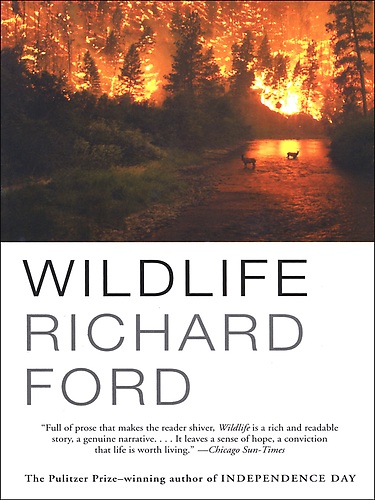
Wildlife (Richard Ford)

Every now and then I come across a book or a film that makes me feel I’m not old enough for this. Richard Ford’s Wildlife definitely had that effect – which is strange, as the novel’s narrator is a 16-year old. There is something about the novel’s pace and demeanour, though, that makes it feel old – past middle age and past its mid-life crisis. (Okay, it is likely that the narrator is actually considerably older and looking back at his 16-year old self, but it’s not just the telling of the story, it’s also the young man’s words and actions that feel like the young version of the narrator wasn’t all that different from his older, narrating self.)

Which is not to put down the novel (or rather novella, at a slim 160 pages). Wildlife is one of those books where no word seems out of place. This story of an early ’60s marriage falling apart is sparse (though not to the point of Carver’s short stories), very far removed from Sinclair’s anarcho-shamanism, and methodical in a way that becomes strangely hypnotic. The theme is as shopworn as they come, but in Ford’s style it takes an uncanny, destabilising quality that makes the story work as something very different from your usual domestic drama.

I’m not sure the narrator (or his younger self) works for me, though – he is either the oldest 16-year old there has ever been or he’s on some of that groovy, early-’60s Valium. There’s internalised and there’s somnambulant, and the character crosses that line… very slowly.

Grisly Death Key…

… reads one of the legends of this infographic, which definitely made me look up – the good people at the Guardian have come up with a neat graphic detailing how people die in the works of Edgar Allan Poe. I loves me a good infographic… (Click on the image to enlarge.)

I’ll be on vacation the next two weeks, so chances are I won’t get around to posting any updates. Here’s hoping that I’ll be back bursting with bloggy inspiration at the end of August!

A League too far?

Has it finally happened? Have I gone off Alan Moore? What’s next: will I stop liking rare steak? (I admit, I like good quality beef and my carbon footprint looks like nothing so much as a gigantic hoof-print…)

Well, what has happened is this: I used to get most if not all new Alan Moore comics by default, and after reading League of Extraordinary Gentlemen: Century: 2009: Are there any more subtitles coming this way? that’s simply not the case any more. I haven’t liked any of Moore’s recent works as much as those created during his heyday – masterworks such as WatchmenFrom Hell, V for Vendetta – but I’ve found enough things to like even in decidedly lesser Moore such as Smax, his Top 10 spin-off.

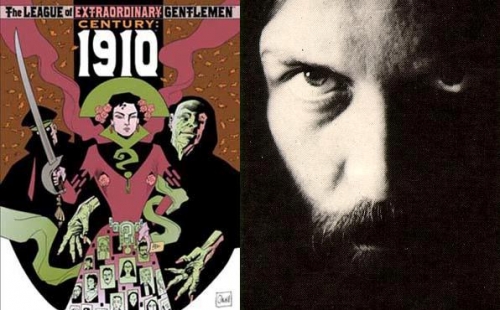
For the record, I think that the first two League of Extraordinary Gentlemen volumes are fantastic examples of strong storytelling and characterisation. Thematically they may not be as complex and rewarding as the works that made Moore famous, but they’re still examples of an author at the top of his craft. The continued adventures of the League though… To my mind Moore made two mistakes: one being that his ambition to create a world where all fictions are true overrode any wish he had to tell a good story with great characters, the other that the closer the story came to our present the less Moore had to say about the culture he was riffing on. 1910 and 1969 are still well crafted, and the latter even manages to intrigue as a story, but 2009 simply doesn’t say anything much of interest about modern pop culture. Its critique is shallow and lazy, making the Grand Old Madman of Comics come across as an old coot going, “You kids, get off my lawn!”

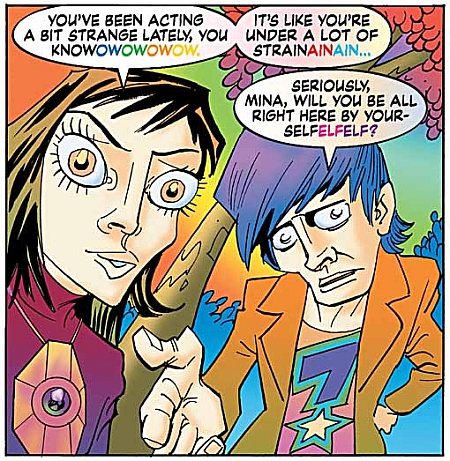
The greatest crime, though, is that a series that once featured extraordinary characters written with depth and sympathy (for the most part) – well, that series ended up with versions of the surviving characters that were uninteresting and exchangeable. Mina and Alan, as the century rolled on, were reduced to pale shadows of their former selves, in ways that made them boring to read rather than resonating thematically, which may be what Moore was aiming for.

It’s a shame, because throughout Century there are scenes that show Moore has still got it, and one of my favourite bits in all of the League is the deus ex machina he employs at the end of 2009, managing to be funny and chilling at the same time. But it doesn’t quite make up for the increasing tendency in the comics to indulge in Where’s Waldo-style “Spot the reference!” games – and, what is worse, games that lack the gleeful joy of earlier instalments. Too much of 2009 feels perfunctory. So, quite seriously, has Alan Moore become too much of a caricature of himself?

Sadly, even Kevin O’Neill’s art feels lacking in 2009 – perhaps because the (near-)present is a less exciting playground than the fictional past. He’s still got some great visuals, but both in terms of writing and art 2009 feels tired too much of the time. Perhaps it’s time for Moore to take a holiday? Watch some good TV? Get over himself?

Not your average assembly line heroes

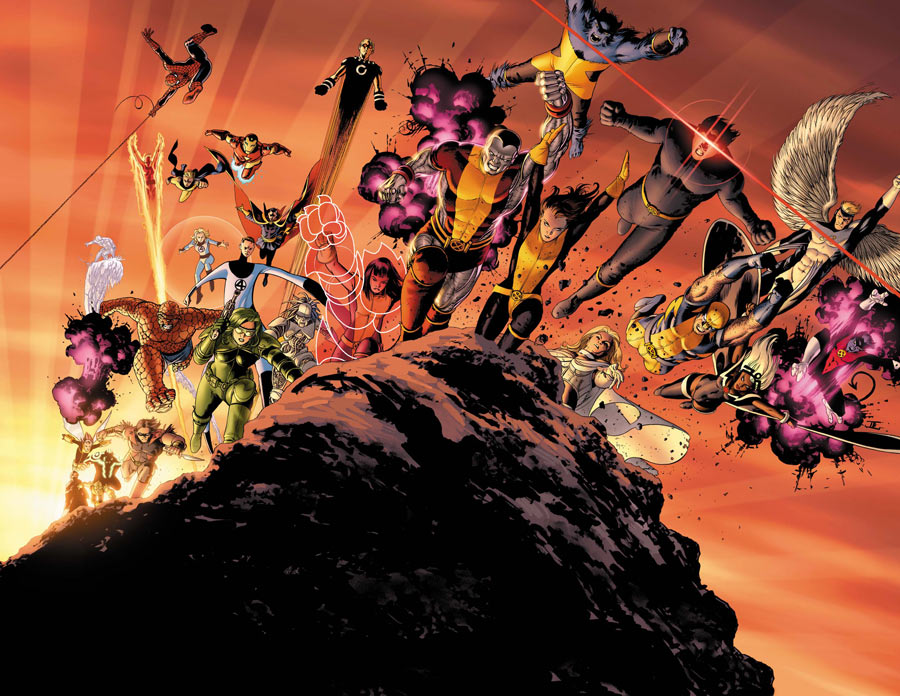
As a nerd/geek since childhood, I’m a bit of an odd duck. I never read superhero comics as a kid. Asterix, yes, as well as Tintin, and for a while there I also read some of the Disney stuff, but never very avidly. The caped crusaders, men of steel, the uncanny mutants and amazing arachnid-boys, though? Nope. I was never particularly interested. Yes, I watched the occasional superhero movie and am still a fan of Burton’s Batman Returns and Nolan’s takes on the dark’n’depressed knight, I did catch most of the X-Men, Spiderman and Iron Man films at the cinema, but I never felt all that engaged. At their best they were a fun way of spending two hours, at their worst they were forgettable but had some cool special effects, but I didn’t get what would make people go and buy regular instalments of their favourite heroes’ comic series.

My first superhero comics were the more revisionist ones, Moore’s Watchmen, Miller’s The Dark Knight Returns (which I can safely say I didn’t like), later Mark Millar’s Superman: Red Son, all of which riffing to some extent on the comics that had gone before, and that I was aware of in a second-hand, “I’ve read about these…” way. The traditional superheroics, though? I wasn’t interested – unless they were written by someone whose writing I really liked. When Joss Whedon did his run on Astonishing X-Men, I bought the trade paperbacks and greatly enjoyed them, but I always put that down to Whedon doing his thing, not to anything intrinsic to comic book heroes. Same with Brian K. Vaughan’s Runaways, which reminded me a lot of Whedon’s TV work. (Ironically, I’m not a big fan of Whedon’s run on Runaways, which should have been a perfect fit but the writing was unengaging.)

What I liked about these especially – Whedon’s X-Men and Vaughan’s Runaways – was that they had characters who weren’t defined by their powers or gadgets. These were characters I’d want to spend time with even if they weren’t saving the world, beating up baddies or fighting their nemeses. And, more than that, they were about dysfunctional (surrogate) families, that old old Tolstoyan chestnut… Families that brought out the best and the worst in each other. Just like those other families in Whedon’s work, the Scoobie Gang, the crew of Serenity, even the team of Angel Investigations.

I didn’t realise that at their best, the superhero comics (at least Marvel – I have to say, I don’t know DC particularly well, although Vertigo’s Sandman is also about a dysfunctional family, of course) are exactly about that. They’re not about the BIFFs, the ZINGs and the POWs, they’re not about being able to punch someone through a mountain, climbing up vertical surfaces like a human spider or running at supersonic speed. And that’s exactly where Joss Whedon’s The Avengers took me completely by surprise. I went in thinking, “Well, I liked Iron Man, I like Mark Ruffalo and Jeremy Renner, and Scarlett Johansson is relatively easy on the eye. Perhaps Whedon will make this work.” I thought I’d probably not give a toss about Captain America (how can I, as a European pinko liberal commie of the worst kind?) or Thor (seriously, that outfit? the hammer?) or the Hulk (green, grotesque, always angry – Mr Hyde’s boring descendant, right?).

And yet, I sat in that cinema giggling with glee, whooping with joy, cheering at the heroic poses, applauding as an enormous motherfucking space serpent thing was punched in the face and went down! For the first time I realised what a joyous, potent blend these superheroics could be, and it was because Whedon made me care. I still don’t particularly need to go and watch Captain America or Thor (probably I will if it’s on TV, but I won’t go out and buy the DVDs), but watching the film’s heroes become a family, warts and all, overcoming their flaws and dysfunctions, and kicking some intergalactic ass? I get a big, goofy grin just remembering the film.

Some of my favourite bits:

  • Colour me green with surprise, but I loved the Hulk in this. More than that, I loved Ruffalo’s Banner and his Hulk. Poignant one moment, laugh-out-funny the next. “Puny god”, indeed!
  • Samuel L. Jackson’s Nick Fury wasn’t a showy role, it didn’t go for the SLJ effect (which by now has become as much of a cliché as Al Pacino’s “Hooah!” persona), but I loved the ambivalence. Yes, he’s a good guy, but he’s primarily a master manipulator. Usually these films reserve the manipulativeness for the bad guys.
  • Captain America’s joy when he finally got a cultural reference!
  • The confrontation between Loki and Black Widow. In so many ways.
  • Naked Bruce Banner and Harry Dean Stanton’s caretaker, accepting that this guy just happens to turn into a huge green monster occasionally. No big thing.
  • The moment when the Avengers finally, well, assemble. The moment is cheesy, glorious and 100% earned.

I came out of that cinema thinking, “I want to watch that film again. And again. And again. And possibly send Joss Whedon, his cast and his crew all the Swiss chocolate I can get my hands on.” I’d be lying if I said the film was perfect – it suffers from a beginning that is somewhat generic and unengaging – but I’ll say it again: The Avengers made me whoop with joy. It made me cheer at the heroic poses. This is no “good enough for its genre” flick, it’s no “well, there’ll be explosions, right?” In some ways it’s the polar opposite of Nolan’s Batman films – as good (or even better?), but doing something entirely different. I’ve seen and read the reinventions of the super hero genre. I’ve seen the revisionist takes. Only now have I seen what these stories can be, in their original form.

And I like it.

P.S.: I also like Film Crit Hulk’s take on The Avengers. The guy’s all-caps Hulk spiel takes some getting used to, and I understand that some people give up, but the guy writes well and makes intelligent points, and he cares about this stuff. Well worth checking out.

When in Arkham…

Sometimes I am just a tad embarrassed to be a gamer. Make that more specific: sometimes I’m embarrassed to be a male gamer. Apart from superhero comics, is there any medium whose depiction of women tends to be this much on the adolescent fetish fuel side of things? Seriously, the average depiction of women in games makes Michael Bay’s female characters and their depiction look positively mature.

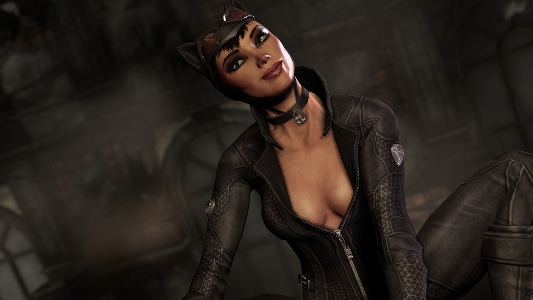
One of the games I played recently, the sequelific Batman: Arkham City, is a good case in point, being the offspring of both of those media… and boy, does it ever meet the stereotype. Witness Exhibit A:

Possibly an argument could be made that Catwoman’s open-hearted display of her, ahem, cuddly kittens is there to distract the various henchmen she faces – but no, seriously. We all know why Ms. Kyle is presented in this way, and it has little to nothing to do with tactical advantages fighting testosterone-riddled thugs.

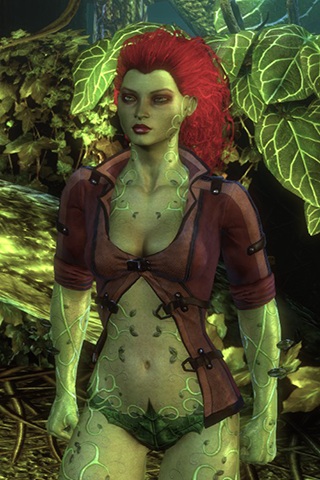
In comparison, Poison Ivy is almost demure, right? Wrong.

The sad thing is this: in terms of writing, Arkham City isn’t bad, and this includes its female characters. Sure, it’s no Ibsen, it’s pulpy as hell, but within the over-the-top, Grand Guignol genre they inhabit, the characters, their motivations and their actions make sense. And, what’s more, they become surprisingly compelling. I’m not a big fan of comic-book superheroics as such – I like some select examples of the genre,* but I don’t feel any specific attachment or nostalgic yearning for the various Adjective Men and Single Defining Attribute Women bursting out of phone booths in gaudy costumes (and in half the cases practically bursting out of gaudy costumes in phone booths). But over the 20+ hours of playing the Caped Crusader (AKA World’s Greatest Detective – I bet you thought it was Sherlock Holmes, didn’t you? – AKA The Man Who Manages To Remain Po-Faced When People Call Him Silly Names) it’s difficult not to become engaged in the story and in the silly, silly characters.

A large part of this is the voice-acting. Again, we’re not talking about masterclass material – this isn’t Ian McKellen at the Old Vic – but the cast manage to infuse the often pathos-laden, convoluted storyline with wit, humour and, yes, a sense that these freaks in costumes are real. At least for the duration of the game, I found myself wanting to know what happens to the Joker, Rhas Al Ghul, Mr. Freeze and the whole menagerie. Admittedly, I’d still feel a burst of shame if my girlfriend had walked into the room while I was playing with Catwoman (anyone who even thinks of making jokes about joysticks will get a kick in the Johnny Szazs…), but the game almost, almost made me see the appeal of these eternal schoolyard fights that are half semi-mythological epic, half soap opera.

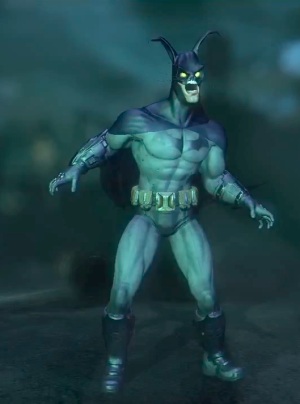
Also: how can you not love a game that features this Donnie Darko-meets-March Hare version of the Batster?

But seriously, folks – this is what Catwoman looks like! Not like two melons pressed into a zip-up leather overall – this is the one, true Catwoman:

*Okay, I’ll come clean. While I wouldn’t call myself a fan of superhero comics per se, I have enjoyed Watchmen, Mark Millar’s Red Son, Joss Whedon’s run on X-Men, Hellboy (does he count as a superhero?), Brian K. Vaughn’s Runaways and Ex Machina, several of Moore’s other ‘science hero’ works, Chris Nolan’s Batman films, and I will want to see the new Spiderman at the cinema, although that’s entirely because of Andrew Garfield. And, hey, good old Jed Bartlett is in it too!

The times, they are a-changin’…

… and the League of Extraordinary Gentlemen is changing with them – but it seems that time is catching up with the League.

When I first read it I wasn’t terribly fond of Alan Moore’s Black Dossier, a source book-cum-smorgasboard of literary pastiche continuing the ongoing tales of some of literature’s strangest, least likely heroes. What I liked best about the first two volumes of the League’s adventures was how Moore combined exciting tales with fascinating characterisation, bringing to the fore the undercurrents of Victorian genre fiction in smart ways: the sexism, the racism, the sense that an Empire was slowly rotting from the inside. I enjoyed how Moore could bring out humanity in his monsters and vice versa. While I appreciated the achievement of Black Dossier a lot more when re-reading it, it’s still mainly a show of Moore’s considerable skills at parody and pastiche. What it isn’t is a strong story.

The first issue of League of Extraordinary Gentlemen, Volume III: Century was a lot more centred on telling a story, but it was clearly a first part. Having been a Moore fan since my first trip into his mindscape (From Hell was my starting point, and what a wild ride it was) I trusted that the grand old man of Northampton knew what he was doing, but it was difficult to discern where this was going: the issue was self-contained, but in terms of story it was relatively thin, being more interested in doing a retelling of Brecht and Weill’s Three Penny Opera in the world of the League than in giving us a plot to care about – which was most likely exactly that Moore had intended, in homage to Brecht’s literary politics (or should that be political literariness?).

Moore and his League artist Kevin O’Neill are notoriously late with their work; the second issue, 1969 (AKA “Paint It Black”, although I haven’t actually seen that title anywhere in the comic itself) was originally scheduled for spring 2010 but finally came out in August 2011. And while it’s as much of a middle part as 1910 (or “What Keeps Mankind Alive”) was a beginning, it’s easier to discern where the writer is taking this storyline. Arguably, this is the Empire Strikes Back of Century, and it ends with Moore’s dark equivalent (darker even if you take in the appendix) of Han frozen in Carbonite. It’s quite surprising how an artist who in an interview boiled down his Lost Girls to “Make love, not war!” (I’m sure Moore was fully aware this was an oversimplification) presents such an ominous version of the Age of Aquarius. This is not the Summer of Love so much as a wicked, clever Nicolas Roeg-inspired romp that spirals out of control and ends in madness, mayhem – and a certain unexpected character vanishing into a wall at Kings Cross Station. That’s right, Moore brings a certain someone from a much beloved franchise into his storyline and gives him a prominence that proves surprisingly effective.

What’s next for the League? 1969‘s epilogue, set in a punk club in the ’70s, with Mina out of sight and literally out of mind, Alan Quatermain back on the drugs that almost killed him and Orlando (female once again, although far from feminine) giving up on his erstwhile friend and lover, suggests that the third issue – to come out next year, if Moore, O’Neill and the gods of publishing prove kind – won’t start in a happy place. The issue’s title, “Let It Come Down”, doesn’t exactly sound optimistic, does it?

And now, guys and gals, make sure to pray to your 2nd century imaginary sock-puppet hoax of a snake god that the book comes out while we still remember what happened before, okay?