Each Friday we travel back in time, one year at a time, for a look at some of the cultural goodies that may appear closer than they really are in The Rear-View Mirror. Join us on our weekly journey into the past!
Honestly, I don’t envy the job that Peter Jackson ended up with when he became the director of the film adaptation of The Hobbit. From what I’ve read and heard, he famously didn’t want the job, having already spent years and years of his life on The Lord of the Rings, he was hired after Guillermo del Toro left the project and given relatively little time to get the show on the road, and he was told to change a two-film plan into another big fantasy trilogy. Never mind that The Hobbit, J.R.R. Tolkien’s novel, is a slim volume that cannot really be compared with the big, fat doorstop that is The Lord of the Rings.

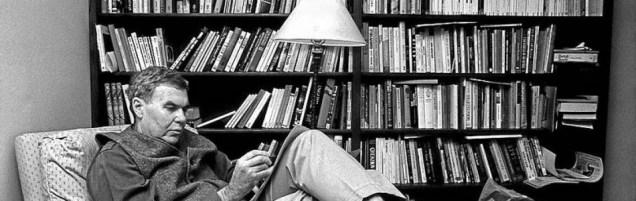 The most grassroots definition of a writer’s writer, I guess, is one whose writing you love to bits and immediately want to tell your friends about. In other words, somebody really good but still undiscovered. Katherine Dunn. Marisa Matarazzo. Esther Morgan. Sofi Oksanen. Greg Hollingshead. Rick Bass. Please feel free to add your own favourite obscure authors, and you will never run afoul of the definition above. Another, slightly looser definition might be that there is a lot you can learn from a writer’s writer for your own writing, such as dialogue from Elmore Leonard, or cliché-free sci-fi from China Miéville.

 Daphne du Maurier’s novel My Cousin Rachel, published in 1951, seems to exist in the spot where the universes of Jane Austen and Agatha Christie touch. On the one hand, the tone of the book is well-mannered, and its characters are not allowed to flat-out say what they passionately would like to say, but have to hide behind the mores of the era. On the other hand, someone dies, and another character is in danger to meet the same fate, so whodunnit?


 For the June episode, join your cultural baristas as they discuss The Lives of Others (2006), the Academy Award-winning drama about East Germany in the 1980s, Stasi surveillance, the redemptive power of art and its tragic limitations. When not listening in to the artist couple in the apartment on the floor below, we also talk about Amazon Prime’s adaptation of the near-apocalypse, Good Omens, Béla Tarr equine mood piece The Turin Horse and Richard Powers’ 2003 novel The Time of Our Singing.