These Dead are made for Walking

Zombies. How’s that for unlikely media stars? I used to think it’s only geek culture that goes for zombies in a big way, with stuff like the Marvel Zombies series (seriously!) and with even the most unlikely games having to shoehorn in a mode where you battle the undead hordes.

But no, zombies have arrived in a big way, and they seem to be here to stay. Perhaps the biggest success in this respect has been Robert Kirkman’s The Walking Dead, a comic series started in 2003 which by now has generated not only a TV series that is currently in its third season – and an adventure game series by Telltale Games that is one of the most unexpected gaming hits ever. Adventure games are a bit of a zombie genre themselves; back in the ’80s and ’90s there were many best-selling series, from the Monkey Island games to Sierra’s countless Quest titles, but these days there simply aren’t any triple-A graphic adventures. Telltale, too, have not always produced sterling games, often resorting to tired genre clichés in various series of games trying, with varying success, to revive old franchises, including video game follow-ups to the Back to the Future and Jurassic Park series of films.

To be honest, I didn’t expect much from The Walking Dead. I read the comics but quickly gave up; they start well and are admirably ruthless at depicting a world after the zombie apocalypse where no one is safe from being chowed on by shambling corpses, but the writing is often clumsy and the plotting increasingly became about little other than escalating worst-case scenarios with a touch of sadism towards the characters. (I don’t expect the scenario to be all sunshine and lollipops, but ceaseless grimness and brutality quickly become boring.) The TV series seems well made enough, but zombie fiction tends to rehearse two plots over and over again: 1) the zombies are coming! and 2) man is wolf to man (oh, and the zombies are coming!). How much story can you squeeze out of the overall setup?

Telltale Game’s The Walking Dead doesn’t tell a story that is fundamentally new, but it succeeds at taking the shopworn premise and giving it a spin. For anyone who’s ever despaired at people seriously discussing how they’d fare in the undead apocalypse (and listening to the kind of guys who’d seriously claim that they’ve got it all figured out: “Man, all I need is a sharp katana and 500 tins of baked beans…”), the game puts you in the shoes of a survivor and makes you take some hard decisions. Do you save the person who’s most likely to be of use but who hates your guts or do you throw him to the undead in favour of the woman you’re kinda sweet on? Do you distribute your limited food and water among the group or do you keep them for yourself and the eight-year old girl you’ve taken under your wing?

The game was advertised on the strength of the choices it gives the player, but admittedly the plot doesn’t change in any major ways based on what you do. What does change, though, is how the characters feel about you and how you feel about the characters. What Telltale does magnificently is engage you in the story of a small band of characters – none of which fit the typical video game template (no super heroes, space marines and busty female archaeologists in this one!) – and make you feel the escalating dread and weariness. Whatever you do, you don’t end up saving the world. You might not even save yourself. In The Walking Dead, winning may mean making sure that Clementine, the little girl that ends up in your care, survives another day, that she gets to eat, and that you’ll manage to keep her and the dwindling group of survivors from losing not only their lives but indeed the will to live.

In the end, Telltale’s take on the Walking Dead universe reminds me of nothing as much as of Cormac McCarthy’s The Road. It doesn’t have the same beautifully sparse prose, but it has the same trajectory – and it effectively puts me in the shoes of The Road‘s father, desperately wanting to make sure that the child I’m looking after is safe but at the same time knowing that I must not do so at the price of my own humanity. The relationship between Lee, the player character, and Clementine is one of the most successfully executed relationships in any game I’ve ever played, and it beats most similar relationships in films and TV. Hell (on earth), even Mr Ebert might appreciate this one when he isn’t yelling for those damn brain-eating kids to get off his laaaaarrrrgh-

P.S.: My apologies for the pun in the title – the only thing that’s funny about it is its smell…
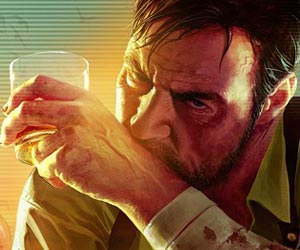
Payne Killer (part 2)

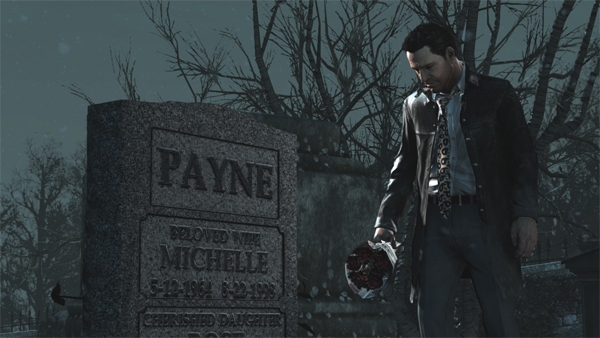
This post follows from my previous meanderings on Max Payne. For those who have not played Max Payne 3, beware: there will be spoilers.

While I am not an outright fan of explicit violence in modern media, I’m not particularly squeamish either. I have no interest whatsoever in the gore extravaganza of much modern horror, but neither am I put off by the viscera of some of Tarantino’s more recent offerings, and some of the TV series (e.g. Rome or Game of Thrones) I’ve enjoyed most over the last couple of years don’t skimp on the red gushing stuff.

And yet, Max Payne 3 almost made me switch off the game, not just once but twice, due to the brutality it depicts.

And this is in no way an indictment of the game.

Max Payne 3 is a brutal game – and more than any shooter I’ve played it does a remarkably horrid job of showing what bullets do to bodies. Does the game revel in showing exit wounds? I think I’d be lying if I said it wasn’t – MP3 does not present its violence with the frat boy, fist-pump glee of other games, but it has a fascination for showing the damage done, both to people and to interior (and exterior) decorating, in slow motion. So much so that checking out some of the videos on YouTube makes me queasy – less with the game than with the Beavis and Butthead-ish tone of the video description and comments.

But it’s not so much seeing the carnage I’m authoring that made me wince, at least not after the first ten minutes or so. (There is definitely something numbing to seeing henchman after henchman dying horribly at the business end of my gun – and it’s this repetitiveness that’s a major flaw of the game in my opinion.) It’s two key scenes: in one, I finally find the beaten, bleeding trophy wife of a São Paolo business man earlier abducted by a favela gang, only to see one of the gangbangers put a bullet through her head. In another, the business man’s brother is covered with petrol and burnt alive. The game has previously shown the man as shallow, narcissistic and rather pathetic – but the way the game depicts his death got to me, and quite possibly more so than a similar scene would have in a film.

I don’t want to get into the question here of whether games are becoming too violent or whether people are desensitised to real-life violence and cruelty due to watching brutal films or playing violent games. That question is much bigger and deserves a longer discussion in a wider forum. What I’m interested in is this: why did these two scenes get to me to the extent where I wasn’t sure I wanted to continue playing (keeping in mind, as I’ve said, that I’m not all that squeamish)?

I think it’s this: games make a big thing of player agency – as gamers it’s our finger on the trigger, we decide who lives and who dies, it’s, like, interactive! – yet in practice our agency is always limited, it’s circumscribed in a hundred ways: by a game’s design, its user interface, our character’s abilities and, often frustratingly, by the story a game tells. You’re Superman while playing the game, you’re John McClane, you’re Neo – and then comes a pre-rendered sequence, and what’s pre-rendered as well is your impotence in the face of the great god, Plot. The villain jumps from the shadows and skewers your love interest with his great big sword. (I’ve never played Final Fantasy VII, but apparently this is one of the primal scenes of so many gamers into Japanese role-playing games… and I wonder whether the cod-Freudian subtext is as heavy when you’re actually playing.)

Many games use this in a frustrating way that feels like the program is cheating, in revenge for decades of players using hidden cheats and God modes to become invulnerable. Think you’re all-powerful, gamer? Take that! Ooh, that must’ve hurt! The two scenes in Max Payne 3 that I mentioned earlier (and there are others, although none as pointed) may have an element of this, but I think the game is being cleverer than that: Max Payne, from the first game onward, told a story about revenge and redemption. I’m not sure to what extent it manages the latter all that well, although there’s a lot of quasi-Noirish verbiage in the game about it – but especially Max Payne 3 never lets you forget that the revenge you’re effecting is finally hollow. Yes, you might get to kill hundreds of bad guys in bloody, bone-crunching ways, but Max’ loss is the constant foil through which the player views this revenge. For every henchman killed, for every villain stopped, Max’ wife and child is not a single bullet closer to being alive. For a game that’s entirely about revenge and redemption, it’s bleakly ironic that revenge is shown to be pointless and redemption all but impossible. Max Payne’s extended trauerarbeit (and I don’t think this is wankerish pseudo-analysis imposed on the game – every second line of dialogue is about Max’ ongoing, futile quest to find some sort of meaning in a life that’s had all meaning shot to hell), like the hundreds of painkillers he keeps popping, only serves to dull his pain momentarily.

I’m not saying that Max Payne 3 is a deep, philosophical treatment of mourning, revenge and the futility of redemption – but it does address these issues within the rules it has set up for itself… and, like Rockstar’s earlier Red Dead Redemption (although my vote still goes to RDR for doing more interesting, complex things with the theme) it goes a long way to disabuse the player of this crazy idea that just because he’s got his finger on the trigger he can make everything all right.

Payne Killer (part 1)

It has to be said: as a gamer it’s sometimes difficult not to be embarrassed by video games. Most people with a modicum of taste would take one look at a game called Max Payne (its central character of that name the proverbial Cop With Nothing To Lose, which doesn’t exactly make it less embarrassing) and snort derisively. It sounds about as classy and grown-up as one of those superhero comics where the women have breasts the size of battleships and waists with the circumference of a ripe peach.

The surprising thing was that Max Payne, while not exactly A la recherche du temps perdu (or even Pulp Fiction), was fairly smart and knowing in its writing, at least for a video game in the early years of this millennium, and its sequel, The Fall of Max Payne even more so. Mixing neo-noir cynicism and post-Matrix bullet time with comic book aesthetics, surreal dream sequences and a parodic style that was more Scream than Scary Movie, Max Payne didn’t take itself overly serious, yet it still pulled off that neat trick where we come to care about the characters. They’re funny, but they’re not just the punchline to a joke.

Not even poor, doomed mob underboss Vinnie Gognitti in his Captain BaseballBatBoy costume. Okay, perhaps a bit.

Max Payne 2 pulled off something strangely akin to Tim Burton’s Batman Returns. It shouldn’t work. It should be an incoherent mess of incompatible parts. Dark romance, surreal comedy, cartoon noir and self-referential humour shouldn’t come together to form something that’s somehow more than the sum of its parts – yet it does. Or perhaps it’s a variation on Stockholm Syndrome, where someone who enjoys playing computer games but also enjoys good writing and interesting characters convinces himself that purple prose such as “There was a blind spot in my head, a bullet-shaped hole where the answers should be. Call it denial. I wanted to dig inside my skull and scrape out the pain.” congeals into something that by some process of video game alchemy manages to transcend the clichés it’s assembled from.

What’s the occasion of all of this reminiscing about old games? Call it exposition, call it setting the scene – it’s basically a glorified lead-in for my thoughts on Max Payne 3, the latest (and possibly last?) game in the series, coming soon to a blog near you. Did the series manage to reinvent itself, almost ten years after its last instalment, by transposing its New York neo-noir bullet ballet to the sun-drenched favelas of Sao Paolo viewed through the camera lens left behind by Tony Scott?

Game on, John

I’m sorry, this isn’t the promised Breaking Bad post yet – I got started on that one, but life (and exhaustion) got in the way even of mediocre writing. So, to distract you, here’s something shiny! (To my occasional guest blogger: I have an inkling that this may not be your kind of film – but hey, the trailer features John C. Reilly!)

So, for those of you whose childhood was sadly devoid of “Insert Coin” and “Press Button to Continue”, and whose dreams aren’t haunted by the WAKA-WAKA-WAKA of Pacman’s eating disorders, here’s another trailer, which is a good bit and has Christoph Waltz in it.

Here comes the rain again

Hang on, weren’t computer games about (male teenage) wish-fulfillment? Weren’t they about pretending to be overly-muscular he-men carrying weapons the size and weight of Texas, or knight templars wielding enchanted swords, or cocky, ersatzIndiana Jones explorers making sexy small talk while exploring dark tombs looking for the Whatsit of Certain Doom?

Instead I’m spending time in front of the telly running after my son, knowing I won’t get to him before something horrible happens. I spend time shaking the controller so that my overweight on-screen avatar shakes his asthma inhaler, then I press right on the analog stick so he actually takes a puff of his medication. And all the while the rain keeps pouring down.

Heavy Rain is a weird game. It’s derivative: the atmosphere is pure Seven, which is nowhere as obvious as when I visit a suspect’s apartment and the man, a religious nutter, has crucifixes hanging from his ceiling like so many Little Trees car air fresheners, and the music sounds like Howard Shore’s B-sides. The characters lack subtlety and their dialogues often clunky. There’s something almost laughable about how hard the game tries to be melancholy, weighty, tragic. And the gameplay feels like a mix between Dragon’s Lair quick-time events (press R1 now not to get knocked out by the prostitute’s choleric john!) and one of those hipster-witty, highly meta indie games mocking the usual epic dick-waving of video games by making you do utterly mundane, pointless things: yes, you can open the fridge, take out a carton of orange juice, shake it (wouldn’t want all the pulp to remain at the bottom of the juice carton!) and take a gulp, but it won’t get you any closer to finding the Origami Killer. In fact, I’m a couple of hours into Heavy Rain and most of the interaction I’m offered is of the juice-carton or asthma-inhaler shaking kind. There are important decisions (do you shoot a suspect? do you foil a robbery?), but they don’t make up the bulk of the game. Is this some weirdo wish-fulfillment for pretentious, self-aware dweebs approaching middle age – an ironic power fantasy for the disillusioned?

The thing is, though, the gameplay, allowing for actions veering between boringly banal and surreally pedantic, works in one important way: it puts you in the role of the character you’re playing in a most effective way. Heavy Rain provides the player with agency that precisely isn’t of the “I am a Jedi!” kind, which is always essentially “I am myself, but I am also invincible! Take that, 3rd grade bully who’s become an Imperial Stormtrooper!”; instead it makes it easier to slip into the skin of depressed father Ethan Mars or asthmatic private investigator Scott Shelby. It’s a bit like acting, where it can be the small actions and gestures, irrelevant to the plot, that make a character come alive – it’s the bits in between the showcase fights and high-tech investigation, between entering a suspect’s apartment and fighting off hooded intruders, that make the player empathise.

I’d hesitate to call Heavy Rain a good game. I’d definitely not want other games to copy its gameplay. But as an experiment in the potential and the limits of agency in gameplay, and in player identification, it’s fascinating. And I want such experimentation to be possible not only in small-scale indie games but also in Triple-A titles. Just like L.A. Noire, Heavy Rain may get quite a few things wrong, but what it gets right it does in ways that few other games have even attempted.

Dark is L.A. and full of terrors

When it comes to creating virtual worlds, Rockstar may just be the true heir of Origin Systems. Whether it’s the Liberty City of Grand Theft Auto 3 or GTA4, the fictionalised versions of Los Angeles, San Francisco and Las Vegas in GTA San Andreas, the boarding school and small town of Bully or the dying Old West of Red Dead Redemption, in my opinion Rockstar’s greatest creation to date.

L.A. Noire‘s sun-drenched yet crime-riddled 1950s Los Angeles is both an amazing feat and, quite possibly, Rockstar’s greatest wasted opportunity. It’s an impressive recreation, looking just like the movies, from Chinatown to L.A. Confidential – but where I enjoyed exploring San Fierro, New Austin and Liberty City, I never felt at home in this noirish L.A. In Rockstar’s other games, I’d forgo all automated options of getting around the place, I’d drive everywhere myself, just because I enjoyed hanging around in these cities. The games and their locations, they were one and the same. In L.A. Noire, though, I quickly started to ask my partner to do all the driving. In spite of the game’s title the place itself, Los Angeles, is a mere backdrop – and as it’s rarely integrated well into the game, it feels like an elaborate loading screen, or like a technically impressive but essentially lifeless cardboard backdrop – like The Truman Show‘s Sunhaven, and I was the unwitting Truman stuck there.

Unfortunately, L.A. Noire is full of wasted opportunities. The writing is great, as is most of the (voice) acting, but the game’s signature motion-capture technology veers into Uncanny Valley as often as it succeeds at bringing its characters to life.

The occasional disconnect between the characters’ faces and their bodies is one thing; another is that L.A. Noire doesn’t do photo-realism, doesn’t try to, so the animations, realistic down to the imperfections of involuntary twitches, don’t gel with the more stylised look. It doesn’t matter whether the latter is due to technical limitations – the result, while often impressive, does pull its audience out of the moment too often.

L.A. Noire could have managed to pull everything together with its gameplay, but alas, that’s another strike against the game. It’s not so much that it plays badly – what hurts L.A. Noire is that as a game it is bland. Rockstar’s other titles tend to be generous to a fault in the gameplay department, where you might get new elements introduced two thirds into a game’s plot. In its ’50s crime-and-punishment saga you’ll be doing pretty much the same from the first case you’re working to the last. Here a foot chase, there a car pursuit – and the game’s signature interrogations suffer from a lack of internal logic (seriously, guys, at times the choice between Doubt and Lie seems to have been down to a coin-toss).

In spite of all this, though, I’d be lying if I claimed that L.A. Noire didn’t have its compelling moments. As you progress from the first crime desk (Traffic) to the second (Homicide), the single cases start to connect, and the story ties in cleverly with the Black Dahlia murder. As the plot begins to cohere, the characters become more interesting, and the protagonist Cole Phelbs, while rarely likeable, turns into one of Rockstar’s trademark flawed anti-heroes. By the game’s ending, I felt for the guy and his messed-up issues.

In the end, L.A. Noire is a weak game with strong elements – and for a Rockstar game, it’s a failure. It’s a fascinating failure, though, and I’m curious to see how its experiments and assets – the motion-captured acting, the story structure, the ‘real’ location – pay off in future titles by the developer. Grand Theft Auto V will again be set in Los Santos, Rockstar’s earlier take on LA; I, for one, wouldn’t mind seeing L.A. Noire‘s fingerprints on it.

Bereavement: a game

What exactly makes video games different from other mediums? The go-to answer to that question is obviously interactivity – games require their audience (their ‘readers’, if we want to use the word in an extended sense) to interact. Now, clever-clogs will say, “Aren’t films and books interactive as well? After all, the reader is always engaged in co-creating meaning together with the text. Eh? Eh?” At which point you kick the clever-clogs in the nuts and send them back to the literature departments whence they came. (Please note that I myself was one of those clever-clogs for a long time, and I still have a fair amount of affinity with them. Doesn’t stop me from the whole nut-kicking thing.)

Granted, there is no such thing as an entirely passive audience. The interaction that games require, though, is of a different kind; it is not purely mechanical (like, say, flipping pages or working the DVD remote), nor is is purely a mental process (which covers anything from mere comprehension to interpretation to other forms of intellectual, psychological or emotional engagement with a text). It is tied in with the concept of agency: the player is more directly, more immediately involved in generating the actual text, although the freedom he has in this can be immense or minimal.

Where does this leave games such as the recent indie title Dear Esther, in which the player-reader-person holding the mouse (and wondering when he’ll find his first automatic weapon) is little more than a floating camera with ears? Playing Dear Esther, if “playing” is indeed the right term, means using the mouse to select where to look and the keys to move around. There’s no jumping, no shooting, no meaningful interaction with the environment – and more, there aren’t any goals, puzzles or challenges other than navigating the environment and looking for the spot where the next level or chapter begins. You walk around a foggy, damp island and look at things, and every now and then the narrator speaks his next monologue, about some guy called Donnelly, a long-dead shepherd called Jacobson, about Paul – and about Esther, the narrator’s wife. Over time, it becomes clear that Esther is dead, most likely killed in a car crash. Walking across the island, the narrator gives a voice and shape to his feelings of loss, sometimes through metaphor, sometimes through a simple retelling of events, sometimes through associative, allusive stream of consciousness.

Discussing whether this is a game risks being as pretentious as this short description of Dear Esther already sounds, most likely… and, truth to tell, I’m not particularly interested in finding a definition of what constitutes a game. On a very personal level, I wouldn’t say I “played” Dear Esther, I experienced it – and there I go again, skirting pretentiousness. Thing is, there’s no way around this. Dear Esther sets out to be artistic, from its themes (loss, mourning, life and death) to its visuals, to its writing, as this excerpt illustrates:

I collected all the letters I’d ever meant to send to you, if I’d have ever made it to the mainland but had instead collected at the bottom of my rucksack, and I spread them out along the lost beach. Then I took each and every one and I folded them into boats. I folded you into the creases and then, as the sun was setting, I set the fleet to sail. Shattered into twenty-one pieces, I consigned you to the Atlantic, and I sat here until I’d watched all of you sink.

Now, since the interactivity that Dear Esther offers is minimal, couldn’t the same be done in a short story or a film? Why make this a game (in the loosest sense of the word), other than in an attempt to help the still fairly young medium gain seriousness or credibility, to save it from the accusation that video games are reserved for adolescents looking for escapism or intent on enacting their power fantasies (save the princess, save the world, shoot turbaned bad guys, that sort of thing)? My own personal answer is no. Even if walking around the island and looking at ruined houses, painted symbols and snippets and texts, the lighthouse in the distance doesn’t constitute agency in the sense that you’re affecting the story or the characters in any way, you’re still experiencing it in a way that is inherently different from reading a story or watching a film. In fact, what Dear Esther (and similar games) remind me of most, perhaps, is theatre – and specifically the sort of theatre that says, “Screw the fourth wall” and requires its audience to experience what is going on in a more direct way. I remember reading a review of a play performed in a series of rooms, and the audience walks freely from room to room, witnessing scenes that exist separately from the audience’s journey; the sequence in which you see the performance, the points at which you enter or leave a scene, all affect your experience of the play.

Games like Dear Esther go further than this, in that they can create a theatrical space and experience involving elements that are difficult or even impossible in live performance: the voice you hear as you explore the island is disembodied, it isn’t the player’s, but nor is it a third-person narrator – it takes up a space in between. In some ways, games are that weird beast, the second-person narrative: you don’t become a first-person narrator, you put them on like a mask, and you’re always aware that there is a distinction between you and your character even while you perform this character. For me at least, when talking about a game, I usually slip into second person: “So, you’re this guy who’s lost his wife, and you explore this island that he’s withdrawn to. You walk up the hill to the ruined house, hoping to find… something. Some sign, something that will help you understand. Dunno… You play it, okay?”

Playing, reading, experiencing Dear Esther isn’t like being an audience, nor is it like being an actor. It is more like a lucid dream, and this dream-like state lends itself to experiences that none of the other mediums can provide in this exact way. Theatre can perhaps come closest, but traditional theatre, with its literal actors and spaces, cannot recreate that final, heartbreaking, soaring moment that Dear Esther delivers. The game isn’t its medium’s Citizen Kane, its The Dubliners or Starry Night, but it is unlike anything I’ve read or seen in the way it uses its means to make me think and feel. Doesn’t mean I want all my games to be like this – but I’m looking forward to others exploring the medium to see what it can do, what it can be. Others can call this pretentious all they want – I’m quite happy to soar with Esther.

P.S.: I very much like Eurogamer.net’s review of Dear Esther. Well worth reading, whether you’re generally interested in games or not.

When in Arkham…

Sometimes I am just a tad embarrassed to be a gamer. Make that more specific: sometimes I’m embarrassed to be a male gamer. Apart from superhero comics, is there any medium whose depiction of women tends to be this much on the adolescent fetish fuel side of things? Seriously, the average depiction of women in games makes Michael Bay’s female characters and their depiction look positively mature.

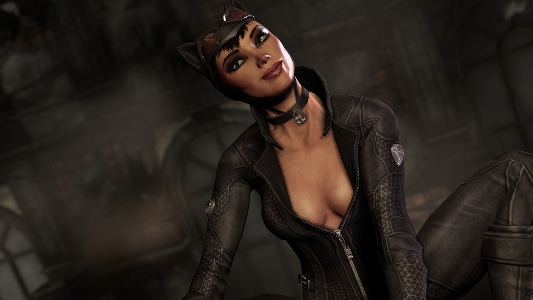
One of the games I played recently, the sequelific Batman: Arkham City, is a good case in point, being the offspring of both of those media… and boy, does it ever meet the stereotype. Witness Exhibit A:

Possibly an argument could be made that Catwoman’s open-hearted display of her, ahem, cuddly kittens is there to distract the various henchmen she faces – but no, seriously. We all know why Ms. Kyle is presented in this way, and it has little to nothing to do with tactical advantages fighting testosterone-riddled thugs.

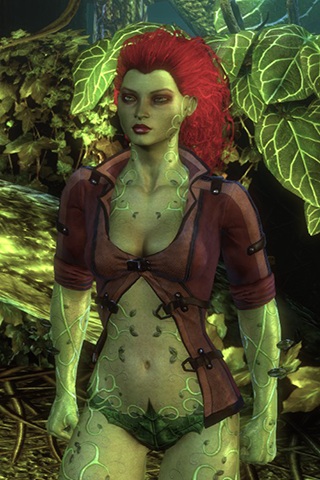
In comparison, Poison Ivy is almost demure, right? Wrong.

The sad thing is this: in terms of writing, Arkham City isn’t bad, and this includes its female characters. Sure, it’s no Ibsen, it’s pulpy as hell, but within the over-the-top, Grand Guignol genre they inhabit, the characters, their motivations and their actions make sense. And, what’s more, they become surprisingly compelling. I’m not a big fan of comic-book superheroics as such – I like some select examples of the genre,* but I don’t feel any specific attachment or nostalgic yearning for the various Adjective Men and Single Defining Attribute Women bursting out of phone booths in gaudy costumes (and in half the cases practically bursting out of gaudy costumes in phone booths). But over the 20+ hours of playing the Caped Crusader (AKA World’s Greatest Detective – I bet you thought it was Sherlock Holmes, didn’t you? – AKA The Man Who Manages To Remain Po-Faced When People Call Him Silly Names) it’s difficult not to become engaged in the story and in the silly, silly characters.

A large part of this is the voice-acting. Again, we’re not talking about masterclass material – this isn’t Ian McKellen at the Old Vic – but the cast manage to infuse the often pathos-laden, convoluted storyline with wit, humour and, yes, a sense that these freaks in costumes are real. At least for the duration of the game, I found myself wanting to know what happens to the Joker, Rhas Al Ghul, Mr. Freeze and the whole menagerie. Admittedly, I’d still feel a burst of shame if my girlfriend had walked into the room while I was playing with Catwoman (anyone who even thinks of making jokes about joysticks will get a kick in the Johnny Szazs…), but the game almost, almost made me see the appeal of these eternal schoolyard fights that are half semi-mythological epic, half soap opera.

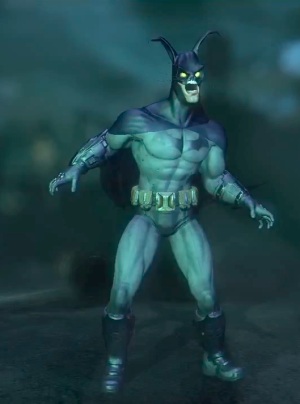
Also: how can you not love a game that features this Donnie Darko-meets-March Hare version of the Batster?

But seriously, folks – this is what Catwoman looks like! Not like two melons pressed into a zip-up leather overall – this is the one, true Catwoman:

*Okay, I’ll come clean. While I wouldn’t call myself a fan of superhero comics per se, I have enjoyed Watchmen, Mark Millar’s Red Son, Joss Whedon’s run on X-Men, Hellboy (does he count as a superhero?), Brian K. Vaughn’s Runaways and Ex Machina, several of Moore’s other ‘science hero’ works, Chris Nolan’s Batman films, and I will want to see the new Spiderman at the cinema, although that’s entirely because of Andrew Garfield. And, hey, good old Jed Bartlett is in it too!

When in Rome…

For all the amazing places I’ve visited vicariously through cinema, last week that was spent in actual, real Rome made me realise that I haven’t seen all that many films set in the Eternal City, in spite of its obvious cinematic qualities. I’ve seen Antonioni’s Roma, Città Aperta, and I’ve watched Matt Damon trying to figure out whether he wanted to be Jude Law or whether he simply wanted him in The Talented Mr Ripley – but other than that, cinematic Rome has passed me by. (Televisionary Rome, on the other hand…) Having recently walked past the house where Frederico Fellini and Giulietta Massina lived for the last years of their lives, I am resolved to check out La Dolce Vita and Roma, at least. Film Four, couldn’t you throw a Fellini retrospective our way?

However, I did spend a couple of weeks earlier this year exploring the place – albeit neither in films nor in the real world, but in Assassin’s Creed: Brotherhood, a game that carries the DNA of both Dan Brown and Umberto Eco according to some critics (I’m afraid that Eco, other than The Name of the Rose and some essays, has passed me by so far – another omission I’m hoping to correct). It’s set in Renaissance Rome, and it’s a near perfect example of how video games, in terms of technology but accordingly also in terms of ambition of what can be depicted in games, have developed in the last couple of years. Obviously seeing the real Pantheon or Colosseum or Campidoglio isn’t the same as seeing them in the game – and indeed, when I fired up Brotherhood this morning to check out the locations with Rome fresh in my memory, I did find them all to look considerably smaller in comparison – but letting you explore places that feel alive and that are inaccessible to you otherwise is something that games are doing better and better.

What games cannot do, though, and won’t for a long, long time, is deliver that perfect Granita di Caffe con Panna. Time for Nintendo to make a deal with Nespresso, methinks!

P.S.: In Brotherhood, the Colosseum and the Pantheon are probably my favourites. In actual Rome, it’s the wonderful Caravaggios (can he lay eggs?), the restaurants and that perfect tagliolini cacio e pepe at Le mani in pasta in the Trastevere part of the city. Molto delicioso!

You’re a mean one, Mr Kratos!

It is strange that I should enjoy God of War III so much. I’m not a particular fan of hyper-violence – and with a game that features Zipper Tech, a subroutine that calculates innards spilling out of a disembowelled centaur, it’s fair to say that it’s a tad on the violent side. I’m also not the biggest fan of puerile sex scenes in any media – and banging Aphrodite (off-screen) by Quick Time Event while two of her bare-breasted attendants watch and get all hot and bothered in the process doesn’t strike me as a particularly mature depiction of human (or indeed mytho-divine) sexuality.

And yet, in spite of me slaying more Olympeans than I care to shake my blades at (come to think of it, most of them I killed by shaking my blades at them, repeatedly), none of my pinko liberal borderline-pacifist sentiments complain the way they do when I hear about how much Jack Bauer rules. It’s not that I fist-bump every time Kratos tears some satyr’s head off or impales a minotaur on his torn-off horns… but damn, if the game doesn’t make those things enjoyable! And even though I’m about the greatest story-whore there is when it comes to games (two fingers to you, ludologists!), I guess my enjoyment of God of War III comes down to gameplay, first and foremost. I don’t know how Sony Santa Monica did it, but the Ghost of Sparta (known as Krony-Poo to those friends of his who want to have a close look at their lungs) and his arsenal of mythological weapons of mass destruction control so well. For non-gamers, it may be difficult to understand just how much a game can pull you in with a reactive, easy-to-learn-hard-to-master set of controls – and the God of War series has always been extremely good at this.

While story isn’t the game’s main attraction, it is pretty well told – and eminently pretty, in a “Look at the shader effects on that flesh wound!” way – and Kratos’ butchers tour of ancient Greece features some memorable re-interpretations of the big names, from snide but doomed Hermes to bruddah Hercules who gets his face Gaspar Noéd in to poor doomed Hephaestus who only wanted to protect his daughter, Pandora. But the visual beauty of this game doesn’t come from the characters (although it’s impressive to see Kratos’ scars in realtime HD) or the cutting-edge (pun intended) blood and guts – it’s the amazing, epic scale that each of the games has managed to put onto the screen. From fighting the Colossus of Rhodes to the Steeds of Time to climbing around on Gaia’s ample back fighting harpies… and don’t even let me get started on the architecture! In effect, God of War III may dress up as splatter, but at its heart it’s scale-porn – it gets hot and bothered showing tiny little figures climbing around gigantic buildings and creatures. It’s what a model railway built by Peter Jackson would look like. And, pinko lefty liberal that I am, I eat it up like it’s going out of style… and if it means pulling the heads off another 99 hydras.