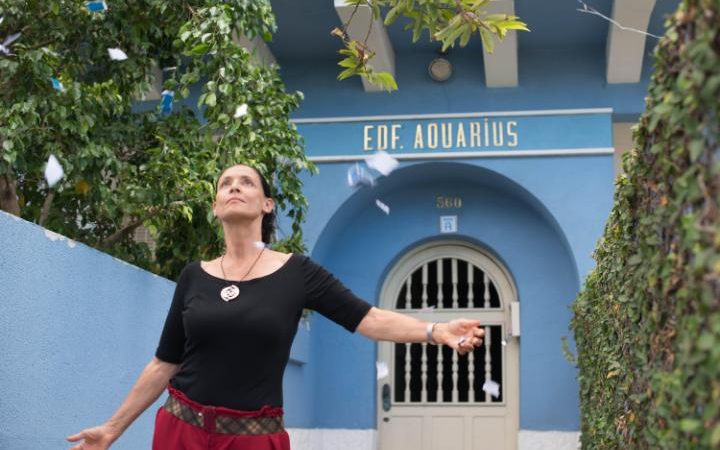
 There is an apartment house on the beachfront of Recife, Brazil. It’s from a time when houses still had names, and this one is called the Aquarius. Throughout the years, towering hotels have been built around it; tenants move out until there is only Clara left. Developers turn up, friendly but smarmy, but Clara does not want to sell. For Clara, home is a place. That is why the movie is called by the name of the house, Aquarius. It’s impossible to separate the woman and the house, but the developers don’t realize that yet. We all have something outside ourselves that defines us. With Clara, it’s the place she lives in. In Clara’s living room, there is a wooden chest of drawers on which Auntie Lucia, a family legend, once made love to her lover and future husband. That is not a source of ridicule, but a way to fondly remember the past. Continue reading
Movies
The young woman and the Sea
 Pedro Almodóvar’s latest Movie Julieta is a Homeric family biography, bookended with Hitchcockian disquiet. I am not sure if those two moods go easy together; the story is loosely based on three Alice Munro short stories, so maybe this is what kept me watching. The movie starts when the older Julieta (played by Emma Suárez) gets word that her long-lost daughter Antía is alive and well and a mother of three, living in Switzerland. Julieta leaves her lover and moves back into the flat where she and Antía used to live so that the daughter can find the mother at the old adress – if she wants to. This and the brooding score made me expect some long-simmering family conflict. Continue reading
Giving us some song and dance
 Damien Chazelle’s La La Land harks back to another era of moviemaking, but it stands entirely on its own two feet. Sometimes those feet jig and hoof and skip and jump, but they are also able to stand completely still while the head looks at someone else across a crowded jazz bar. It’s a musical, but it is much more. It starts as an exuberant fantasy, and when the romantic bits or the musical numbers run the danger of getting too much, real life comes crashing in, rooting the whole dream in firm ground, only to take off again later. It’s over two hours long, but there are no boring bits. There is funk, soul, jazz, tap-dance and waltz, there are vinyl records and live bands, there is beer and coffee. There is love, and there are kisses, and there are fights. Continue reading
Bring me the head of 2016
 In a lot of ways, 2016 was the year to get suspicious about a lot of things, most of all about the future, and maybe some of us even got superstitious a little bit. As far as my movies are concerned, I think I detect a pattern: the two movies I liked best in 2015, Whiplash and Birdman, ran here in January, and 2016 began with Carol and The Big Short, another couple of great movies. Superstition? Coincidence? Perhaps. I can’t quite shake the feeling that this year, you had to dig slightly deeper to find a really good movie. I wrote about The Assassin and American Honey, which are far from light entertainment, but are immensely rewarding and beautiful to look at. I also highly recommend Sing Street for its youthful irreverence and its music; Arrival, for its use of the sci-fi genre to learn a lot more about us humans than about the extraterrestrials (if you haven’t read thirithch’s excellent review, you should do so). And Rogue One, which tried hard not to be a blockbuster and was all the more successful because of it. Continue reading
We must love one another or die
You know how this story ends. It ends the same way as every story does, if we’re being honest. “Happily ever after” sounds nice, but it is really only a comforting fiction. All stories move towards the same end, mine, yours, everyone’s. Does that make them bad stories? Is every story that’s honest also depressing?
Then again, what choice do we have? And, if we admit to ourselves – not just occasionally, with a start, but with every breath – that every story ends the same way, would we still choose to live those stories? Could we even, without our hearts breaking constantly?

Fan service, nostalgia and storytelling
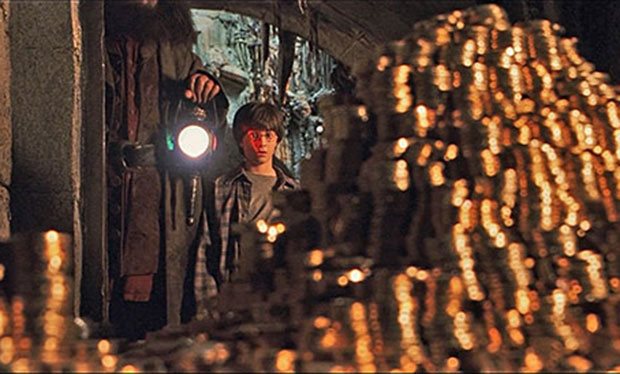
When I first heard about Warner Bros. Pictures’ plans to bring the Potterverse back to the big screen with Fantastic Beasts and How to Find Them, I pretty much dismissed those plans as them going back to their favourite cash cow: a decision based primarily on monetary interests. Rowling’s book, published in between the fourth and fifth Harry Potter novels, was more of a sourcebook for the fans, so why turn this into a film – or, indeed, a series of films? For the many shiny sickles and galleons the producers would add to their hoard at Gringotts, obviously.
If music be the food of love
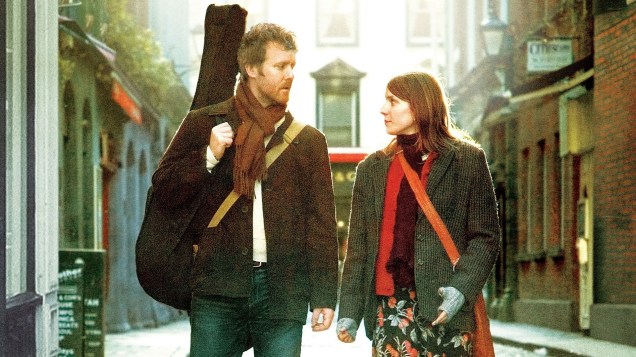
I fell in love with John Carney’s Once. That is not a particularly original reaction to the film, but it’s definitely true for me. Once is a beautiful, subtle love story told mostly through music – or is it a music film told through romance? Having recently watched Carney’s follow-ups, Begin Again and Sing Street, those same elements, love and music, are central there too, and with them it’s also impossible to separate the romance and the music.
She can handle the truth
 I like the Dardennes. Their movies have something immediate and unfiltered, something of the here and now. Their realism isn’t intrusive or voyeuristic, it’s simply part of their world without being moralistic or downtrodden. All of their features are set in or around the same area, in Seraing, Belgium, where they are from, a down-on-its-luck area of industrial estates and anonymous apartments. We’re amongst the working class, and things generally look bleak. But the people are real and breathing, and there is no need to zoom in on their weaker moments. Just look at them, and their glow and zeal will reveal itself. Continue reading
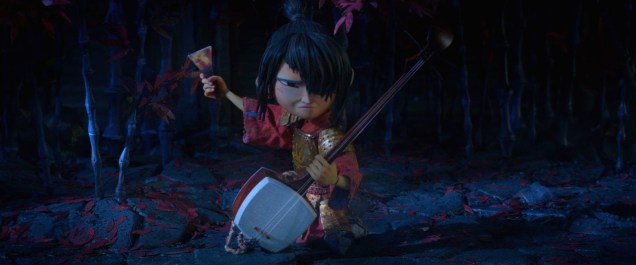
Shamisen Hero
“If you must blink, do it now. Pay careful attention to everything you see, no matter how unusual it may seem. If you look away, even for an instant, then our hero will surely perish.”
— Kubo and the Two Strings
Laika Entertainment may just be the most underrated animation studio currently working. Everyone knows Disney and Pixar, you can barely go to the cinema without seeing a DreamWorks trailer, and Studio Ghibli and Aardman Animations deservedly have a large fanbase. Laika’s gorgeous features, from Coraline to ParaNorman, are mentioned much more rarely, though – which is a shame, since their latest, Kubo and the Two Strings, deserves much more of an audience, as it is one of the most beautiful works of animation I’ve seen in a long time.
Chronicle of a death foretold
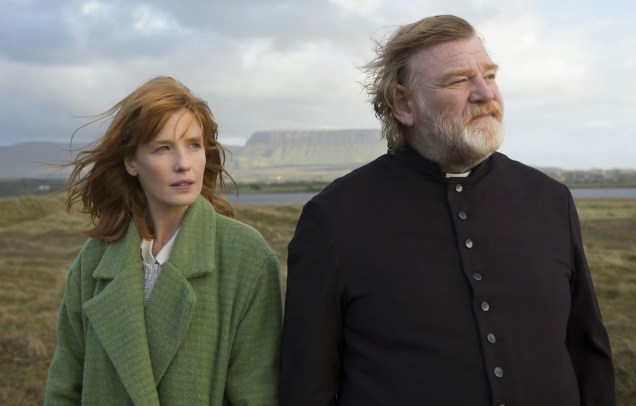
Is there an actor better than Brendan Gleeson when it comes to evoking the strange, rare combination of exasperation and sadness? Look at his filmography and you’ll find funny, poignant performances throughout, from The General and The Tailor of Panama via 28 Days Later (he makes it out of the film before the shaky ending, though not before breaking our hearts) to Martin McDonagh’s In Bruges, where he’s the perfect complement to Colin Farrell’s thick, tragicomic protagonist.