Space race

Gravity is a gorgeously shot film, no doubt. It’s a film by a director who knows what he’s doing; there’s not an ounce of fat on that movie. It’s a thrilling piece of cinematic craftsmanship, and one that has rightly garnered praise from critics and audiences alike. It’s difficult not to see some of the criticism as internet-age contrariness. Is the film’s plot simple? Perhaps. Is it too simple? Well, that point was ably countered by that patron of upper-case criticism, Film Crit Hulk.

And yet, I came away from having seen Gravity being subtly disappointed. It’s a good film, definitely, and Cuaron does a great job – but already one or two days after having seen it, when I try to think about what I saw the images that come to mind aren’t Gravity‘s, they’re from Danny Boyle’s Sunshine.

Now, Sunshine… It’s a flawed film that’s almost sunk by its last third. It’s messy and confused. Yet it resonated with me to a much larger extent than Cuaron’s more accomplished, more consistent movie did. As a matter of fact, one of the reasons why I was somewhat disappointed with Gravity is this: I was immediately pulled in by the trailer, which evoked the visceral dread of floating off untethered into the infinity of space. The film itself didn’t bring back this dread, because of its structure: obviously Gravity wasn’t going to kill off Sandra Bullock, at least not before the final five minutes or so, which meant that there was little sense of risk. It’s possible for stories to solve this conundrum by involving their audience in a sleight of hand where they know a protagonist won’t die, yet they feel that they may just be wrong about that. Gravity didn’t do that, at least not for me, and I’m not sure it wanted to – its aim was to show Bullock’s character struggling and triumphing.

Gravity

That’s the other thing, though: I did care about the character triumphing, but not much. Dr. Ryan Stone, first-time astronaut, works as an audience stand-in, especially in concert with the amazing cinematography (seriously, if Emmanuel Lubezki doesn’t get an Academy Award for this, the Academy should be shot into space!), but to be honest, I didn’t particularly care about her. Part of this is Bullock’s particularly American everywoman quality: a bit like a female Tom Hanks, there’s something to calculatedly likeable about her. She works well in Gravity, but I often find her (and Hanks) bland, compared to, say, the everyman characters of Jimmy Stewart that hinted at darker qualities under the folksy niceness.

Adding to this are my issues with Gravity‘s themes: Film Crit Hulk (and other critics) liked the rebirth motif running through the movie, but I found it somewhat hackneyed and distractingly obvious. By the time we get Bullock’s zero-G fetal position and realise that the line tethering her character to various space vessels doubles as an umbilical cord, the film is practically shouting its subtext at us in IMAX-sized captions: we’re witnessing her rebirth, get it?
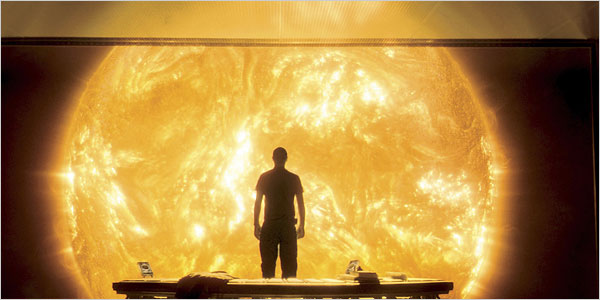
sunshine

Sunshine is hardly all that more subtle about its themes, but it’s less single-minded – it’s more messy, as I mentioned earlier – and for me this makes the film resonate more. It’s fair to say that Boyle’s movie doesn’t quite know what it wants to be, but the result is that Sunshine‘s themes aren’t as pushy. More than that, though, I cared about its characters and their plight much more than I did about Dr. Stone’s; she may be more likeable, but her likeability is largely predicated on the audience liking Sandra Bullock. Sunshine‘s characters are more flawed, more complicated, and to my mind more human. As a result, when those characters die it feels more like a loss, whereas Gravity‘s deaths were mostly forgotten a minute after they occurred.

There’s something else that Sunshine pulled off and that makes the film resonate more with me than Cuaron’s arguably more accomplished movie: both films have a metaphysical component, but Sunshine‘s goes beyond the individual level. It’s not just about the potential death of one audience stand-in, it’s about the possible death of mankind. It’s about the two directions in which playing God can go: the film’s protagonists are working on saving the sun and, by extension, mankind, while the antagonist wants to return us all to the stardust we came from. Both sides are torn between being flawed humans and aspiring to the kind of power that humans should not have. It is a shame that Boyle turns this metaphysical playground into a slasher movie, almost drowning the more interesting themes in a space-age retread of And then there were none, but the power of the filmmaking – always more disjointed than Cuaron’s, but for me more engaging in this – got to me to an extent that Gravity didn’t in the end.

Gravity is accomplished in ways that Sunshine doesn’t manage. It is the more coherent film, it gets more things right and fewer things wrong. But the things that Sunshine gets right – and even its noble failures – means that I’d rather sit in a tin can with Cillian Murphy, Rose Byrne and Hiroyuki Sanada than with Sandra Bullock and George Clooney. I’m glad that Dr. Stone made it, but for me her triumpant rebirth doesn’t even begin to touch Sunshine‘s final scene, which is confident enough to be simple and quiet – and all the more glorious for it.

Twilight of the Superheroes

What if normal people decided that the way to tackle crime was to put on costumes, assume a silly name and fight crime on a one by one basis? And what if Hollywood, as it is sometimes wont to do, did not one but two films based on that premise, pretty much at exactly the same time? (I’m sure there’s a fancy, latinate word for such occurrences, AKA the Armageddon Effect.) Well, that’s exactly what happened in 2010, with Kick-Ass (based on a Mark Millar comic) and Super – although arguably someone who puts on a costume and becomes a masked vigilante is by definition not quite normal, which both Super and Kick-Ass explore. Neither does it entirely successfully, though, mostly because they give in to the perceived needs of the stories they’re telling and the audience they’re hoping to satisfy.

Kick-Ass in full fetish gear

Kick-Ass was the more successful of the two films according to the main metric that determines a film’s success, namely box-office take – so successful, in fact, that it’s got a bigger-budget sequel coming out later this year. It’s probably more immediately entertaining than Super, playing the situation more for laughs: its protagonist is a geeky teenager who reads too many comics, like a sadder, radioactive-spider-deprived version of Peter Parker who is at least as interested in copious masturbation as he is in fighting crime. More interesting, and more funny for the most part, are the secondary protagonists, though: Big Daddy, an ex-cop turned vigilante, and his adorable moppet of a daughter, Hit Girl. A lot of the film’s laughs come from the incongruous display of Hit Girl effecting maximum carnage as she slices and dices the criminal element of New York City. While the actors (Nicholas Cage and Chloë Grace Moretz) make the most of the roles, though, the film does become pretty lazy once it’s discovered its most effective punchline, that of an 11-year old cursing like a sailor while committing acts of hyper-violence, repeating it so often that the movie should almost be renamed The Repetitive Adventures of Hit Girl (introducing Kick-Ass, the Boring Boy Wonder).

More problematic than the lazy comedy, though, is that Kick-Ass only takes its own premise seriously for the first half hour. Our teenage protagonist quite aptly gets his ass kicked – not to mention an ugly knife wound in the abdomen – on his first attempt to fight crime. By the end, though, he’s flying around with a jetpack firing shoulder-mounted gatling guns that, if fired that close to his head, would shred his eardrums in seconds. He dispatches the film’s big bad with a bazooka that’s almost bigger than he is. Kick-Ass‘s initial “What if?” is long forgotten as its eponymous hero commits acts as unbelievable as Hit-Girl’s, and barely any less realistic than those of his super-powered brethren.

Super takes its premise of a socially challenged shlub becoming a masked vigilante more seriously. The film still plays as a comedy, but the humour is decidedly more dark, as the protagonist’s vigilante crusade is shown to be deeply messed up. Sell drugs? Get a spanner to the head. Proposition a child prostitute? Get a spanner to the head. Cut in line at the cinema? Get a spanner to the head. Super‘s wannabe hero characters may in part react to what they see as evil, but what motivates them just as much is the self-righteous power trip they’re on. If the world treats you like a loser, put on a mask and costume and show the world that you’re not a loser by hitting it over the head with a spanner.

... okay. Better Kick-Ass' fetish gear than this... thing.

While Kick-Ass ends up like a more snarky, hyperviolent version of the stories it sets out to comment on, Super feels more like a grungy, sometimes adolescent take on Taxi Driver. Its protagonist, Frank Darbo AKA The Crimson Bolt, isn’t miles away from Travis Bickle, and just like his ’70s precursor he is torn between seeing bad things in the world and feeling utterly powerless and inadequate (not least when it comes to women). Differently from Taxi Driver, though, Super can’t quite resist buying into the power fantasy. The Crimson Bolt goes on a violent spree not too dissimilar from Travis Bickle’s, and we’re supposed to see it as messed up, but damn, if our clumsy, shlubby loser of a protagonist isn’t suddenly an absolute badass with guns, explosives and inventive movie-hero kills! The film ends up feeling less ambiguous than suffering from ADD, oscillating between, “This is sooo cool! This is sooo messed up! This is sooo cool! This is sooo messed up!”

In the end, when it comes to the messed-up-ness of vigilantes, my go-to hero is still Watchmen‘s Rorschach, himself clearly influenced by Travis Bickle’s philosophy. Doesn’t “All the animals come out at night – whores, skunk pussies, buggers, queens, fairies, dopers, junkies, sick, venal. Someday a real rain will come and wash all this scum off the streets.” sound quite a bit like “The streets are extended gutters and the gutters are full of blood and when the drains finally scab over, all the vermin will drown. The accumulated filth of all their sex and murder will foam up about their waists and all the whores and politicians will look up and shout ‘Save us!'” Admittedly, Rorschach may not offer the same kind of snarky giggles as The Crimson Bolt’s escapades or Hit Girl’s adventures, but as so many times before, Alan Moore knows the score. As far as I’m concerned, we’re still waiting for a “What if people really became superheroes?” comedy that actually takes its premise seriously and works as a comedy.

Earthdown, Moonrise

From an atypical variety pack to a covert one – the Variety Pack that dares not speak its name. I recently celebrated my birthday, which I usually follow with some hedonistic binge buying of DVDs and Blu-rays. We’ve since watched two of the films I’ve bought, namely the indie sci-fi-tinged drama Another Earth and Wes Anderson’s latest Andersoniad, Moonrise Kingdom.

Let’s start with the one I’ve seen more recently, Moonrise Kingdom. I have an ambivalent relationship with Anderson’s films; I find his striking, hyper-arch style fascinating and irritating in equal measures. Having said that, I loved The Fantastic Mr Fox, and I have a lingering suspicion that I’ll come to feel similarly about Moonrise Kingdom. On the surface it very much does what all his films do: tell arelatively simple storiy that is tinged with melancholy using ironic artifice in the presentation. Anderson’s style felt too much like a pose to me in The Royal Tenenbaums, hampering the sadness because the form seemed to whisper constantly, “My, aren’t we being ironic and self-aware about all of this?” There’s something more felt, more balanced in Moonrise Kingdom‘s performances, though, especially those by the two young leads, which renders the sadness much more effective and credible. It no longer feels quite as much as if the director is constantly putting the air quotation marks of irony around everything in his tale, even though the film is stylistically pure Anderson. As a result, Moonrise Kingdom is both a typical, dollhouse-style Wes Anderson confection and a convincingly sweet, touching childhood romance, without the two being at odds with each other. The change is a subtle one – from stills, and probably from the trailer, this will look like any and every film by the director – but it’s definitely worth checking out for those who were ambivalent about his earlier works.

Another 2012 film that I’d heard good things about, Another Earth, turned out to be more of a disappointment. It attempts to marry a relatively generic drama premise (a young woman destroys a man’s life when she, drunk and distracted, crashes her car into his, killing his wife and child) to a sci-fi high concept: one day, a second earth appears, visible from our planet, and get this: that planet is identical to ours in every way.

What a weird, wasted premise. The film later goes back on it, but for most of its duration we’re made to believe that this other earth is identical to our own, the people on it are identical to us. It’s a mirror image – but what good is a mirror image if it doesn’t allow us to contrast what we believe we will see with what we actually see? Another Earth‘s mirage in the sky is a concept that’s used to surprisingly little effect, with little reality for much of the film. In a story that is about regret, wouldn’t a more intriguing move be to make this second earth a constant reminder of “What if”? Since the film has already suggested that things on this second world are identical to ours, it’s not a mirror so much as a copy.

Except, in the film’s last fifteen minutes, there’s suddenly the suggestion that while the two earth’s were identical, this synchronicity was shattered when Earth 2 was first glimpsed, moments before the crash that sets the story into motion. So why not have this as the premise to begin with? For more than an hour, the second earth is a visual, a concept, but a vague, abstract one, a pretty but pointless intrusion on a fairly standard drama about guilt, regret and second chances. Earth mark 2 only comes into focus for the film’s ending, coming across as a half-baked idea in serious need of a rewrite.

... but it does make for nice stills!

What doesn’t help is that the film is too languid, too slow, to keep the viewer distracted from some uncomfortable questions. The main character, before going to prison after the accident that kicks off the plot, wants to go to MIT. She is in love with the universe and its mysteries. Yet the second earth makes not a jot of sense: it starts off small, then gets bigger and bigger, so doesn’t that suggest it’s a threat to earth, a more familiar double of Melancholia‘s eponymous planet? How can such a planet be identical to ours in every way if it doesn’t share our orbit, miraculously appears one day and then comes closer, growing ever bigger in the sky? These questions, to be quite honest, should be absolutely irrelevant – von Trier’s film couldn’t have sustained such science-minded inquiries either – since the celestial doppelgänger ought to be relevant in thematic terms, not scientific ones, but Another Earth fails to make the sci-fi element resonate with its theme. The big blue bauble just hangs there while the fairly predictable, though well-acted, earth-bound drama ensues. Note to the writers: if your main story conceit is irrelevant to the story you’re telling for 80% of its running time, perhaps it’s not that good an idea in the first place. Think about it.

July Variety Pack (but it’s an odd one…)

A quick “Hey there!” in between a week’s holiday in Paris and a work trip to the UK – and since the heat is making my brain frizz out on a semi-regular basis and I don’t have the stamina for a longer-form post, here’s a variety pack. It’s a strange one, though; for once I’m not writing about a couple of films I’ve watched recently but about a few topics that have been hanging around in my brainpan, equally lacking in energy due to summer having icumen in.

What did you do in the war, dad? – I was in an HBO miniseries, son.

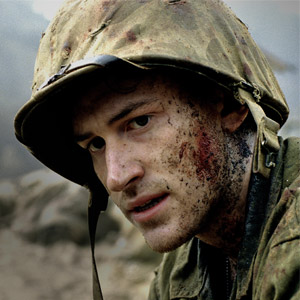
A war veteran, reminiscing about the time he was pursued by a pack of velociraptors.We’re currently watching HBO’s The Pacific, a sort of follow-up to Band of Brothers. It’s a good series with great production values and strong performances, and the theatre of war it depicts does come across as distinctly different from the Western front of the earlier series. At the same time, there is definitely something a bit samey about the two series, and about so many American war films of the last ten, twenty years in general. (Clint Eastwood’s Flags Of Our Fathers and Letters From Iwo Jima come to mind.) They don’t go in for the easy, unambiguous heroics of the war films of yore, yet the subtext still seems to be this: these men we’re watching, the soldiers they’re standing for – they deserve our respect. Not because they’re heroes to begin with, but because they’re ordinary men that become heroes in extraordinary circumstances. The experience of war – and, on a more meta level, the act of turning them into film, with all the trappings of the genre – ennobles them. And this is the bit that I’m uncomfortable about: as riveting as a well-made war film is, very few of them end up not telling you unquestioningly that these men and what they do is noble. Being in a war and watching your buddies geting shot to pieces may be hell, but the act of going to war is a noble one. Sad, yes, but that only makes it more noble. Perhaps the Second World War was the kind of fight that sustains these narratives that, at least implicitly, suggest the Good War. Regardless of the ideologies of The Pacific, though, part of me wishes for a genre piece that doesn’t insist with its elegiac soundtrack and close-ups of brothers in arms giving their lives for each other that warfare is a noble endeavour and that soldiers unquestioningly deserve our respect. (For the record, there are scenes and narrative strands throughout The Pacific that provide glimpses of a different perspective – but they still end up surrendering to the superior firepower of the filmmaking that keeps emphasising, “Noble! Sad! Elegiac! And, yes, patriotic!”, rather than leaving me to form my own thoughts.)

History will teach us nothing…

… except that the Middle Ages were oh-so-pretty. And Elizabeth Woodville, wife of Edward IV and Queen of England, could summon storms by going “Oooh, ooooh, ooooh…!” in a menacing way. Not a bad parlour trick!

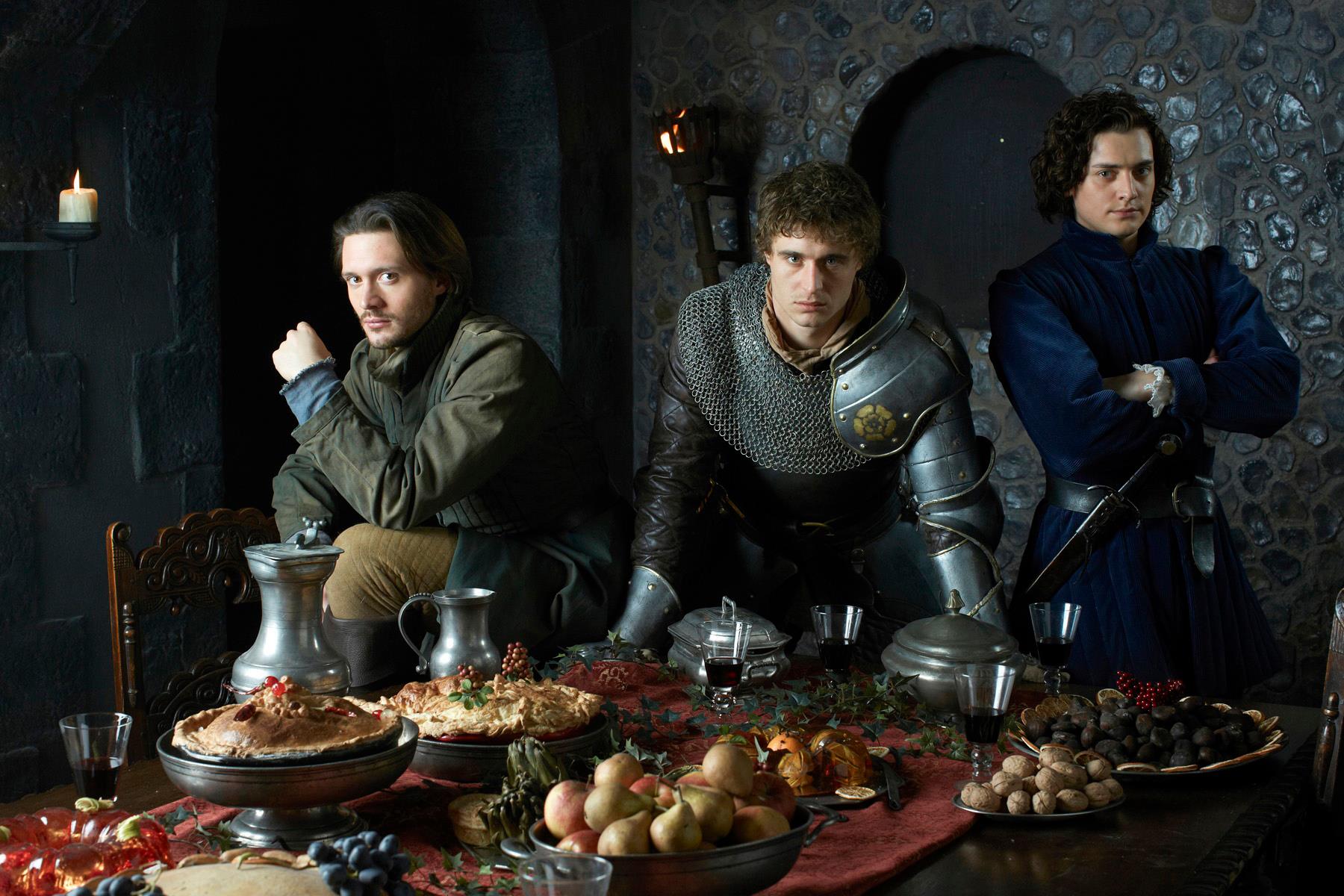
Anyway, watching The White Queen has made me long for Rome‘s way of handling history. It’s a tricky genre, historical fiction (and perhaps I should just accept that The White Queen doesn’t belong to that particular genre so much as to that of historical romance), and one thing that often goes wrong is that such fiction wants to have its cake and eat it: it wants to show that these olden-times people were different from us and did things differently and we shouldn’t judge them from our anachronistic vantage point of being all enlightened and such stuff, yet then in the next scene it espouses a completely ahistorical, modern point of view to make the characters relatable to us. Balancing these two narrative impulses – Ooh, look at how different and weird these people are! And now look how they’re just like us after all! – is extremely tricky, and I don’t think The White Queen has handled it particularly well so far. In one scene we see the young king almost raping his queen-to-be when she doesn’t assent to a quick tumble in the grass, yet ten minutes later when he actually says he’ll marry her she goes all swoony and Twoo Luv, like a 20th/21st century teenager in love for the first time. If we’re supposed to see this through modern eyes, how can we accept Edward’s earlier attempt at Lancastrian date-rape? Only if we give him the benefit of historical perspective – of course, he’s the king, and she’s a woman at a time when women have very little power, it’s rarely love that starts a relationship in these days, if she’s lucky she’ll learn some affection for him – but then her later behaviour makes little to no sense, because it is entirely predicated on current ideas of romance. Again, though, perhaps that’s it: the series definitely puts romance before history.

Cast for realism... or swoon factor? What do you think?

Talking of historical fiction: revisiting Deadwood

Alan Sepinwall, TV critic and blogger, is currently finishing his Deadwood Rewind. His perceptive, eloquent posts on the series’ third season are a great read – not least because he’s got some of Deadwood‘s actors visiting the comments threads on a regular basis, such as Jim Beaver (Ellsworth), Keone Young (Mr Wu) and W. Earl Brown (Dan Dority). It’s fascinating to revisit the series through their eyes. (Here’s a link to the Deadwood Rewind for episode 6 of the third season, “A Rich Find”, with some great contributions by Jim Beaver.)

Relationship slump

I don’t usually mind when my opinion diverges from that of critics. Why would I? I feel fairly secure in my views on films, books, TV series and games, without needing others in positions of (questionable) authority to confirm my point of view.

Which is easy enough most of the time – except when every single critic seems to have an opinion that differs from mine. It’s at this point that I usually start wondering: what is it about the work in question that I missed, or misunderstood? What is it that rubs me the wrong way? I can’t remember many cases of this, but when it happens, it’s usually that my opinion is more negative than that of the critics. Case in point: Before Midnight, the latest team-up by Richard Linklater, Julie Delpy and Ethan Hawke.

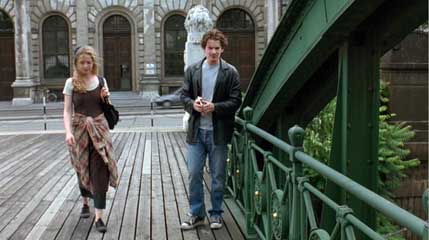
Before SunriseCards on the table time. I didn’t particularly like Before Sunrise, the first of the three films. The characters were credible and well acted, the film was filmed and directed with a lightness – but I guess that at 34 I was too old when I first saw the film. The characters were credible and well acted, but they got on my nerves with their post-teen self-centredness. Since I’d got the two films, Before Sunrise and Before Sunset, as a set, I thought I’d watch the second one too, expecting to be equally annoyed at the characters – yet I found myself liking Before Sunset and its more grown-up characters a lot. Jesse and Céline had caught up with me, so to speak, and now I was saddened to leave their company.

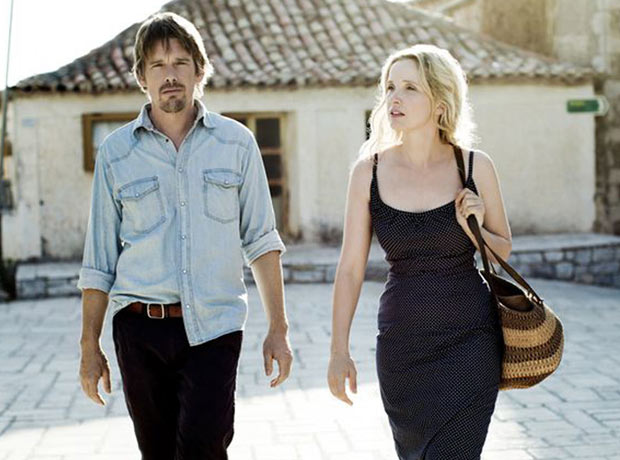
Come Before Midnight, I was looking forward to catching up with the two, not least because every single review I’d read suggested that this was the best film of the three. More than that, I like the concept of the series; there are lots of films that accompany characters over the course of decades, but the illusion that the people we’re watching aren’t actors with increasing amounts of make-up is one that is rarely complete. With Linklater’s films, it’s not an illusion – the people we see are a decade older. As the film started, I was almost instantly back with Céline and Jesse, enjoying their older, somewhat more jaded banter – but then, the longer the film went on, the less I could buy into it. For one thing, Before Midnight brings in several couples to act as a foil for the two central characters, but it does so in too obvious and schematic a fashion, winkingly telling us and the central couple, “Ah, this is the two of you when you were 20 years old – and that’s where you’ll be in ten years time. Wait ’till the next film and we shall work in a memento mori or two as well!”

Before Sunset

So, there’s snag one: the film did have to vary the structure of the first two – it could no longer be a more-or-less chance meeting after nine years, so there had to be something more to it than “Jesse and Céline meet and talk in some picturesque European city.” – but it does so in rather clumsy ways. Snag two, ironically, is more or less the opposite: Before Midnight returns to the banter in ways that aren’t always particularly convincing. Yes, I enjoyed the two characters talking, it’s just like old times, with the added benefit of nine years of life having happened in the meantime. But people who’ve been together for almost a decade, let alone a couple with two small kids: would they talk like this? Wouldn’t they have talked about most of these things before? And wouldn’t they be glad to enjoy some, well, silence? Jesse and Céline still talk as if they had been apart the last several years, which may be fun but isn’t particularly convincing. While watching the film I didn’t really mind, but once my girlfriend made this point after we’d left the cinema I had to agree: I don’t really buy it.

Snag three is the main one, though: the last third of the film is an escalating argument between the two characters that got more grating the longer it went on. Dramatically it made sense to have the couple fight – but while Jesse’s side of the argument is credible enough, Céline’s more often than not seems to have little to do with the character they’ve created over three films. In fact, most of the accusations she throws in Jesse’s face decidedly sound like Cosmopolitan‘s Top 10 Anxieties of Women In Their 40s. They don’t particularly fit with what we know of the two characters’ life together – they’re generic. They make her sound like a stereotypical middle-aged, middle-class shrew with stereotypical middle-aged, middle-class resentments and fears. The two first Before… films always played with the characters’ stereo? proto? arche? -typical qualities, they always balanced what made them easy to identify with with the things that made them individuals, but in Before Midnight‘s last half-hour, Delpy’s character loses her credibility as an individual to such an extent that it hurts the film.

Before Midnight

Except none of the reviews I’ve read seem to think so. Rotten Tomatoes has the film at 98% Fresh, with only three of 152 critics giving the film a negative grade. It’s not an ego thing for me: I can very well live with others having different opinions. In this case, however, it almost feels like they’ve all seen a different film. Several even mention the big argument scene as the highlight of the film. Am I too harsh on Before Midnight and on Céline? Am I too dismissive of the ways in which, regardless of what Tolstoy may have suggested, all arguing middle-aged, middle-class couples are the same in certain ways? And will I have to wait another nine years for another film in the Before… series to reconcile myself with Linklater, Hawke and Delpy’s latest?

An evening with The Master (4)

Following from the previous three posts – on Paul Thomas Anderson’s career, the two main characters of The Master and the Master’s wife and his self-improvement cult – we’ve arrived at the fourth and final instalment of this series.

Mege   Let me ask you this: Roger Ebert said “when I reach for it, my hand closes on air” with this movie. I know what he means, but in my opinion, he goes too far. The film is puzzling, but not to the extent that we are left with a lot of hot air. How do you see this?

Matt   I’d agree with you. I find the film fascinating, confounding, perplexing, but I definitely wasn’t frustrated by all the questions it’s left me with. Like There Will Be Blood before it, I mainly felt that I’d seen something disconcertingly, intriguing different than what you usually get in American cinema. Yes, there are echoes to Kubrick, to ’70s filmmaking, and probably to lots of other things I didn’t even register, but there is still something entirely original about the film, its characters and what it evokes in me. It doesn’t make for comfortable viewing, but there’s enough of that already, I’d say.

Mege   And another question: We know that PTA likes his music. Boogie Nights knows how to use the music of the era almost to perfection, Magnolia is based on several Aimee Mann songs. In The Master, many characters start singing songs for various reasons, not all of them clear. It’s probably one of the weirdest aspects of the movie, so is there anything that struck you about the singing?

Matt   Well, for one thing, Phillip Seymour Hoffman’s singing creeps me out! Seriously, though: while I find Dodd the less puzzling of the two main characters, his serenading Quell with “Slow Boat to China” is extremely odd. There’s something about it that is moving, yet it’s also weirdly threatening – and I can’t imagine anyone other than Hoffman to pull off that particular scene. Music is definitely something that PTA obviously cares about, though his approach has also changed since Magnolia and Boogie Nights. I mentioned Kubrick before, and in both of the more recent films (though more so in There Will Be Blood) I heard echoes of some of Kubrick’s choices – György Ligeti’s less-than-whistleable ditties spring to mind. The Master‘s orchestral soundtrack has moments where it feels like a talented alien with no understanding of earth musicology has listened to a bunch of early 20th century music and then done his own, alien take on it. What was your reaction to the orchestral soundtrack?

Mege   You got me. I am very difficult when it comes to musical scores. This time around, I only remember the weird guitar twang, and I would have to watch the movie again, concentrating on the score, in order to answer properly. – Maybe the music has strong ties to the mood of the movies we’ve mentioned: Boogie Nights and Magnolia have kindness and good intentions towards most of their cast, while There Will Be Blood and The Master focus on the dark side of human nature. The guys in Boogie Nights really thought they were making art – they weren’t, and the music reflects that. Stuff like “Jungle Fever” is a musical catastrophe, but it’s full of atmosphere, and there is no other song that brings that time to life more quickly. The Aimee Mann songs as well as the Jon Brion score from Magnolia sound like there is hope for most of its characters. And if I say that the music in There Will Be Blood is dreadful, I don’t mean it’s very bad, I mean it’s full of dread.

I guess Dodd tells Freddie goodbye with that song. They met on a boat, so it’s only fair that their farewell should include a boat. I agree that the singing is weird, but (this is a long shot) there is nothing quite as appealing to your subconscious as a song. Remember what happened to Freddie when the Master sang and danced through Mildred Drummond’s house? Freddie started to see all of the women as if they were naked. They have music during a break in the presentation of The Split Sabre (it’s actually Melora Walters’ voice we are hearing). Music is a great means of manipulation.

Inherent ViceMatt   Time for a final question: I just Googled for PTA’s future plans – and apparently he’s adapting Thomas Pynchon’s latest novel, Inherent Vice. IMDB summarises the plot as follows: “In Los Angeles at the turn of the 1970s, drug-fueled detective Larry ‘Doc’ Sportello investigates the disappearance of an ex-girlfriend.” The cast includes Joaquin Phoenix, Owen Wilson, Reese Witherspoon and Benicio Del Toro. What do you foresee: a return to the earlier drug-addled world of Boogie Nights, something dark, strange and full of dread such as PTA’s more recent films – or is it futile to try and predict what Anderson will do next, doubly so if it’s based on a novel by Pynchon?

Mege   No idea – and I mean that in the best possible sense. I like filmmakers who take risks, and PTA has the ability to puzzle thoroughly, for instance with giving Adam Sandler the lead role. I am completely open, but for the record, adapting a Pynchon novel must be hard work by itself. What do you think?

Matt   Apparently Inherent Vice is Pynchon’s most approachable novel – which, I expect, is still pretty much bugshit crazy postmodern goodness. From the sound of it, the material is funnier than Anderson’s last two films, which aren’t devoid of humour, but it’s of a pretty grim sort. (“I drink your milkshake!” comes to mind as both hilarious and horrific.) Perhaps he will reinvent himself again, or perhaps we’ll see what the missing link between Magnolia and The Master might look like. In any case, I’m definitely looking forward to the film and to Anderson’s continued career!

And that’s it! Thank you for reading our series on The Master. We don’t have any definite plans yet for future conversations along these lines, but we’re definitely hoping to return to this format at some point. Any comments on these posts and how we can improve them are very welcome.

An evening with The Master (3)

In the first two instalments, we discussed Paul Thomas Anderson’s developing style as a director and the two main characters of his 2012 film The Master. For this post we’re focusing on Peggy Dodd (played by Amy Adams) and the film’s riff on Scientology, The Cause.

Matt   The film is mainly Phoenix’ and Hoffman’s, but there’s also Amy Adams’ fiercely protective Peggy Dodd, Lancaster Dodd’s wife. It’s an untypical part for Adams, isn’t it?

Mege   Very. It’s the 1950s, and it’s unheard of for a woman to lead a cult. If you ask me, she is the brains of the operation, some sort of Borg Queen, while Lancaster brings truckloads of charisma and a talent for improvising to the Cause. There is that telling scene where she talks and he types away furiously at his typewriter. If he is not typing verbatim what she is saying, he may at least take her words as inspiration. In a way, that would make her the author of at least the second book, wouldn’t it? Then there is the scene where we learn that she controls her husband’s sexuality. She sees right through him. And there is that scene in England where she tells Freddie Quell exactly what’s what, and then leaves the room. Lancaster would never do that. Peggy Dodd is miles away from Amy Adams’ other roles. The Muppets. Enchanted. And I am sure the new Lois Lane cannot change her eye color.

The Master

Matt   With you mentioning women leading cults and the Borg Queen, I have flashbacks to Alice Krige’s New Age speaker for The Plan in Six Feet Under… which sounds close enough to The Cause to get me back to the topic at hand. I agree, she’s a very strong, smart character, but I find her quite puzzling. On the one hand, she seems to see Freddy as a threat; even at the beginning, when she’s apparently nice to him, her eyes are cold and guarded as she talks to him. Why exactly does she see him as a threat? Is she jealous of his closeness to Dodd? At the same time, both she and Freddy are probably the most zealous about Dodd’s crackpot cult philosophy, so there is a link there – but she never wavers, whereas Freddy does have moments where he says, quite clearly, that the Master is making it up as he goes along.

Mege   It’s Val, his son, who says that first, and Freddie almost beats him up because he knows that Val is right. But about Peggy: Maybe everyone is a threat, until they become their allies. I think the Dodds see themselves as threatened, as weak, but getting stronger because of their Cause. That the second book is probably much weaker is a threat to them. Newer disciples must be tested, so she might turn on Freddie with that cold stare of hers just to see how things are with him. After all, he appeared out of nowhere and by complete coincidence, and he might disappear the same way: anytime and without good reason.

The Master

Matt   I wonder about that… While I see your point about testing new recruits to the Cause, my impression was more that Peggy, and the rest of the family to some extent, feels threatened by how quickly and completely Freddy is taken in as Dodd’s friend and confidant. One of the first things Peggy says to Quell is that since he’s arrived Dodd is writing like mad, and while on the surface this seems to be a compliment, underneath she comes across as guarded and wary. In some ways the film strikes me almost as a battle between Peggy and Quell for the Master – only Quell isn’t aware of it, but Peggy is, painfully so. In that last scene between the three, Peggy is barely visible on the sidelines and practically cancelled out by the intensity of the connection between Quell and Dodd. It may well be a combination of the two things: that Peggy is jealous of this new man in her husband’s life and how he might change Dodd for the worse, doubly so because Freddy is so volatile. She feels both jealous of and threatened by a man she sees as a human time bomb, so to speak.

In the final instalment of this four-part series of blogs, we’ll discuss miscellaneous issues.

An evening with The Master (2)

In the first part of this discussion of Paul Thomas Anderson’s The Master, we discussed Anderson’s career and the development of his directorial style leading up to the film. In this instalment, we focus on the movie’s two main characters, Freddie Quell (played by Joaquin Phoenix) and Lancaster Dodd, the titular Master (portrayed by Phillip Seymour Hoffman).

Matt   Even though the film is called The Master, I’d say it’s first and foremost Freddie Quell’s (as played by Joaquin Phoenix) film. The movie begins and ends with him. Phillip Seymour Hoffman’s part as Lancaster Dodd, the titular Master, is large, but at least in terms of screen time it could almost be called a supporting role. What did you think of Phoenix’ performance?

Mege   Freddie Quell is not a good man, is he? He is a hardcore alcoholic – life does not go on like that for much longer. He cheats, he acts out, he lies, he almost kills a man. It’s a surprise he can hold down a job for long. He is clearly one of the more damaged soldiers, and it is only partly the war. His stance, his facial ticks, his awkward bursts of laughter – something is profoundly wrong with this guy. I have to say I liked the performance a lot, for two reasons. One reason is that we don’t really know what has happened. Lost love, the war – sure, but he was weird even when he courted Doris Solstad, wasn’t he? He keeps us guessing what injuries he might have. And second: Not a lot of actors would have agreed to a scene where they had to jerk off on the beach.

Matt   I was wondering the same thing about Quell – he isn’t quite as off, for want of a better word, in the pre-war flashbacks, but he’s most definitely already strange, and strangely offputting. Watching the film for a second time, I found it impossible not to think of Taxi Driver‘s Travis Bickle; Quell seems a bit smarter (he has moments where he’s surprisingly perceptive), but it’d definitely be inaccurate to say that the war made him what he is during most of the film. If anything, his wartime experience seems to have brought the oddness he already had into sharp contrast.

The one difference there is, though: in the film’s ‘present’ storyline, he always seems extremely tightly wound, like he’s ready to explode. (Perhaps that’s where I get the Travis Bickle vibe, together with his social awkwardness.) With Doris, but also later with her mother and at the end when he travels to England for his last meeting with the Master, he seems to be much more at peace. Still weird, still damaged, but I no longer expect him to start beating people because they threaten the things that give him stability. And yes, I no longer expect him to jerk off on the beach.

Which brings me to another point: were you as surprised as I was to see just how successful the guy is with often quite attractive women? His fling at the glossy department store, Dodd’s daughter, the English girl at the end, but also Doris: what do they see in the guy?

Mege   I don’t know, other than he can be quite dashing from afar and on a good day. I think he is quite fresh and straightforward with females, so he has a statistical chance of succeeding. Other than that, I wouldn’t know. – Elizabeth, though, is probably on a mission to make him stay in the fold. There is no real attraction in the way she sidles up to him and sits down, much less in the way she feels him up. I think that Peggy or Lancaster might have set her onto him.

The Master

Matt   Interesting take on the scene – I’ll definitely have to rewatch it with that in mind. Let’s take this point in the conversation to the other lead and titular character, Lancaster Dodd AKA The Master. I enjoy Phillip Seymour Hoffman in most things he’s in, and The Master is no exception. He also makes for a very striking contrast to Quell’s messed-up veteran, being a much more contained, almost classical character, at least at first. What’s your take on Dodd?

Mege   Dodd has two things going for him. He is good at improvising on the spot, an enchanting entertainer, even charming. This works very well – as long as his opponents are pliable rich widows. When he finds himself confronted with even mild criticism, he is out of his depth very fast. The other things is his magnetism. While his charms come from his words, his magnetism is there just by walking into a room. He shines – his hair and skin remind me of an albino, a blank screen you can project your stuff onto. His manner, sometimes even his attitude, are kind, but determined. He is pudgy, slightly overweight, so there is no way you don’t notice him even in a crowded room. The way he greets his wedding guests is the way of a game show host – hi, hi, good to see you, great to be here – it’s almost his show, not the one of the newlyweds. Dodd isn’t so far away from a young Jimmy Gator in that respect. But he tires fast. He yells at the man in the widow’s mansion and later at the Laura Dern character. His façade has rifts.

I know I am turning this post into a really long one, but I would like to segue into my main argument about the movie: Freddie and Dodd need each other. The Master manages to rustle up Freddie’s demons with his method in a way Freddie can intuitively accept. Dodd wants to end the interview, but Freddie is eager, almost desperate to continue. It’s probably years since anyone asked Freddie stuff he wanted to scream and shout about. And lo and behold, they manage to make him stop drinking – not by the Cause or by pacing the length of the room from the wall to the window and back umpteen times, no: Peggy just tells him to stop. This, more than the Cause or any of the tapes or books or seminars, binds Freddie to them. Dodd needs Freddie because if the can somehow heal this broken man, then the Cause works – or he can start pretending that the Cause works, which is not the same thing. At least, he had proof so he could stop calling his detractors “pig fuck”. It’s the movie’s great joke that they can make him stop drinking just by telling him to stop drinking. They have to really heal him in order to pretend that they have healed him.

Matt   I’m not sure he stops completely – isn’t the next scene the one where Freddy finds Dodd’s sleeping son Val on the veranda and takes a swig from his hip flask before waking him up? I do think though that Peggy’s barking up the wrong tree with respect to Dodd’s drinking – I would say that rather than being the way he is because he drinks, he drinks because he’s the way he is.

However, I totally agree with you that Freddie and Dodd need each other – to begin with, Freddie’s need may be the stronger one, and by the end he manages to free himself in some sense, but only by having integrated the Master into himself. (I’m thinking of the final scene where he uses Dodd’s interview/therapy method with the girl he’s with.) The final scene between the two men speaks volumes: it comes across as a weird, intense break-up scene, with Dodd doing what he can to convince both Freddy and himself that he’s still in control, that he’s still the Master – which he isn’t really. Freddy has reached escape velocity, and his brief return to Dodd only proves that he doesn’t need to be in the man’s orbit any more.

I very much like your reading of the Master needing Quell because if he can convert him completely – not just to the Cause, but convert him into a whole new person – he works the alchemy of turning his lies into truth. How consciously aware do you think Dodd is that he’s a charlatan?

Mege   Hard question. Sometimes Dodd talks like he has rehearsed some bits. I became aware of that when he introduces himself to Freddie: “I am a writer, a doctor, a nuclear physicist and a theoretical philosopher. But above all, I am a man, a hopelessly inquisitive man, just like you.” Hah. Don’t tell me you haven’t tried that one out in front of a mirror many times. But rehearsing doesn’t mean that he doesn’t, to some extent, believe in it. You cannot talk to people in such a risky way and not be convinced of what you tell them. Maybe Dodd sits on the fence, and healing Freddie would validate his made-up stuff, so the charlatan could start believing more strongly in his own phrases.

In the next instalment, which will follow in a couple of days, we will be discussing the Master’s wife, Peggy Dodd, his family and the Cause, the cult he has created.

An evening with The Master (1)

Paul Thomas Anderson’s The Master was one of the most intriguing films of the last year. As a big fan of Anderson’s earlier movies especially, I’ve been wanting to write about The Master – but it’s such a puzzling work, I decided it was time to bring in back-up. So, for this post and for the next three, I’ll be joined by a occasional contributor and good friend to discuss the film. I hope you enjoy this somewhat different, longer format!

Matt   Thanks a lot for joining me in discussing The Master, Paul Thomas Anderson’s enigmatic 2012 film. Let’s jump right into the conversation – our first one in this format, so let’s hope we won’t end up at each other’s virtual throats! What I’d be interested in, first and foremost, is how you see The Master and Anderson’s development as a director. To be more specific: I was a big fan of the director’s Boogie Nights (1997) and Magnolia (1999). When There Will Be Blood came out in 2007, though, I could barely reconcile the film and its director to the earlier work, and the same is still true for The Master. The earlier films have a certain signature style, as do the later, but the styles could hardly be more different. It’s like Anderson has completely reinvented himself as a director. How do you see this?

Mege   PTA stated in an interview that after Boogie Nights, he wanted to avoid being famous for a certain kind of movie, so he knew that his next movie would be intentionally different. But that doesn’t really answer your question, does it? That next movie was Magnolia, and it is not hugely different from Boogie Nights in terms of atmosphere and style. He even uses some cast members and some of the same musical score bits in both. The differences are more far-fetched: Boogie Nights takes place over a few years, Magnolia takes place in less than 24 hours, if I remember correctly. Maybe the real answer is that he is refreshingly versatile.

Matt   Versatile he definitely is – disconcertingly so. To me, without wanting to call them derivative, Magnolia and Boogie Nights both feel like descendents of Altman – they’re very much ensemble pieces of the sort that Altman has done, and Magnolia is clearly influenced by Short Cuts – and Scorsese, in terms of form. There’s an energy in the filmmaking, the cinematography and editing especially, that recalls Goodfellas, for instance. The two films both have sequences that are so relentless, they almost become overbearing – as if Anderson was a talented, personable version of Henry Hill all coked out.

Rewatching The Master, what strikes me about the filmmaking is how those two influences seem to be entirely gone. If anything, both The Master and There Will Be Blood have echoes of Kubrick, who couldn’t be much more different from Altman and Scorsese. They both have a weird buzz, underscored (no pun intended!) by the music, they both feature magisterial, strangely distancing camera work, and visual symmetries abound. You can almost feel the unearthly sort of wonder of 2001‘s monolith in some scenes in Anderson’s two most recent films.

But I don’t want to overplay the “Who’s your cinematic daddy?” game. My main point is probably that while I find recent Anderson fascinating, I have to say I miss the warmth of Boogie Nights and Magnolia. Do you find any of the earlier Anderson in The Master (other than Phillip Seymour Hoffman, obviously), and what do you like best about what his work has developed into?

Mege   I’ve never seen it that way, but yes, Boogie Nights and Magnolia both have their tenderness and warmth. While PTA wanted to utterly destroy Jimmy Gator, one of his other aims was to make Claudia Wilson smile. On the other hand, it’s hard to imagine a heartfelt movie about the oil business. Same with the cult business. There is greed, recklessness and manipulation in both There Will Be Blood as well as in The Master. I also have to admit that, although your comparisons to Altman and Scorsese ring true to me, I didn’t think of any influences while watching, maybe because a PTA is so darned original every time.

This discussion of Paul Thomas Anderson’s The Master will continue soon; next time we’ll be talking about the film’s two main characters and the performances by The Master‘s stars, Joaquin Phoenix and Phillip Seymour Hoffman.

Ah, but is it a classic?

“Classic’ – a book which people praise and don’t read.” – Mark Twain

I spent most of last week examining undergrad students of English studies, together with two colleagues. For the oral exam, students had to read and discuss an article, and one of my colleagues used a New Yorker article called “Cannon Fodder: Denouncing the Classics.” Much of the discussion was about what makes a classic work of literature – which made me think about the term ‘classic’ and how it’s used with respect to film.

Frankly, my dear...

What sort of films come to my mind when I think of classic movies? Casablanca, definitely. The Third Man. Probably much of Hitchcock’s oeuvre, and Gone With The Wind – and let’s not forget The Wizard of Oz, It’s A Wonderful Life, Citizen Kane, Some Like It Hot. I might even add later films such as The Godfather (and I’ll gladly add The Godfather Part II).

However, I don’t think I’d put films such as Taxi Driver on that list, or Apocalypse Now. I might even hesitate to add Jules et Jim (in case you were wondering whether English was the only language), although it definitely looks like what I’d imagine a classic to look. The thing is, when I think of classic movies, I think of films that are undoubtedly great examples of cinematic craft – but that are comfortable and cosy, films you can slip into as you would into a fluffy dressing gown.

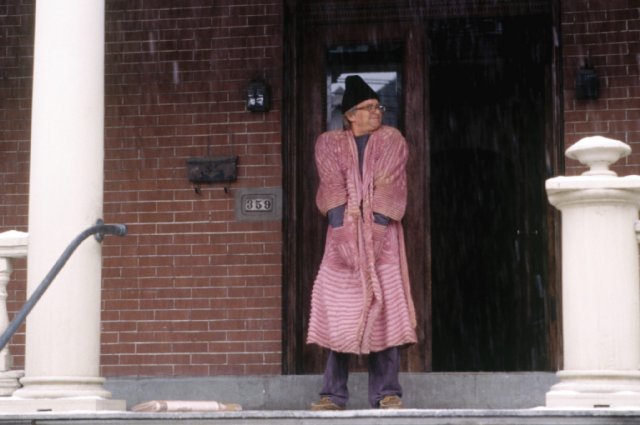
Half-way between The Streets of San Francisco and Liberace: Behind the Candelabra...

Coincidentally, one of the essay topics that the students could choose for their written exam was a quote by Franz Kafka:

I think we ought to read only the kind of books that wound or stab us. If the book we’re reading doesn’t wake us up with a blow to the head, what are we reading for? … A book must be the axe for the frozen sea within us. That is my belief.

Disregarding the programmatic nature of Kafka’s statement – I think reading, or watching films, to be comforted and entertained is absolutely valid – at least when it comes to movies I don’t think of classics as films that wound or stab us. That’s simply not what the word connotes for me. Is it the same with literature? For whatever reason, I’m more comfortable to call a “deeply weird” (in the words of one of my colleagues) novel such as Ulysses, or earlier examples of weirdness such as Don Quixote and Tristram Shandy classics, but when it comes to movies the word seems more apt when describing the burnished, oak-and-leather respectability of Hollywood’s Golden Age. The Easy Riders, Raging Bulls–era works – well, the best of them – still have the power to wound and stab, to disorient and destabilise. The strongest films coming out of the French nouvelle vague are still thrillingly fresh, as is De Sica’s The Bicycle Thief in many ways. Calling these films ‘classics’ would be accurate in a literal sense, I’d say, but also strangely sad: at least in my understanding, once you call a film a ‘classic’, you deem it safe. Time has pulled its fangs.

Get out of the bathroom, you psycho! And anyway, are you dressed up as your mother? You need professional help, man!Or perhaps we have, by regarding films as classics. Some of the ones I’ve mentioned above still have their teeth when you look at them with an open mind – even as cornball and (seemingly) cosy a classic as Frank Capra’s It’s A Wonderful Life, a film that has a surprising degree of darkness hidden just beneath the surface. The New Yorker article mentioned above ends by saying that classic literature should be argued about and fought for – and when it comes to movie classics, that may be exactly what we should keep doing. We shouldn’t be too quick to consign these films to the old people’s home of the cinematic arts and only visit them when we want a nostalgic afternoon with Gramps, because many of them aren’t nearly as comfortable as we make them out to be in remembering them.