May Variety Pack

It’s been a while since I’ve done one of these, but it’s a good time for them, since I’ve seen a couple of movies, none of which necessarily warrant a longer write-up. Of course, having said that, I’ll probably write more about each than was originally planned… Anyway, without much further ado, here goes.

Iron Man 3

I’m not really familiar with the Iron Man comics. I’ve read the occasional Marvel comic, but my interest was usually piqued by a writer doing a limited run, say, Joss Whedon or Brian K. Vaughan. I very much enjoyed the first Iron Man film for its sense of fun, something that Christopher Nolan’s po-faced Batman movies very much lacked. Iron Man 2, though… The less said, the better. Even Robert Downey Jr couldn’t salvage that one, nor could Don Cheadle joining the cast to replace Terrence Howard, an actor I have an irrational dislike of.
Ah, but who is Felix and who is Oscar?

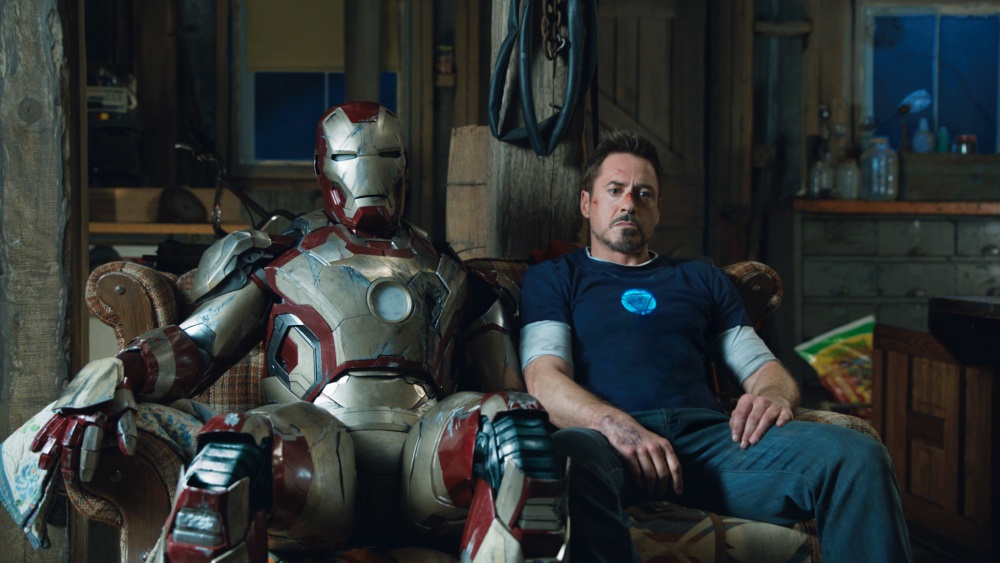
I went into the third Iron Man film expecting RDJ being RDJ, plus some cool, exciting action set pieces. What I wasn’t expecting, though, was a super hero movie almost as good as The Avengers. The latter does that thing Whedon does so well, bringing together an ensemble and playing them off each other in great ways, but it’s flabby in its structure and pacing. Iron Man 3 is also too long, but damn it, if it doesn’t entertain almost during its entire run! Shane Black’s script is great fun and a surprising amount of wit, the action is exciting, and (comic readers, you may want to skip to the next paragraph) the Mandarin’s re-invention is clever and effective, with Ben Kingsley having more fun than he’s had since his guest appearance on The Sopranos. I’d say that this film is the second-best of the Marvel films to date (admittedly, I haven’t seen Captain America, which supposedly is great popcorn cinema too) and better than The Avengers in a couple of ways.

Hey, it’s even made me enjoy Gwyneth Paltrow, which is a rare occurrence these days.

Side Effects

There was a time when I would have been deeply sad for Steven Soderbergh to retire from movie making. These days, not so much – while I did enjoy Contagion, as depressingly eager as that film was to kill off everyone I cared about, I came to enjoy Soderbergh most during his productive phase in the late ’90s and early ’00s, and most of his films in the last ten years haven’t done much for me. He’s always been eminently skilled, but I found his Che rather unengaging, The Informant! felt like it wanted to be a Coen Brothers movie instead, and Ocean’s Thirteen was a tired retread of Ocean’s Eleven (whereas the more flawed Ocean’s Twelve was, unexpectedly, a formally daring slice of Nouvelle Nouvelle Vague). Little of Soderbergh’s filmography in the last decade has held my interest other than in a rather abstract, “Let’s see what he’s doing this time” way.
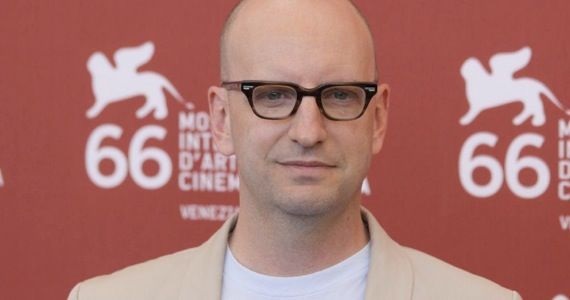
That's it, bitches, I'm outta here! Ahem.

Apparently Side Effects is his last movie, although it’s likely he’ll still be making films for TV – at which point the distinction becomes somewhat moot, especially for someone who watches most things on DVD and Blu-ray. Is it a worthwhile sort-of-swan song? Well, let’s put it like this: I won’t remember much about the film in a month or so. It’s an effective genre piece, the sort of thriller that’s constructed like clockwork, and it did manage to surprise me once or twice, but as so many thrillers that put the emphasis on structure rather than characters it comes off as a rather empty experience in the end. There’s a mean streak in the script, which is undercut by Soderbergh using a rather clinical style; shot differently, say by a Brian De Palma, the film would feel sleazy, whereas now it feels like a stylish but very slight genre piece, with a number of interesting tangents simply not developed further. In the end, I came away reasonably entertained, but I don’t think the film will leave much of a trace in my mind a month from now. Except the glib ending that pushed the reset button on one character and the effects the story has on him: that one I’m likely to remember for a while, but not in any good way.

Ah well. I won’t mourn for Steven Soderbergh, based on this film. I’ll just go to my DVD shelf and get out Traffic, Solaris and Ocean’s 11. And if I really need a fix, I may just give that Behind the Candelabra a camp, over-the-top twirl.

Fear of a Melancholy Planet

Lars von Trier is a highly talented artist. He is also a bit of a troll – not due to this Nordic origin but his obvious enjoyment of getting a rise out of people in often obnoxious ways. I’ve found the handful of his films that I’ve watched a mixed bag: at turns intriguing, affecting and annoying, as well as manipulative in ways that are skilled but a little too obvious at times.

Melancholia: an art lover's pin-up

Melancholia lacks the impishness of some earlier works of his, except perhaps on an aesthetic level – I’d be surprised if von Trier hadn’t banked on the slo-mo beginning of the film raising a few eyebrows and tempers (and prompting some people to ask for their money back because they felt they’d ended up in Zack Snyder’s movie adaptation of Millais’ “Ophelia”). For a von Trier, Melancholia is remarkably sedate, not to say mature (a word I expect the director would not be too happy with). It lacks the borderline sadistic, “Let’s see how far we can take this” showiness of, say, Dogville, but it is no less intriguing for this.

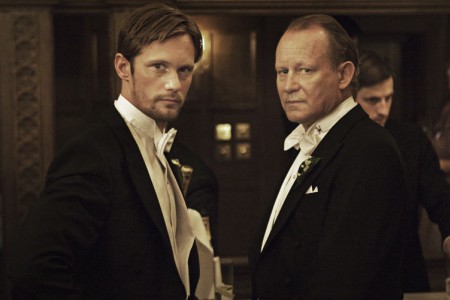
When's Stellan getting a guest spot on True Blood?

To a fan of the director’s work, does Melancholia feel like a compromise, an appeal to more mainstream audiences? Both von Trier and his fellow European provocateur, Michael Haneke, received praise from the critics’ establishment for their most recent works, yet at least in the case of the former there was a faint note of disappointment: if we can’t trust the vicious jester of cinema to irritate us in inventive ways, who will do it instead? As a non-fan who has rarely felt the visceral annoyance that some people get from von Trier, nor the equally visceral enjoyment that others feel, I found Melancholia intriguing, beautifully acted and absolutely gorgeous to look at. Without going for a conventional aesthetic, von Trier brings an evocative, painterly eye to the film, playing especially effectively with the haunting light the eponymous planet threatening Earth throws on the film’s protagonists and scenery. In terms of cinematic apocalypses, this is one of the more subtly effective ones, evoking an intimate sadness that is miles from von Trier’s sometimes tendency to, well, troll his audience.

P.S.: As far as end-of-the-world movies are concerned, my favourite may still be Don McKellar’s Last Night, a film that couldn’t be much more Canadian if it tried and that gives the wonderful Sandra Oh a blessed chance to shed her hospital duds.

Little lust, less caution

It’s time for some superlatives: to my mind, Michael Fassbender is one of the most exciting actors of his generation, and Steve “Not that one!” McQueen is one of the visually most accomplished directors making films these days. Not many people could make fecal mandalas on prison walls intriguingly beautiful, but McQueen managed this with a deceptively effortless grace in Hunger, his film about Bobby Sands’ death. Not coincidentally, the other main strength of Hunger was Michael Fassbender’s electric performance.

Fassbender and McQueen seem to bring out the best in each other, since their 2011 film Shame is yet another movie with amazing visuals and a brave central performance that serves the film’s story perfectly. On paper it sounds like festival fodder: Shame depicts a sex addict’s descent into his personal hell after his sister, with a whole set of issues of her own when it comes to relationships, comes to stay with him. Yet in the hands of its director and star, and with the more-than-capable help of Carey Mulligan, Shame doesn’t feel like it’s pandering to a particular audience, doing its own thing instead, and to great effect.

Shame

If there’s a list of films featuring depressing sex, Shame is definitely in the top 5 (other candidates would be 28 Grams and Blue Valentine – a threesome between those three movies would probably create the sad sex singularity that effectively ends the world because no one would ever procreate naturally again). Strangely, though, for all the joylessness of Brandon’s sexual misadventures, there’s a genuine joy to watching a film as confidently handled, visually entrancing and perfectly acted as this.

P.S.: Some reviewers and bloggers accused Shame of homophobia, as during his climactic (no pun intended) long night’s journey into hell he gets a temporary fix by getting a blowjob in the underworld of a dungeon-like gay club, the argument being that McQueen depicts gay sex as the absolute lowest point in Brandon’s odyssey towards some sort of happiness. To my mind, those reviewers ignore that while the encounter is demeaning and joyless, the same is true for practically each of Brandon’s sexual encounters. The scene is followed by an extended threesome with two (female) prostitutes, which is arguably more aligned with generic male fantasy, yet this menage à trois is presented as no less demeaning, nor any more enjoyable. There is nothing in the blowjob scene to suggest that it’s to be read as worse for the character than what happens before or after it. If McQueen had wanted to show gay sex as the worst option for a sex-addicted straight man, surely a director as in control of his material as him would have found a more effective way of showing this, wouldn’t he?

Yoda isn’t always right

In case you were wondering whether I was ever going to write another blog post, fret not – I’m back with material for the next few posts. And yes, this warrants me taking issue with one of the little green jedi master’s famous pronouncements: sometimes size matters indeed.

Let’s contextualise this so your imagination doesn’t run away with you: as a film geek I like to see my movies on a big screen, so at home I’ve got a 50″ plasma HDTV that I’m fairly happy with – friends of mine buying bigger televisions notwithstanding. Most of the time I’m absolutely happy with the size of my screen… but then there are those times when a TV of that size doesn’t feel all that much bigger than the televisions of my childhood.

And one of those times is when watching Lawrence of Arabia on Blu-ray.

The cinema of David Lean is generally of the grandiose kind, calling for the big screen experience – though never more so than with Lawrence of Arabia. This isn’t just about beautiful visuals, by the way; it’s been years since I’d last watched the film, but even among visually stunning movies it stands out. Some of its brethren live almost entirely off their visual splendour, and once this aspect is removed they’re nice but by no means spectacular. Lean’s masterpiece, though, uses its cinematography to amplify the effect of its story and characters. It is undoubtedly epic, yet at the same time it is one of the most intimate epics I can think of. The size of the screen it’s viewed on doesn’t just make for pretty desert shots (and undoubtedly they are very pretty), it also pulls you that much more into the character of T.E. Lawrence (as played by a Peter O’Toole that has rarely been better), an intriguingly ambiguous character.

It is often said that “they don’t make ’em like this any more” when talking about modern Hollywood cinema, which may or may not be facile nostalgia hankering for a past that was rarely as good as (or in the ways that) people think it was. I wonder whether they ever made ’em like Lawrence of Arabia, though – this is not the big-emotions, big-visuals melodrama of Doctor Zhivago (a film that’s much better than I’d originally remembered, mind you), nor is it the action of The Bridge on the River Kwai, although both of those have some elements that recall Lean’s desert epic. No, for all the moments in other films that recall this one, Lawrence of Arabia is very much one of its kind, like its eponymous character.

And yes, it may just be the best advertising for a truly big TV screen.* Titanic? Avatar? Prometheus? Sit down and let the grown-ups show you how it’s really done.

*Okay, if it’s just visuals you’re looking for, any Terrence Malick or even Andrei Tarkovsky might do the trick – but a world where shops selling televisions showcase their wares with The Tree of Life or Stalker are likely only to exist in long-lost episodes of Fringe.

Lawrence of Arabia

P.S.: In spite of my pinko liberal credentials, I find myself entirely unbothered by the Brits and Mexicans in brownface playing Arabs. Go figure.

They’re ready for their close-up, Mr Hooper

What is a film director’s job? Ask a number of different directors and you’ll get very different answers. For some, working with the actors is an integral part of the job; for others (such as Ridley Scott), acting is solely the responsibility of the actors and the director’s there to focus on the look and feel of a film. (At which point the cinematographer may be going, “What about me?”) Here’s what Wikipedia has to say:

Generally, a film director controls a film’s artistic and dramatic aspects, and visualizes the script while guiding the technical crew and actors in the fulfillment of that vision.

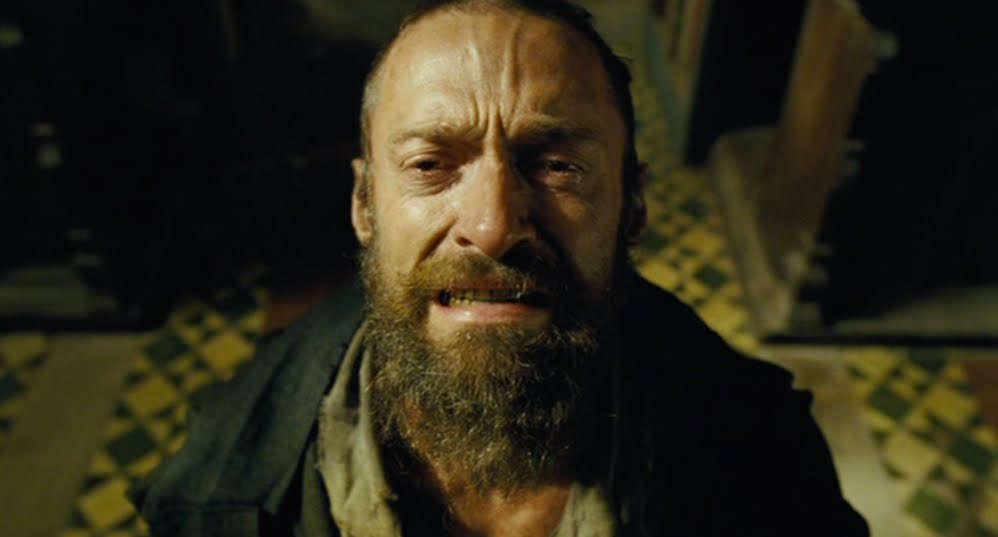
Remember Tom Hooper? He directed The King’s Speech, the HBO miniseries John Adams – and Les Misérables, the film version of the Boubil and Schönberg musical. Based on all of these, I am confident in saying that Hooper does a magnificent job at getting great performances out of actors. I am equally confident in saying that, at least according to the Wikipedia definition as well as my own understanding of what a film director does, Tom Hooper is one of least talented successful directors of recent times.

I don’t want to get into the whole discussion of Les Misérables‘ recording the actors’ singing on set. I don’t even mind (well, not all that much) that Russell Crowe can’t really sing and that he butchers Javert’s songs in the film. When there’s a choice between flawless singing and acting at the expense of voice, I tend to favour the latter, but then musical fans may wonder what’s the point of having your actors singing if the acting gets in the way of a good tune.

The pores! The pores!

What I do want to get into is Hooper’s downright obnoxious use of the camera. Already in John Adams, a handsomely produced, beautifully acted, intelligently written series, the director kept throwing in jarring dutch angles, their main effect being that they drew attention to themselves. It didn’t feel like a conscious use of a technique in order to achieve a certain effect; instead it felt like a directorial gimmick, a distracting flourish with little to no relation to what was going on on the screen.

This obnoxious use of ostentatious techniques is taken to extremes in Les Misérables. Practically the whole film is shot in hand-held, dizzying close-ups – and it’s too intimate. It’s too intrusive. And where it’s effective for a few minutes, it turns into a freakshow – less a method of putting as little distance between the acting and the audience and more a “Check out the tears! The snot! The blood! It’s all real!” Apart from the technique becoming almost exhibitionist when it’s used in 90% of all the shots, there’s no modulation, no rhythm to the images. Crowd scenes, intimate moments of soul-searching, Hooper treats them all the same, to the point where you have to wonder what the hell the director’s doing.

The sad thing is, for every moment where Hooper’s technique is effective there are ten scenes where it’s irritating and distracting. We’re supposed to feel with the characters, and the poor actors are acting their hearts out, but the camera keeps putting us uncomfortably close, so that scenes tip into becoming embarrassing or involuntarily comical. When the film is at its worst, what should come across as earnest and heartfelt becomes pushy and needy. As a result, the film rarely works as the grand spectacle it was written as, and it rarely works as intimate drama. Mr Hooper, seriously – techniques should be geared towards what the film needs, they shouldn’t be an affectation or a nervous tic. You do great when it comes to getting performances from your actors… and then you shoot yourself in the foot with everything else. Do me a favour and read this before you make your next film, ‘kay?

Watch out, you're going to slip, Mr Valjean!

And serious, man… Fuck those Dutch angles!

Blood in the kitchen sink

Broken is a great piece of storytelling. The editing, the pacing, the atmosphere – all add to its quality. Even if you don’t know anything about the movie, there are several hints in the first three minutes that there will be blood. After four more minutes, you think you’ve seen the worst, and the rest of the movie is about how people will deal with what has happened. Nope. Brace yourself, you’ve been warned.

And yet, the movie is not a long journey into night. There are hopeful moments, most of them involving Skunk, a smart, kind 11-year old girl. She is played by Eloise Laurence, in a debut performance that has much more to do with instinct than with acting. There is a sequence where she tries to talk her dad into buying her a new cellphone. That moment alone is worth seeing the movie. Eloise Laurence carries the story in the same way Jodhi May did in A World Apart. And oh, it was good to see Tim Roth again, without guns, without shouting. His Archie is a calm, benign father to Skunk and one of the solid centres of the small community, although he himself would disagree.Image

It’s hard to talk about plot. I guess it sort of starts with one of the daughters of the Oswald family, who finds a condom in her older sister’s room. She examines it and then tries to flush it down the toilet, where her dad finds it. Daddy Oswald presses his daughter into wrongly admitting she’s had sex, while she, clearly afraid of her father, blames Rick Buckley of rape, only because he is visible across the street, washing his dad’s car. Rick is thin-skinned and naïve, a good kid, but without any defences. Skunk looks on as Daddy Oswald comes rushing out of his house and beats up Rick. I have only mentioned the first six minutes of the movie. There is no way you can guess what happens next. It is fast-paced, non-linear, and it clocks in at 88 minutes, but feels longer because of all the things that happen underneath the plot. And yet, it never feels rushed. We always know where we are, with whom, why and when.

Daddy Oswald is maybe the most controversial character in this movie. He is played by Rory Kinnear as a wounded widower who does not have the slightest clue how to regain control over his three fast-growing daughters. I might feel for him if he didn’t try to rule by fear and rage.

The movie seems flawless, but I would wish for a less obvious ending. The moments in church are so conventional that they stand out as the weakest scene in the film. Luckily, it’s not a movie you watch for the ending – you watch it for the characters.

Skunk is in some danger because she goes towards people who may better be left alone. There is her brother who is busy becoming a teenager and nicks cigarettes from their nanny who, in turn, falls for Archie, who has no idea what to do with that love, or his own. There is the nanny’s boyfriend, played by Cillian Murphy, who can’t see that Skunk looks up to him, and should act accordingly. In a lesser movie, he would be the teacher who gets accused of abusing a student. Here, he does what any courageous man would do – and it’s very bad luck that he is a teacher. He is untidy with his feelings, but gets more punishment than he deserves. Maybe that’s what the movie is all about. Do we ever get what we deserve? Should we? And what DO we deserve? There is no deus ex machina in this movie – good or bad has to do with yourself and the people who are around you. Sometimes it’s not the stranger with candy that frightens you, it’s the well-meaning neighbour.

Disappointment. The ‘D’ is silent.

Waltzing with ChristophI want to say, “It’s not you, Quentin. It’s me.” But I couldn’t say it with much conviction.

What’s happened? Why the sad face on my part? It’s this: ever since first watching Pulp Fiction, I’ve been a Quentin Tarantino fan. This doesn’t mean that I love everything the man’s been involved in – I wasn’t too keen on From Dusk Till Dawn or Natural Born Killers, for instance – but I’ve greatly enjoyed his directorial work. While most people would go, “Yeah, I dig Reservoir Dogs, but fuck Jackie Brown, man, what a bore!” or “Kill Bill Part 1 rules, Kill Bill Part 2 drools,” I came away from all of them with a big grin on my face. Yes, even Death Proof, apparently the litmus test for Tarantino fans.

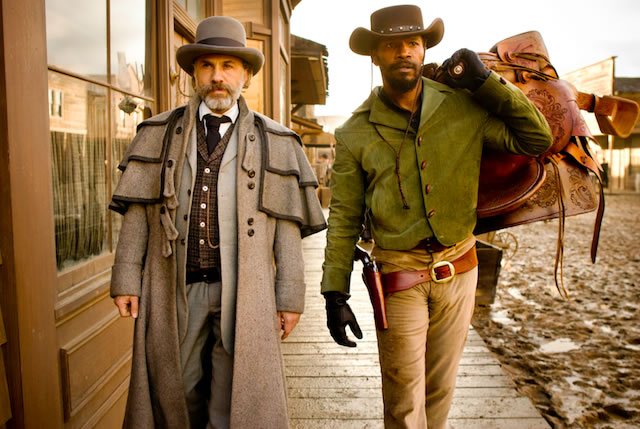
So what was wrong with Django Unchained? Let’s mention the positive first: I found the film very entertaining. It was funny, it had its tense moments, it was well crafted, it had good performances. Christoph Waltz was a joy to watch, Jaime Foxx was effective in the part, Samuel L. Jackson played a very different role from what I’m used to seeing. It’s just… I expect more than “very entertaining” from Tarantino. I remember sitting in the cinema for Jackie Brown and being hooked in the very first scene, thanks to the perfect combination of actress, visuals and music. I remember being pulled into the film immediately when Kill Bill started with a black and white close-up of the bloodied Bride and Bill doing his “Do you find me sadistic?” monologue, followed by the blackout and Nancy Sinatra’s “Bang Bang (My Baby Shot Me Down)”. With Death Proof it took longer – up until the halfway point I was prepared to hate the film for, well, finding it sadistic, but then things fell into place in the second part. And the first scene of Inglourious Basterds is pretty much perfect in how it creates tension and then ratchets it up to unbearable levels.

I felt giddy about all of Tarantino’s earlier films, sometimes due to the sheer exuberance of what he was doing, often because of the virtuoso way in which he remixed styles and genres to amazing effect, usually because the films had a sharp wit and intelligence that might not be apparent at a first viewing. Django Unchained, though? I never felt giddy. I never felt excited at what Tarantino was doing. The closest the film came was Christoph Waltz’s character and performance, which were pretty much pitch perfect, but other than that the film was strangely flat. No surprising juxtaposition (and no, it’s not enough to have Ennio Morricone and 2pac on the same soundtrack any more), not much in the way of subtext. Especially after Inglourious Basterds, which did some pretty intriguing things with its revenge plot(s), Django Unchained is strangely, disappointingly straightforward – and often it’s the lack of straightforwardness, the eagerness to stray of the most direct path, smell the daisies and cut them to shreds in an ironically postmodern homage to grindhouse gardening (“Alan Titchmarsh stars in The Gardener and his Hoe!“) that make Tarantino’s work stand out.

I’m wondering whether some of my disappointment comes from slavery being much more of a cultural issue in the States, and accordingly it wouldn’t resonate with me in the same way that it might with an audience that is still confronted with its racial past. Perhaps that adds an element that simply wasn’t there for me. Or perhaps Django Unchained is Tarantino light, at least with respect to the things I like best about Tarantino. Anyway, I’m in no particular hurry to see the film again (I saw both Kill Bills three times each at the cinema), but perhaps the film will grow on me if/when I sit down to watch it again. And in the meantime I’ll finally see what Pulp Fiction looks like on my TV…

… when she says nothing at all

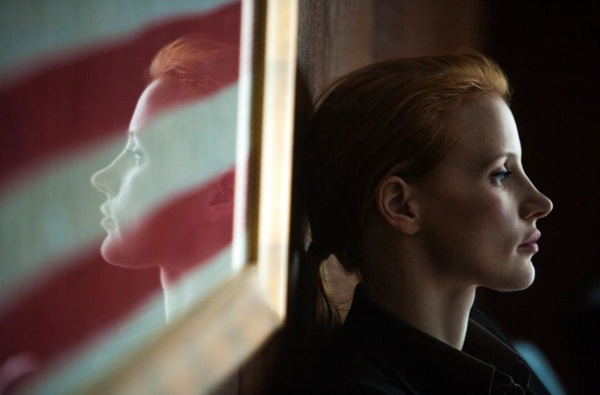
Anyone who’s used the words “Leni Riefenstahl” unironically to describe Kathryn Bigelow and her latest film, Zero Dark Thirty, needs to get a handle on themselves and a sense of proportion (and if they ever saw even an episode of 24, chances are that their frontal lobes would explode into mush). Seriously, if Zero Dark Thirty is supposed to be pro-torture propaganda, it is extremely inept at furthering a pro-torture agenda – and being inept at her craft is about the last thing you could criticise Bigelow for.

No, the problem with Zero Dark Thirty isn’t that it espouses problematic opinions – it’s that the film hardly has any opinion at all. It effaces practically every trace of an ideological or political position from its story, becoming one big Rorschach test in the process. Depending on one’s own view of the issues – the war on terrorism, the hunt for Osama Bin Laden, the use of torture – it’s easy to read any set of diametrically opposed intentions into the film. The same scenes can serve as evidence, with a bit of prodding and tweaking, that Bigelow approves of torture and that she sees it as a dehumanising evil, but without the outside input of the viewer’s opinions the movie does not forward any statement beyond “And then this happened.”

Zero Dark Thirty

I don’t particularly want to get into the quagmire of What Really Happened. I accept that this is a fictionalised version of the events, added to which I doubt there’s an unadulterated, unbiased, and most importantly unredacted version of what happened that Bigelow – or anyone, really – had access to. My issue with the film isn’t its political position but its blankness, which makes it difficult to engage with the film. I like cinema to be ambiguous, I enjoy making up my own mind and thinking for myself, so it’s not that I wanted Zero Dark Thirty to tell me how to feel about what was happening – but the film, its events and its characters are such blank slates that there isn’t even much there to engage with. There is a distinction between even-handedness and utter neutrality, and Switzerland could learn one or two (or two-hundred) things from Bigelow’s latest.

As a result, I found myself thinking and feeling relatively little about what was happening on the screen, beyond “Yeah, this – or something like it – did probably happen at some point.” Shouldn’t the events on screen carry some dramatic weight? The main adjective describing Zero Dark Thirty for me is this: professional. The film is well directed, shot, acted, edited; there is little to fault (except one clumsily manipulative scene that makes the characters involved look stupid) except its blankness. If anything, perhaps its very basic plotting can be criticised – a mere string of events reminiscent of a schoolchild’s essay on “What I did on my hols hunting for Bin Laden” – or its pedestrian characterisation, but both of these reflect what seems to be Bigelow’s intention, not to impose anything on the audience. But, Ms Bigelow, imposing on the audience and giving them something, anything, to work with, those are two very different things. Should I come away from a film on this topic feeling faintly impressed by the craft, faintly bored by the sheer length of the movie, but mostly just blank?

Trip the light fantastic

Okay, this could just as well be a variety pack, but I’m saving that option for another time, ‘kay? Anyway, with the two films there’s a theme to be made, however tenuous. And that theme is… the fantastic! Either that or big, growling, carnivorous CGI creatures that would chew your face off as soon as look at you. How’s that for themeitude?

The Hobbit

I’ve defended most of what Peter Jackson did to The Lord of the Rings. Jackson and his team had a good feel for what works in a book and what works on the screen. Cutting out Tom Bombadil? About the best thing that ever happened to Tolkien’s work. In fact, the film that gets the purists most riled up, The Two Towers, is my favourite of the trilogy.

I’m afraid that when it comes to The Hobbit, though, Jackson’s instincts weren’t quite as successful, at least with respect to the book-to-film transition. A lot has already been written about the decision to do yet another trilogy (seriously – what is it about fantasy and the number 3?), and I don’t want to come down too hard on Jackson et al. before I’ve seen all three of the Hobbit movies, but so far I have two main objections: 1) The Hobbit is a children’s book, it isn’t the big, world-shattering epic that its kid brother would be, and the relatively flimsy plot can’t carry the epicness that the film makers tried to inject. An Unexpected Journey tries to be two things at the same time – whimsical adventure and epic – and the film’s internal conflict makes it work less well as either of these two. 2) I understand that the writers’ team wanted to bring in all of the cool stories, scenes and characters from Tolkien’s other writings, but at least as far as this first film in the new trilogy is concerned there is no connection between the dwarves plot and the Necromancer storyline. As a result, the latter feels like a tenuously connected “Meanwhile at Dol Guldur…”

Still life with dwarves

Having said that, though, The Hobbit Part I (In Which Everyone Wonders Why This Had To Be Yet Another Trilogy) is an enjoyable film. It’s fun, it’s exciting, it’s got a fantastic rendition of the “Riddles in the Dark” chapter (it’s a shame that Gollum’s appearance in The Hobbit is done by the end of the first film), and Martin Freeman is a perfect Bilbo – and most importantly, the film did succeed at bringing back the good old Middle-Earth feeling right from the start. Let’s just hope, though, that by the third film hobbit fatigue hasn’t set in too much.

Life of Pi

Yes, I know – it isn’t exactly the same sort of fantasy as Jackson’s revisiting of Tolkien, but the fantastic plays an important – arguably more important – role in Ang Lee’s adaptation of Yann Martel’s novel. I wasn’t a huge fan of the book when I read it; Life of Pi is well written and perfectly charming for the most part, but its “I wanna be Le Petit Prince” whimsy, aiming for lightness mixed with profundity, grated. In addition, the novel’s final twist struck me as badly handled and gimmicky. I don’t mind stories that pull the rug from under your feet, and some of my favourite films and novels have similar elements, but Martel delivered his answer to “What’s the use of a story that isn’t even true (or is it?)?” too glibly.

Ang Lee’s film version of Life of Pi is beautiful to look at. I’d feared from the trailer that it would be tacky kitsch of a decidedly Kincaidy bent, but the film handles even the more outlandish, phantasmagoric images deftly. The 3D is integrated well, the CGI rarely looks computer-generated and the animation is just about as perfect as it gets. (Some scenes that I took to be CGI I later found out to have been shot with a trained tiger – go figure.)

Just when you thought it was safe to go back into the water...

In fact, I would go so far as to say that Lee’s film version may be the best film you can make of the novel – without changing it into something else altogether, that is. I enjoyed watching the film, but its twee attempts at depth, its facile final dilemma, it all bothered me. Life of Pi is quite the journey (minus the occasional bout of literary sea-sickness), but it’s one that ends in a disappointing destination. Perhaps the film depicts Pi’s story even too well, because it stacks the deck so much in favour of the fantastic version of his tale that the other version feels even cheaper. And it’s difficult to shake the feeling that in the end Pi is really saying, “Why let the truth get in the way of a good story?”, which is too much of a cop-out, both with respect to Pi’s story and the larger question of God he’s talking about. And cop-outs shouldn’t be delivered quite this glibly. Perhaps Life of Pi is a good story, and a good film, in dire need of a good ending.