Welcome to Six Damn Fine Degrees. These instalments will be inspired by the idea of six degrees of separation in the loosest sense. The only rule: it connects – in some way – to the previous instalment. So come join us on our weekly foray into interconnectedness
The perfect follow-up to the mixed media delight of Who Framed Roger Rabbit (so lovingly remembered in last week’s piece by Julie) for the pre-Christmas season, in my mind, is clearly the most insane, self-referential sequel of them all!
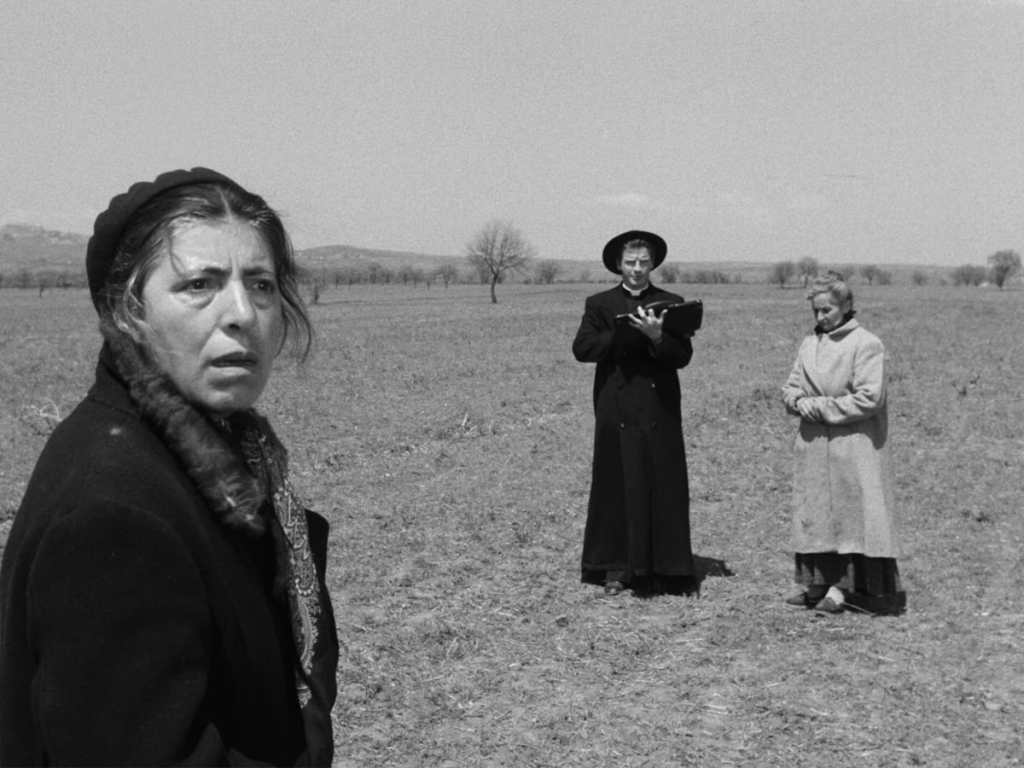
In films, we’re used to con artists being the heroes. Not always, obviously, but more often than not, cinema presents swindlers as appealing trickster figures, with charm and charisma up the wazoo. At first, Il Bidone, the Fellini film that followed La Strada, looks like it might be one of those movies. Carlo (Richard Basehart) has a face that radiates a childlike innocence (as it did when Baseheart played the Fool in La Strada) and Augusto (Broderick Crawford) is the experienced, paternal figure of the gang, with only Roberto (Franco Fabrizi, whose character feels like he could have walked out of I Vitelloni, in which Fabrizi played one member of the central group of friends) being presented as something of a rotter. Il Bidone also sounds like one of those films, with Nino Rota’s score, a lilting tune, reinforcesing our first impression: these characters are fun con men, tricking rubes with a twinkle in their eyes, and all of this is supposed to be a lark.
Which makes it all the more jarring when the film uses scene after scene to show that the rubes being tricked are desperately poor and living off scraps. They are not greedy: if they are eager to make a quick buck, it’s because they don’t have much to begin with and need money fast. When the con men promise them wealth, they bite because they work day after day just to break even. The swindlers sell them hope at extortionist rates. And we watch our protagonists ply their trade, swindling Italy’s post-war poor out of what little they have, while Rota’s jaunty music plays.
Join us every week for a trip into the weird and wonderful world of trailers. Whether it’s the first teaser for the latest instalment in your favourite franchise, an obscure preview for a strange indie darling, whether it’s good, bad, ugly or just plain weird – your favourite pop culture baristas are there to tell you what they think.
It’s not exactly a secret that Hollywood can be a tad self-centred: it loves making films about itself, sometimes lovingly so (such as in Singing in the Rain), sometimes bitingly caustic (take Sunset Boulevard, for instance). And this has pretty much been a part of Hollywood’s MO since the beginning. For our December podcast, join Julie, Sam and Alan as they look at three films in which Hollywood depicts itself, for better or for worse, from the 1970s to the present. Starting with John Schlesinger’s adaptation of Nathanael West’s novel The Day of the Locust (1975), a dark, sometimes downright apocalyptic satire, continuing with Martin Scorsese’s Howard Hughes biopic The Aviator (2004) and ending up with Damien Chazelle’s much-derided Babylon (2022), they examine how these films depict historical Tinseltown and what this reveals about their attitudes towards the US movie industry.
Join us every week for a trip into the weird and wonderful world of trailers. Whether it’s the first teaser for the latest instalment in your favourite franchise, an obscure preview for a strange indie darling, whether it’s good, bad, ugly or just plain weird – your favourite pop culture baristas are there to tell you what they think.
We left off last time with a cinematic version of what the Great Beyond might be: Hirokazu Kore-eda’s After Life, in which the newly deceased have a few days in a threadbare but friendly waystation to decide on the one memory that would be made into a film, and that film would then be all that remains of them for eternity.
Defending Your Life, Albert Brooks’ 1991 romantic comedy with a satirical slant, shares some surprising qualities with Kore-eda’s film. Its afterlife is also entirely mundane, though in a decidedly more American way, and it is likewise staffed with people who are there to determine what happens with you next. Like in After Life, none of the people who have just died question their fate, nor do they seem overly concerned with metaphysical questions. No one brings up God or religious belief, though in Brooks’ version of the hereafter people are somewhat concerned with heaven and hell – where will they go to next? But first there are more important questions – where will they go for dinner? This afterlife is a place of all-you-can-eat restaurants that will pack you nine pies to take back to your anonymous hotel room. Judgment City is the American hereafter, after all.
Join us every week for a trip into the weird and wonderful world of trailers. Whether it’s the first teaser for the latest instalment in your favourite franchise, an obscure preview for a strange indie darling, whether it’s good, bad, ugly or just plain weird – your favourite pop culture baristas are there to tell you what they think.
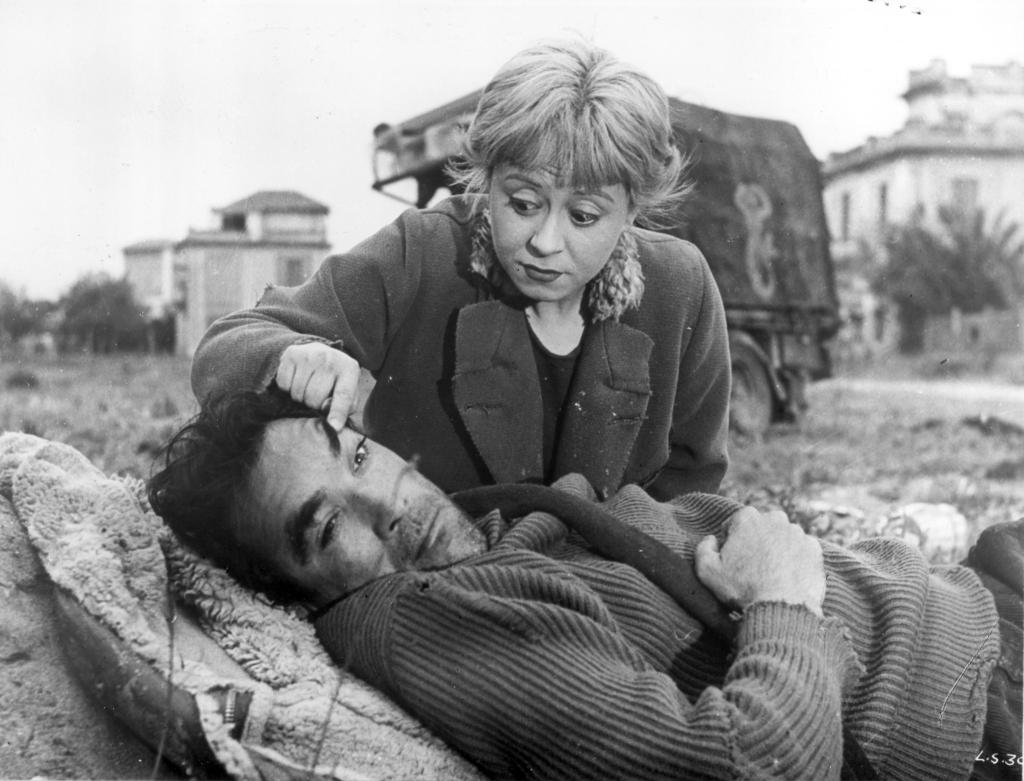
While the chronological approach that Criterion took in their Essential Fellini box set meant that the start was less than smooth, Matt’s definitely finding that the films improve a lot over time – and after I Vitelloni, La Strada is a worthy addition to any film collection, not least because of Giulietta Masina’s wonderful performance as Gelsomina.
It’s the film that everyone’s had an opinion on, not least the devout Marvel fans and people who want an opportunity to go to the restroom during films of epic length: Martin Scorsese’s Killers of the Flower Moon. Join Sam and Matt for their discussion of Scorsese’s latest. How did the film land for a fan of the iconic American director, and what are the reactions of someone who isn’t so much into Scorsese’s world of toxic masculinity and backroom dealings? Where do they stand on the question of whether Killers of the Flower Moon needs its length (and being uninterrupted) to have the intended impact on the audience or whether it would have been improved by being shorter? What did they think of the performances of Scorsese stalwarts Robert De Niro and Leonardo DiCaprio, and of new faces Lily Gladstone and Jesse Plemonds? And what’s their take on that ending and on the director literally having the final word of the film?
If I Vitelloni was the first of the films in Criterion’s Essential Fellini box set that justified the director’s reputation, La Strada more than confirms it. This is a beautifully made, heartrending film that deftly balances its tendencies towards the sentimental with a nuanced characterisation and an empathy that extends to those who may seem least deserving of it. And Giulietta Masina as Gelsomina steals the film, even though the main roles are all excellently played. Her performance is rightly remembered as iconic.
Join us every week for a trip into the weird and wonderful world of trailers. Whether it’s the first teaser for the latest instalment in your favourite franchise, an obscure preview for a strange indie darling, whether it’s good, bad, ugly or just plain weird – your favourite pop culture baristas are there to tell you what they think.
This week, Matt wrote about less-than-ideal actor/director relationships – mentioning along the way one of the most iconic fraught relationships in cinema, so let’s give the word to Messrs Kinski and Herzog.