If you’re gonna steal…

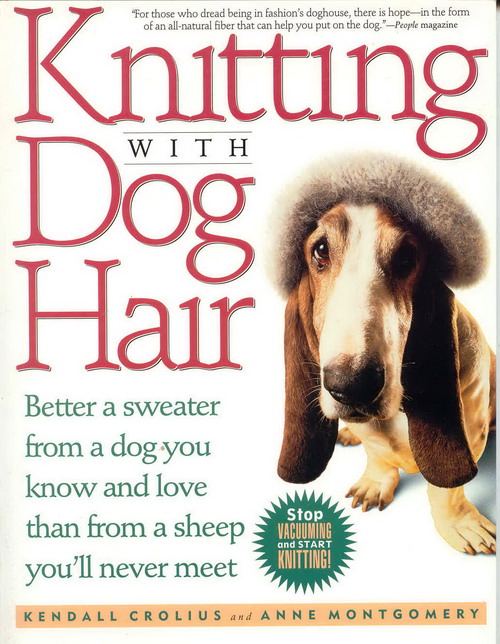
Okay, no most beautiful and wonderful things in the world in this entry. Instead I’m posting a quick, cheap link to Something Awful (with the usual warning that their humour can be rather off-colour and definitely NSFW). In a twist on their usual Photoshops veering from clever to tasteless to Eww! and beyond, they’ve got Real Books That Look Like Photoshops!

Here’s a sample:

That's just wrong, that is.

P.S.: The first entry on page 5 is wrong on so many levels that I may never be able to eat a flan caramel again. Ever.

Smell disfunctional marriages, can ya?

It’s good to see Leonardo Di Caprio and Kate Winslet in something that wasn’t written by an author whose ideas of romance (and class) are those of a 16-year old. Revolutionary Road is a beautifully, if at times somewhat archly, acted study of a marriage stifled by society and by individual cowardice.

The film could easily have gone wrong – the script isn’t particularly strong, with a number of oddities (e.g. where are the Wheelers’ children? they seem to exist only when it’s deemed necessary, whereas the rest of the time they seem to be locked away in a stasis chamber), clunky lines (“You’re the most beautiful and wonderful thing in the world. You’re a man!” Excuse me, but WTF?!) and hackneyed characters. The mathematician son of a friend of Frank and April’s is basically that old chestnut, the wise fool – but the acting makes him into something more real than the script would warrant.

It takes the film a while to spin on all cylinders and move beyond its conventional story of societal pressures and marriage as an exercise in mutual resentment, but once it does it’s gripping and moving, thanks mainly to Di Caprio and Winslet’s acting. And the ending is effectively devastating as Frank Wheeler surrenders to the quiet dispair, the “hopeless emptiness” of his life.

I was less taken with last night’s episode of Grey’s Anatomy. The series has never been particularly good at introducing new characters, and it’s even worse at giving a send-off to regulars. Dr Erica Hahn’s leaving was handled especially badly, coming across very much as a spur-of-the-moment decision by the producers to axe her and the budding lesbian relationship she’d started with Callie Torres. Similarly, the two new characters weren’t given any lead-in – they were just there suddenly. Especially with Sadie this was done quite insultingly badly; obviously we were supposed to think, “Eh, she really comes out of the blue, which doesn’t make sense if she’s supposedly Meredith’s former BFF, but she’s hot, so whatever…”

And her character Virginia Dixon, a heart surgeon who has Asperger’s Syndrome, highlighted one of the things I’ve come to hate about the series: its manipulative use of music. It’s okay if it’s earned, and they often have a good hand at choosing songs to underline sad moments – but the jaunty comedy music is annoying, especially when what we’re seeing simply isn’t very funny. It’s just a step away from canned laughter. And when the series invites us to laugh at the weird new doctor (after all, the music tells us that this is a comedic scene) to then turn around and have her say that she doesn’t particularly like being made fun of, chiding us for what the episode suggested was the intended reaction? Well, that strikes me as more than just a tad hypocritical.

Skeletor is not a crook (and our little Brad’s finally gone and grown up)

Sorry for that post title. I was going for something clever and intertextual, but after staying up for the Academy Awards I simply don’t have the brains for it.

Did anyone else see them? I was doubtful that I’d enjoy them – but I did, not least for the huge grin on Danny Boyle’s face that grew with every one of his mates winning an Oscar. And his Tigger impression was sweet. I always knew that the man who directed 28 Days Later had to have a genuinely sweet side to him.

Incidentally, the last two films I’d seen at the cinema were among the most nominated titles: Frost/Nixon and The Curious Case of Benjamin Button. A lot has already been said and written about how the latter is practically a remake of Forrest Gump; my only comment on that is that yes, in terms of plot this allegation is absolutely true. But David Fincher, thank the celluloid gods, is no Robert Zemeckis. It’s not his best film, not by a long shot, but it’s a poetic, not a little surreal story about the things and the people we leave behind. As such I found it very effective and another illustration of Brad Pitt growing as an actor with every year.

All things considered, though, I was more taken with Frost/Nixon, perhaps more so because I didn’t expect to be. The first film I’d seen Michael Sheen in was Underworld, which ranks high in my list of worst films ever. (No, Kate Beckinsale in tight leather doesn’t stir my, ahem, imagination any. Sorry, Kate.) I wasn’t prepared for his strong, nuanced performance as David Frost – but I was doubly not prepared for Frank Langella’s sad, pathetic, tragic Richard M. Nixon. Who’d have thought that the guy who played Skeletor in the film version of Masters of the Universe would be this good? I should probably go back and watch those early Deep Space Nine episodes he was in.

What next? Well, I definitely want to see Revolutionary Road and quite possibly Milk and The Reader. And at some point I should check out The Visitor, which garnered Richard Jenkins (yes, that’s right – Nate the Elder from Six Feet Under) a nomination. Ah… something isn’t right if you don’t get to go to the cinema at least once a week!

Cold off the press

Yes, I’m afraid I have to admit that I have been somewhat amiss in updating the blog. My boring, sad excuse? Work. Work, work, work. (I could write an entire scene just using variations of the word, but I think we can all do without that one.

But there are a number of things on my list of Things to Blog About. Even if some of them go back months, they’re definitely not forgotten.

Now, if only I could remember what they are…

The Wire, season 5. Most of the reviews I read were almost a bit embarrassed – yes, the final is good but it’s widely agreed to be the weakest of the series. If it had come earlier it would have been less of a disappointment, but after the potent tragedy, the incisive satire, the sheer all-round greatness of the earlier seasons – well, it felt like The Wire light.

This was perhaps clearest in how the season may just be the funniest of the five, but it lacks a strong tragic counterpoint. Yes, there’s sadness in what happens, even in McNulty’s harebrained scheme, but not to the level of Frank Sobotka’s tragedy, or Bunny Colvin’s, or that of the kids in season 4. And what tragedy there was felt like more of the same, not the deepending of previous seasons. Michael, Dukie, Prop Joe, Omar – they didn’t really bring anything new to the table. As such, season 5 felt less like the last chapter and more like an epilogue. Arguably, the only truly new aspect – the media – lacked the complexity of the series’ earlier depictions of deep flaws in the system grinding up people who try their hardest to get by.

Nevertheless, season 5 worked well as a sendoff to the series and its characters, not least due to its final episode and its uncharacteristic hopefulness. Yes, the system still sucks but – suprisingly optimistic for The Wire – our heroes, the McNultys, Danielses, Michaels, Bubbles, have a chance of surviving, of getting out. Which, in hindsight, may be a touch sentimental… but damn, if it didn’t bring a tear to my eye as I watched it.

Where is he now?

Okay, this won’t be a proper update. This is just me saying that yes, I’m still around, yes, I’ll still blog. This is just the busiest time in the year, work-wise.

But I’m hoping to write some updates soon, covering some or even all of the following:

  • The Wire Season 5
  • Sympathy for Lady Vengeance
  • Seven Samurai
  • Rock Band
  • The financial crisis and its repercussions on the mating habits of the North American dung beetle

Okay, one of those was probably a lie. Guess which one and you’ll get absolutely nothing. Other than my undying admiration and a day’s supply of minutes, free.

Late to the Party: Dr. Horrible’s Sing-Along Blog

Mwhahahahahaha!

I know I’m once again half a year (or more) behind the rest of the internet – but I finally got around to watching Dr. Horrible’s Sing-Along Blog, done by the Whedon brothers and some of their mates for a song and a half.

So that's coming along well then...

A lot has already been written about Dr Horrible, perhaps the world’s first internet-spawned super-villain musical starring Doogie Howser, M.D. So, not to bore people too much, let me fast-forward through the important bits (skip to the end!): I liked it a lot, the songs are infectious, it does have rather major tonal shifts, to the extent where some people thought that the ending sucked because it turned a light-and-frothy lark into something dark and depressing. Several critics accused Joss Whedon of doing what he always does (make the audience care about characters only to do horr- erm, heinous things to them) and of creating a female character that was supposedly a sexist cliché with no life or meaning of her own beyond what she meant to the male protagonists/antagonists.

While clearly some people might not enjoy Dr. Horrible, I do think that those who were surprised by the darkness of the ending weren’t really watching this. While the tone of the first two acts is largely fun and witty, there are some major scenes (and, perhaps more importantly, songs) that hinted at less fun things to come. I mean, honestly, people! Didn’t you watch the beginning of Act II? Or Penny’s song?

That’s also where my problem with the second main complaint comes in, namely that Penny (or “Whats-her-name”, as her close friends of the press know her) isn’t so much a character as a plot device. For one thing, clearly all of the three main characters are primarily stereotypes (with a couple of individual quirks, because otherwise it wouldn’t be Whedon). If Dr. Horrible is bad because Penny isn’t a character of Chekhovian richness, what about Captain Hammer, corporate tool? If any one character remains barely one-dimensional, it’s him. And yes, Penny is definitely also a projection pane for all the “nice guys” out there who secretly carry a torch for the nice, shy, somewhat nerdy girl with the cute smile, just as Billy is a perfect identification figure – which makes the ending more effective, in my opinion.

But what makes her a richer character than some have acknowledged is how, to some extent, she is complicit in what happens. Penny isn’t blind to Captain Hammer’s less charming qualities, but she projects her own needs onto him as much as Billy projects his onto her. Listen to her laundromat song and look at her face while she sings it, and it’s obvious that the character isn’t some Mother Theresa of the Laundromats: her niceness, her need to help others, these are a self-willed resignation that she’ll never get what she really wants, so the best she can hope for is to try and make things better for others while she’s pretty much given up on herself and her own wishes. Once the Hammer-man enters the pic, she can pretend that he’s her means of being happy, until even she can’t ignore his downright idiocy and vulgarity. But all of this is an act of will on her part: to do for others what she cannot do for herself, to resign herself to Captain Hammer because, well, it’s not as if she could do any better, could she?

I could spout some more pseudo-psychological drivel here, but I’m going to spare you. If you haven’t seen Dr. Horrible (and my post so far hasn’t turned you off it), do check it out. Get the DVD and you’ll even get Commentary! the Musical, Wiccan subtitles (?!) and fan-submitted application videos to the Evil League of Evil, such as this one:

Male Bonding

I’d better admit it right up front: I liked Quantum of Solace.

Okay, now that that’s out of the way and 90% of my readership (all nine of them) have decided that I’m off my trolley but not interesting enough in my insanity to keep reading, let me qualify this a bit. Yes, the film isn’t particularly well directed, especially in the action scenes – some were thrilling, some were muddled and done without any clear understanding of what makes an action scene work, and there were definitely way too many of them. Yes, the plot is equally muddled, confusing “complicated” for “complex” or even “deep”. Yes, it doesn’t hold a candle to Casino Royale. And yes, the title sequence sucked, to put it bluntly.

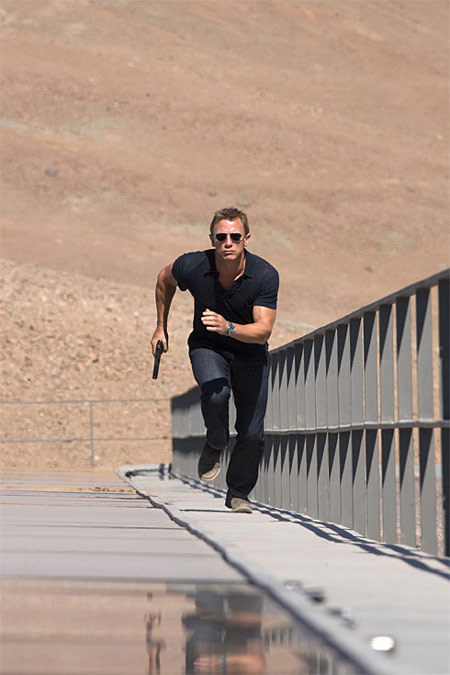
James "Energizer Bunny" Bond

But (and this is where I go all heretical again) I liked it better than every single Bond movie I’d seen that starred Pierce Brosnan. Yes, even better than Goldeneye (which I saw on video years after it’d come out, and I thought it looked cheap and trashy). I liked that the baddie wasn’t some over-the-top madman out to destroy the world but just a businessman with the necessary lack of ethics to be good at what he does. I liked the running gag of Bond killing every single lead – in self-defense, mind you, but he’s still not exactly very good at this, is he? (He’s great at improvising and at being part hitman, part monk, as Craig’s Bond put it in the previous movie, but he still has a lot to learn.) And I liked how Vesper, while still dead and gone and sorely missed by most of the male audience (yes, Olga Kurylenko is also quite tasty), is still very much in this film, making its title more than just the last Flemying-penned Bond title they could use for a film. While Bond in this film isn’t the well-oiled machine out for revenge that some critics thought him to be, there is always this secondary motivation – to find something, some small measure of relief (see what I did there? sad, innit?), that would put an end to his sense of betrayal.

Clearly it did help that I’d almost only heard bad things about the film, so I went in expecting… well, something like Die Another Day, except perhaps without the invisible car, the ice fortress and, ideally, Brosnan. As I wrote earlier, the film isn’t nearly what it could be, especially with a tight rewrite (one that also allows for more moments of quiet in the first half rather than the breathless parade of action sequences we get) and better direction. (Sorry, Marc, I’m still not convinced you’re a terribly good director.) But it makes me think that the franchise, especially if it keeps Craig, still has some life in it.

It was you, Bodie. You broke my heart.

Life (and Death) on the Streets

I feel old. I been out there since I was 13. I ain’t never fucked up a count, never stole off a package, never did some shit that I wasn’t told to do. I been straight up. But what come back? Hmm? You’d think if I get jammed up on some shit they’d be like, “A’ight, yeah. Bodie been there. Bodie hang tough. We got his pay lawyer. We got a bail.” They want me to stand with them, right? But where the fuck they at when they supposed to be standing by us? I mean, when shit goes bad and there’s hell to pay, where they at? This game is rigged, man. We like the little bitches on a chessboard.

Poor Bodie. Poor loyal, misguided, tragic Bodie. Like so many on The Wire, we’ve seen him do terrible things ever since he and Poot shot Wallace back in season 1 – yet he wasn’t a bad guy. He wasn’t evil. He was just one of those little bitches on a chessboard, just like another tragic player who decided that enough was enough and ended up hanging from a prison doorknob with a belt around his neck.

Poor Randy. Screwed over by the stupidity of a cop who doesn’t get that he’s betraying this kid – but screwed over even more by a society where talking to a cop is much worse a crime than putting a bullet in someone’s head, it seems, and by a system that at best can keep an account of the people it’s failing – but actually helping them? Sorry, no. Not enough money, not enough people to do the work, not enough of an incentive to cut through the red tape.

Poor Carver, trying so hard to do right by those under his care. Poor Dukie, for whom a day in high school is more frightening than a life on the corners. Poor Michael, killing his soul to protect his little brother. Poor Bubbles, saddest of all. You all broke my heart… and I know I’ll be back for more.

bubbles

I’d thought that season 2 of The Wire was as tragic as it would get. Frank Sobotka going to his death, thinking that he had even the tiniest chance of patching things up for himself, his nephew, his union, for the men he felt responsible for. But the slow, drawn out death of the working stiffs’ union doesn’t hold a candle to the perpetual, systemic sickness which The Wire, season by season, evokes for us, and the way it infects the youngest already.

With “Final Grades”, the season 4 finale, The Wire may just have topped Six Feet Under as my favourite series. The care and intricacy with which the characters are developed, the interconnecting themes play out – has there ever been a series as perfectly constructed yet feeling so right and so true? I could point to episodes, plot strands and even characters in Six Feet Under that didn’t add anything much to the overall series. The Wire? Everything adds to the whole, coming together with dizzying precision, affecting me to an extent that I never would have expected from what looks like a naturalistic cop series about drugs and crime.

Chris, Michael and Snoop (shudder...)

All of this might sound like The Wire is too complex, too constructed for its own good, but the scenes and the characters breathe with a lightness of touch that has to be seen over a number of seasons to be appreciated. It’s only when you take a step back that you can see just how perfectly wrought the series is.

Okay, enough of this clumsy attempt to put into words the effect that “Final Grades” had on me. Unless you’re scared of spoilers, you may want to check out this page (http://www.theguywiththeglasses.com/2008/03/wire-top-scenes.html) as it deftly picks some of the best scenes of the series up to the end of season 4.

And, apart from anything else, it’s good to see a quality series that actually makes it to the end without being cancelled prematurely. (There is something cruelly ironic about releasing a DVD set called Deadwood – Complete Collection. Be honest, cocksucker, and call it what it is: Deadwood – Dead Before Its Time or Deadwood – We Killed It Because We Had To Pay For This Weirdo Surfer Dude Series or Deadwood – Because A Good Novel With The Final Chapter Ripped Out Is Still A Good Novel, Right?)
Shame I’ve already used “A Death in the Family”…

Anyway, it’s really two deaths I’ll be writing about. And the whole notion of family… well, let’s put it this way. It’s complicated.

I’m currently rewatching The Sopranos and I just finished season 3 (“… In which an old friend’s son is shot in the back of the head and Meadow interrupts a sentimental song with thrown chunks of bread and a rendition of a Britney Spears classic”). While the series dealt in ambiguities from the very beginning, season 3 is perhaps the first one where the audience’s complicity is brought to the fore. We root for Tony Soprano, paterfamilias to two families, but for all his charm and for all our sympathy for him (when he’s not being an asshole to the people around him) he is evil – if he is defined by who he is and what he does, he’s evil. Less so than the outright psychos in his entourage (I’m mainly looking at you, Paulie and Ralphie) and more self-aware, but he enables them and depends on them and their actions for his own success.

Up to the end of season 3, we’ve never seen him quite this manipulative and hypocritical, and now it’s seeping into his children more and more. Knowing quite well on one level that her idiot ex was killed because of the system her father upholds, she now defends it – to the face of idiot ex’s sister and with a degree of self-righteousness that is nauseating.

He's behind you!

The problem I have with rewatching The Sopranos, though, is that differently from, say, Deadwood, Six Feet Under or (most of all) The Wire the episodes and seasons are pretty much exchangeable. There’s very little character development – which may be the point, but if you could watch the episodes in pretty much any order and the only thing you can determine by whether it’s season 1, 3 or 6 is how old the kids are and whether Pussy Bompensiero is around? In my books that diminishes the lasting appeal and success of the series.

Talking of deaths in series: since Switzerland is a couple of months behind the States with respect to TV, we only got to see the House season 4 finale now… and what a downer that one was. Even though season 4 was the shortest season of the series ever, most of the episodes after House had chosen his new team felt like retreads (or, in fact, re-re-retreads), but the two finale episodes, “House’s Head” and “Wilson’s Heart”, were among the best and definitely the emotionally strongest episodes. I remember pretty much hating Robert Sean Leonard in Much Ado About Nothing, but together with Hugh Laurie he carries the series even in its most generic episodes. Give him material such as this and he absolutely shines. (And I don’t know what it is, but give me a well-acted man crying his eyes out in a series and I get a big lump in my throad…)

I still don’t think that Kate Beckinsale is talented or particularly beautiful, though, so there.

Give me Emma and Kenneth any time. Please.