Welcome to Six Damn Fine Degrees. These instalments will be inspired by the idea of six degrees of separation in the loosest sense. The only rule: it connects – in some way – to the previous instalment. So come join us on our weekly foray into interconnectedness!
Before the eponymous alien of Ridley Scott’s film was turned from a biomechanical, psychosexual horror into a murderous bug, it was something much more potent. Even if functionally it’s basically not much different from the bogeymen of slasher movies, for which the original Halloween‘s Michael Myers is certainly the platonic ideal, it is also something more. I don’t like to use the term ‘cosmic horror’, mainly because it seems too flabby and loose a definition to be particularly meaningful, but the antagonist of Alien was more than just a monster or a killer in a rubber suit. When Ash, reduced to a head on a table, calls it the “perfect organism” and praises its “structural perfection” and its “purity… unclouded by conscience, remorse, or delusions of morality”, he’s reinforcing what’s already there in H.R. Giger’s design: the alien (I still don’t like calling it a xenomorph, the kind of term beloved of people who prefer leaden lorecraft over imagination) is, well, alien. Even when you know it’s a guy in a rubber suit, it doesn’t feel like it. That head, the extendable jaw, the acidic blood, and its uncanny ability to blend into the shadows so that every piece of industrial engineering aboard the Nostromo seems like it’s alive and out to get you: the alien is a living, walking nightmare.
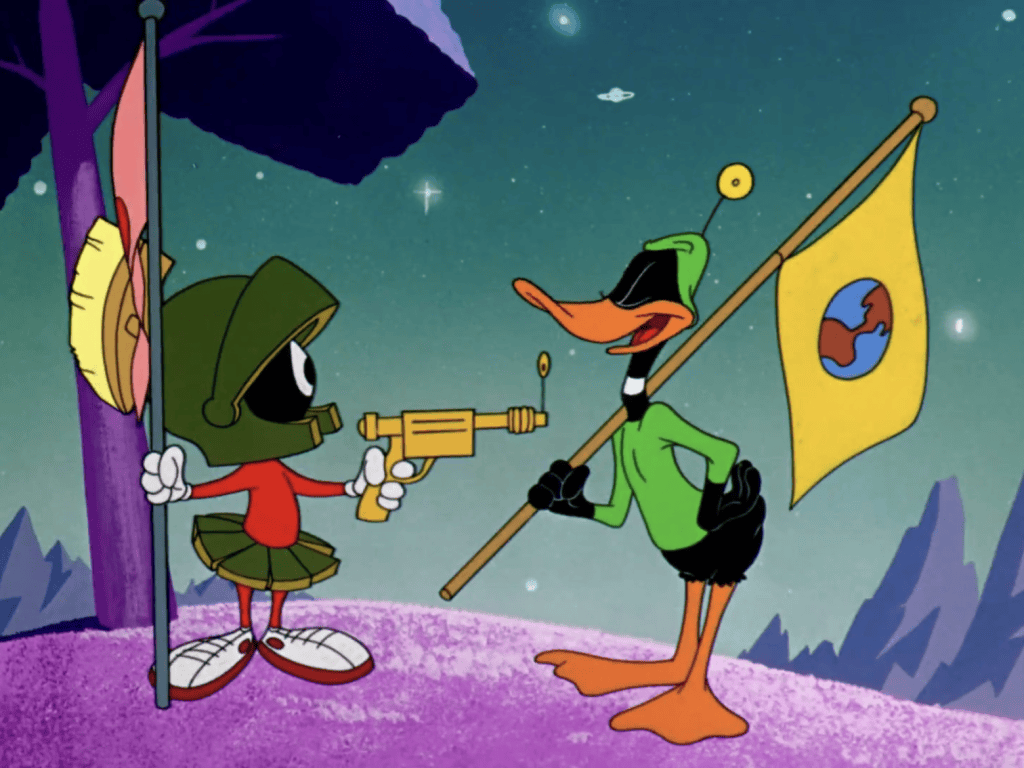
But while this is true, functionally the alien isn’t particularly, well, alien. It can be understood. It functions, on a naturalistic level, like a predator (no, not that kind of Predator! that’s a diffferent movie!), and on a structural level, like the aforementioned bad guy from a slasher movie. Truly alien aliens are exceedingly rare in so much storytelling, especially visual storytelling.
Continue reading


