One of the things that video games can do magnificently is create worlds. These posts are an occasional exploration of games that I love because of where they take me.
Gamers love choice. They love games that let them make momentous decisions: killing a character or sparing them, siding with the rebels or the powers that be, blowing up the city of Megaton or disarming the nuclear bomb at its centre. The bigger the choice, the better, and it’s best if the choices change the plot of a game in fundamental ways. Gamers sneer when a choice seems purely cosmetic: being nice or nasty to a character, only to get a message that so-and-so will remember how you treated them? It’s not like that character won’t be eaten by zombies ten minutes later, so what does it matter?
Most gamers look at choice in binary terms, and choices only matter when they affect the plot of a game. As if the choices we make on a daily basis, the ones that aren’t life-or-death, weren’t the ones that defined us – perhaps not individually, but certainly in sum. It’s our many small decisions that shape us for when a big decision comes around.
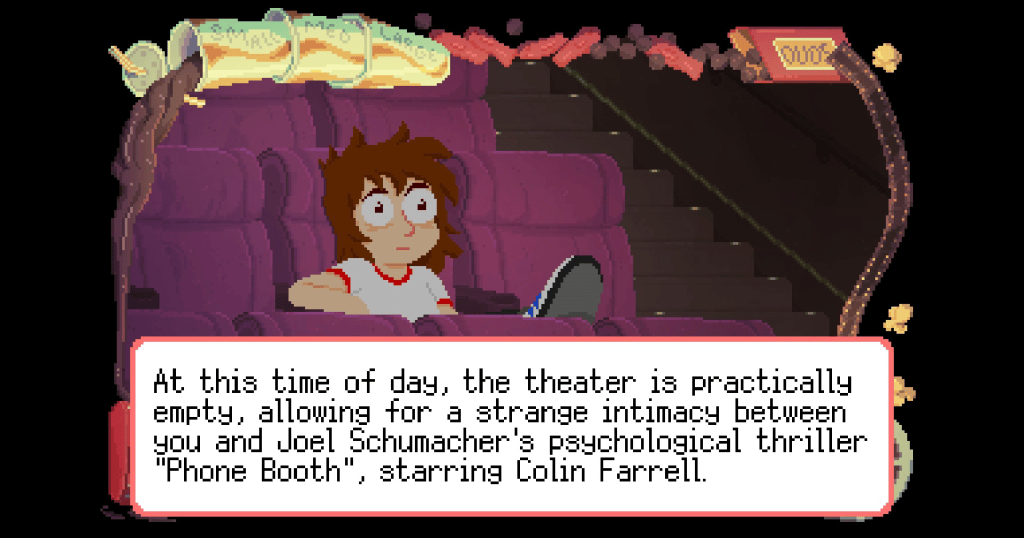
A while ago, I wrote about the 2022 game Perfect Tides, which tells a coming-of-age story about teenager Mara Whitefish, a girl living on a small island off the US East Coast. Perfect Tides used the genre of the point-and-click adventure to help set its story at a very specific time, a time of pixel-art adventure games and dial-up internet. It used the sense of nostalgia that its blocky aesthetic and Sierra-style user interface evoked in smart ways to tell its story. Earlier this year, Meredith Gran (cartoonist and developer of Perfect Tides) released her sequel, titled Perfect Tides: Station to Station – and, to cut to the chase, where I liked the first game a lot, I positively loved Station to Station. Again, it is a point-and-click adventure, one that builds on Perfect Tides and adds systems that fit the story and characters in clever ways.
In Perfect Tides: Station to Station, we catch up with Mara two years later. She is studying in the City (a stand-in for New York), having moved away from the island of Perfect Tides but still living with her mother and commuting every day, unless she’s crashed at a friend’s apartment. The two-year difference between the games is captured well in Gran’s writing: Mara is a young adult now, but she is still recognisably the Mara we first met. She is insecure but opinionated, and she desperately wants the approval of others while fearing that she will never get it. She’s no longer as self-loathing as she once was, teetering instead between her original crippling insecurity and the arrogant confidence of an 18-year-old.
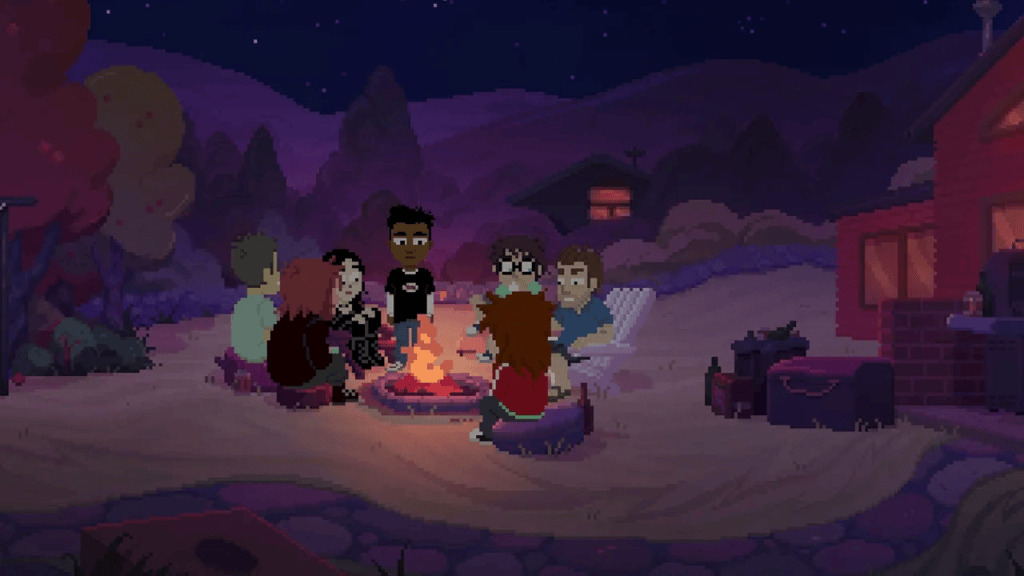
Mara isn’t the cypher that video game protagonists often are. She is clearly defined, through what she says and does as much as through what she doesn’t do. Her clothes, hair, posture: even rendered in blocky pixel art, all of these give us an impression of who she is. Which creates a challenge: how do you combine a specific, clearly-drawn character with player choice? Is this even possible?
In the game that introduced us to Mara, the player had some choices to make, but they were not as front and centre. In Station to Station, Gran has chosen a clever way to give the player agency while keeping Mara a well-defined character: through what she reads and what she writes. Mara is a student, she works at a library, she lives in a world of books. Some of these she’s told to read for Uni, others she borrows from friends or gets them from the guy that sells second-hand books. Being the busy student that she is – there’s classes and writing, but more than that, the social life of a young adult! -, the game gives Mara enough time to read one book a day. She’s broadly interested, but she is also an 18-year-old, and she still expects these books to explain life to her. One day she might read The Communist Manifesto, the next Langston Hughes’ The Weary Blues, or All About Love by bell hooks, or a novel by a young, up-and-coming writer that she encounters. And these books do shape Mara, though not in big, momentous ways: we don’t get to turn our protagonist into an out-and-out ideologue or armchair Freudian or the great hope of feminism in the early 21st century. The stations of Mara’s story are largely defined, and they won’t be changed fundamentally by whether she reads The Odyssey or Susan Sontag’s Against Interpretation. But these are the kind of choices that, to Mara, still feel important – and relatable: they say something about who she is and, more importantly perhaps, who she wants to be.
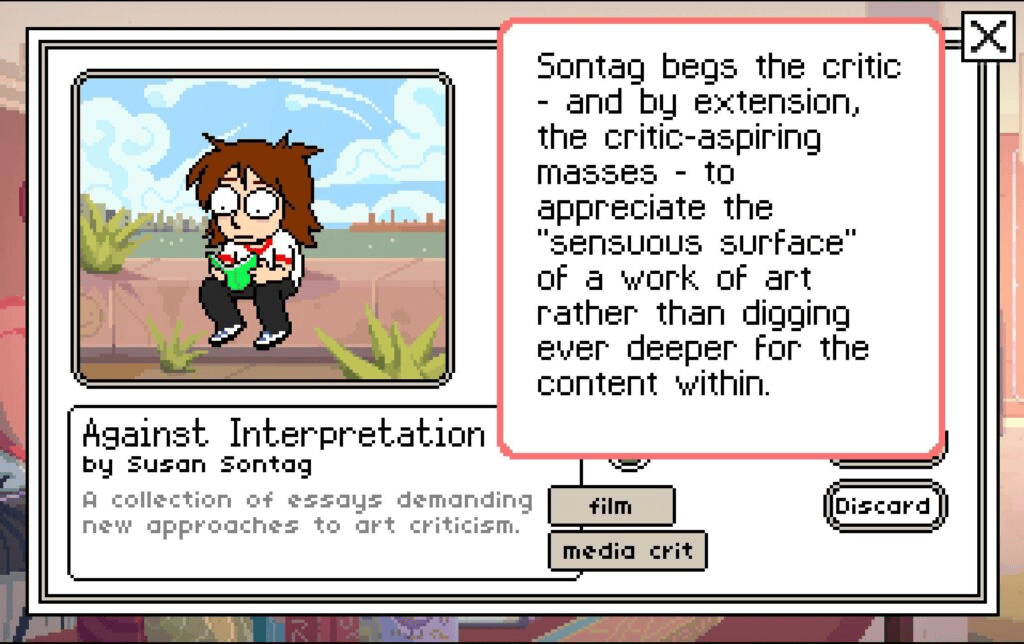
They, together with her experiences in the City, also shape her writing. Here again, Gran gives players the kind of choice that lets us take part in shaping Mara’s story while keeping her clearly defined. Like in a roleplaying game, Mara acquires and develops a number of topics, including Movies, Anarchism, Music, Sex, Drugs and Death. Depending on what she reads, does or encounters, she might become more knowledgeable about one of these. When she has a writing assignment or works on her own fiction, she can then decide which of these topics shall inform what she writes: an essay for class might draw on what she’s learned about movies and sex, for instance, and the choice of topics as much as the experience Mara brings to these has an impact on the resulting paper or short story (or, in one case, Mara’s attempt to revolutionise the sorting system of the library where she works – which I tried to succeed at, using my/Mara’s threadbare knowledge of anarchism).
The game lets you succeed or fail at these tasks, but Station to Station isn’t about min-maxing your character values. The game doesn’t let you become Super Mara, able to ace every assignment due to her superior knowledge at Music, Sex and Death, as expressed in high stats. Her interests and experience may be gamified on the surface, but the point isn’t success or failure, winning or losing: it’s getting us to understand better, and have a hand in, Mara and her development as a person. At the tail end of her teenage years and as a student in a place much bigger, more exciting and more daunting than the island where she grew up, she is hungry to live, to try out things, yet keenly aware of the constant possibility that she will fail, in small ways as much as in big ones. Station to Station isn’t a Choose Your Own Adventure kind of game, the choices don’t change Mara’s story in fundamental ways – but they are important, and far from cosmetic. Having the choices, anguishing over them, picking something while wondering whether some other choice, some other book, some other topic or assignment, are an expression of who Mara is at this point in her life.
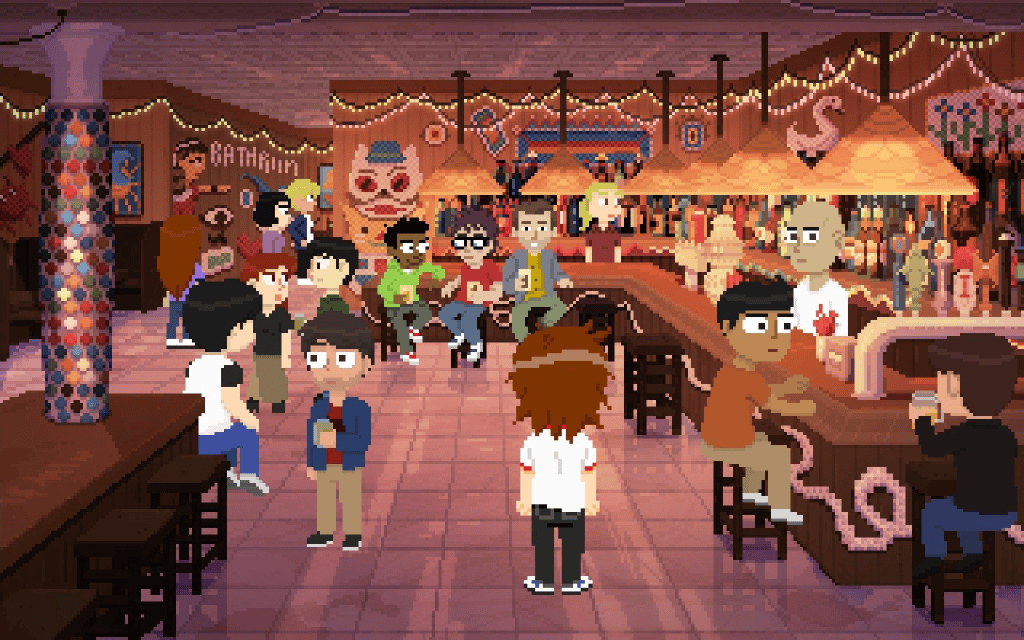
I’d be lying if I said that I don’t sometimes like big, plot-shattering choices in games like the gamer I am. I have greatly enjoyed especially roleplaying games that let me be a saintly hero, a snarky rogue, a chilling psychopath. I’ve also been impressed by games where, depending on your choices, the plot could go in entirely different directions and I could decide the fate of the world. But such choices have always felt rather abstract to me: on some level, they ended up being about me recognising that the developers had created extra content for me to experience. Choosing to side with one faction or another might get me two entirely different chapters in the overall plot, so obviously I’d want to reload my save game after finishing one storyline and check out the other way the story could go. But such a choice wouldn’t say anything about me or the character I play: it would simply express a wish to see all options, to maximise the amount of content I get to see.
The choices in Perfect Tides: Station to Station are largely small ones, but they are choices I recognise, and accordingly, I recognise myself in Mara. In Nick Hornby’s novel High Fidelity, the main character Rob starts off thinking that what you like defines who you are. Are you into this band or that one? Are you into Stanley Kubrick or Quentin Tarantino? Later in the novel, Rob comes to learn that it’s not what you like but what you’re like. But that life lesson misunderstands that we also become who we are through what we read and watch and listen to and play. They don’t define us, but they shape our path. Obviously it’s silly to base your entire personality on whether you’re into the Beatles or the Rolling Stones, Tolkien or David Foster Wallace – but these choices are ways in which we get to try out versions of ourselves, just as Mara gets to try out different Maras. When she decides between reading Homer or Susan Sontag, she also decides on the lens through which she reads herself, for now. Tomorrow it will be another book. The next assignment will be about Drugs and the City, or she’ll write a short story on the topics of Music and Death. Mara is 18 years old. The year will have her decide on bigger, more important things, about life, sex, death, the City and her place in it – but these small choices nonetheless matter. Not because they determine whether you will be the Mara who reads The Odyssey or the one who reads Against Interpretation, but because you had the choice, and the next one, and the next one. And you made them.
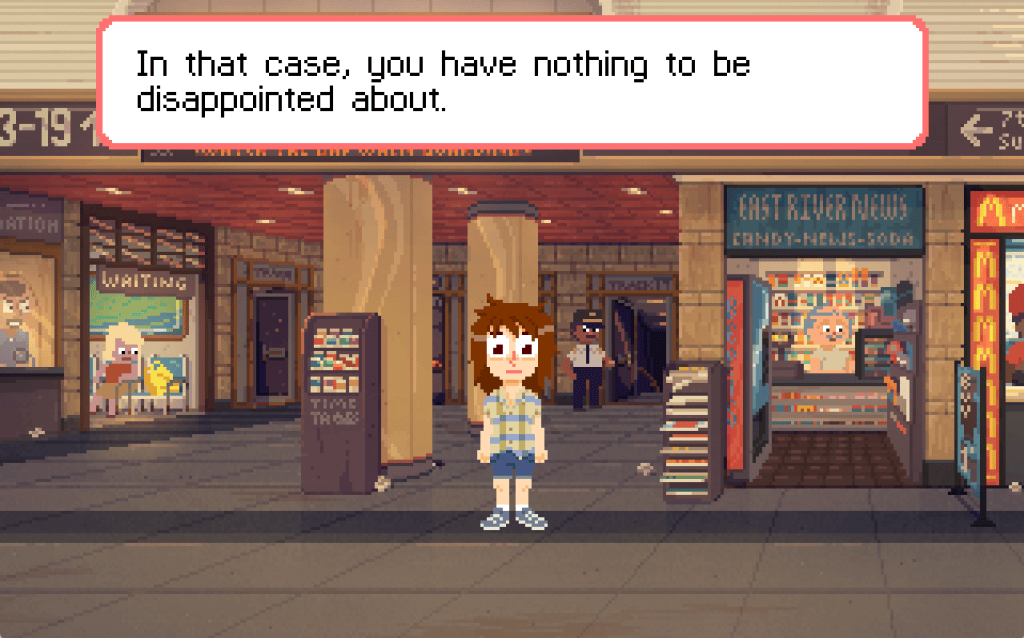
P.S.: There is plenty else to love about Perfect Tides: Station to Station, apart from the ways in which choice matters. For one thing, there is the best ever karaoke scene in any video game. No joke: it’s one of many reasons why Station to Station is one of my favourite games of this year, and quite possibly of the last decade. Even if it didn’t increase my Music score by 1.

