Each Friday we travel back in time, one year at a time, for a look at some of the cultural goodies that may appear closer than they really are in The Rear-View Mirror. Join us on our weekly journey into the past!
I’ve just finished Robert Musil’s The Man Without Qualities, a book I would have stopped reading if I’d had to carry it around with me, but there is an excellent audio-book, read by Wolfram Berger, thanks to which I somehow made it through. Did I understand all of the philosophical, political and social musings in there? Of course not – not even half. That is the advantage of novels: you can delve into certain sections and figure them out and read on later, and you can skip other parts. Novels must have some kind of plot, or they are barely novels. There is an obvious red thread, however spurious, that we can figure out and follow. Continue reading

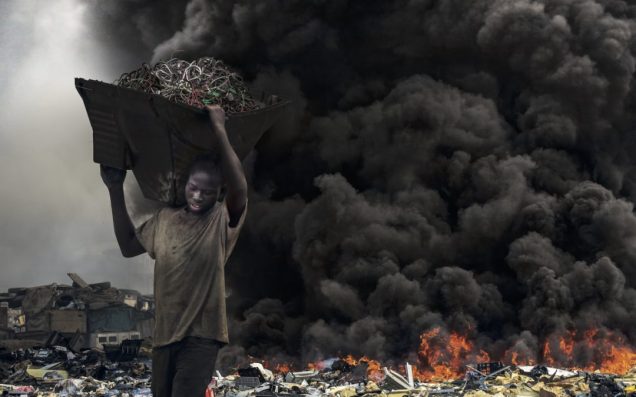 I am writing this on a laptop with internet connection. I’ve got another laptop without internet that I use for writing because if I have to research something, it might lead to unbridled surfing. You know how it is. I have owned four or five laptops before, and maybe seven or eight cellphones until now. Then there is all that hardware at work that got upgraded regularly. That must be thirty to fourty units of hardware just because of me. I am a moderate user because the digital superhighway is not my preferred means of communication, but not using laptops or cellphones makes you a hermit without wanting to be one. Even my daughter gets her homework online. So yes, I have my hardware needs, and so have you. But where do our machines go after we dispose of them?
  Each Friday we travel back in time, one year at a time, for a look at some of the cultural goodies that may appear closer than they really are in The Rear-View Mirror. Join us on our weekly journey into the past!
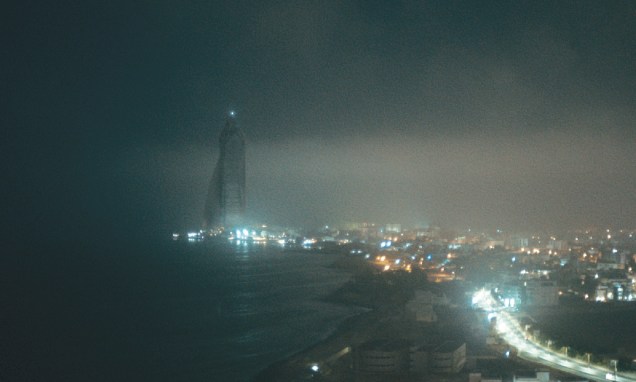 There is a gigantic supertower in Dakar, Senegal, and it is almost complete, and the men who work construction there soon have to find other jobs, especially because they haven’t seen their wages for the last three months, but work is scarce, so most of them will pay their passage on a boat for Europe. One of them is Souleiman, and he falls for a young woman named Ada, who is promised to a rich guy named Omar. Next day, word on the street is that Souleiman has left. There is that memorable scene where the women are wearing their best dresses and go to the beach hut where they hang out – and there are no men. Many of them are gone, and most of the women already know they will stay behind.
 Daphne du Maurier’s novel My Cousin Rachel, published in 1951, seems to exist in the spot where the universes of Jane Austen and Agatha Christie touch. On the one hand, the tone of the book is well-mannered, and its characters are not allowed to flat-out say what they passionately would like to say, but have to hide behind the mores of the era. On the other hand, someone dies, and another character is in danger to meet the same fate, so whodunnit?

 The first half hour of Alejandro Landes’ debut feature Monos contains some of the most beautiful images of any movie released this year. We are somewhere in Latin or South America, so high up that the clouds seem lower than the silhouettes of the child soldiers. There are red-burning clouds trying to scale the jungle-green mountaintops; there are lush meadows and old abandoned fortifications. There is a war, but we know less about it than even the eight teenagers in their rag-tag, mismatched dirty uniforms.
  A Damn Fine Cup of Culture