Would you say that, when you were a child, your parents really knew you? Did they see the person you considered yourself to be? Were there things you wished they’d known about you, but you were afraid of what they would think if indeed they did know? Did you feel that, in so many ways, you and your parents were strangers to one another?
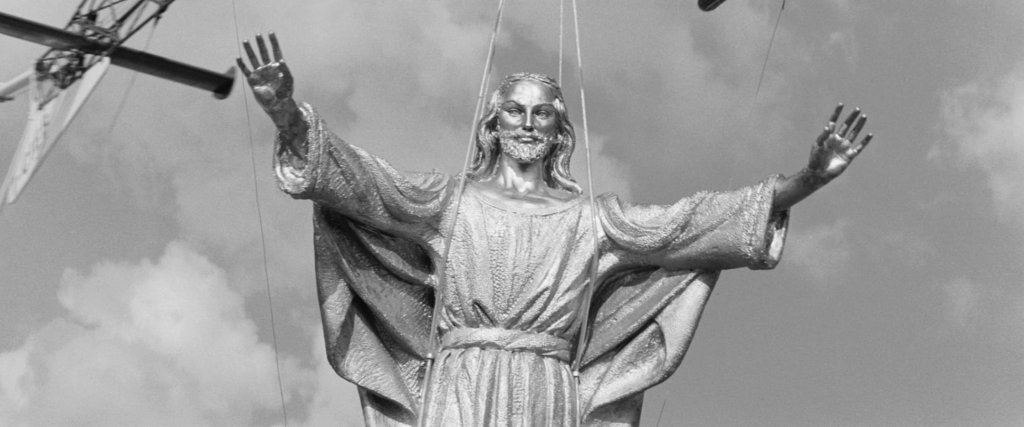
We all know the iconic images: the statue of Christ flying through Rome, transported by a helicopter; wild nighttime parties in the Baths of Caracalla; believers carrying the sick on stretchers, tabloid journalists and TV people crowding two small children that claim to have seen the Madonna; and, always and especially, Anita Ekberg in the Fontana di Trevi.
Join us every week for a trip into the weird and wonderful world of trailers. Whether it’s the first teaser for the latest instalment in your favourite franchise, an obscure preview for a strange indie darling, whether it’s good, bad, ugly or just plain weird – your favourite pop culture baristas are there to tell you what they think.
Welcome to Six Damn Fine Degrees. These instalments will be inspired by the idea of six degrees of separation in the loosest sense. The only rule: it connects – in some way – to the previous instalment. So come join us on our weekly foray into interconnectedness.
As Alan talked about in his Six Damn Fine Degrees instalment last week, there are very good reasons to dislike some actors even when we enjoy their performances and the films they’re in. The same is true for directors, producers, writers, and so on. Hollywood has its fair share of bigots, racists, antisemites, homophobes, abusers, and various bastards of any shape or size. And the more we find out about what went on in yesteryear’s film industry, the more skeletons pop out from the closet. This may make our feelings about some of our favourite films more complicated, but I’d agree with Alan: all in all, it’s better to know.
However, sometimes we develop irrational dislikes of the faces we see on the silver screen. I started off hating Eddie Redmayne for no better reason than, well, literally disliking his face… and, yes, his acting style and often his choice of roles. Possibly his voice as well. But I’m mostly over it. Mostly.
But for a long, long time I nursed an irrational dislike of an actor who had done even less than poor Eddie to deserve my ire. Reader: I used to hate David Morse.
Join us every week for a trip into the weird and wonderful world of trailers. Whether it’s the first teaser for the latest instalment in your favourite franchise, an obscure preview for a strange indie darling, whether it’s good, bad, ugly or just plain weird – your favourite pop culture baristas are there to tell you what they think.
How do we handle knowing rather unsavoury things about the actors and filmmakers whose work we like? This week, Alan wrote about his approach, focusing on Charles Coburn, that most avuncular of bigoted racists, best remembered perhaps for his role in Gentlemen Prefer Blondes.
Join us every week for a trip into the weird and wonderful world of trailers. Whether it’s the first teaser for the latest instalment in your favourite franchise, an obscure preview for a strange indie darling, whether it’s good, bad, ugly or just plain weird – your favourite pop culture baristas are there to tell you what they think.
When I think of the films of Yorgos Lanthimos, many things come to mind: first and foremost, his deadpan absurdity (Lanthimos is part of a film movement referred to as the Greek Weird Wave), but also recurring themes such as the arbitrariness of social mores, sexuality, heteronormativity, and structures of power and authority. What I associate most strongly with Lanthimos, though, the unease they evoke. Even when they make me laugh, Yorgos Lanthimos’ films are often supremely uncomfortable.
Which is why it comes as something of a surprise that his latest film, Poor Things, which tells the story of an infant whose brain, Frankenstein-style, is implanted into the body of an adult woman and who finds liberation through sexuality, may just be Lanthimos’ most feel-good film.
Welcome to Six Damn Fine Degrees. These instalments will be inspired by the idea of six degrees of separation in the loosest sense. The only rule: it connects – in some way – to the previous instalment. So come join us on our weekly foray into interconnectedness.
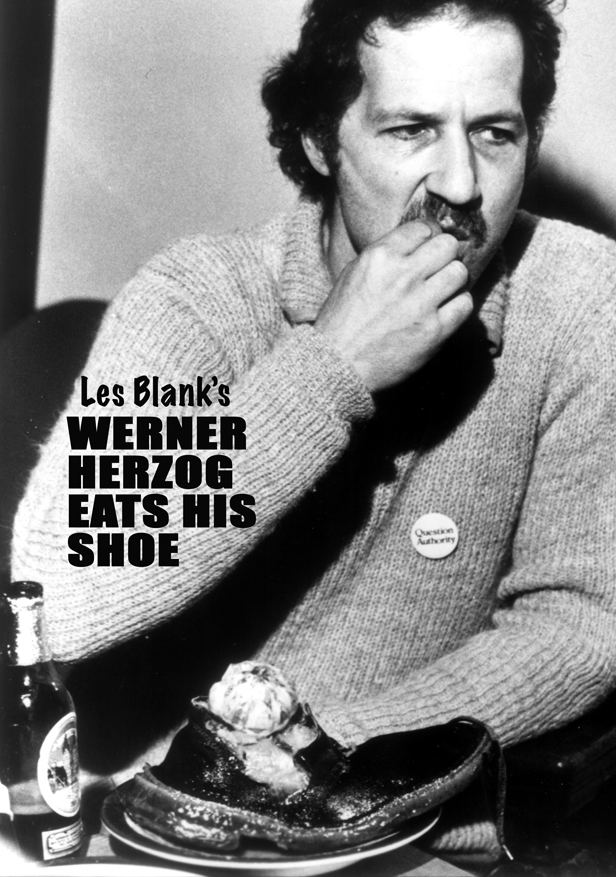
Werner Herzog must be one of the most frequently parodied filmmakers in the world. I have no evidence of this other than my own gut feeling, but is there anyone else that’s been caricatured as often as him? And good old Werner gets in on the fun too: he’s voiced versions of himself on The Simpsons, The Boondocks and American Dad – and it’s likely there’s an element of self-parody in him voicing a character described as “Old Reptile” in an episode of Rick and Morty.
It’s the kind of meta filmmaking that’s catnip for critics and academics: screen legend Boris Karloff, firmly at the tail end of his career as a horror movie actor, plays the equally legendary Byron Orlok, a man firmly at the tail end of his career as a horror movie actor. Orlok announces his retirement from cinema, because he’s a has-been and his brand of cinematic horror is no longer scary, it’s camp. Meanwhile, a thoroughly modern kind of bogeyman stalks Los Angeles County: a young, blandly all-American insurance agent with an unsettlingly large gun collection, takes aim at random targets. Slowly but surely the two storylines converge, until they intersect – in a drive-in cinema, where Orlok is set to make his final public appearance. It’s cinema all the way down.
Just like Fellini used to be a big gap in my filmography – something this series, with a little help from Criterion, is supposed to address -, I’ve not seen all that many films by Pier Paolo Pasolini. The ones I have seen are an eclectic bunch: Mamma Roma (starring a magnificent Anna Magnani), The Gospel According to St. Matthew, and the Greek tragedies: Oedipus Rex and Medea. Based on having watched these, it’s difficult for me to get much of a grip of who Pasolini was as a filmmaker – but tonally he definitely seems to be a fairly different, much more overtly political storyteller from Federico Fellini.
Which makes Nights of Cabiria, on which Fellini collaborated with Pasolini, an interesting blend of the two men’s styles and preoccupations. The role of Pasolini, who was one of altogether four co-writers, was to help with the dialogue of the 1950s Roman demimonde of pimps, prostitutes and their tricks, giving it more authenticity. The world of Nights of Cabiria doesn’t actually seem all that far removed from that of Mamma Roma, who, like Cabiria, is a sex worker dreaming of a different life. However, while the director and his writers evoke a believable world that is earthy, that lives and breathes, this world isn’t what defines the film the most, instead providing a background to the central performance. As in La Strada before it, the star of the show is undoubtedly Giulietta Masina – who may be even better as Cabiria than she was as Gelsomina.





 A Damn Fine Cup of Culture