Welcome to Six Damn Fine Degrees. These instalments will be inspired by the idea of six degrees of separation in the loosest sense. The only rule: it connects – in some way – to the previous instalment. So come join us on our weekly foray into interconnectedness.
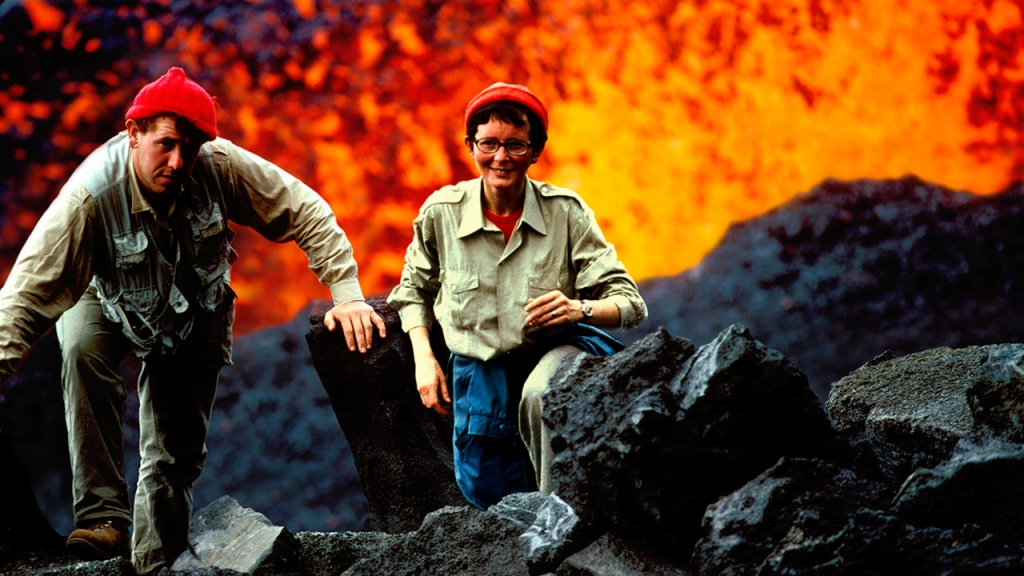
It’s a story made for the movies, isn’t it? Two oddballs meet and fall in love with each other – and with volcanoes. They become documentary filmmakers and travel the world, capturing the awe-inspiring power and beauty of volcanoes on camera… until, twenty years later, they die together in an eruption. Perhaps not the happiest ending to a love story, but one so fitting it could have been penned by a screenwriter.
Join us every week for a trip into the weird and wonderful world of trailers. Whether it’s the first teaser for the latest instalment in your favourite franchise, an obscure preview for a strange indie darling, whether it’s good, bad, ugly or just plain weird – your favourite pop culture baristas are there to tell you what they think.
Of all the tropes in romantic stories that I’m not a big fan of, two people falling instantly in love is probably the most common. I can buy immediate attraction, especially of a sexual kind, and I am also okay with an almost instant sense of sympathy, a sort of mutual resonance that develops into something further – but when we’re supposed to believe in love at first sight, that there is deep, abiding love between two people the moment they meet, I roll my eyes, and they keep rolling if this instant romantic attachment is given a significance that is practically metaphysical. I am no fan of the notion in romances that someone is ‘the one’, that destiny has preordained certain couplings. In fact, I don’t find the idea particularly romantic to begin with.
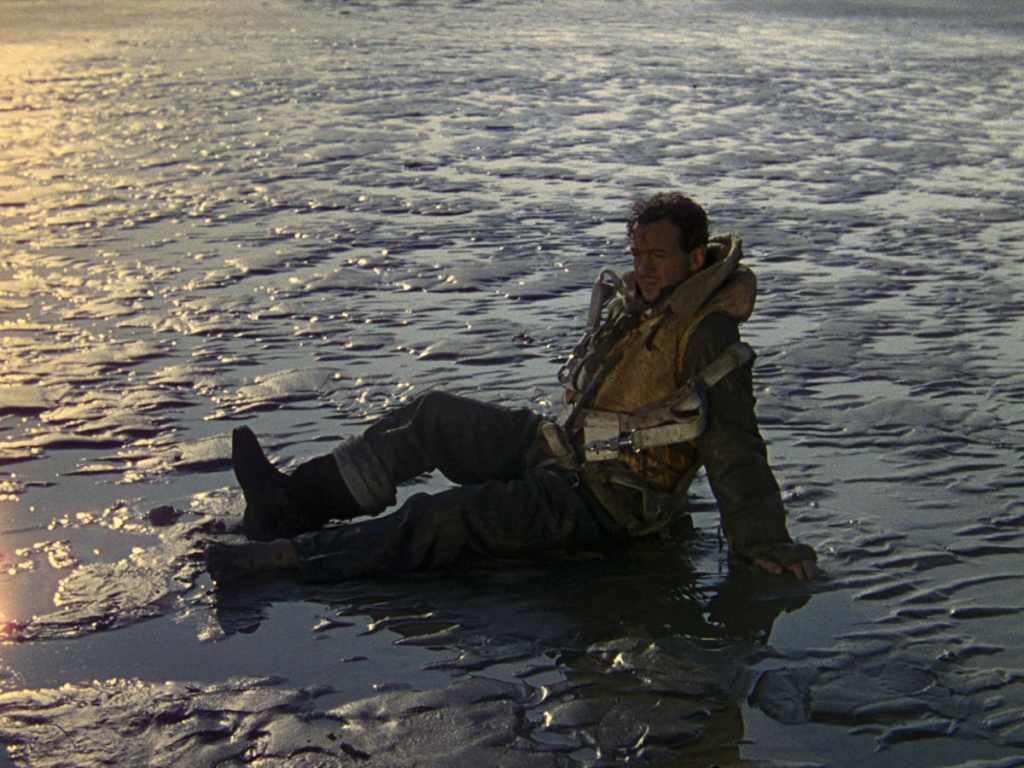
There is perhaps one film where I buy into such almost instant love, and not just begrudgingly but entirely, 100%. That film is Michael Powell and Emeric Pressburger’s wonderful A Matter of Life and Death (1946).
And once again, the year just keels over and ends. At least that’s how it feels: ever since history decided that we can’t complete a single orbit around the sun without some major upheaval or crisis, it’s continued in that vein. Or has it always been that way, and I’ve just been too Euro- or phallo- or whatevercentric to notice that that’s just what history is: one kind of crisis after another?
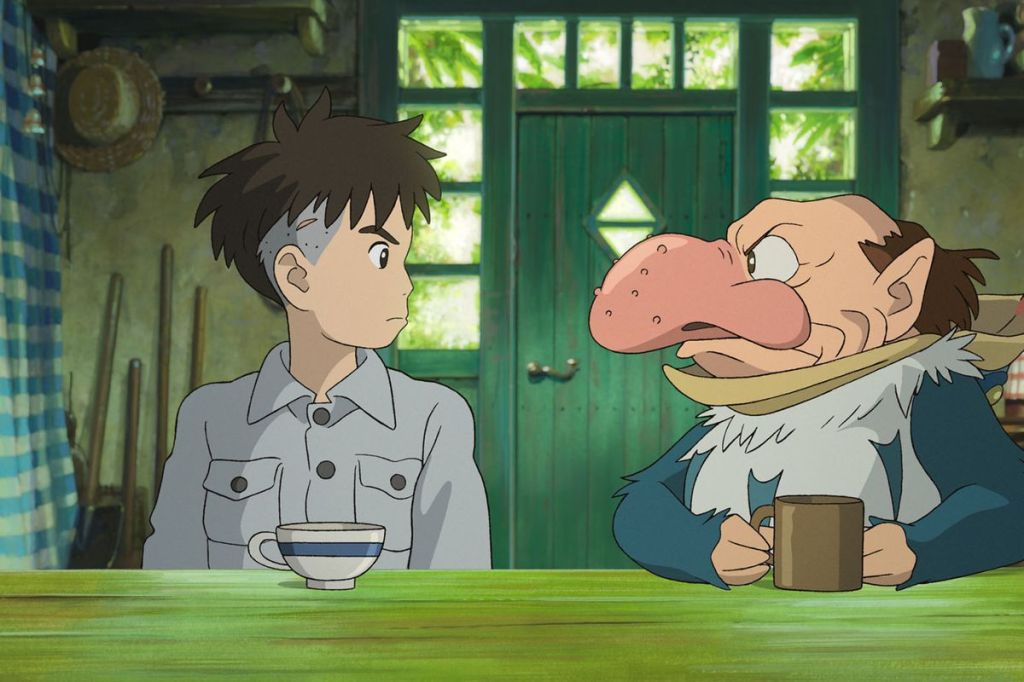
Apart from the ’70s anime version of Heidi (which I, like so many kids growing up in Switzerland in the 1980s, watched much more of than any more ‘native’ versions of the story), for which Hayao Miyazaki worked on scene design, layout and screenplay, my first proper encounter with the director and his work that I was aware of was Princess Mononoke (1997). Japanese animation didn’t often make it into Swiss cinemas at the time, at least other than the occasional showing of a classic of the form such as Akira or Ghost in the Shell, so I had to travel to another city to catch the film at the cinema.
It was absolutely worth the journey: seeing Princess Mononoke was a breathtaking experience. The film felt archaic and epic and strange, though at the same time intimate and very personal. It grappled with big moral questions, but without reducing these to good vs evil simplicity. (Ian Danskin’s video essay “Lady Eboshi is Wrong” on the topic is well worth watching.) Even just on an aesthetic level, Princess Mononoke was visually stunning, and its score, easily one of Joe Hisaishi’s best, complemented the visuals perfectly. Miyazaki’s films deserve to be seen on a big screen – and yet, since seeing Princess Mononoke at a cinema, I only managed to do the same with Spirited Away. All of Miyazaki’s other films (and everything that Isao Takahata did) I only ever saw on my TV.
Welcome to Six Damn Fine Degrees. These instalments will be inspired by the idea of six degrees of separation in the loosest sense. The only rule: it connects – in some way – to the previous instalment. So come join us on our weekly foray into interconnectedness
When I was a child, I remember there being a certain Hollywood magic to films that seemed to have simply everyone in them. I’m not talking about your average ensemble cast (or the kind of ensembles that Robert Altman worked with, which were very much their own thing), but the kind of cast where every name that is dropped in the credits makes you go, “Ooh, wasn’t he in… And didn’t we see her in…? And wasn’t he great as…?” In my head, the archetypes of this kind of film are the 1970s Agatha Christie adaptations featuring Belgian super-sleuth Hercule Poirot: Murder on the Orient Express, in which you’d get Lauren Bacall on the table next to Ingrid Bergman and Jacqueline Bisset, looking across the aisle at Richard Widmark, Michael York, Sean Connery and John Gielgud, or Death on the Nile, whose cast ranged from Bette Davis via Angela Lansbury to Mia Farrow, and from David Niven to Jack Warden, and that’s not mentioning the Maggie Smiths, Jon Finches and Peter Ustinovs. Then there’s the grimmer but equally star-studded A Bridge Too Far, again with Sean Connery, but also Gene Hackman, Dirk Bogarde, Edward Fox, Michael Caine, and many, many others.
In films, we’re used to con artists being the heroes. Not always, obviously, but more often than not, cinema presents swindlers as appealing trickster figures, with charm and charisma up the wazoo. At first, Il Bidone, the Fellini film that followed La Strada, looks like it might be one of those movies. Carlo (Richard Basehart) has a face that radiates a childlike innocence (as it did when Baseheart played the Fool in La Strada) and Augusto (Broderick Crawford) is the experienced, paternal figure of the gang, with only Roberto (Franco Fabrizi, whose character feels like he could have walked out of I Vitelloni, in which Fabrizi played one member of the central group of friends) being presented as something of a rotter. Il Bidone also sounds like one of those films, with Nino Rota’s score, a lilting tune, reinforcesing our first impression: these characters are fun con men, tricking rubes with a twinkle in their eyes, and all of this is supposed to be a lark.
Which makes it all the more jarring when the film uses scene after scene to show that the rubes being tricked are desperately poor and living off scraps. They are not greedy: if they are eager to make a quick buck, it’s because they don’t have much to begin with and need money fast. When the con men promise them wealth, they bite because they work day after day just to break even. The swindlers sell them hope at extortionist rates. And we watch our protagonists ply their trade, swindling Italy’s post-war poor out of what little they have, while Rota’s jaunty music plays.
We left off last time with a cinematic version of what the Great Beyond might be: Hirokazu Kore-eda’s After Life, in which the newly deceased have a few days in a threadbare but friendly waystation to decide on the one memory that would be made into a film, and that film would then be all that remains of them for eternity.
Defending Your Life, Albert Brooks’ 1991 romantic comedy with a satirical slant, shares some surprising qualities with Kore-eda’s film. Its afterlife is also entirely mundane, though in a decidedly more American way, and it is likewise staffed with people who are there to determine what happens with you next. Like in After Life, none of the people who have just died question their fate, nor do they seem overly concerned with metaphysical questions. No one brings up God or religious belief, though in Brooks’ version of the hereafter people are somewhat concerned with heaven and hell – where will they go to next? But first there are more important questions – where will they go for dinner? This afterlife is a place of all-you-can-eat restaurants that will pack you nine pies to take back to your anonymous hotel room. Judgment City is the American hereafter, after all.
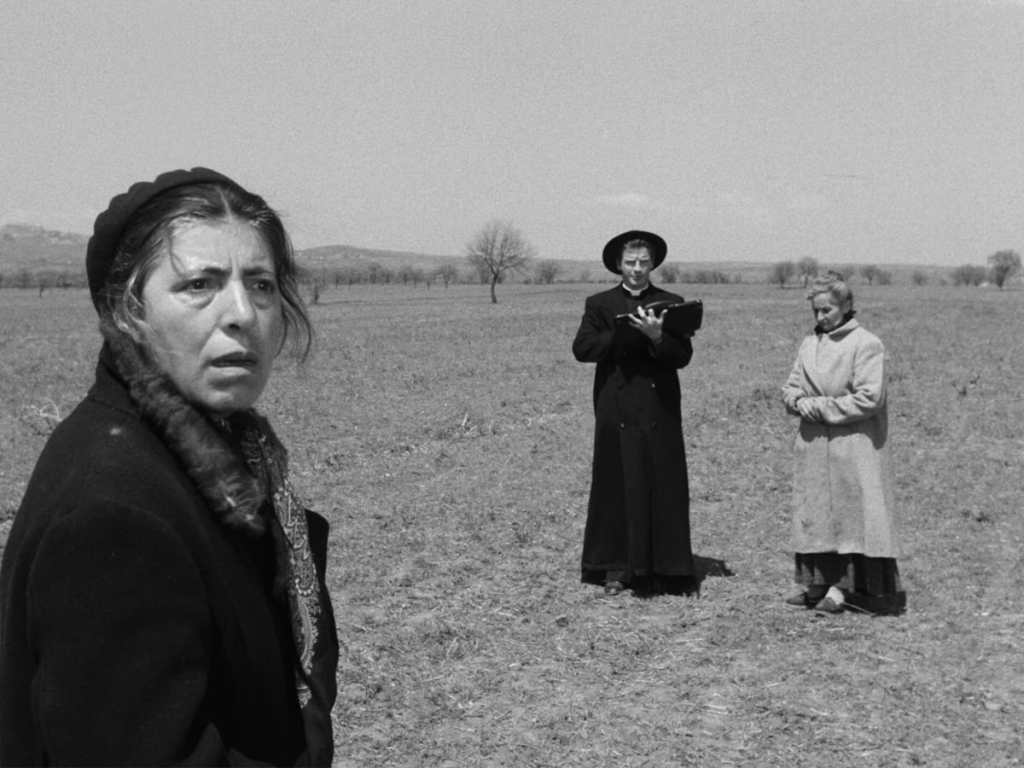
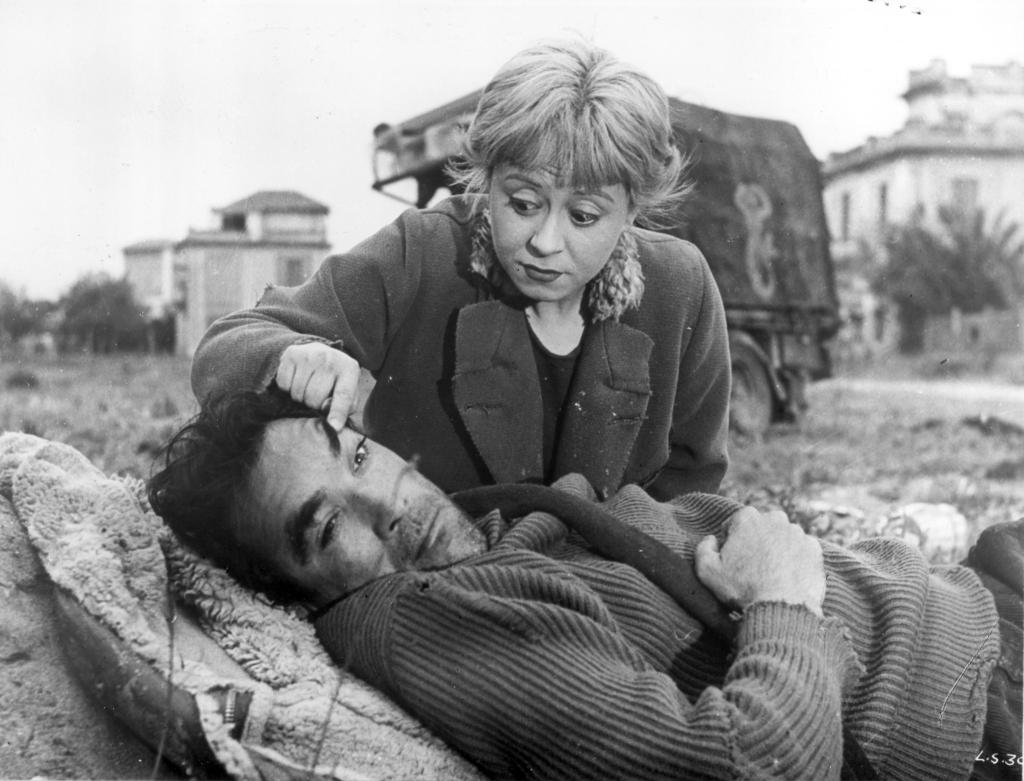
If I Vitelloni was the first of the films in Criterion’s Essential Fellini box set that justified the director’s reputation, La Strada more than confirms it. This is a beautifully made, heartrending film that deftly balances its tendencies towards the sentimental with a nuanced characterisation and an empathy that extends to those who may seem least deserving of it. And Giulietta Masina as Gelsomina steals the film, even though the main roles are all excellently played. Her performance is rightly remembered as iconic.




 A Damn Fine Cup of Culture