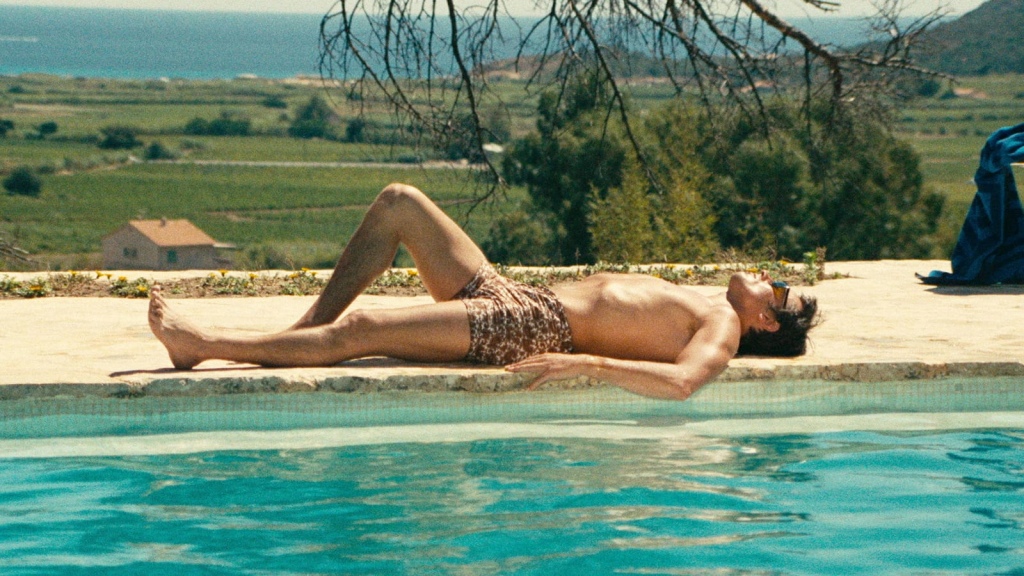
They create worlds: Imaginary gardens, real tourists

One of the things that video games can do magnificently is create worlds. These posts are an occasional exploration of games that I love because of where they take me.

I am currently replaying one of the Assassin’s Creed games, in which players are invited to go back in time and hobnob with the likes of Queen Victoria, Leonardo da Vinci and Cleopatra in 19th century London, renaissance Florence and Ptolemaic Egypt. They’re wonderful games for tourists – but they’re also shallow and repetitive, filled with busywork and ludicrous plots about ancient conspiracies and precursor civilisations. For a long time, I would buy each new Assassin’s Creed and play it excitedly, like the history nerd I am, but almost always I would get tired of them before I was even close to the ending.

Nonetheless, when I’ve got a phase where I’m tired from work in the evenings and don’t want anything that engages me too deeply, I often revisit an Assassin’s Creed game, because of the sightseeing. I don’t always need deep, engaging gameplay or storylines – sometimes what I want to do is climb the clocktower of the Palace of Westminster and look out over Dickensian London, smog, chimney sweeps’n’all.

Continue reading

Six Damn Fine Degrees #122: You can be my bad guy any time

Welcome to Six Damn Fine Degrees. These instalments will be inspired by the idea of six degrees of separation in the loosest sense. The only rule: it connects – in some way – to the previous instalment. So come join us on our weekly foray into interconnectedness!

Lock up your daughters (and your sons, quite possibly) – the British are coming! It’s pretty much impossible to watch Alfred Hitchcock’s North by Northwest and not be bowled over by the suave charms of its British star. That voice, the confidence, and the man certainly knows how to wear a suit.

But enough about James Mason. Cary Grant is also pretty good in the film.

Continue reading

Criterion Corner: Show Boat (#1021)

What is it I look for in a Criterion release? Why do I not just get every single film released by the Criterion Collection? It would certainly save me some time – upfront, at least, though not necessarily afterwards, when I actually have to watch these films. Not that it’s a chore, but my various media backlogs and the increasing unlikelihood that I’ll actually get to finish all the films, series, books, games etc. that I’ve amassed in my life to date are already making me more anxious than I like. (#firstworldproblemsamirite?)

So, what is it that makes me buy a Criterion release? Obviously, the first reason is that they release a film that I already like, or the work of filmmakers and actors that I already enjoy. Next, sometimes it’s a film that I’ve heard a lot about, one of those stone-cold classics that I’ve never got around to watching on TV, and what better way to first see a classic than a good remaster with interesting extras included on the disc? (Okay, the correct answer to this is often: at the cinema. But while I’m very happy with our local cinema releases of classics, they will never cover everything I’m interested in.) Sometimes it’s simply that I’ve never heard of a certain Criterion release, or perhaps only snippets and a still here and there, but what I read makes it sound intriguing, strange or fascinating in some other way. I mean, if it’s Criterion, it’s gotta be good, right?

The final type of Criterion purchases I make comes from me feeling somewhat guilty that I’m not more broadly interested in the history of cinema. Obviously I am interested, but then I look at Julie or Alan, our two resident movie historians, and I see their fascinating with and breadth of knowledge on classic Hollywood, whether we’re talking about the classics of silent movies or pre-Code Hollywood, and there’s a part of my movie-fan ego that feels vaguely inadequate.

Continue reading

Postscriptum: The Incompleat Ingmar

Where do you go after seeing most of Ingmar Bergman’s films and TV productions, over a span of almost four years? Do you go back to the beginning and start again? There are definitely quite a few of these that I’ll want to rewatch, but no, I don’t want the rest of my life to be on a permanent Bergman loop. Do I seek out the remaining films (seven, apparently) and watch those as well, for the sake of completeness? Some of the films not included on Criterion’s set are from the early years, and while those films are not uninteresting, for many of them I found the main interest to be the glimpse they provide at a Bergmann who hasn’t quite found his groove yet – and lesser Bergmann can leave you with a sense of “Why didn’t I watch Smiles of a Summer Night or The Seventh Seal or Persona or Fanny and Alexander instead?”

So how about watching some films about Bergman instead?

Continue reading

They create worlds: Pentiment

One of the things that video games can do magnificently is create worlds. These posts are an occasional exploration of games that I love because of where they take me.

In the early years of video games, their aesthetics were limited mainly by technology: by the resolution of the graphics or the number of colours that a system could produce and display on the screen at the same time, or by CPU speed. The best programmers and artists could do wonderful things within those limitations, and you can enjoy great pixel art even today, when computers can produce real-time visuals that are vastly more complex.

These days, video game graphics are much less limited by the tech the games run on, so a lot of games – especially in the so-called AAA segment, i.e. the games with the biggest budgets and the largest teams of developers – aim for photorealism. At the same time, smaller developers who don’t necessarily have the resources to create virtual worlds that visually are getting less and less distinguishable from reality, have a vast range of possibilities to work with those very different limitations: they might create games that use different kinds of stylisation, that look like vintage animation or paper cutouts or jagged fever dreams. In modern games, we may find aesthetics that don’t harken back to the ’70s and ’80s, with their blocky pixels and four-frame animations, but to times when video games were entirely inconceivable.

Continue reading

Six Damn Fine Degrees #118: When you’re tired of robbing casinos…

Welcome to Six Damn Fine Degrees. These instalments will be inspired by the idea of six degrees of separation in the loosest sense. The only rule: it connects – in some way – to the previous instalment. So come join us on our weekly foray into interconnectedness!

Pretty much from its infancy, cinema recognised the dramatic potential of crime. Whether we’re talking about whodunnits in the style of their literary ancestors, films in which the protagonists were sleuths and detectives, or their counterparts, the movies that told the stories of gangsters, thieves and murderers, crime pays – at the very least in ticket sales. Something else cinema exceeds at: showing us people who are very, very good at what they do. There’s a joy to watching consummate professionals at work. (There’s even a phrase for it, competence porn, and Breaking Bad‘s Mike Ehrmantraut is its laconic patron saint.) And, of course, there’s the place where the Venn diagram meets: many a highly entertaining film has been about criminals who are good at their particular genre of crime. The con men and women, the safe breakers and thieves, and yes, even the killers who are just so damn adept at killing that it’s delightful to watch them go about their gruesome business.

And at the heart of the intersection of those two sets is a particular brand of movie, about a particular brand of criminals who do a very specific kind of crime requiring the upmost professionalism: the heist movie.

Continue reading

Been there, done that

There are some gamers who seem to seek validation from some game that they spent dozens of hours on being adapted for cinema or TV. Is it because Roger Ebert put down our hobby decades ago when he was still with us? (Okay, to be fair, a certain someone who shall remain me had some definite opinions on Ebert’s verdict at the time and wrote an article in response that got translated into Italian and published; at this point I wouldn’t understand that article if I tried to read it.) So, when HBO announced a few years ago that it’d bought the rights to adapt the bestselling game The Last of Us: hey, how much more validation can you get? The network that ushered in the Golden Age of Television with modern classics such as The Sopranos, The Wire, Deadwood – and, more than that, the series runner would be Craig Mazin, whose outstanding miniseries Chernobyl had made people forget that he’d written the third and fourth instalment in the Scary Movie series.

Continue reading

Criterion Corner: WALL-E (#1161)

For a while, I’d catch all new Pixar releases at the cinema. I missed out on Toy Story, their first feature film, when it originally came out, but I remember enjoying A Bug’s Life and Toy Story 2, and I loved The Incredibles when it came out (though I have to confess that I never enjoyed Finding Nemo as much as most people did). At the time these were something we’d not seen before, not in this quality. Obviously Pixar’s artistry was amazing, in a genre that, when the first few Pixar films were released, was still fairly new – and with each film, the company would introduce new innovations. The fur in Monsters, Inc. (apparently there were over two million hairs on Sulley that needed to be animated), water and the way it was lit in Finding Nemo, the way musculature behaved on human beings in The Incredibles: Pixar were technological innovators as much as they were artists, but above all, they were storytellers. Their movies were technological marvels from the first, but most people aren’t wowed by textures or shaders alone: if these aren’t used to tell interesting, engaging stories, the films that use them won’t be remembered. I mean, how many people still talk about Final Fantasy: The Spirits Within?

Continue reading

Six Damn Fine Degrees #115: Chronicle of a death foretold

Welcome to Six Damn Fine Degrees. These instalments will be inspired by the idea of six degrees of separation in the loosest sense. The only rule: it connects – in some way – to the previous instalment. So come join us on our weekly foray into interconnectedness!

“Somewhere in here I was born… and here I died. It was only a moment for you… You took no notice.”

Even just reading those words gives me goose bumps. In Alfred Hitchcock’s Vertigo, a film that’s not light on ominous, eerie moments, it is probably the one scene that most gets under my skin, even after I’ve seen the film a half-dozen times. It is strange and uncanny (even if it is actually part of an extended con), but also, and perhaps most of all, it is sad, as many of my favourite ghost stories are. The woman in front of you pointing at the tree rings, pointing out where she was born, first, and then where she died.

Died. Past tense.

Continue reading

Criterion Corner: Design for Living (#592)

Three young, smart, attractive people – Gilda, a commercial artist, the painter George and the playwright Thomas – meet on a train to Paris. Their initial conversations may not be entirely friendly, but the sparks that fly as they exchange zingers make it clear that the men are attracted to Gilda, and vice versa – and how could they not be? They’re witty, they’re attractive, and they’re in Paris. Soon they fall: both of the men for Gilda, and Gilda for, well, both of them. She can’t choose, and she won’t choose – so Gilda, George and Tom come up with a plan: they live together as Gilda is a friend, a muse and a critic to both men. They make a gentlemen’s agreement to make sure that this will work: no sex.

What could possibly go wrong?

Continue reading