The Compleat Ingmar #24: All These Women (1964)

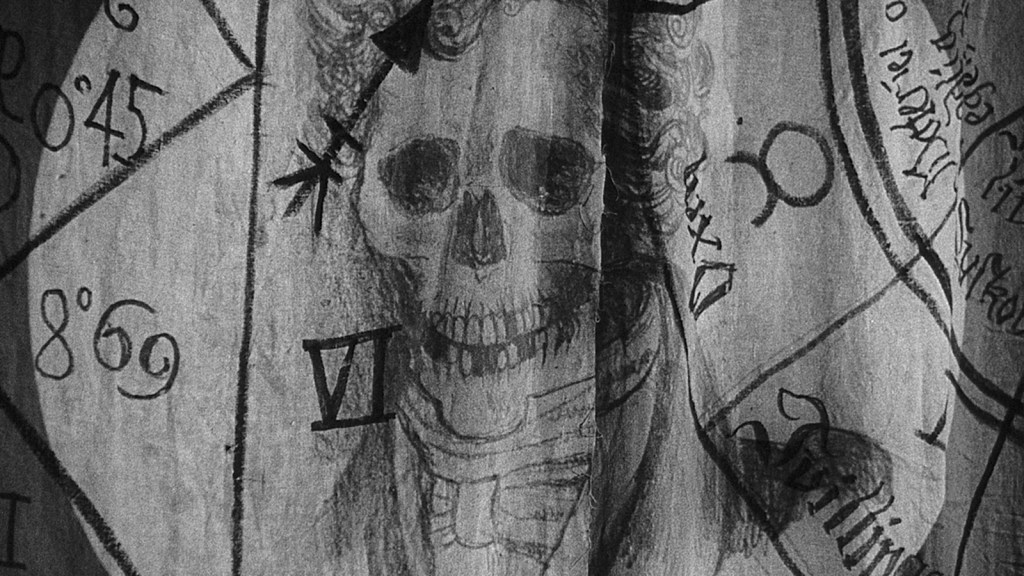
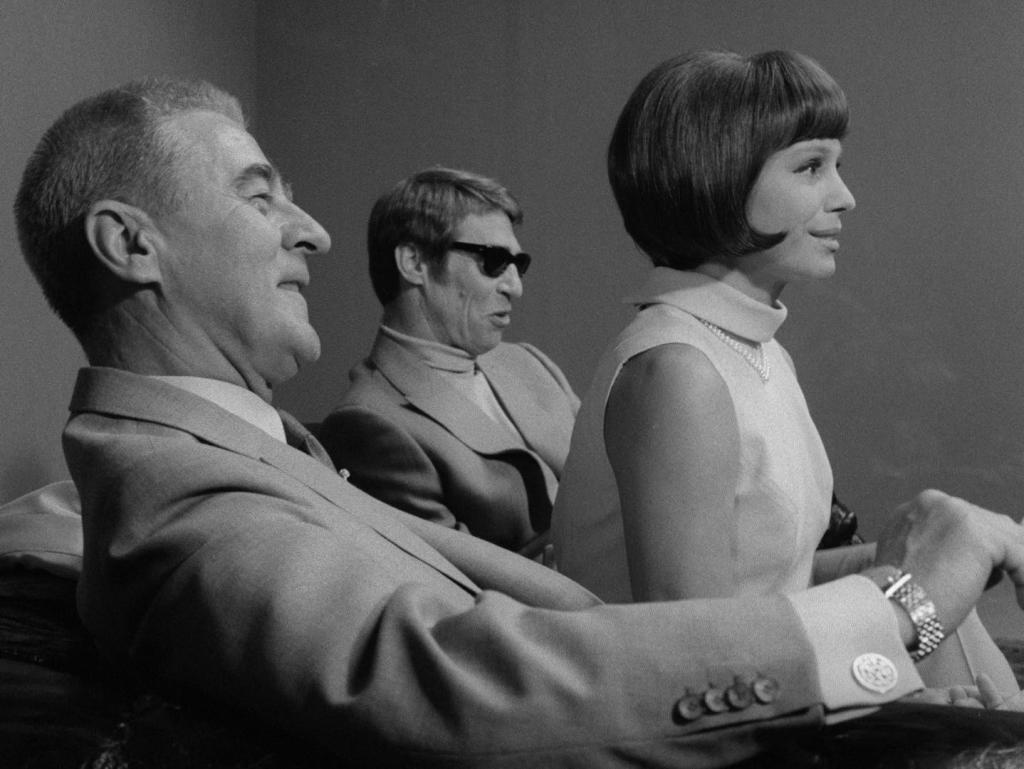
It had to happen sometime. Twenty-four films into Criterion’s big Bergman box set, we’ve arrived at the first film by the director that I would call bad. And I’m not alone in this: Roger Ebert called the 1964 comedy All These Women the worst film Bergman ever made (in his 1978 review of Bergman’s ‘American’ film, The Serpent’s Egg). Now, it might be tempting to say that good old Ingmar, he should’ve stuck to what he knows to do best: brooding psychological drama. But, frankly, that’s rubbish. Bergman was perfectly capable of delivering delightful comedy, and while it is often of the sardonic kind, humour is not infrequent in the director’s work, from the way he pokes fun at male insecurities to the deadpan cheekiness of The Seventh Seal‘s Death. Bergman used humour throughout his films, and the cliché of Bergman as a dour dramatist becomes all the less valid the more you look at his work.

Continue reading

Criterion Corner: The Killing (#575)

While I’ve enjoyed the Stanley Kubrick films I’ve seen, I couldn’t say that I have a clear idea of what makes a Kubrick film. I recognise certain aspects or qualities, certain directorial quirks, but I couldn’t say that I recognise a red thread going from Paths of Glory, Spartacus via Lolita and Dr. Strangelove to 2001: A Space Odyssey, Barry Lyndon and finally Eyes Wide Shut, to name just a few. Every now and then there are scenes that remind me of the other films, such as 2001‘s notorious stargate sequence and Strangelove‘s aerial photography – but tonally, I couldn’t claim I have much of a grasp of who Kubrick is as a director, if he even has a typical tone. If anything, I would say there is a drily, drolly, sometimes even bleakly ironic streak that I’ve found in several of his films – but not in all.

Continue reading

Six Damn Fine Degrees #38: Out of Sight and George Clooney

Welcome to Six Damn Fine Degrees. These instalments will be inspired by the idea of six degrees of separation in the loosest sense. The only rule: it connects – in some way – to the previous instalment. So come join us on our weekly foray into interconnectedness!

Click here for the next link in the chain

The first time I was exposed to Elmore Leonard (I make him sound a bit like a virus, don’t I?) was probably when Get Shorty came out in 1995 and was a big hit. I didn’t see it at the cinema, but I caught it on TV a while later. I have to admit that there’s pretty much nothing I remember about Get Shorty, so the first time I actually registered that this Elmore Leonard cat might be someone to look out for was when I went to see Out of Sight, in 1996, and fell for the film. I fell for the characters, the writing, the direction, the editing, the feel. And, obviously, I fell for Jack Foley (George Clooney), gentleman bank robber, for Marshall Karen Sisco (Jennifer Lopez), and most of all for their car trunk, whirlwind romance.

Continue reading

Introducing the Criterion Corner

Over the last few years, I’ve stopped buying as many DVDs and Blu-rays as I did in previous years. In part, that’s simply for practical reasons: my wife and I live in a flat that, while it’s absolutely fine in terms of space, is close to reaching the Billy Singularity. There are only so many bookshelves, IKEA or not, that I can conceivably put up in this place and stack with films, books and the like. There’s also the fact that we have subscribed to a number of streaming services, but we’re also still subscribed to regular TV, which includes a number of channels that have a pretty good selection of films. Lastly, I’ve come to realise that I had been buying so many films that, while they were well-reviewed and sounded good, ended up being the kind of films that I’d happily watch once – but I would just as happily leave it at that. No need to buy something that I’m fairly certain to begin with I would watch the one time only.

Continue reading

The Corona Diaries: The beginning is the end is the beginning

For a while it looked like we were over the worst. Well, when I say “we”… Let’s put it like this: in many places, numbers were going down, cinemas were opening up, people were wondering if we were returning to something akin to normalcy. I mean, I’ve been back to the Best Little Cinema in the World often since it opened its doors again in May. Work colleagues are going abroad on vacation. Isn’t this what normal looks like?

Remember when Mege posted this photo in his Corona Diaries entry in May 2020?

Or is this just what it looks like when people decide, as the finishing line comes into view, that they’ve had enough, and it’s the last bit that sucks the most, so why don’t we skip it?

Continue reading

Things fall apart: The Father (2020)

I’ll get it out of the way: I’m not actually that much of an Anthony Hopkins fan. He’s certainly great in many of his appearances, and he’s never not watchable, but I often feel that I’m watching a trademarked Anthony Hopkins performance, something that has the purpose of making the material he appears in look better than it really is. There’s no one like Hopkins to make mediocre scripts and outright schlock seem more classy, at least at a first glance, than what they really are – but a bit like that other saint of modern cinema, Meryl Streep, it’s rare that I watch a performance by Anthony Hopkins without being entirely aware that that is what I’m watching.

While I can’t say that Anthony Hopkins is unrecognisable in The Father, I will say that Hopkins the celebrity vanishes into Anthony the character almost entirely. And it is bitterly ironic that the character I’m watching is on the verge of vanishing himself.

Continue reading

The Compleat Ingmar #23: The Devil’s Eye (1960)

Things are not well in hell: the devil has a pain in his eye, and as everyone knows, this can only mean one thing: there’s a young woman on earth who is about to enter marriage as a virgin. What’s a devil to do? Clearly, there’s only one thing: that famous sinner Don Juan must be dispatched post-haste to seduce the young Nordic maid!

Continue reading

The ruling crass: The Great (2020)

At a first glance, the historical (though perhaps don’t take that adjective too literally) comedy-drama The Great looks suspiciously like a TV spinoff of Yorgos Lanthimos’ 2018 The Favourite – which isn’t too surprising, since both were (co-)written by the Australian playwright Tony McNamara. Both Lanthimos’ film and the series are bleak, black farces about incompetent, neurotic rulers, the people at their mercy, and central female characters that attempt to change things by manipulating the people in power. Both are irreverent, blatantly sexual to the point of crudeness, and ruthless, depicting the deadly ridiculousness of hereditary rule, and the corrupting effects of power.

The G

Seeing how there isn’t much that’s even remotely comparable to the works of Yorgos Lanthimos on TV – or anywhere, really, other than in Lanthimos’ films -, it’s definitely unique and not a little thrilling to find something like The Great on TV. However, it doesn’t entirely do The Great a favour to watch it through that particular lens, because while it is undoubtedly entertaining as pitch-black historical comedy, it doesn’t have the same kind of sharp, icy edge that The Favourite has. It is only when looking at what the series does differently that it truly comes into its own.

Continue reading

Six Damn Fine Degrees #32: Tessa Thompson

Welcome to Six Damn Fine Degrees. These instalments will be inspired by the idea of six degrees of separation in the loosest sense. The only rule: it connects – in some way – to the previous instalment. So come join us on our weekly foray into interconnectedness!

Click here for the next link in the chain

In Rocky, Talia Shire does a great job of depicting a character that is painfully shy and seems exceedingly mousey at first, but who reveals depths of emotion and loyalty as the film progresses. She’s a good fit for Sylvester Stallone’s Rocky, also a character who doesn’t fit the bill of archetypical heroic lead at first. Whatever the Rocky franchise turned into, both the movies and their leads started off at a point where they were downright antithetical to what they’d become later – not least in Rocky IV, in which the title character was pretty much the embodiment of Reagan’s America during the late stages of the Cold War. Rocky and Adrian were engaging characters, but as depicted by Stallone and Shire their charisma wasn’t readily apparent.

Fast-forward 39 years, to 2015 and to Creed, a quasi-sequel or spin-off to the original Rocky series. Yes, I can already hear you: did the world of cinema need to continue turning that particular dead horse into a punching bag? That’s pretty much what I thought – and then I saw who was involved: Ryan Coogler, pre-Black Panther but post-Fruitvale Station. Michael B Jordan, who has come so far since he played poor, doomed Wallace in the first season of The Wire.

And then there was Tessa Thompson.

Continue reading