Intoxicology: Another Round (2020)

Imagine the following: you’re a teacher, male, middle-aged. Your adolescent pupils barely notice you, that’s one thing, but worse: so does your wife. When you ask her whether you’ve become boring, she doesn’t give you the reassuring answer you crave – nor the bluntly honest one you fear, which is somehow just as bad. It’s not that your life is bad – you have a well-paid job, a nice house, kids, friends -, it’s just that you suspect you’re not very good at living it, and you haven’t been for a long time.

What do you do?

Continue reading

Six Damn Fine Degrees #27: Fear of a Camp Planet

Welcome to Six Damn Fine Degrees. These instalments will be inspired by the idea of six degrees of separation in the loosest sense. The only rule: it connects – in some way – to the previous instalment. So come join us on our weekly foray into interconnectedness!

Click here for the next link in the chain

Camp, adj. - Ostentatiously and extravagantly effeminate (typically used of a man or his manner); ... deliberately exaggerated and theatrical in style. (Definitions from Oxford Languages)

For the longest time, I would shy away from a lot of media that I associated with camp. From what little I could see, I thought it was tacky, in poor taste and attention-grabbing: “Look at me! I’m in your face! I’m different – and I’m unafraid to be different!”

I’m still not automatically a fan of things that I consider ostentatious and in-your-face, and I guess there is a lot of camp that leaves me non-plussed. But that’s true for a lot of art – and it’s not necessarily a bad thing. If I’m entirely honest: looking back, I wonder how much of my negative reaction to it was that, as little as I like to acknowledge it, young Matt was a teensy bit of a homophobe.

Continue reading

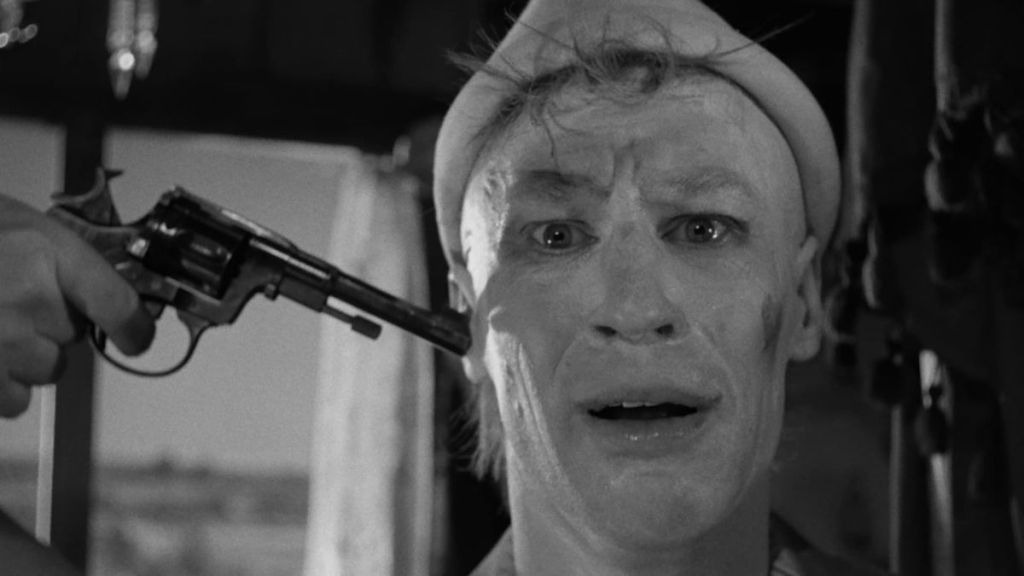
The Compleat Ingmar #22: The Seventh Seal (1957)

It’s been a while since we last visited with the Swedish master of existential crisis, but we’re returning with what is probably his most famous, most iconic work. Mention Bergman’s name, and what do people think of? Max von Sydow on a desolate beach playing chess with Death, probably.

Continue reading

The Corona Diaries: Hello darkness, my old friend

Here we are, Sunset and Camden: yesterday, for the first time in almost half a year, I sat in a movie theatre, watched the lights go down, the curtain open, and the film begin. Gene Kelly, Debbie Reynolds and Donald O’Connor, all wearing yellow raincoats, begin to sing that iconic song. Sitting in the satiny dark of the cinema felt like coming home – but, like so many homecomings, there’s a note of ambivalence.

Continue reading

Poltercast: The Battersea Poltergeist (2021)

Ghost stories are a genre well suited to the audio format: they are, after all, about things going bump in the night. Fear is often generated more by what we imagine, how we fill in the blanks, more so than what we see with our own eyes. As such, BBC Radio’s The Battersea Poltergeist is a good fit for radio – and podcast, which is the format in which I listened to the series. Who wouldn’t want to hear all about ghostly goings-on while preparing dinner?

Continue reading

Six Damn Fine Degrees #23: The Guardian

Welcome to Six Damn Fine Degrees. These instalments will be inspired by the idea of six degrees of separation in the loosest sense. The only rule: it connects – in some way – to the previous instalment. So come join us on our weekly foray into interconnectedness!

Click here for the next link in the chain

Okay, to get this out of the way first: no, this entry in our weekly Six Damn Fine Degrees feature is not about the centre-left British newspaper famous for its idiosyncratic spelling abilities. Instead, it is about the main antagonist of several instalments of the classic series of computer role-playing games Ultima, a transdimensional being of immense power bent on conquest, a villain to match the likes of Marvel’s Thanos, DC’s Darkseid or the First Evil from Buffy the Vampire Slayer.

Or, as some fans of the Ultima series like to call him, the big red muppet.

This was the face that emerged from my screen when I started to play Ultima VII.
Continue reading

The Corona Diaries: Raptured away

We’ve had this before: video games can be many things, but one thing they are particularly good at is escapism. A video game can be extremely effective at taking you out of your current situation, when you need something of a getaway.

So, after replaying Journey and finding it an exceedingly solitary experience of quite limited escapist value during these pandemic times, what do I do? I go and replay Everybody’s Gone to the Rapture (2015), in which the player walks a Shropshire village that is deserted – but everywhere there are traces of the people who are gone after a mysterious epidemic has struck. Oh, and the world has ended.

D’oh!, as the kids say.

Continue reading

Tell me who you are, so I can tell you who you are: Alias Grace and Ex Machina

Over the last couple of weeks, we watched the 2017 Netflix series Alias Grace. It is a smart, stylish adaptation of Margaret Atwood’s novel, with strong writing by Sarah Polley and direction by Mary Harron (of American Psycho fame), and the acting is impeccable, especially when it comes to Sarah Gadon as the Irish maid Grace Marks who may or may not have helped murder her employer and his housekeeper. The series handles tone and genre well, navigating between historical drama, dry black comedy, true crime, gothic horror and deft commentary on gender, class truth and fiction.

And about halfway through the final episode I thought that Alias Grace isn’t all that different from that film with the robot.

Continue reading

A Journey through Worlds of Wonders: Three Films by Karel Zeman

At the very least since I first watched Star Wars recorded off ITV onto a Betamax video tape, I’ve had a keen interest in special effects, and in films that use special effects to create unique and different worlds and beings. In this respect, though, the last twenty years or so have been something of a disillusionment: while CGI visual effects have become more and more realistic and indistinguishable from reality, they only rarely recapture one of the things I enjoyed most as a kid. See, the kind of special effects I’ve enjoyed most were never about verisimilitude, at least not first and foremost. A fantastic world is made believable and engaging by the imagination going into it more than by the number of pixels and shaders. And sure, I prefer a well-made green screen effect providing the illusion that those kids on broomsticks can really fly to a bad green screen effect aiming for the same thing and failing, but the special effects that stick most in my mind are the ones that transport me to a different, more interesting world – and that can be achieved by miniature spaceships suspended on threads you can make out if you look closely.

Continue reading

Six Damn Fine Degrees #18: Toby Jones

Welcome to Six Damn Fine Degrees. These instalments will be inspired by the idea of six degrees of separation in the loosest sense. The only rule: it connects – in some way – to the previous instalment. So come join us on our weekly foray into interconnectedness.

Click here for the next link in the chain

You know how sometimes there are these strange cases of cinema serendipity, where within a year you’d get not just one but two big films about, say, asteroids heading for Earth and teams of astronauts sent on a mission to destroy them. Or CGI comedies about ants. Or biopics about legendary Scottish freedom fighters.

Perhaps the strangest of those pairs of ‘twin films’, as the phenomenon is called on Wikipedia, is the 2005 film Capote and 2006’s Infamous, both of which told the story of Truman Capote’s writing of his 1966 book In Cold Blood. Capote received wide acclaim and won its lead actor Philip Seymour Hoffman an Academy Award. Infamous, though, was barely noticed – beyond the comparisons to the film released earlier. And this extended to the actor who played Infamous‘ version of Truman Capote: Toby Jones.

The Two Capotes
Continue reading