Inception. One of the coolest, smartest action flicks this side of The Dark Knight. A fun, brainy conundrum for those who prefer a bit of smarts in their big-budget entertainment.
And the source of some truly weird YouTubes.
Remember a year ago, when I posted about Psychonauts, a computer game that’s the bastard offspring of Tim Burton (when he was still good) and Terry Gilliam, where you explore psyches made real, tangible and pretty frickin’ weird locations? Well, this mash-up is beautifully executed and works disturbingly well:
Want to see (or rather hear) something weirder, though?
Reminds me of watching The Wire with my girlfriend and the two of us intoning the ending music. Good times.
P.S.: Next entry’s going to be more of a proper blog entry, with more than one sentence before there’s a picture or a YouTube video. Promise!
Alice in Wonderland (and its sort-of-sequel, Through the Looking Glass) is an odd book, and my memory of it is just as odd. I can remember liking it, but when I try to remember the book, what comes to mind is John Tenniel’s illustrations, images from the Disney movie, scenes from Jan Svankmajer’s surrealist dream/nightmare – or, more recently, American McGee’s Alice with its twisted, dark Wonderland and music by Chris Vrenna.
Anything, but not the actual Alice in Wonderland. The original has become a sort of collection of memes: the Mad Hatter, the Cheshire Cat, the Jabberwocky. It’s a hypotext whose influence throughout literature, cinema, comic books, video games etc. is strong, but Alice itself has become distorted and murky behind all the copies, pastiches and parodies.
Tim Burton’s most recent film is called Alice in Wonderland, but it’s less of a direct adaptation than a hodgepodge of half-digested ideas and images from over 100 years of Aliceology. Like most of Burton’s films, it looks gorgeous, but like too many of his recent movies it feels like warmed-over Burton, down to the Danny Elfman score. The visuals are admittedly cool (and I have to admit that I watched the film on a BA transatlantic flight – small, fuzzy screens aren’t the best way to appreciate a Tim Burton film), with some fantastic character design, but the plot is predictable, the dialogues leaden and most of the acting vanishes behind the CGI. It’s as if Burton was given a beautifully surreal world but basically decided to tell Generic Fantasy Story X in this world. Despotic ruler, check. Chosen one, check. Needs to discover her powers and believe in herself, check. Special blade, check.
It’s a shame that such a creative, talented cast and crew could have come up with something that combines Lewis Carroll’s original story and Tim Burton’s sensitivities in weird and wonderful ways – but Burton’s sensitivities at this point seem to be a pale shadow of his earlier creativity. Worst of all, the man seems to have gotten old the way that Steven Spielberg has gotten old, meaning that in creating something that should burst with childlike energy and wonder, he’s come up with something that feels like a director in a midlife-crisis trying to pander to what he thinks is youthful and energetic. The worst example of this is the dreadful dance the Mad Hatter does towards the end of the film: even Johnny Depp with his considerable talent and charm can’t make it into anything other than an awkward attempt by the film to be ‘cool’ and contemporary.
Anyway, enough about Alice in Wonderland. I may get back to my 12 hours of blurry free films at a later date, but for now I want to leave you with this strange, strange video telling the Complete History of the Soviet Union through the lens of Tetris:
There are some games that, while I’m playing them, change the way I look at the world around me. I remember times spent playing real-time strategy where in my mind’s eye I’d draw selection boxes around the people I’d see, or around a herd of sheep, and I’d plan out strategies of where to send these people to do my bidding. (I was young and silly at the time.) Or, when I was a teenager and had to bike to school, I’d see everything through the lens of the X-Wing and TIE Fighter games, zooming down the deathstar trench and evading incoming laser fire. Yes, I was and still am a geek.
One of the games I’ve been playing a lot of lately, Assassin’s Creed II, has definitely taken hold of my visual cortex – not least because of where I live. Check out these videos from the first and second Assassin’s Creed games, taking place in medieval Acre and Renaissance Venice respectively:
Living in Bern, I can’t help looking at the 17th and 18th century architecture and thinking, “Hmm… If I jumped up there and grabbed that ledge, then pulled myself up there and did a leap over to the other side… and the spire at the top should give me a great vantage point from which to plan my next assassination.” (Note: by ‘assassination’, I mean ‘shopping spree’. Or ‘cuddly kitten’. Or something else that’s inoffensive and doesn’t make me sound like a psycho.) Frankly, though, I think there’s only a slim chance that Assassin’s Creed III will feature the best of Swiss sandstone architecture – although Swiss banking would fit in nicely with Assassin’s Creed‘s conspiracy storyline.
More importantly than my geek musings, though, I’ve got an announcement to make that’s been a long time coming: a friend of mine will be posting book reviews on Eagles on Pogo Sticks. I asked him ages ago but then never got my act together. No more excuses, though – please give my friend a round of applause as he gets ready to introduce himself.
In storytelling terms, Prince of Persia: The Sands of Time – the game, not the film of the same name – is quite possibly the most elegant game I’ve had the pleasure to play. It’s not deep, it’s neither Ulysses nor Shakespearean tragedy nor Moby Dick, but within the medium it tells a story, tells it well and does certain things that would be difficult to pull off as nicely in any other medium. Differently from the film, it also knows throughout that it’s basically a tale from the Arabian Nights. It doesn’t try to complicate things. It’s straightforward, and in that straightforwardness it finds a grace the film can only dream of.
There’s something ironic in Prince of Persia: The Sands of Time – the film this time – being more video game-like than the game that spawned it. It features a dagger with a big red button (okay, it’s a ruby, but it’s basically a button on a sharp, pointy gamepad) without even a sense of self-awareness. It does the whole slow-motion thing just to look cool. It has big-name actors called in to do very little of interest, but in grandiose RP accents.
What it mainly has, though, is a director who doesn’t know how to direct action in an interesting way, who doesn’t even seem to be interested in action scenes – which is fine, if you’re directing, say, Donnie Brasco (which I still like a lot), but I already thought that Mike Newell was the wrong man for Harry Potter and the Goblet of Fire. Funnily enough, that film felt like a video game to me: in this level, you need to retrieve the golden egg, in that level you must free your friends from the mermaids’ realm, and in the final level you must navigate the hedge maze and face the boss enemy. (Thing is, levels are okay in games, but in movies they make for clumsy, mechanical structure.)
There are many action setpieces in Prince of Persia: The Subtitle of Subtitles – but they’re largely handled in a clumsy way that breaks the flow when that is the last thing you want to do. Have a main character whose talent is for parkour? Don’t film and edit the scenes in a way that makes it hard to believe the guy is actually doing all those tricks. Tighly controlled continuity is key in such scenes (Casino Royale did this pretty well in its Madagascar sequence), but Newell insists of cutting after an acrobatic movement’s already begun and/or before it finishes, so what we get is disjointed staccato scenes that have as much flow as mud.
What is just as sad: the film aims for charming banter between its two main leads, but much of the time I found myself thinking, “The game had better banter.” Disregarding the plot differences between film and game (and there are many), if a computer game has banter that is better written than that of its big screen adaptation, you need to get a better script. I wouldn’t go so far as to say that Prince of Persia: The Thingamy of Doodah featured horrible writing – it was serviceable for most of the time, but it was oh so plodding. It was clunky. And whoever okayed Ben Kingsley’s lines and then decided to give him the direction, “Act as if you want the audience to find out you’re actually the villain five seconds into the movie”… Well, as I said: I don’t think that Mike Newell was the right man for the job. He wasn’t even the right man for the non-action scenes. And I’m starting to think that Donnie Brasco was a fugazi. Fuggedaboutit.
P.S.: One of my favourite parts of the game – the story is told in retrospect, by the Prince who has already lived through the adventure and is trying to convince the Princess of his tale. (Great reverse Sheherazade move, that one.) When his tale comes to the point where he falls to his death, is impaled by spikes or cut in half by a spinning blade (due to player carelessness), he stops himself and goes, “No, that’s not right. I didn’t die. Let me retell this part.” He basically retells those bits until he gets the storytelling (and the player the moves) right. Lovely touch of meta.
Nothing big to add here – I’m still working on a blog entry on Mike Leigh’s Happy-Go-Lucky in my mind (these things take time, and it’s not as if the film’s already years old), but since I’ve posted the odd entry on Ebert’s big “Video games cannot be art” shtik, I wanted to post this link: The Observer has two gamers and their regular film critic Philip French give Rockstar’s Red Dead Redemption a whirl. French is obviously not a gamer, but he knows his films, and it’s good to read a critic who’s at least willing to take the artistic potential of games seriously. He doesn’t use the A word, but that’s fine – any discussion of art that circles around what art is tends to vanish up its own backside anyway.
And now for some heavy-duty shilling of the game, because it does look quite good – western fans take note, and don’t be put off by the sucky stills below:
What is it about pixels that makes Original Gamers like me all gooey and nostalgic? Show us mid-90s polygons and we’ll go, “Ugly! Get it outta my sight!” Show us one of the original Space Invaders, or Inky, Blinky, Pinky or Clyde, and we get teary-eyed as if we’d just seen the first glimpse of our PC after having been held hostage by computer-hating luddites for six months. Mix it with those bleepy sounds of yesteryear (or, more accurately, yestercentury), and we’re back in the past, back at school where we consider ourselves much cooler than the Chess Club set but are just as incapable of getting a date… but at least we’ve got a firm grip on our joysticks, haven’t we?
There’s an entire branch of computer-based painting called Pixel Art (and if anyone goes Ebert on the term, I’ll make sure that they wake up gnawed at by an army of rabid hamsters) that is all about using the limitations of pixels to nostalgic effect. Pixel art isn’t necessarily as rough and basic as the original Donkey Kong – higher resolutions mean more pixels – but it tends to have a similar style as those Where’s Waldo? books. Check out this Pixel Art London (click on the pic for the full effect):
What is it about pixels that has that effect, at least on those of us who’ve been playing games since the heady days of the C-64, NES or Spectrum ZX? Is it the Lego-combined-with-OCD look? Is it a hankering for simpler, better times when we didn’t need to upgrade our computers every year to make games run well, when we didn’t need to download half-a-gig patches just to make the games work that we’ve just bought? What makes a good instance of pixel art much more charming than 90% of current-gen polygons (other than the fact that all too many current games cater to frat-boy, jock-straps-and-boobies tastes that never did much for me)?
I don’t know, but I want to leave you with this video – one month later than the rest of the internet, mind you:
Warning: if you’re not interested in my video game musings, you may want to skip to the end of this post. And now on with the regular programme…
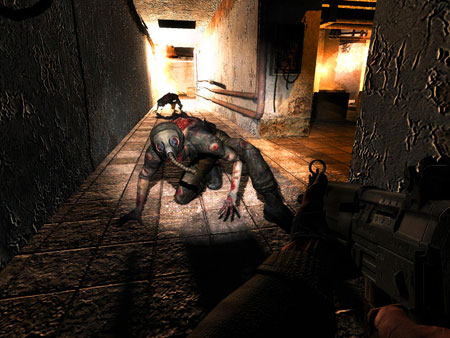
Who doesn’t like a good post-apocalypse? There’s something about nuclear wastelands peopled with desperate survivors and mutated wildlife that brings a radioactive glow to the most hardened geek’s heart. And The Day After has been a topic dear to computer gamers ever since the heady old days of Wasteland, and it’s produced one of the most memorable games of the last five years.
In the ’90s, two spiritual successors of Wasteland, the original (and highly pixellated) post-apocalyptic CRPG (computer role-playing games, for those of you who aren’t fluent in nerd), came out, called Fallout and (somewhat uninventively) Fallout 2. They were ugly beasts at first, with a forbidding user interface and graphics the colour and consistency of irradiated cow dung. However, they were crafted with a wicked sense of humour and created an atmospheric world that was basically the mutant offspring of ’50s sci-fi, the “Duck and Cover” lies of the early Cold War and Mad Max, with Robbie-the-Robots and cathode ray computers sitting side by side with two-headed cattle, wasteland scavengers and slavers. And Fallout 2 had one of my favourite ever ironic uses of music – Louis Armstrong’s A Kiss to Build a Dream On.
Fallout also introduced one of video gaming’s most iconic phrases, delivered by none other than “Stupido Salavtore”, Hellboy, Beast: Ron Perlman himself. If I think of the world after the nuclear bombs have fallen, what comes to my mind isn’t a very young Mel Gibson pulling a Rorschach on the men who killed his wife, or even a touchingly naive elderly couple drawn by Raymond Briggs. No, what comes to my mind is this: War. War never changes. (Do it in a Ron Perlman voice and it suddenly changes from a trite phrase to- Well, listen for yourselves.)
So what’s brought on this attack of love for Fallout? It’s this: I’ve recently started playing Fallout 3, a monster of a computer game. I’m probably a dozen hours into the game and I’ve barely scratched the parched surface of the wasteland. I’ve already disarmed an unexploded nuke in the charming scrapmetal town of Megaton, I’ve ended a plague of firebreathing ants, I’ve faced mutants and feral dogs and giant scorpions. And I’ve lost my dad, as voiced by Liam Neeson, which makes me think that I must be some nucular Leo DiCaprio scouring the irradiated desert in search of a post-apocalyptic Bill the Butcher. It’s weird, but I haven’t enjoyed myself this much in a game in a long time. (Oh, and if you want an explanation of the title of this post, this video should help.)
Ahem. If you skipped all the rest of this post because you’re not interested in video games, I hope that you’re at least a fan of Rube Goldberg machines. If not, I’m afraid I haven’t got the slightest clue why you’d be reading this blog… Anyway, here’s the video of OK Go’s “This Too Shall Pass” – enjoy!
In case anyone’s interested, Rock Paper Shotgun has a “Wot I Think” on Prince of Persia. They say much of what I think about the game, putting it much more succinctly. I guess that’s why they are professional games journalists who get paid for this sort of thing, and I’m a lowly fan with a big mouth.
Also, after seven games and two reboots, the Prince of Persia series gets a movie version, which will make any film afficionado rejoice. Or regurgitate. It’s one of the two. In any case, it’s got proper actors and even a director who’s made good films – which is more than most video game movies can say for themselves. It even features good ol’ Satipo:
Could this be an actual video game movie that is worth the admission? Or will we be wishing afterwards that we could use the Sands of Time to rewind the previous two hours?
What makes a video game enjoyable? It’s obviously different things for different gamers: some like non-stop action, while others prefer games to be slower, more cerebral experiences. Some are graphics fetishists, while others say that gameplay complexity trumps visuals every time. Myself, I like a good narrative in a game, but I also want the gameplay and storytelling to be intertwined.
In the end, however, what it boils down to for most people, and in the most circular fashion at that, is that most people want games to be fun. They want to be taken out of their everyday lives for a while. Obviously that’s one of the reasons why so-called ‘casual games’ have been a major success in the last few years. Whether it’s Peggle or Plants vs. Zombies, or indeed one of the gazillion variations on the theme of Mah Jong, they’re all making money compared to what they cost that make most ‘non-casual’ games cry into their DVD boxes.
Now, old-school gamers like myself, who remember the times when a pixel was bigger than your head and the height of gaming was yellow pill addicts running through mazes and frogs crossing the street… Many of those gamers have nothing but disdain for casual games. Why? Because they’re easy. There’s little to no challenge in Puzzle Quest, they claim, so even your grandmother can play them and succeed. The most embarrassing examples of such old-school gamers will then go on a rant about the evils of instant gratification and those horrible people who feel entitled to winning a game every now and then without serious training.
Myself, I like a challenge every now and then – but to be honest, next to working 100% and having a relationship, I definitely see the appeal of games that are not punishingly hard. I see the fun in games that you can pick up, play for 15 minutes and drop again feeling that you’ve had a good time and cleared your mind.
However, there is such a thing as a game being too easy. I’m currently playing Prince of Persia, a reboot of a reboot of a classic gaming series back from the days when computers were big as houses and joysticks had one button. It’s a beautifully crafted game: it looks and sounds gorgeous, and it tells a nice story to boot. But, honestly: if I wanted a game that practically plays itself, I’d watch a DVD.
It’s a real shame, because the game could easily have been as much fun or more while still providing a bit of a challenge. As it is, you never feel like you’re controlling your character – and for me, that’s one of the big things when it comes to good games. If it’s there, you never think about it, but the moment that control is taken from you, you can’t help noticing. In previous incarnations of the Prince of Persia series, your character performed the most amazing free-running acrobatics, but the controls were tight enough to make you feel that you were the one making the Prince run along walls, parkouring his way through Arabian Nights-inspired worlds. In this game, however, it’s enough to run roughly in the right direction and press a button at roughly the right time, and hey presto! you’re running along walls as if gravity was completely optional.
Without a bit of a challenge, without the feeling that you’re actually controlling your character, the gameplay actually becomes a bit of an annoyance much of the time. It’s like watching a film on DVD (or Blu-ray, of course!), and every time you get to a new scene you have to play Tic Tac Toe against an idiot. You’re sure to win, but it breaks the flow of the game. At what point does a game become so easy that it might as well consist of one button: “Press X to watch the next cutscene?”
But yeah… the game is oh so pretty. Behold (and if you’re a fan of the final episode of Six Feet Under, you may want to brace yourself for a tune you know very well – once you’ve accepted this as something other than utter blasphemy, it actually works quite well):