A tale of two movies

I like films that are cinematic, that show me images I wouldn’t see otherwise. I like directors who are audacious about their use of the camera and of editing. I like my movies not to look like TV fare. (I don’t like my TV fare to look like TV fare, for that matter.)

In spite of this, I very much like John Sayles’ movies. None of the ones I’ve seen so far are visually spectacular, although they’re definitely not drab. It’s more that Sayles clearly isn’t interested in David Lean-type filmmaking. As a matter of fact, his films don’t look like he’s trying to impress their audience. They seem, at first, unassuming little movies.

But, once you get into them, they pack a surprising punch. Much of this is down to the fact that they’re immensely political films, something not seen very often in American filmmaking. Certainly politics is often used as a backdrop for movies – how many thrillers or action movies get a kick out of putting the president in jeopardy? – but they’re not interested in politics, not really.
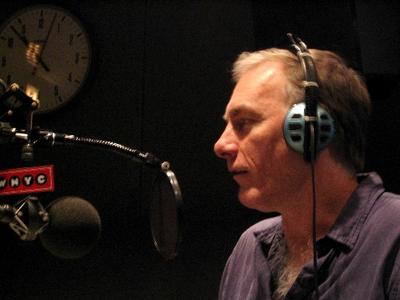
John Sayles

John Sayles’ films are, but they’re not of the finger-wagging, lecturing type. Clearly they’re mostly left-leaning in their politics – almost all of them are concerned with small communities being fundamentally changed by big business – but more than that, they don’t tell you what to think. They provide you with Sayles’ interpretation of facts, but you’re still the one who has to make up his or her mind.

Limbo, which we watched on Sunday, is a strange film. It starts very much like Sunshine State or Lone Star, depicting a small community undergoing changes, focusing on a small ensemble of characters… but about halfway into the movie, it turns into something else. There is a thriller element, just as there was to Lone Star, but what the second half of Limbo reminded me of more than anything else was Into the Wild (also see Roger Ebert’s comment on the movie). Sayles, whose focus on ensemble casts usually is almost as strong as Altman’s was, zooms in on the fate of three individuals in an exceptional situation. Yes, it ties in with earlier lines in the film about how Alaska is about to be turned into a themepark and how people want the illusion of danger – they want to feel at risk without actually being at risk -, turning these lines on their head, but in effect it feels like Sayles started making one film and decided half-way through that he’d rather make a very different film.

The net effect is strange but compelling. Ten minutes into the film, I thought I knew what to expect; one hour into the film I no longer knew where Sayles would take me, which was exciting and quite frightening. Anything, literally anything, could happen to these characters.

Limbo

And then came the ending. Absolutely fitting. And it felt like a punch in the stomach. Not because it was horrible or tragic or nasty. Because it was consistent to what had been set up. But, again, not the kind of thing you do if you want to impress or please your audience. I read that there’d been catcalls when the film was shown at festivals, and I understand why. But, the more I think about it, the more I feel that the “lady-or-the-tiger” ending was the only proper way to end the film.

But if I ever meet John Sayles, I’ll kick him in the shin.


P.S.: John Sayles is one of the consistently best writers for women, especially for middle-aged women, in American filmmaking. He should write for the stage…
Before the devil knows you’re dead

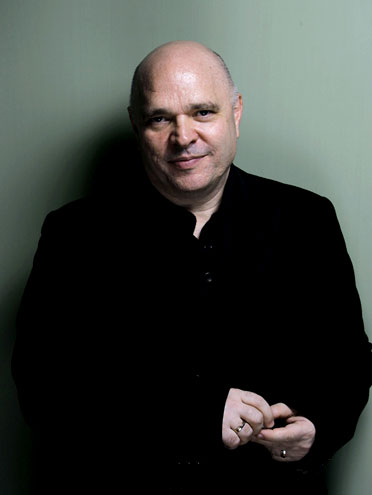
Anthony Minghella

I was planning to write an entry today on John Sayles’ Limbo, but that has to wait until tomorrow or the day after. Since my browser start page is BBC news, I’ve just read that Anthony Minghella has died. I’ve written about his films before (e.g. here and here); I liked many of the films I’d seen that he’d directed, and those I didn’t like I still appreciated. He knew how to work with actors that I didn’t particularly like (such as Gwyneth Paltrow or Robin Wright Penn). And he directed the film that convinced me that Alan Rickman wasn’t Evil(tm):

A Life in Pictures: Anthony Minghella. Rest in peace.

A hellish slice of throat for the gentleman?

It’s been a while since I really liked a Tim Burton movie. Sleepy Hollow looked great, but I felt that the romantic subplot between Johnny Depp and Christina Ricci was tacked on, and largely as a result the film felt mean-spirited to me. Mars Attacks! was half an hour of great over-the-top black comedy padded to an indecent extent with boring SFX bits and cameos. Planet of the Apes was, well, Planet of the Apes. Big Fish annoyed me more than most movies I’ve seen in the past few years; it was aggressively sentimental and the old guy simply angered me with his chronic need to be the centre of attention. (If I’d been the Billy Crudup character, I would have suffocated Daddy Dearest with a pillow ten minutes into the movie.) Corpse Bride was okay and nicely done, but it was no Nightmare before Christmas – the characters were flatter, the music less memorable, and the bits that were best felt like rehashed bits of Halloween Town.

 As I wrote recently, I enjoyed Charlie and the Chocolate Factory quite a bit, but it’s not the sort of film that I’d need to see more than once. All in all, I wasn’t sure what to expect of Sweeney Todd, since I’d heard mixed things. I’m not the greatest fan of musicals (even though I keep finding myself wanting to rewatch “Once More, With Feelings”), and I wasn’t sure whether anything new or interesting would come out of Tim Burton working with Johnny Depp and Helena Bonham Carter yet again.

They’re my friends…!

We sat in the very front row at the cinema, since all the other seats were already taken. Not the best starting point for an enjoyable evening at the cinema (and I’d rather not tell you about the Mexican restaurant beforehand… I may very well have woken tonight, screaming the lyrics of that horrible Latin-y Happy Birthday song they played at top volume).

I think I was riveted about two minutes into the film. Like Sleepy Hollow, the atmosphere was great – the film was one of those that you should be able to frame and hang on the wall. But unlike that throat-wounding movie, this one had better writing and, accordingly, better, more believable characters. While the film was visibly artificial, it didn’t feel fake like many of Burton’s worlds tend to do. And the emotions on the screen felt more… well, more grown up, for want of a better term. There’s something very child-like (sometimes indeed childish) to many of Burton’s works, and in the case of Edward Scissorhands and Ed Wood it works quite well, but it was getting tired and stale. By comparison, this film felt like Jacobean revenge tragedy – bloody, passionate, alive and raw.

P.S.: It’s a shame that Anthony Head (yes, I squeaked “It’s Giles!” at the cinema) didn’t get to do more on screen. Apparently he recorded some songs, but they didn’t make it into the final version of the film.

P.P.S.: For the first time, in this movie I saw why some people think Neil Gaiman and Alan Rickman look alike. When the latter doesn’t do his patented “Where are ze fucking detonators?” sneer, he does look and even sound a bit like Mr. Sandman.

I’ve drunk beers you people wouldn’t believe

Every now and then YouTube disappoints me. Today is one of those days. I was looking for a Guinness ad – one of my favourite TV adverts ever – that makes great use of that song from South Pacific, “I’m gonna wash that man right out of my hair”, a feminist quip and surreal imagery. There’s fish in there – Dave McKean would’ve liked it.

Why did I want to blog on a Guinness ad anyway? I’ve been re-watching the final cut of Bladerunner, this time with the commentary track. (Ridley Scott commentaries are sometimes interesting but often frustrating; the guy is a great craftsman, but he doesn’t really have much to say that is very interesting, intelligent or enlightening, and he comes across as somewhat arrogant. And the Thelma & Louise commentary is one of the worst I’ve ever forced myself to sit through.) Watching ’80s Rutger Hauer on screen, quite logically I thought of the Guinness ads he did a few years later (ah, the glorious days of Sky Channel), and from that I moved on to a Rutger-less, more fishy ad.

However, since I didn’t find that one, here’s one of the Hauerian adverts – short and sweet, at a point where the pretentiousness had already turned to irony. Enjoy! (And tomorrow I might post something on Buffy or on a comic series I liked rather more than Preacher.)

Suffer the little children

I missed Monster’s Ball when it was on at the cinema, and I never really went out of my way to see it on TV. There’s no particular reason for this – except, perhaps, that there seemed to be more talk about the fairly explicit sex scene between Halle Berry and Billy Bob Thornton than about anything else. Okay, a good sex scene can make a film better (Don’t Look Now, I’m ogling you!), but there’d better be something beyond copulatory goodness.

Marc Forster, the director of Monster’s Ball, is one of the few Swiss people who’ve made it big in Hollywood – so big in fact that he’s now doing the new James Bond movie. He seems to be comfortable in many different genres and he gets in the good actors.

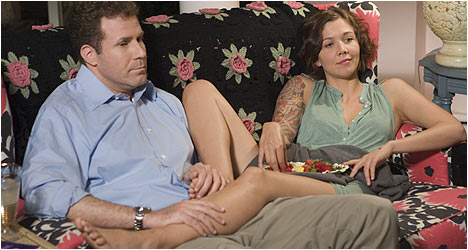
Stranger than Fiction

And yet. I wasn’t too keen on Stranger than Fiction, a film that desperately wanted to be more clever than it really was. True, Will Ferrell put in a fairly poignant performance, and I always enjoy watching Maggie Gyllenhaal, but all in all the movie felt like Charlie Kaufman Light, turning its metafictional veneer to the service of an essentially trite Carpe Diem story. And what was worse (at least for me): the book that the critically acclaimed author played by Emma Thompson was writing was drivel of the worst sort. It wasn’t even a parody of literary fiction – it was the sort of thing that a decidedly mediocre first-term creative writing student might cobble together, feeling awfully proud of himself.

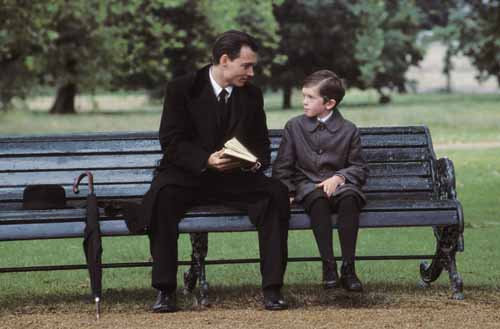
Last week we watched Finding Neverland. Again, Forster’s assembled a lovely cast of actors: Johnny Depp, Kate Winslet, Julie Christie, Dustin Hoffman. The film is well crafted, obviously. But the story and dialogues render their work disappointingly toothless. Most of the performances are adequate, but let’s face it: it doesn’t take much to get an adequate performance from these actors. It’s more difficult to get a bad performance from them. But what can they do, when their characters can all be summarised in two sentences without being reductive?

Finding Neverland

There are small joys in both films. Dustin Hoffman is understated but great fun, both as the theatre impressario and as Stranger than Fiction’s literary critic. (I just wish he’d say what is so blatantly obvious – that the book Will Ferrell’s character is in is badly written rubbish.) And Freddy Highmore (who went on to play with Johnny Depp yet again in Charlie and the Chocolate Factory) is great. Not only is his acting subtle and moving, his character is probably the only one in the film who is ambivalent, who has depth, who doesn’t fit comfortably into a well-worn cliché.

Talking of children: perhaps the strangest, sweetest sight in any Deadwood episode is that of the school children lined up behind Joanie Stubbs and Calamity Jane holding hands, walking down the thoroughfare to their new school. For a few moments, the scheming and bloodshed comes to a complete halt as the inhabitants of Deadwood come out to watch the children. I have a feeling, though, that “Amateur Night” will be the last episode of the season (and, sadly, series) that will allow for such peace and quiet. Something is going to happen, and it’s going to happen sooner rather than later. I’ve rarely seen a series that managed as well to ratch up the tension. Somehow I have the distinct impression that the title of a recent P.T. Anderson film will describe the last three episodes of the series quite accurately.

And no, I don’t mean Punch Drunk Love.

You can’t take a picture of this – it’s already gone

For all of those who thought that after weeks and months of me going on about Six Feet Under you were finally rid of wafflings about the Fisher family, I’m afraid you were popping the champagne corks too early.

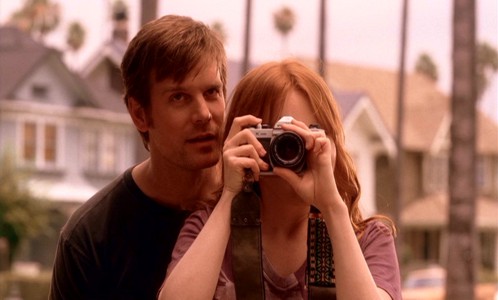
So, what brings on this bout of raising the dead? Frankly, I’m not quite sure. I’ve been in a strange mood all day, and the last few minutes of “Everyone Waits”, the final episode of Six Feet Under, kept coming to my mind. Mostly in fragments: a bit of Late Nate Jr. singing “I Just Wanna Celebrate (Another Day of Life)” against a blinding white background, a bit of Sia’s “Breathe Me”. But mostly one short scene: as Claire says farewell to her family, she takes out her camera to take a picture. As she looks at them through the viewfinder, Nate stands behind her, telling her “You can’t take a picture of this; it’s already gone.”

You can’t take a picture of this - it’s already gone.

And it’s this line that’s been running around in my head. Taken out of context – by which I mean the whole scene, the episode and indeed the entire series – it’s nothingy. It even seems trite at first, like a slightly reformulated Seize the Day-type motto. But there’s more to it. The context adds layers. Is it about Claire’s constant attempts, as an artist, to capture something; call it the truth, the spirit of the moment, or just pretentious twaddle? Is he telling her not to hold on to moments, because those moments become the past immediately, and while you’re busy trying to hold on to it, you miss out on life? Is he telling her that life is fleeting? We all could drop dead from a brain aneurysm, be shot, die in a car accident, or have our heads crushed by blue ice falling from a plane passing overhead?

Probably there’s something of all of these in Nate’s cryptic sentence, but what kept coming back to me isn’t just what he says or how he says it. It’s the fact that Claire, after Nate has said his bit, takes the photo anyway.

What is it about this moment that keeps coming back to me? On the one hand it’s the sentence itself, and if I try to reformulate what it means to me, it just becomes trite. On the other hand, it’s Claire’s defiance: yes, the moment is fleeting, yes, tomorrow we shall die, yes, sooner or later we will lose everything we have to time (there I go, getting all trite, even though I said I wouldn’t…) – but she takes the photo anyway. Against hope, against reality, against her better knowledge, she tries to hold on to the moment. A lesser series would have had her take the photo, and only then Nate tells her that what she just did was futile. So much of Six Feet Under was about defying that futility – to hold on to what we have already lost, and to honour it in everything we do in the present. It’s already gone – and personally I dread the moment we accept that and move on without looking back. I hope with all my heart to know fully well that I can’t hold on to the present moment, and nevertheless to do so.

P.S.: Next time, more HBO – and Peter Pan, by way of overrated Swiss directors. At least that’s what I’ve got planned. Yes, I actually plan these things in advance. Sad, isn’t it?

Let’s face the oil well and dance…

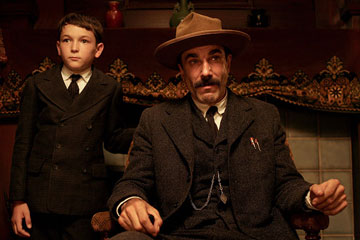
There’s something weird going on in P.T. Anderson’s There Will Be Blood. Okay, there are many weird things going on – the film is quite confounding on the whole, as it doesn’t present its story the way you’d expect it – but when you watch the beginning of the film, a long sequence without any dialogue, you feel some strange sort of double vision. At least you do if you’re a film nerd like me, that is.

On the one hand, you’re watching a solitary prospector mine for silver in a desolate landscape, breaking his leg in a bad fall, striking it rich – and then, almost by accident, finding oil. On the other hand, the music and the landscape suggest very different images, recalling one of the most famous (and most parodied) scenes of cinema:

There is some sort of weird intertextual thing going on between There Will Be Blood and Kubrick’s movies that is discussed intelligently in this forum post. Beyond that, though, there something eerily ritualistic and religious about the film’s beginning: it’s as if the black liquid gushing from the ground is the harbinger of some new, cruel religion that will require sacrifices. In his way, Daniel Plainview (a disturbing performance by Daniel Day Lewis that is more complex than its detractors admit) is more of a mad prophet than his opponent, the self-righteous yet wheedling Eli Sunday. It’s just that human beings have no place in his religion.

Is it better to rule in Hell…?

I recently re-watched Magnolia, which I still like a lot, so There Will Be Blood came as a surprise. Even Punch Drunk Love, which I didn’t particularly enjoy (or understand), felt more like the P.T. Anderson who made Magnolia and Boogie Nights. Those latter two films were quintessential ensemble movies. There Will Be Blood has barely enough space for one or two characters next to Plainview. It grows out of its central monolithic (if you forgive the Kubrickian pun) protagonist: perhaps the most frightening character in recent film history.

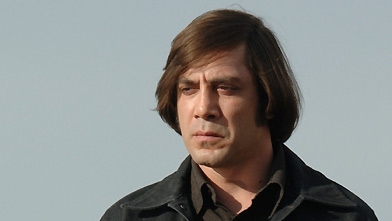
P.S.: Please keep in mind that I haven’t yet seen No Country for Old Men, so I can’t judge the scariness of that film’s Anton Chigurh. His hair’s plenty scary enough, though.

Prince Valiant, the Cleaner

P.P.S.: After Miami Vice used to be the top search term leading people to this website, it has now become “magenta”. So, my heartfelt thanks to one of my frequent readers. Hope you’re getting just as many hits because of me!

Where the wild things are

Sean Penn is clearly a very talented artist. He’s also annoying and self-righteous as hell, at least sometimes (and I’m saying this as someone who basically agrees with many of his opinions). So what happens if someone annoying and self-righteous makes a film about someone annoying and self-righteous?

In the case of In the Wild, what happens is that you get a beautiful, moving, disturbing and infuriating film.

The film clearly has admiration for the uncompromising cut Chris McCandless makes with his family and his past, and for the way McCandless – calling himself Alexander Supertramp (he doesn’t seem to be ironic about this) – goes out into the American wilderness to become himself. Penn’s movie, especially in its images, shares his protagonist’s awe at the beauty of the country and of nature, and so do we to some extent. Part of me definitely thought, “Yeah, man, I’ll get rid of all my belongings, get some survival gear and live like Grizzly Adams! Right on!” And I didn’t even need to be smoking pot to think it.

At the same time, McCandless (as portrayed in the film) can’t be described as anything else than a self-righteous, selfish adolescent. Clearly many of the societal conventions he abandons are also selfish in nature – do parents have any claim to their children’s lives? does a sister have a claim to her brother? But Chris makes people care about him and then he’s off. Being human, the film implies amidst the awe, also involves human contact, human responsibilities… and responsibilities seem to scare McCandless. It’s either that, or he’s cheerfully callous about waltzing into people’s lives and then waltzing out the moment they feel for him.

It is this ambivalence about the central character that makes Into the Wild more than just a beautiful film. Some critics have been rather negative about this: why feel awe for such a selfish jerk? Didn’t McCandless simply got what he deserved? Yes, he (the movie character – I don’t want to judge the real person on the basis of a movie) is selfish, and yes, he is a jerk. Yes, he’s a coward who doesn’t have the courage to forgive. Yes, he’s also an idealist and a dreamer, and his cowardice is also his courage. Strip the film of this central ambivalence, and you turn the movie into a simplistic cautionary tale: Don’t abandon your family and your cosy capitalist surroundings to go into the wild, because you’ll die of starvation in an old bus, only to be found by moose hunters two weeks later.

Personally, I prefer to feel both awed and infuriated. I prefer to be given enough space to make up my own mind. And space is something Penn’s film has in spades.

Into the Wild

A matter of life and death… and Japanese movies

There are a handful of films that give off a glow in my memory, like a candle flame. They’re not necessarily the Assassination of Jesse James etc. etc. or Magnolia type of films. They’re not by people such as Steven Soderbergh or Martin Scorsese. One of those films is Roderigo Garcia’s Things You Can Tell Just By Looking At Her (great acting in that one, but more than that, the film is amazingly gentle – not soft, mind you, not anodyne, but gentle), which I saw by sheer accident. Another one is Kore-Eda’s After-Life.

I’d been wanting to see the director’s Nobody Knows for a while now, but I only did so yesterday evening. After the very emotional final episode of Six Feet Under (it got to me just as much this time as it did when I first watched it) I wasn’t sure whether a film about four children who are abandoned by their mother and who try to continue their lives as best possible, ignored by the world around them, wouldn’t be too depressing.

The film is definitely not cheerful, and the ending is quite tough in terms of what happens, but there’s something as gentle and comforting about Kore-eda’s direction in Nobody Knows as there was in his deeply spiritual but never preachy After-Life. There are moments of simple joy in the lives of the children. There are just as many moments of joy in the filmmaking: scenes that are both realistic and subtly poetic.

Nobody Knows, by Kore-eda

It’s strange: in a way I feel the movie should get to me more, especially considering the ending – yet somehow I also think that I’d resist a tougher film more. Kore-eda’s work doesn’t do the emotional work for you. It doesn’t tell you what to think or feel. And it doesn’t allow for simple, clear-cut emotions. Yet you have to be willing to be taken along by the film’s flow. I don’t think I’ve seen many films that have this sort of pace; the film that popped into my mind when I tried to think of other movies that had a similar effect on me was Le fils by the Dardenne brothers.

Writing about the film now, I feel I’m only circling around the emotions that it touched upon. I don’t think I’m an inch closer to understanding the effect Nobody Knows had on me. But I think, somehow, that I may be remembering this film, much like After-Life, for a long time.

The Miami boys have lost their pull

It had to happen eventually, but still… for the first time in months, the top post in this blog isn’t the one about Crockett and Tubbs. What will I attract readers with now? According to the search terms used most often to get here, Hellboy’s become more of a pull. Sorry, Colin Farrell – some big red dude with filed-off horns gets the virtual punters in the seats these days!

We’ve now finished Jackie Brown (this blogger here is getting old – halfway through JB I realised that it was way past my bedtime… and that before midnight!), and it definitely more than holds up. The care Tarantino takes with his characters is wonderful, and not a little surprising: I’m more used to Tarantino caring about his lines and close-ups of feet than about characters.

More than anything, Jackie Brown is the most (perhaps even the only) mature film Tarantino has made. Now, his appeal doesn’t necessarily lie in his maturity – in fact, his adolescent hyperactivity is part of his appeal – but it’s beautiful to see his talent put to the service of a story that is not just a fun ride. In our youth-obsessed pop culture, it’s rare to see such a perfectly executed, entertaining film that is essentially about getting old but that takes its older characters seriously.

P.S. for all the Hitchcock fans out there: Vanity Fair has done a photo shoot of iconic Hitchcock scenes with today’s actors. People might ask what the point is – I don’t. I think the photos are eminently cool. The lighting, the painterly, expressionistic colours, the actors chosen… it’s perfect. Check all of ’em out here.

Okay, the seagull on her head may hamper the effect a tad for some…