The Limits of Detection

This blog entry is partly a reply to Emily Nussbaum’s article Cool Story, Bro. The Shallow Deep Talk on True Detective, which appeared in the New Yorker on March 3, 2014. That artice can be found here: http://nyr.kr/1eosEyD
truedetective_010914_1600

I would really, really like to see a series that takes stuff from the film noir genre – the lies, the sex, the crimes, the shadows – and then casts two female detectives in the lead roles. It could be written and directed by women so we are spared the male gaze. That would be a new thing. If it already exists, then I don’t know about it. Maybe the second season of True Detective will bring us something like that. Jessica Chastain’s name is attached to the project, and I personally could see Michelle Forbes as the other lead.

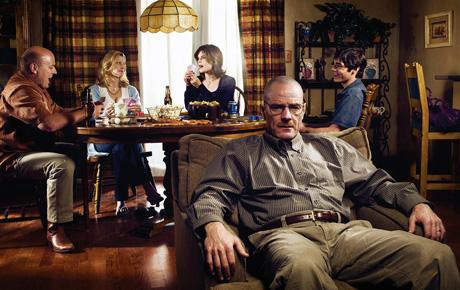
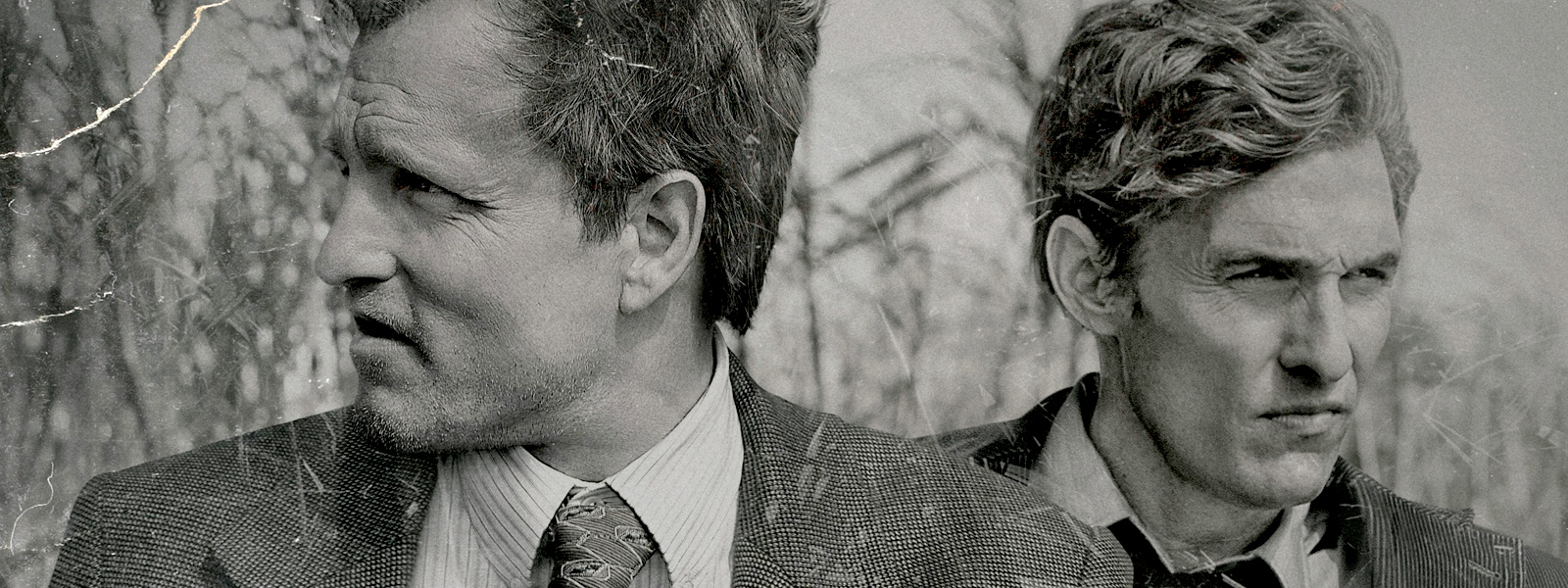
Meanwhile, we have the first season of True Detective to watch. To me, TD is not a police procedural or a whodunit, but a character study of Marty Hart (Woody Harrelson) and Rust Cohle (Matthew MacConaughey), two guys who might cross the street or the state line to avoid each other in everyday life. It took me half the series to see that it is not about the Yellow King or Carcosa, but about their relationship. If anyone keeps watching it as a whodunit, prepare for disappointment: the last episode is by far the weakest one. I restarted the series and watched all of it as the study of two very different guys. And while it won’t ever pass the Bechdel test, it worked very well. It’s certainly flawed , but there are only a couple of other series I liked better these last few months.
images

I disagree with Nussbaum’s label of the series as macho nonsense. Marty Hart has a strong tendency to rule over his family and often tells women what’s what. While that is certainly macho, he is also a horrible liar and a pathetic adulterer. He is weak, but instead of accepting his weakness, he pleads with his wife for more credibility, and as soon as he has it, he delves into that self-styled schizophrenia that lets him believe that if he lets off steam with some anonymous pussy, he can be much more caring and loving at home. For Marty, sublimation won’t work for much longer. His wife sees through him every time. To be clear: It’s the character that has macho tendencies, not the series.

Rust Cohle, on the other hand, is nowhere near a macho. He uses work as self-harm, and may be very close to do some real harm to himself. There is that nihilistic stuff he mutters forth, and these monologues are actually the highlight of the series for me. Unlike Marty, he does not have any defense mechanism. He knows exactly what is wrong with him, but he cannot climb out of his black hole, and so he blames the whole world. Those monologues are sometimes wafer-thin, but they often need to be. Can there be any grand-standing, any redeeming speech from a guy who could jump from a bridge at any moment? Rust doesn’t have to make sense because he doesn’t have to make sense to himself, either. It is to his credit that sometimes, he really does make sense, which renders his existence that much worse. With that guy, the wiring shows. As with Marty, life does not go on for much longer like this.

Rusty can come across as an arrogant asshole by the time Gilbough and Papania come around asking questions. That could be interpreted as macho, but to me, it is all self-protection. Rust the nihilist is still in there somewhere, preserved in a barrel of cheap beer.

reggieledoux

Yes, the victims in True Detective are all female. But they all die off-screen, and there is very little violence going on in real time. Compare that to The Fall, and then tell me that the latter series does not make you cringe for all the stuff done to women. (I can’t shake the impression that Helen Mirren referred to The Fall when she criticised the fact that most victims in film and TV these days are girls and women.) The Fall shows you women alive and well, then being assaulted, bound, gagged, raped, dying, dead, and disposed of. Repeatedly. And all is made well by that one phone call between that brilliant female police detective and the male killer in the very last minute of the last episode? Does Nussbaum really think that this is any consolation for those people in the audience who cannot take the immediate violence of the episodes before that last scene?

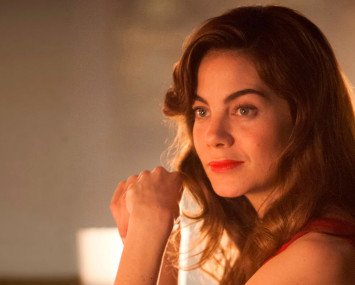
The women of True Detective are not paper-thin. It is true, however, that the most prominent woman, Maggie Hart (Michelle Monaghan) could be much better written, and given more of an active role to play. What I don’t get is that Nussbaum can say that the betrayal of Maggie sleeping with Rust has no weight. Rust is thrown off balance, while Maggie sees it as the mistake it is, but not entirely. There is something new about her afterwards, something empowering. Maybe it is not so much the sex, but the fact that she has slept with him, not him with her.
Michelle-Monaghan-True-Detective-Portable-355x285

The other women are far from thin, too. Marty’s fling Lisa (Alexandra Daddario) could bring down his marriage and his job with just two anonymous phone calls. For a long time, I thought that something like that has happened to Marty in the missing years. Lisa has legal training, so she is one of the best educated characters in the show. And those memorable scenes with Tess Harper? Ann Dowd? Come on. While the men are still trying to figure out stuff, the women already seem to know something.

What I don’t get is that Nussbaum can describe a series initially as stylish and complex and let some sort of reluctant admiration shine through, and then makes a U-turn and uses the rest of the article for telling us how it’s full of macho nonsense and that it’s really the female asses and the nice bouncy racks telling the real story. The whole season contains maybe four or five nude scenes, and brief ones at that. That may not even be average. So what is it going to be – deplorable macho nonsense or likeable lady parts? You can’t have both.

All fun and games, until someone loses his head

I understand that the following might get me defenestrated, decapitated, poisoned, disembowelled and/or otherwise treated harshly – but I think that Game of Thrones is overrated. Don’t get me wrong: it’s a great series with a cast that well night perfect, characters that are engaging, production values that are amazing, complex storylines that are riveting and setpieces that are stunning. It’s head (not Ned’s, obviously) and shoulders above a lot of TV. Nevertheless, on a list of favourite series it wouldn’t make it into my Top 5: I’d take The Sopranos, Deadwood, Six Feet Under, Breaking Bad and The Wire over it any day, to name just a few.

Thing is, for all its strengths the series is pretty much entirely about itself. It has little to say about our world. I’m not denying the series all relevance, but for all the cruelty and political intrigue of the world it depicts it is still escapism. Does it need to be anything more? Most emphatically not – but it makes the superlative praise the series gets ring somewhat hollow.

Hmm... My shoelaces are untied.

My impression is that because the series is brutal, because it kills our darlings, people implicitly see it as something more than escapist entertainment. “This is what the world is really like – cruel, amoral and swift to kick you in the privates, steal your silver and stab you in the spleen!” Except I doubt that most of its fans live in a world in any real sense that is like Westeros. Does Game of Thrones have anything much to say about power, responsibility, pragmatism and honour in a world of shifting alliances and uncertain motives? It probably does, although not all that much beyond what makes an intriguing story. Then again, it doesn’t need to – but its fans sometimes behave as if the series is completely new and does things that haven’t been tried before.

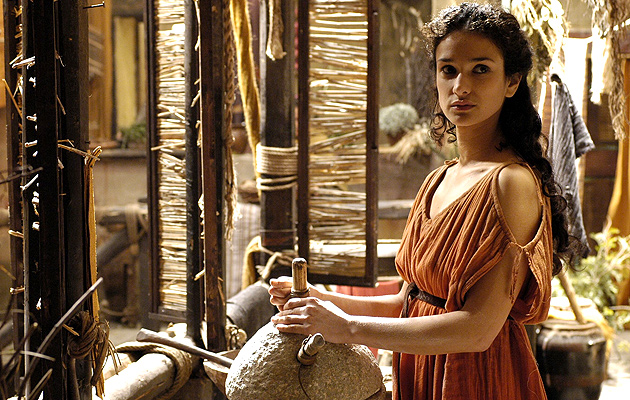
What puzzles me most is how Game of Thrones is almost universally hailed, yet HBO’s earlier series Rome barely made it to the end of season 2. In so many ways, Rome is an amazingly close precursor to the sprawling Westerosiad. Sex and violence? Check. Political intrigue? Check. Exotic locales? Check. Moral ambiguity? Check. Ciarán Hinds, Indira Varma, Tobias Menzies? Check, check and check again. (We’re still waiting for Ray Stevenson to make it to Westeros and for Kevin McKidd to be saved from his Seattle day job by a crazed, bomb-wielding, suicidal plane crash-cum-zombie apocalypse.) In terms of format, tone, characters, visual identity and, obviously, Nipple Count (and no, that’s not a character on the X-rated Sesame Street spin-off), the two series are very similar. Certainly, there are no ice zombies and dragons in Rome, but is that what makes Game of Thrones a success whereas the earlier series floundered? When people praise the series’ complexity, its characters and the world it evokes, are they actually saying that dragons, ice wights and boobs are cool? Or was the world not yet ready for a series of this kind when Rome was first aired?

Two.

There’s something about about the way the internet has embraced Game of Thrones that recalls self-perpetuating feedback loops. People don’t just get excited about the latest episode, they get excited about the latest round of YouTube videos depicting fan reactions. Watch total strangers scream at their TVs as Prince Fringfrang of House Shmoodle gets his arms torn clean off! Controversial scenes? Check out the clickbait: Why women like The Walking Dead better than Game of Thrones! (Not a joke, that one…). There’s something performative to the fan hype, as if people think they’ll become more interesting if they’ve got a video of themselves shrieking at Ned Stark’s decapitation or if they’ve got a blog post about what people on the internet say about-

Okay, gotcha. I’m feeding on, and into, the hype machine as much as everyone else. And who am I to tell the internet that it’s overrating its latest darling, especially if I then go and wax gastronomical about Hannibal after posting my own clickbait? So, to close this meandering post: if any fans of Game of Thrones are still reading this, I’m not telling you to stop enjoying the show or talk about it. But if you get bored waiting nine months for season 5, do check out Rome, especially season 1. You might enjoy it. And you won’t have to worry about book readers spoiling next episode… just pesky historians. Just don’t enter “does caesar” into the Google search window, lest the auto-complete function ruins it for you.

Having your meth and smoking it

Is there such a thing as too satisfying? There’s definitely such a thing as too neat, and I’m afraid that’s what I take away from the final episode of Breaking Bad. I enjoyed it, definitely – but coming as it does after “Granite State”, the penultimate episode, it feels too much like the series was tied up with a bow. It’s an enjoyable finale, but it is also a safe finale, and that I find a little disappointing.

Now, “Granite State” (especially in combination with the episode that precedes it, “Ozymandias”), that would have been a more courageous finale, and a more frustrating one. Not The Sopranos, “Made In America” level frustrating, but close. It’s a deeply moralistic episode, but one that is very much in line with the series as a whole. Walter White may have wanted to be Heisenberg, criminal mastermind and all-round badass, taking care of his family and, well, taking care of his enemies at the same time. In practice, though, he was petty, vindictive, scared yet oblivious of – or, worse, indifferent to – what he was doing to his family and the people around him. He used others, he rationalised horrific acts, because he could always pretend to himself that he was doing it for his children.

Family man

“Ozymandias” and “Granite State” stripped all of this away and revealed what Walt had become: powerless and unable to save his brother-in-law, yet venomously evil towards Jesse for turning against him. Bit by bit, Walt either watched everything he cared about crumble or actively contributed to its destruction. If the road to hell is paved with good intentions, he had left behind that road at this point and was safely in hell – which turned out to be a remote, tiny cabin in New Hampshire. Walter White’s hell was being stuck in a small room by himself, with only himself as company, his ill-gotten gains less useful than the month-old newspapers from which he cut articles about the exploits of the great, mythical Heisenberg.

“Granite State” was anything but easy to watch, revealing not only what Walt had achieved to himself but also that some of the things we enjoyed watching most had led him there. It was often as much fun for Walt to don the black pork pie hat and become Heisenberg as it was for us to watch him, but the episode no longer allowed us to indulge in the fantasy of there being two Walters: the one whose actions we despise, and the one we root for. Both of these were the same man, understandably acting out against the shit hand fate had dealt him, but relinquishing all responsibility for his actions in doing so. He didn’t kill Jane, and she was bad for Jesse anyway. He didn’t cause those planes to crash. Gale had to die because otherwise Mike would have killed Walt. Gus had to die because it was either him or Walt. That kid had to die because- The “Ozymandias”/”Granite State” double bill cut through the bullshit and said, “No, Walt. You got yourself here. Live with it.”

And then came the last five minutes of “Granite State” and the segue into “Felina”, which was largely Walter being badass, Walter finding some form of redemption, Walter shooting a dozen evil neo-Nazi fucks to bits. Some viewers theorised that most of the episode was Walt’s dream, and while this strikes me as an overreading there’s a kernel of truth in it: “Felina” does play like wish fulfillment. Not entirely – we don’t get a tearful, loving reunion between Walter Jr. and his father (most likely over breakfast, though with real bacon this time round), but we get the closest the series can credibly get to a making-up scene between Skyler and Walt. Our protagonist/anti-hero still dies, but he doesn’t die of cancer, going out in a blaze of glory instead – and saving Jesse to boot. It’s all very neat and it leaves you feeling considerably better than “Granite State” does, but it does feel like something of a missed chance.

Breaking Bad has always played with the ambivalence of Walter White. Is he heroic or an anti-hero? Is he the series’ protagonist or its bad guy? Are we rooting for him or are we watching him lose all sympathy as he’s got more and more blood on his hands? It’s the tension between those two that drove the series much of the time. “Ozymandias” and “Granite State” came down heavily on the side of consigning Walt to a hell of his own making, which I consider more in line with the series’ thematic thrust, but “Felina” pulls him out of that hell to give him the kind of ending he wants. Breaking Bad largely drops this tension, splitting up those two sides into separate episodes. (It’s like the series’ equivalent of that Star Trek episode where a transporter accident results in two Kirks: one gentle but weak, the other strong, ruthless and even more of a dick than Classic Kirk.) Ending on the episode that is Walt’s version of who he wants to be feels a bit like a cop out, even if it also gives us a scene where he finally admits, to himself as much as to Skyler, that he did it all for himself, that what drove the actions of Walter White wasn’t his family so much as his ego.

Have a drink, Walter

Looking back at the series, including its ending, I definitely consider Breaking Bad one of the best series I’ve seen. The writing, acting and directing are up there with the best of HBO. Even with my reservations about the final episode, I enjoyed the series, including its ending. It’s just… too neat. Too much what Walt, and we, might want, rather than what the series itself calls for. Breaking Bad most definitely decided at the very end that it wanted to have it both ways: it leaned more towards what feels good than what is fitting.

P.S.: For further reading on a series finale that aired more than half a year ago (!), I can very much recommend the AV Club’s review, as well as Alan Sepinwall’s original review and his revisit of “Felina”.

She, Herself and Spike

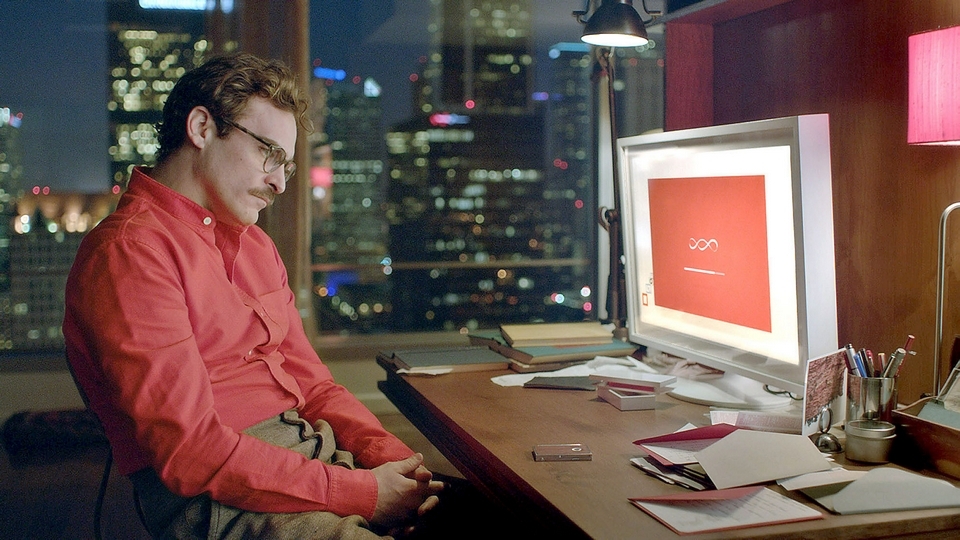
Spike Jonze is that rare creature, a filmmaker who is not only interested in but can actually combine the emotional and the intellectual. He did fantastic work with Charlie Kaufman (and indeed his elusive twin brother, Donald), and I greatly liked his adaptation of Maurice Sendak’s Where the Wild Things Are, though I have to confess that I never read the book as a kid and have no loyalties to the original work. His most recent film, Her (described by Wikipedia as a “science fiction romantic comedy-drama”, that most perennial of genres), was successful with audiences and critics alike, and there is a lot to like about the film. It is smart, sweet and heartfelt.

It should have been the perfect film for me – yet it wasn’t. In part, that’s due to my inflated expectations; largely, though, it’s Charlie Brooker’s fault. Obviously. More precisely, I think I had his “Be Right Back” from the second series of Black Mirror in mind, where a dead spouse is imitated by an artificial intelligence. The comparison is not an entirely fair one: Jonze is telling a different story from Brooker, and his story about a man falling in love with his AI operating system wants to be romantic to begin with, something “Be Right Back” isn’t interested in being.

http://vimeo.com/61215171

The thing is this: I can accept the premise of a sentient, sapient AI with emergent feelings. I can buy a man, especially a lonely, depressed one, falling for his very personable operating system, especially if it’s voiced by Scarlett Johannson. However, in wanting to deal with this scenario in terms of romance, the film seems to ignore one thing: an operating system is a tool. It does what you tell it to do. This is not a relationship of equals, at least not to begin with – it’s a relationship where he can tell her what to do and she does it, and most likely he can switch her off or deinstall her if he wishes. She exists solely for him. I absolutely understand that Theo Twombly, more than ably played by Joaquin Phoenix, falls in love with his OS, Sam, and he’s nice and sweet in his interactions with her – but I have a problem with the film ignoring, or not recognising, the fundamental inequality of the relationship and the hints of Pygmalion, because to my mind these are inherent in the premise.

Through a mirror brightly

The film could easily work with this and still tell the same story. As Her develops, so does she – Sam, being a virtual being not only capable of evolving but predicated on it, outgrows Theo and moves on. I wouldn’t even need the gender dimension to be brought into it (although there are definitely gender-related questions to ask about the film, such as: why do all its nebbish male characters tend to be with more beautiful women? To what extent is Her an unacknowledged male geek fantasy?), but the way that Jonze ignores the digital elephant in the room, that to begin with Sam is entirely in Theo’s power, regardless of how much she’s supposed to be her own person, is an issue that kept me from fully engaging with the film. It’s almost as if Jonze was too much in love with his premise and ironically ended up idealising it too much – unless there’s a more self-aware subtext here that was intended all along, which might mean that my own private OS is in dire need of an upgrade, let alone of evolving.

Breaking points

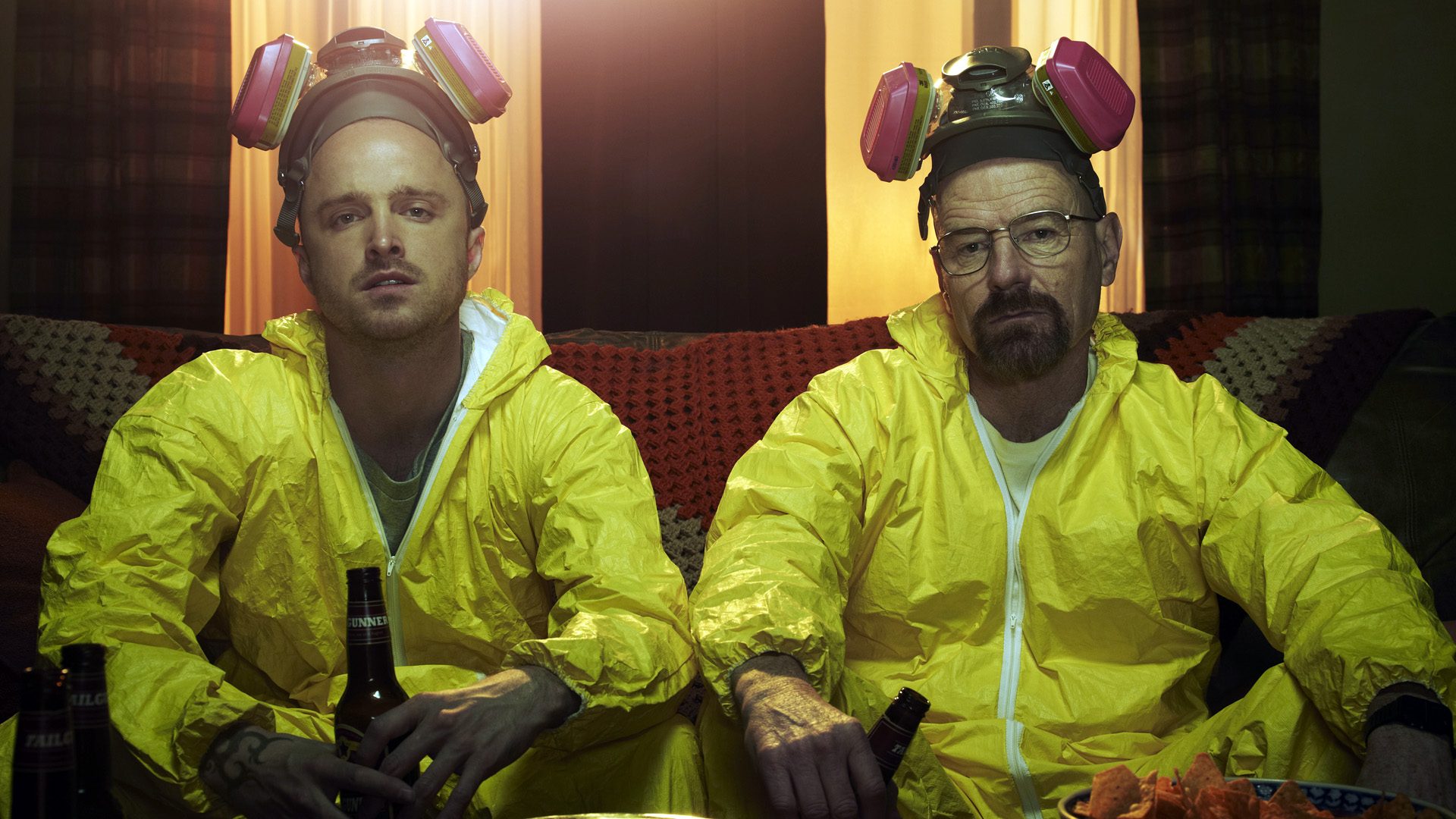
First of all, let me be absolutely clear: I like Breaking Bad a lot. I consider it one of the best TV series of the millennium to date. It’s ambitious, smart, exceedingly well acted (with some exceptions in the minor parts), and it has a grasp of complex characterisation like few other series.

I also think that in some ways Breaking Bad is overrated. It’s not quite the perfect series it’s sometimes made out to be, and while it exceeds in many respects, there is room for improvement in others. Granted, I may be talking out of turn, as I haven’t yet finished the series; we’re five episodes away from seeing the last of Mr. White. However, as I’m currently rewatching the first four seasons in parallel to finishing season 5, I think I can safely address what I consider the series’ main flaw.

More than many of my favourite series, from The Sopranos via Six Feet Under to Deadwood, Breaking Bad is heavy on plot. It uses plot to talk about its characters, but it still puts a considerable focus on What Happens Next. This in itself isn’t a flaw; what is, in my opinion, is that while the characters develop in an interesting five-season arc, the season-to-season plotting undermines these arcs to some extent.

Men at work

To a large extent, Breaking Bad is about Walter White oscillating between pathetic, disempowered male, anti-hero and outright villain, and the discrepancy between how he sees and presents himself and how the audience sees him. The tension between these different positions is always interesting, but the series spends a lot of its dramatic ammunition too early, moving Walt into villainous territory only to retcon him – or, more accurately, our view of him – in the following season to some extent (Warning: the following will spoil events up to and including season 5.)

One of Walter’s main crimes in the final season is the way he glibly accepts the murder of an innocent child as something that couldn’t be avoided and that, he thinks, wasn’t really his fault. We watch the scene and its aftermath and we see him as the monster he has become. However, is this act more monstrous than his watching as Jesse’s girlfriend Jane suffocates on her own vomit while she’s in a drug-induced stupor? Especially if we consider what Jane’s death leads to, namely an air crash that kills hundreds. No, Walt doesn’t pull any triggers – but then he rarely does when he’s at his worst, does he? – but his actions lead to those deaths, both the more abstract hundreds of victims of the crash and the more immediate death of Jane. As in season 5, his reaction is to rationalise his actions and his involvement, coming to the conclusion that he is not to blame. Is this more villainous in season 5 because we see the victim, a young boy on his BMX bike? Or is the series suggesting that people may not remember season 2 and the beginning of season 3 (if indeed they were watching Breaking Bad at the time) and the point needed to be reinforced?

There are other points in the overall narrative that hit similar points – Walt getting Jesse to kill Gale, a defenseless and relatively innocent man, for instance – that in the context of their seasons and the surrounding episodes make perfect sense, but when you look at the overall narrative beats they feel like we’re revisiting ground that has previously been covered. It makes some sense if you consider that audiences watching the series on TV would have several month-long breaks between seasons, so there’s a purpose to treading old ground – but in hindsight several mini-arcs feel redundant in terms of how they develop the characters. They feel like the makers of Breaking Bad either didn’t know where they were taking the series, or they didn’t know how many seasons they had left to tell their story. Especially Walter White’s overall arc almost depends on the viewers forgetting or ignoring where the series had previously taken its characters and how far they’d progressed into full-on villain country.

The Meth Throne

The fact that Breaking Bad still works eminently well is largely due to its stars; even when revisiting old ground, Bryan Cranston and Aaron Paul’s performances feel fresh and immediate. The same is true for Anna Gunn’s Skylar, although arguably the series and its writing have been less generous to her at times; rewatching the previous seasons, I was struck by how similar her arc in the first half of season 5 is to how she developed in season 3, yet Gunn delivers a great performance. Nonetheless, if it were possible to go back and redo Breaking Bad, it’s the overall plotting that would require attention. If my suspicion is correct and vince Gilligan didn’t always know from one season to the next if the series would be renewed plotting accordingly, it’s understandable that he would have aimed for arcs that hit certain character beats, not knowing whether he’d get another chance later to do so – but it did leave him with characters whose overall arcs have built-in redundancies. While this makes for clever design, it makes for slightly frustrating storytelling. More so because there are so many things Breaking Bad does not just well but better than almost any other TV series.

And that’s before we even mention The Awkward Case Of The Ricin Cigarette – so let’s leave it at that.

The Telltale Ricin

P.S.: Another thing that I’ve realised while rewatching especially season 1: Marie Schrader may just be the character that benefitted most from the series’ evolution over the course of its five seasons. In season 1, she is a two-dimensional character at best, slipping at times into flat caricature; by the final season, she is as rounded, complex and capable of tragedy as any of the main characters. While I may see this as something of a flaw of early Breaking Bad, in this case I prefer to look at it the other way around: the series definitely got better over time. This is also clearly seen in its villains: there’s no comparison between psychotic Tuco “Loony Tunes” Salamanca and the much more nuanced Gustavo Fring.

Hollow Men

Francis, Francis, Francis… I tried to like you, I really did – or, more precisely, I tried to like House of Cards, the American reimagining of what may have been Ian Richardson’s best performance. It had excellent production values, good actors and a lot of potential, but in the end I failed to warm to it, which may well have been by design, but neither was I chilled by the series or its calculatingly evil protagonist. For too much of the time I was left deeply indifferent to the intrigues in Washington DC.

It’s a shame, really: the raw materials were there. Kevin Spacey has proven that he can play lying, scheming yet deeply human monsters such as Richard of Gloucester, and he’s adept at the kind of character Francis Underwood is and how he relates to the audiences: making them his confidantes and, eventually, implicating them in his cynical plans. However, as Richard III he had one of the best scriptwriters ever, and that’s what was missing in House of Cards, doubly so because compared to its BBC predecessor it had roughly three times the screen time to fill. I often complain about US series with 20+ episode seasons needing to build in filler material, turning flabby in the process, but House of Cards was flabby at thirteen episodes. Plots meandered, characters went through the motions, repeating variations on the same scene over and over – and where the series could have scored points with witty lines, it fell flat with dialogues and asides to the audience that, quite simply, weren’t smart enough. Frank never made the prospect of the audience’s complicity fun, and as a result I never felt I was made complicit in his crimes. The trick to pulling off a Richard III has to be a long con, charming the audience into rooting for you even when it knows you’re no good for it in the long run.

House of Cards

Perhaps House of Cards wasn’t trying to go for what made the BBC version tick, but if so, it should have dropped the UK version’s (and Shakespeare’s) formal strategies. Frank Underwood isn’t charming in that coldly droll way that Francis Urqhart was. It’s not fun watching him construct his schemes and bringing them to fruition. House of Cards flirts with being a pitch-black comedy, but in the end it goes for drama, which weighs it down to an extent that makes too much of the series leaden. It has moments of genuine drama when it deals with flawed human beings that can evoke our sympathy – most of all in Peter Russo, the doomed, sad pawn in Underwood’s game – but too often the drama comes across as perfunctory and generic. The main victim of this is Frank’s wife Claire, played better by Robin Wright than the clichéd material deserves.

In the end, the drama doesn’t work for me because the character at its centre is hollow, yet the series fails to understand this. Protagonists that are revealed to be empty can work, but this requires smarter writers than House of Cards has, and while the series occasionally hints at things going on inside Underwood, this comes across as lip service. We get an episode which is obviously supposed to reveal that there’s more to the character than is immediately apparent, but the episode seems to have wandered in from a different series, and it wanders off again as soon as it’s over. Having seen season 1, I’d say the potential is still there – but I can also say that I have little confidence in the series’ writing team to pull off that potential. In the end, I could never shake the feeling that I’d rather be watching Ian Richardson – or that grandpappy of powerhungry schemers, Richard III himself.

Planes, trains and automobiles

Let’s get it out of the way: GTA V may just be the best Grand Theft Auto game. It may also be the most disappointing – and it is probably one of the dumbest games in the series. Credit where credit’s due: Rockstar Games do one thing amazingly well, better than anyone else out there, and that’s creating living, breathing worlds. Their obituary to the Old West, Red Dead Redemption, is one of my favourite virtual worlds bar none, the sort of place that I enjoy inhabiting and navigating, even without following the story or sidequests. Just being in the world covers so much of what I look for in games.

Red Dead Redemption also works in one key way that GTA V flubs, and that’s the character writing: yes, there are the joke characters, the broad caricatures of two-faced hypocrites, but Rockstar’s western knew when to take its cast seriously. It didn’t work all the time or with every single character, but by and large the dramatis personae of what could perhaps be called Grand Theft Horse carried the weight of its narrative. I understand that Rockstar might not want to write tragedies all the time – something that Red Dead Redemption ended up being quite effectively – but when it comes to humour the company’s writers tend towards the lazy, obvious joke… and then they flog it until way past its expiration.

I admit, there were moments in GTA V where I laughed out loud, and there were others where I sniggered. There are storylines in the game that work due to a combination of fine voice work and their sheer absurdity, but for each of these storylines there’s a character whose venality and stupidity is so drawn out, so overplayed it’s cringeworthy. What’s worse, perhaps, is that these characters are essentially all variations on the same theme: people who are smug and think they’re the best thing since sliced bread, yet they are essentially hollow. Which is fine until you realise that GTA V is 90% populated with such characters – and no, this does not strike me as a convincing parody of Southern California, and it’s most definitely not an interesting parody – and that the writing itself exhibits the same smugness. By comparison, Rockstar’s previous foray into Los Santos and surroundings in 2004’s GTA San Andreas (it’s already been ten years? now I definitely feel old) also had the broad jokes and the caricatures, but it brought together a band of mismatched characters that genuinely felt like family by the end of the game. By comparison, I don’t miss any of GTA V‘s cast of misfits and murderers, since with so many of them it’s clear that the punchline will always precedence over the character. There are exceptions: moments that show genuine wit and complexity, and jokes that don’t rely on the nth variation on the theme of “Haha, aren’t Californians/Americans/people stupid, vapid and easily fooled?”, but compared to Red Dead Redemption it all feels too much like a middling sitcom writer had watched The Sopranos and decided that they could pull this off.

Much was made of the lack of female protagonist in the game, especially since GTA V‘s main innovation is that there’s not just one but three playable characters. Seeing how limited Rockstar’s palette is in their latest, I have to say I’m glad they didn’t try to write their first female protagonist in this one. In fact, my main recommendation to the company would be this: they’ve pretty much perfected the creation of living, breathing worlds and mechanisms to enjoy being in that world. They have great artists, they choose fantastic music to add another dimension to their worlds, and they have ideas. What they should do is bring in new writing talent that doesn’t just do what they already do. They should get writers whose skills can shake up the by now rather stale mix of HBO Lite (imagine the worst moment in the weakest episode of The Sopranos) and Southpark-style loud parody. They don’t need to go for Greek tragedy or the Dickensian sweep of The Wire – but they should stop telling what is essentially the same joke. In brief, whatever they do next, I’d rather not think that it’s an improvement on their track record to date in every respect other than the writing. If that’s the case, I might just stay in GTA Online, because when the lines are provided by other players I don’t expect the writing to be good.

P.S.: For the record, GTA V‘s most maligned character, Trevor, is actually the most interesting at times. Yes, much of the writing is lazy and repetitive, but there are moments when his lines display a self-awareness that, while not particularly deep, does stand out compared to his usual lazy “Ooh, isn’t this edgy, offensive and craaaaaazy?!” shtik, the aftermath of the infamous playable torture scene (ah, to be a gamer in 2013…) being a case in point.

I couldn’t possibly comment

Well, that’s a lie. Obviously I can comment and I will. So there.

I’ve been watching the American remake? reimagining? resomething of House of Cards. On paper it seems a perfect proposal, updating the series and adapting it to the US context while giving David Fincher and Kevin Spacey something to get their teeth into. Critics largely agreed, on both sides of the pond. We’re now about half a dozen episodes into the first series, and I have to admit I’m not quite feeling it yet. I can’t even say it’s the series: my main problem at this point is that my memories of the BBC original (primarily the first series – the second and third got progressively worse in terms of writing and plot) keep getting in the way. I don’t have any issues with remakes on principle, but I keep thinking that BBC – no, scratch that, that Ian Richardson did it better. In fact, I think that’s my main problem so far: Spacey’s performance up to this point, or possibly the way his character is written, strikes me as somewhat lazy. He’s got the Spaceyisms down pat, but there’s no urgency behind it, no purpose. We’re told what this Frank Underwood wants to achieve, giving his machinations and manipulations a theoretical goal, but so far I don’t feel it. Manipulating people seems to be an end in itself to Underwood, whereas Richardson’s Francis Urqhart was a driven man, something his aloof, calculating irony sometimes covered but that was constantly seething under the surface.

I’m hoping I’ll learn to appreciate the Netflix House of Cards for what it is, rather than for what it isn’t and perhaps shouldn’t be. In the meantime, though, here’s a shoutout to Ian Richardson’s defining role, which he played to perfection even in the inferior second and third series. Is he the best neo-Richard III of all times?

P.S.: There’s a longer clip in an earlier post of mine, showing the plummy glee with which Richardson’s FU addresses the audience. Well worth checking out.

A totally non-representative, disappointingly short Best of 2014

Nope, I won’t be doing any lists. No “Best game that gamers feel insulted by, saying it’s not even a game, like!”, no “Best instalment of The Hobbit to date, even though it wastes Mikael Persbrandt” and no “Best mildly disappointing new League of Extraordinary Gentlemen comic”. Just one entry.

Or should that be entrée?

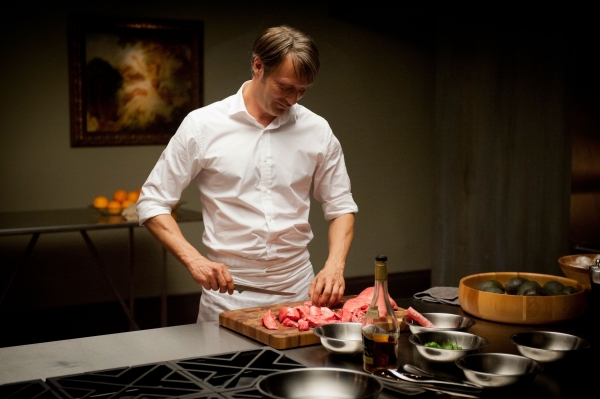
I’ve written about Hannibal before. It’s rare that my pre-release expectations of any media product are this different from my opinion of the result: when I heard that they were doing a TV series based on the Hannibal Lecter books by Thomas Harris, I scoffed audibly. Cannibalistic cash cow, anyone? I was wrong, though: Bryan Fuller and his band of assorted sickos, psychos and gourmets have created one of the most fascinating series in a long time. It’s no The Wire, Deadwood, The Sopranos or Six Feet Under – but neither does it suffer from that comparison. It’s something entirely different, and it’s remarkably different from the films based on Harris’ novels. There’s obviously an element of Grand Guignol in the artistic killings of the series, but at the same time we’re not supposed to titter and gawk at the imaginative imagery. Fuller puts a sense of terror and downright, metaphysical dread back into that most hackneyed of fictional figures, the serial killer.

Much of the credit must go to Fuller’s two leads. I expected Mads Mikkelsen to be good, but he’s better than I’d dared to expect. He is miles away from Anthony Hopkins’ increasingly hammy Hannibal: a cold, calculating, diabolical and utterly fascinating creature, one of the reasons why Hannibal freaks me out as much. If Hopkins is theatrical in his camp evil, Mikkelsen’s culinary villain offers a much more intellectual, sharp-as-a-knife theatricality with no hint of a wink at an audience that despite themselves roots for that darn rascal Hannibal.

Pukka food, eh?

Will Graham, played by Hugh Dancy as a permanent bundle of frayed nerves sending messages of pain to a fevered mind, could have been the boring straight man, but instead he offers the much needed polar opposite to the series’ Hannibal Lecter. His humanity could have been boring, cloying or preachy, but Dancy brings a taut, nervous energy to the role that is constantly interesting, always watchable. The rest of Hannibal‘s cast fares well, but it’s Dancy and Mikkelsen that make it work – together with the cinematography, that is, which manages to balance fascination with repulsion with a deftness I can’t remember having seen in a long time, and definitely not in any of the post-Silence of the Lambs serial killer movies.

There have been other interesting, worthwhile media events in 2013, but nothing has captured my imagination and haunted me as much as Hannibal, and for that I owe Bryan Fuller a dinner, at least.

He may just be the main course, mind you.

And on that yummy note: wishing every one of you a very happy 2014! Except you. No, the other one. Yes, you. Sorry.

Silence of the blog

I’m afraid that this year autumn and the onset of winter got to me, much more than in other years and surprisingly so. The result was that the cold, grey weather sapped my physical as well as mental energy – which meant no blogging for the weary. Can’t say that my energy’s back, but I’m hoping to use this post as a gentle kick in the backside. Since it’s been a while, I thought I’d do a Variety Pack of sorts, on TV series for a change, so without much further ado…

Orphan Black

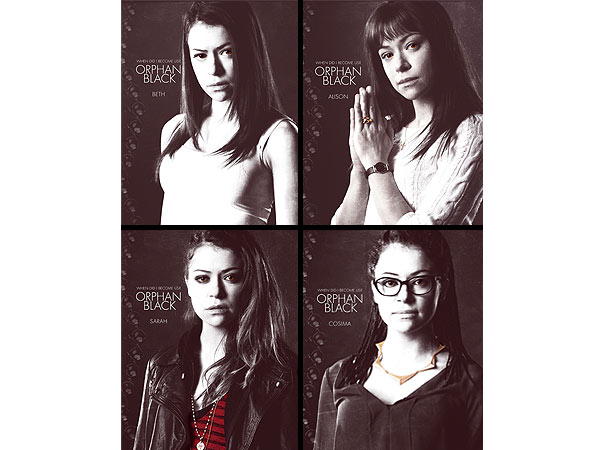
Orphan BlackI read the AV Club reviews of this one when it showed in the States; even though it was a BBC co-production the Beeb only showed it months later. The AV Club gang loved Orphan Black, and there is a lot to like about this sci-fi-ish conspiracy thriller, first and foremost Tatiana Maslany. Her playing several different characters isn’t flawless, relying a bit too much (especially at the beginning) on dodgy accents and costume choices, but as she gets into the parts she quickly becomes the series’ main asset. By the fifth episode I wasn’t thinking about the seamlessness of the special effects any more – I just accepted that there were several clone characters on screen who all looked more or less the same but were totally different in most ways. The plot, while perhaps too convoluted for its own good, definitely drives the series along to its conclusion/cliffhanger. Having said all of this, though, I’m not sure Orphan Black deserves the hyperbolic praise it received on the other side of the Atlantic: in terms of tone, it’s not altogether surefooted, and various characters – even the occasional clone – remain flat, uninteresting and even annoying. I’m intrigued for season 2, but it’s nowhere near the top of my list of favourite series. Entertaining, yes, but I’m glad I didn’t go for the box set.

Sports Night

Is there a TV writer as readily recognisable as Aaron Sorkin? In some ways, Sports Night feels almost like someone has fed the writer’s mannerisms into a computer and turned up the Aaron-o-meter to 150%. The cast is more than capable, but even for someone who loved The West Wing the series can be formulaic as well as overbearingly smug and self-satisfied. Still, there are moments when it clicks – mostly thanks to the likes of Peter Krause, Felicity Huffman and the rest of the cast. (And yes, there are moments when the series brings out the worst in its composer, the improbably named W.G. Snuffy Walden.) Would I have watched The West Wing if I’d started with this? I’m not sure – but there are worse ways to while away 22 minutes.

And just for the heck of it, here are seven minutes of Sorkinisms:

Real Humans

I was a bit wary of this one; there was a big brouhaha in newspapers when they started showing it here, but to me as a former(ish) sci-fi geek it all sounded rather “been there, done that”, with the main inspirations being Asimov and Blade Runner. We’re now six episodes into the first season, and while the ideas in the series may not be the most original to anyone who’s been following the genre, that’s beside the point. Being Human takes a page out of True Blood‘s book, looking at what our society might look like if this one foreign element (androids in the case of the former, vampires in the latter) were to be introduced into it – but differently from True Blood it shows relatively little interest in its lore. Instead, there are elements of allegory, but never to the extent where the series’ so-called ‘hubots’ become a facile stand-in for oppressed group X. The social critique and satire are balanced by a plot that keeps things going smoothly and by characters that are fun to watch, from the sad-sack who, after being left by his wife, blames all his misfortune on the machines to the icy renegade hubot leader who’d give Rutger Hauer a run for his money.

Real Humans

And that’s it for now. I hereby solemnly promise that it won’t be as long yet again before my next post!