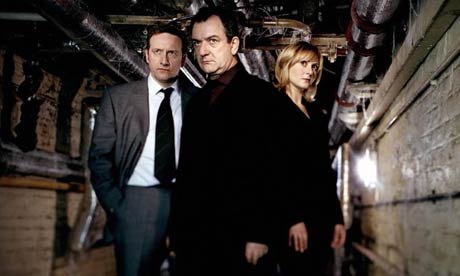
Jane Campion’s mini-series Top of the Lake is an odd one. Usually I’m quite comfortable pronouncing judgment on a series and how well it holds together – I wouldn’t go as binary as the proverbial thumbs up or down, but I’m rarely as ambivalent as I’ve been about Campion’s latest.
One thing I’m comfortable to say: Top of the Lake is a mess. It’s confused. It doesn’t entirely know what it wants to be. And it would be generous to describe its pacing as fits and starts. The series uses its story of a missing, pregnant 12-year old to outline a society that’s closed off, incestuous (both metaphorically and quite possibly literally), and a misogynist throwback, in spite of being set in what appears to be contemporary New Zealand. It never quite decides on the thrust of its criticism, though, as it gets tangled up in its own ambivalence: so many of its men appear to be (or, just as bad, strive to be) sexist alpha males with little regard for the women in their community, yet the series’ prominent locus of female kinship and healing rarely becomes more than a caricature of neurotic women in search of a New Age guru to follow. Which they find, sort of, in Holly Hunter’s G.J. – more on whom later.
On the whole, too many of the characters in Top of the Lake remain one-dimensional, gendered in simplistic ways: the clueless macho, the weak middle-aged woman, the brow-beaten son. The characters that escape such categories aren’t so much better written as they are elevated into something more complex and interesting by the acting. Elizabeth Moss’s young detective, Peter Mullan’s grizzled patriarch – yes, there’s a bit more meat on the bone in the way they’re written as well, but primarily the actors bring to life characters oscillating between stereotype and archetype. There’s something reminiscent of Sam Shepard and his character constellations in Top of the Lake: at its worst, it’s a jumble of clichés, at its best it achieves an almost mythical sublimation coupled with strong, compelling performances. Top of the Lake is something rarely found on TV: it’s not entirely naturalistic, and it takes a while to recognise, let alone accept, the series’ more stylised approach – an approach that is perhaps reminiscent more of the stage than the small screen.
Having said that, some of the series’ strongest moments would be impossible on stage, relying as they do on the images and the breathtaking landscape of New Zealand. The cinematography is striking and deserving of a big TV, if not even a movie screen. As is some of the cast: even if both Mullan and Hunter especially suffer from writing that misses as often as it hits, they almost burst the confines of TV. Hunter especially is a strange creature: her character’s lines rarely have more depth than fortune cookie wisdoms, yet she has a presence that is memorable when what she says rarely is.
Altogether, Top of the Lake is compelling. It’s fascinating. In its deeply flawed, messy glory it’s considerably more interesting and worthwhile than several other series recently shown by the BBC. It is a series that almost requires being discussed and it’s some of the more ambitious TV I’ve seen in quite a while.
So many series we’re watching aren’t exactly puppies and rainbows 24/7. There’s Top of the Lake, with its panoply of misogyny, abuse and murder. There’s Game of Thrones, whose murder, mayhem and intrigue make Shakespeare’s history plays look like A Midsummer Night’s Dream. So, obviously what was missing was Hannibal, a heartwarming story of a troubled boy, his psychiatrist and food, glorious food.
Coincidentally, at the same time we watched the first episode of BBC’s Messiah series 2 – and while Hannibal probably features the more baroque, aestheticised killings, it’s Messiah that I found more difficult to watch. Not in a positive way, mind you; I didn’t come away from Messiah feeling shocked and sorry for the victims, because I didn’t feel that the series was all that interested in the victims. It wasn’t outright sadistic, but it still used the sadism of its killers (I’m including the first series of Messiah in this) as a somewhat lazy shorthand: the killer these people are up again is really messed up. Which is hammered home repeatedly – but it’s almost entirely about the killer in question and the detectives out to find him.
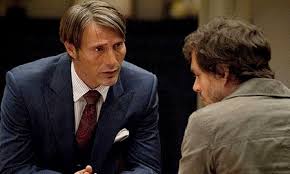
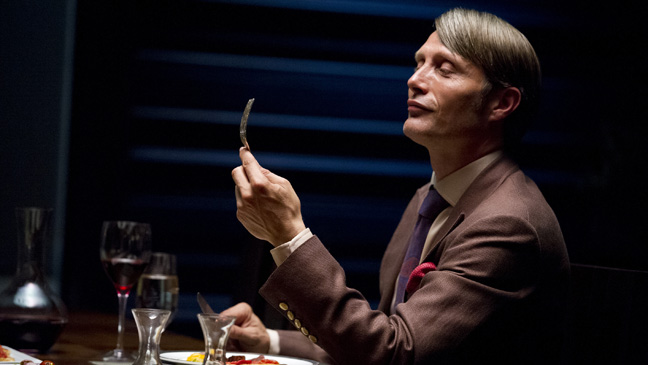
I was surprised by how much Messiah‘s murders turned me off. I usually have a fairly strong stomach when it comes to on-screen violence, and arguably Hannibal‘s cannibalism and impalings are more gruesome. However, while Hannibal doesn’t necessarily spend that much more time with the victims of violence (at least not before they’re turned into Grand Guignol dioramas by Americas 10 Most Artistic Murderers), it has something that so far I haven’t really found in Messiah: empathy. While the BBC series is happy to say, “These are horrible crimes, because they look like horrible crimes, and our heroes will stop them,” Hannibal is interested in states of mind. It’s interested in the emotional consequences of these crimes. The series’ title character, eminent psychiatrist Dr. Hannibal Lecter (Mads Mikkelsen), may be cold to the point of appearing devoid of emotion, but his counterpart Will Graham (Hugh Dancy) is empathy. He’s a raw nerve, incapable of not empathising.
I used to be a fan of serial killer narratives, and I still like films like Seven, Zodiac and earlier additions to the Hannibal Lecter mythos such as Manhunter and Silence of the Lambs. However, I’ve come to realise that I find these films offputting if the violence they depict seems to be decorative first and foremost. Messiah‘s murders seem to be as elaborately symbolic as they are first and foremost for audiences who may be bored with the common or garden variety of murder. They’re elaborate because that’s what the genre demands. And, for me at least, they are cruel because they’re there for the effect. The murders tell us more about how the series wants to entertain its audience than about the murders or the victims.
What Hannibal seems to be striving for, on the other hand, is that old Aristotelian chestnut associated with tragedy: through Will Graham we’re asked to experience pity and fear. I did feel pity for Messiah‘s victims, but more so because I felt the series wasn’t interested in them. It wasn’t even that interested in the murderer, beyond providing a relatively glib, facile explanation of motive. In that sense, Hannibal is closer to Hitchcock’s granddaddy of all things serial-killery, Psycho, in that it believes in extending its empathy to the people committing the crimes – although in the case of Dr. Lecter, there may be no understanding why he does what he does.
Other than him liking his haute cuisine, that is. Because, seriously, where are you going to get that steaming fresh liver for that dish you’ve simply been dying to try out?
P.S.: I might take on Top of the Lake soon. That is, if I can figure out what I think about it – or if I can figure out an interesting way of saying why it confused me.
A quick “Hey there!” in between a week’s holiday in Paris and a work trip to the UK – and since the heat is making my brain frizz out on a semi-regular basis and I don’t have the stamina for a longer-form post, here’s a variety pack. It’s a strange one, though; for once I’m not writing about a couple of films I’ve watched recently but about a few topics that have been hanging around in my brainpan, equally lacking in energy due to summer having icumen in.
What did you do in the war, dad? – I was in an HBO miniseries, son.
We’re currently watching HBO’s The Pacific, a sort of follow-up to Band of Brothers. It’s a good series with great production values and strong performances, and the theatre of war it depicts does come across as distinctly different from the Western front of the earlier series. At the same time, there is definitely something a bit samey about the two series, and about so many American war films of the last ten, twenty years in general. (Clint Eastwood’s Flags Of Our Fathers and Letters From Iwo Jima come to mind.) They don’t go in for the easy, unambiguous heroics of the war films of yore, yet the subtext still seems to be this: these men we’re watching, the soldiers they’re standing for – they deserve our respect. Not because they’re heroes to begin with, but because they’re ordinary men that become heroes in extraordinary circumstances. The experience of war – and, on a more meta level, the act of turning them into film, with all the trappings of the genre – ennobles them. And this is the bit that I’m uncomfortable about: as riveting as a well-made war film is, very few of them end up not telling you unquestioningly that these men and what they do is noble. Being in a war and watching your buddies geting shot to pieces may be hell, but the act of going to war is a noble one. Sad, yes, but that only makes it more noble. Perhaps the Second World War was the kind of fight that sustains these narratives that, at least implicitly, suggest the Good War. Regardless of the ideologies of The Pacific, though, part of me wishes for a genre piece that doesn’t insist with its elegiac soundtrack and close-ups of brothers in arms giving their lives for each other that warfare is a noble endeavour and that soldiers unquestioningly deserve our respect. (For the record, there are scenes and narrative strands throughout The Pacific that provide glimpses of a different perspective – but they still end up surrendering to the superior firepower of the filmmaking that keeps emphasising, “Noble! Sad! Elegiac! And, yes, patriotic!”, rather than leaving me to form my own thoughts.)
History will teach us nothing…
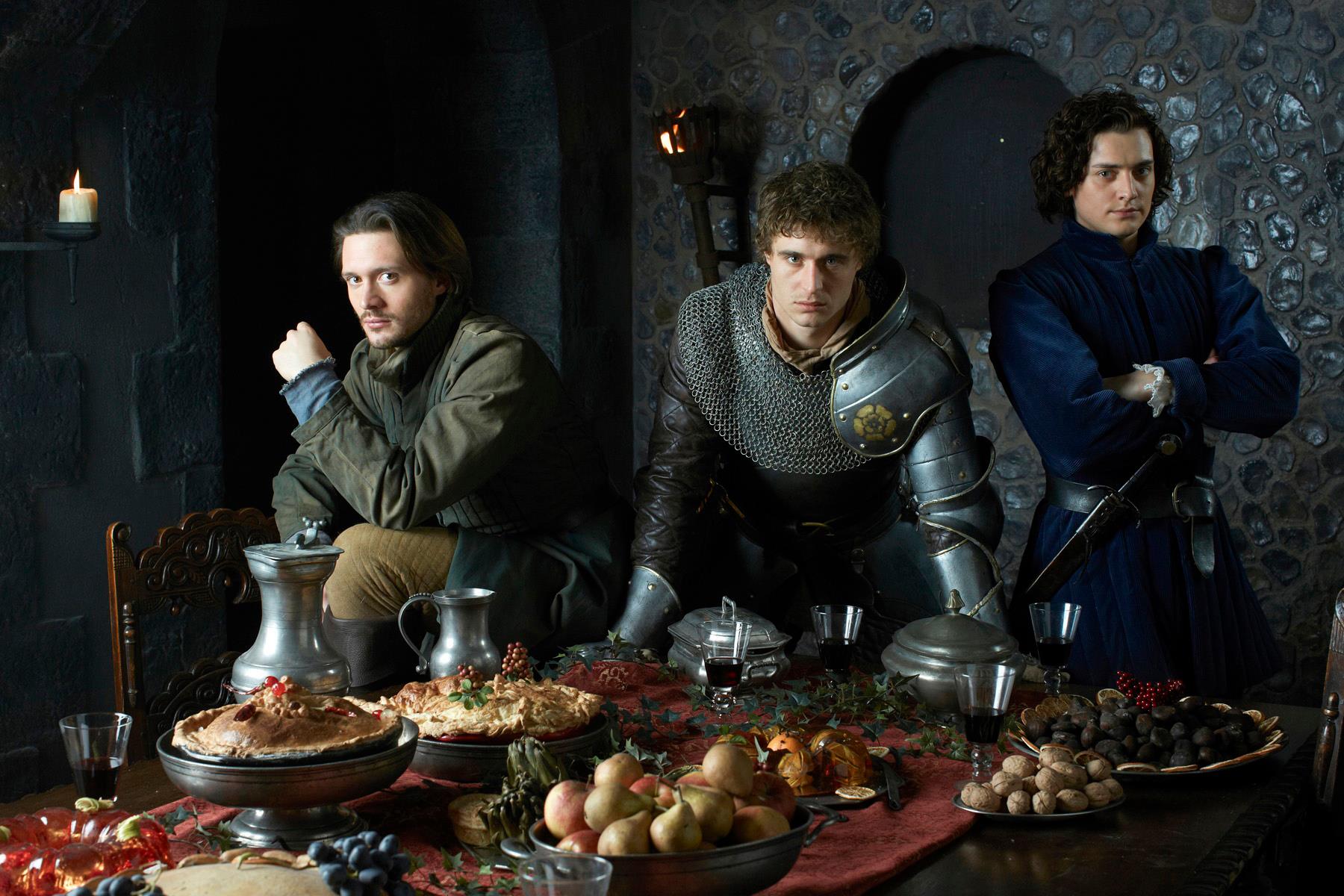
… except that the Middle Ages were oh-so-pretty. And Elizabeth Woodville, wife of Edward IV and Queen of England, could summon storms by going “Oooh, ooooh, ooooh…!” in a menacing way. Not a bad parlour trick!
Anyway, watching The White Queen has made me long for Rome‘s way of handling history. It’s a tricky genre, historical fiction (and perhaps I should just accept that The White Queen doesn’t belong to that particular genre so much as to that of historical romance), and one thing that often goes wrong is that such fiction wants to have its cake and eat it: it wants to show that these olden-times people were different from us and did things differently and we shouldn’t judge them from our anachronistic vantage point of being all enlightened and such stuff, yet then in the next scene it espouses a completely ahistorical, modern point of view to make the characters relatable to us. Balancing these two narrative impulses – Ooh, look at how different and weird these people are! And now look how they’re just like us after all! – is extremely tricky, and I don’t think The White Queen has handled it particularly well so far. In one scene we see the young king almost raping his queen-to-be when she doesn’t assent to a quick tumble in the grass, yet ten minutes later when he actually says he’ll marry her she goes all swoony and Twoo Luv, like a 20th/21st century teenager in love for the first time. If we’re supposed to see this through modern eyes, how can we accept Edward’s earlier attempt at Lancastrian date-rape? Only if we give him the benefit of historical perspective – of course, he’s the king, and she’s a woman at a time when women have very little power, it’s rarely love that starts a relationship in these days, if she’s lucky she’ll learn some affection for him – but then her later behaviour makes little to no sense, because it is entirely predicated on current ideas of romance. Again, though, perhaps that’s it: the series definitely puts romance before history.
Talking of historical fiction: revisiting Deadwood
Alan Sepinwall, TV critic and blogger, is currently finishing his Deadwood Rewind. His perceptive, eloquent posts on the series’ third season are a great read – not least because he’s got some of Deadwood‘s actors visiting the comments threads on a regular basis, such as Jim Beaver (Ellsworth), Keone Young (Mr Wu) and W. Earl Brown (Dan Dority). It’s fascinating to revisit the series through their eyes. (Here’s a link to the Deadwood Rewind for episode 6 of the third season, “A Rich Find”, with some great contributions by Jim Beaver.)
We’ve been watching The Politician’s Husband, a BBC three-parter about the machinations of two married Westminster politicians starring David Tennant and Emily Watson – and, truth to tell, it’s not a particularly good series. It’s got good actors (although – forgive me, Whovians – I’m not seeing what’s so great about David Tennant, although that may be due to the writing), but even they can’t do much with the generic, clichéd writing. Guess what: politicians are either corrupted by their position or they’ve been corrupt all along! They’re more busy playing power games than they are working on improving things for their electorate! They’re manipulative, shallow and don’t deserve your votes! Yeah, I know… That’s some amazingly new insight into politics, or at least TV politics, and it’s in no way cheap cynicism, eh? Anyway, even that sort of thing can work as a TV series, but The Politician’s Husband is written in a way that can only be called lazy, hamfisted and self-congratulatory.
To be fair, though, I don’t know that many series that manage to turn politics into good television, let alone films. It is possible, though, to come at this complex and often-maligned issue in more interesting ways, so let me mention my three favourite politics-themed programmes, in no particular order:
1) The West Wing
The daddy of them all. Yes, it’s a liberal, centre-left fantasy, but it’s got wit, heart, a willingness to face up to the ambiguities of politics and a fantastic ensemble cast. Does it get weaker after Sorkin leaves? Definitely, but it remains a good show, and it becomes genuinely great again in its final years as Jimmy Smits and Alan Alda (as a Republican!) cross blades in the race to the White House.
2) The Thick Of It
I’ve only seen season 1 (and a lone episode from season 3, watched on a long flight), but if The West Wing is too idealistic, this is the perfect antidote, and Peter Capaldi’s Malcolm Tucker is one of the most memorable characters in all of TV. The thing is, while The Thick Of It is viciously satirical about politics, I don’t think it’s glibly cynical – its criticism is more of the systems that grind even hopeful into political duds, rather than LOLpoliticians! And have I mentioned Malcolm Tucker?
3) House of Cards
The BBC original, that is, not the Netflix reimagining. Ian Richardson is the perfect political descendant of Shakespeare’s Tricky Dick the Third, making the audience his confidant. The two following series get progressively weaker, and especially The Final Cut is a pale shadow of the original, but has Richardson has ever done anything sharper, more droll or more chilling? I couldn’t possibly comment.
I’ve written about the first season of Charlie Brooker’s Black Mirror when it first aired (here and here). I didn’t consider all three of the original episodes equally successful at presenting a dark, satiric funhouse reflection of people in the age of omnipresent smartphones, tablet computers and social media, but Brooker’s takes on how technology reinforces human nature in weird but not always wonderful ways were always eminently watchable.
To my mind, the second series (which recently finished on Channel Four) dropped the ball somewhat on its final episode, but again, it has held a fascinating black, quite possibly Apple-branded mirror up to us, and the reflection is not always pleasant. It’s not necessarily scathing, though, so much as sad; other than in his editorials, though, Brooker tempers his satire with empathy for his characters. Well, some of them. Let’s look at the individual episodes, though:
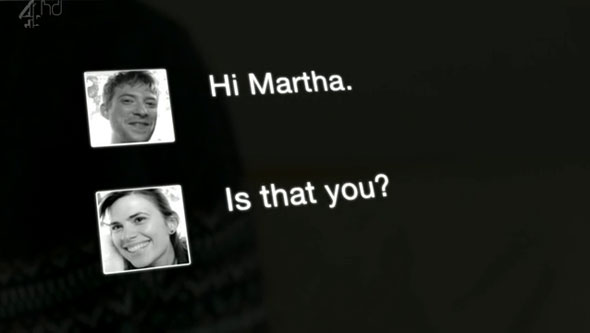
Be Right Back
The first episode is probably the one I liked best, and it is the one that I related to most. “Be Right Back” is the story of a woman whose husband dies in a car crash; a friend, also recently bereft, signs her up to a service that creates a simulacrum – first virtual, later physical – of her husband based on his digital footprint: his Facebook posts, his tweets, his e-mails, the many photos and videos. (Sound far-fetched? Check this site out and tell me if it still does.) While initially the simulation consoles her, being almost like her husband in how he talks and acts, that almost becomes impossible to bear, in a sort of emotional uncanny valley effect. So much of him is there, bringing into stark contrast the ways in which the simulated husband falls short of the real thing.
Perhaps more than most episodes, “Be Right Back” needs its near-future vision of where technology will take us to tell a story, but the story it tells is not about this technology. It’s about loss, mourning and the inability to let go. It’s about the characters, which is why it works eminently well but perhaps falls somewhat short in its ability to comment on the titular ‘black mirror’. Still, it makes you wonder: what if the sci-fi tech had created a more perfect copy of the protagonist’s husband? Is it the imperfection of the process, the ways in which its result falls short of reality and memory, that’s the problem? There are shades (or perhaps digital ghosts?) of Solaris that resonate throughout the episode.
White Bear
If “Be Right Back” was tragedy, “White Bear” is closer to the horror genre, reminiscent of 28 Days Later: a young woman wakes up with no memory (except for occasional flashes) of who she is. Trying to figure out her situation, she finds that everyone films her or takes photos on their smart phones, but otherwise they ignore her – except for the masked weirdos wielding shotguns, electric saws and other implements of unpleasantness. They’re the hunters, apparently using the disconnected voyeurism of the watchers to do whatever they damn well please, including torture and murder.
So, a comment on how people make themselves into audiences, how they film violence and atrocities and put these online for all to see, instead of becoming involved and helping those at the receiving end of the violence? Wrong, at least sort of: the episode pulls the rug from under the main character’s (and our) feet, revealing that this whole thing is an elaborate, grotesquely ironic punishment: she is a convicted criminal, having filmed her boyfriend torturing and killing a child, so her memory is wiped and, in a modern twist on Dante’s contrapasso, her crime is visited on her… day after day after day.
In other words, the episode is about mob mentality, witchhunts and how modern media twist justice by ‘democratising’ it, right? Well, that’s partly the problem: the episode is about both of these things, to some extent, but I’m not sure it succeeds at bringing them together in a satisfying way. Arguably, the sort of disconnectedness that can be heightened by perceiving everything through the filter of a digital camera or smartphone can in turn reinforce the mob’s hunger for revenge, which in turn isn’t necessarily far from a simple hunger to see lions tearing apart Christians in the arena. And there’s clearly the irony of the punishment making the ones inflicting it (the audiences with their phones and cameras) into the person they’re punishing, mirroring her crime. But the two themes are an uneasy fit – and perhaps that unease is part of how Brooker tries to make us uncomfortable.
What is way more uncomfortable, though, and in that sense entirely in keeping with Brooker’s series and his themes, is how on so many online review sites a sizeable portion of the (mostly anonymous) commenters felt the episode’s punishment of its main character was absolutely, 100% justified, i.e. the bitch got what she deserved. Democratising justice, eh?
The Waldo Moment
I’m not sure I would have ended the series on “The Waldo Moment”, not least because it’s very clearly the odd one out. If Black Mirror is indeed about the effect the new media and technologies have on our lives, that element is utterly unimportant in the episode: yes, it features a motion-captured virtual cartoon, but the story could pretty much be exactly the same if Waldo, the sarcastic blue bear, were a sock puppet. The episode feels like a left-over from a different project, probably because that’s exactly what it is. (It incorporates material originally written for Nathan Barley, Brooker’s collaboration with Chris Morris of Four Lionsfame.)
“The Waldo Moment” makes a good point about the general cynicism about politics, and how so many of the things we blame politicians for – their pandering to the lowest common denominator, for instance – we’ve fostered in them ourselves. Politicians deserve to be criticised, but at least some of the blanket criticism they’re exposed to is hypocritical: we slam them for being undemocratic when they act differently from what we’d want, and we slam them again for lacking integrity and being in it for the votes only when they act in ways that appeal to the majority. Our cynicism is facile – and, Brooker suggests, dangerous, making us vulnerable to demagogues in the guise of those speaking the truth and sticking it to the man.
The thing is, while I think there’s something to the point, it is presented in a similarly shallow way that simply fails to carry the episode for its full length. Compared to “Be Right Back”, the characters don’t carry the story enough, and the pace is much slower than in “White Bear”. “The Waldo Moment” has material for perhaps half an hour, but even then it isn’t all that perceptive or incisive. There is one strong moment, both funny and chilling, where an American from “the Company” comes to the protagonist, the comedian who breathes life into foul-mouthed Waldo, and suggests a global roll-out, starting in South America. Indeed, if you’re in the business of toppling regimes, why not do it with a friendly blue cartoon face?
Regardless of being underwhelmed with the final episode, I’m curious to see where Brooker’ll take Black Mirror next – or, if he thinks he’s exhausted the topic, whether he’ll find another topic to turn into a fascinating, witty, angry, sad series. Waldo or not, I’ve enjoyed this journey into the near-future with Mr Brooker (to say nothing of the pig).
Wow. Just wow. Breaking Bad season 4 (yes, as always we’re a year or so behind the US) has done the series proud. Is it better than the previous seasons? I admit, there were moments when I felt the plot was spinning its wheels somewhat – we had scenes that were variations on earlier scenes without adding anything new, usually telling us something about Walter White’s personality that we already knew – and the season didn’t always maintain its well honed balance of plot, theme and characterisation, but when it worked (and it often did), boy, did it work… and off the top of my head, and before my first coffee of the day, I could mention scenes and whole episodes that were stronger than anything that had gone before.
And “Face Off”, the final episode of the season? I would put it up there with the most tension-building denouements I’ve seen or read in any medium. The way Vince Gilligan and his team have put together the individual building blocks to arrive at this ending for one of their most memorable characters, and the way it all comes together in Tio Salamanca’s muffled bell-ringing. As I’ve said: wow.
At the same time, Walter White – who I once thought to be a man trying to do as best he could in an impossible situation – has become one of the greatest villains in any visual medium. It’s difficult to read his tone of voice when he says “I won” at the end of the episode (it’s been described as smug and triumphant, but to me Walt’s shaking voice sounded not a little scared by what he’d become), but Bryan Cranston is pretty much perfect in his depiction of the character. Almost every episode of this season could serve as a master-class for budding actors, and a depressing one too – very few people will reaching the dizzying heights of Cranston’s performance and the character he has brought to life.
Just coming off the high of Breaking Bad‘s penultimate season, it’s difficult to segue neatly into the other season we’ve just finished watching, namely season 1 of Treme. I started watching David Simon’s latest with unrealistic, unfair expectations: The Wire is still the best thing I’ve seen on TV in many ways, and since Treme shares some of the earlier series’ main actors (Wendell “Bunk” Pierce, Clarke “Cool Lester Smooth” Peters) it’s even more difficult to shake these expectations. During Treme‘s first 4-5 episodes I kept repeating the mantra, “It’s not The Wire, it’s not The Wire“, which is true but not entirely fair: some of the themes are the same, but Simon and his cast and crew go for a different feel here. The series is much more meandering; it has a few plots threaded throughout the series, but character always comes before plot in this series.
I can’t pinpoint the moment when it all clicked – there were probably different moments for different characters – but by the end of the season, as the last episode of S1 transitioned into the flashback of all the characters preparing for Katrina, it definitely had. The writers and actors of Treme are impressively astute at balancing the depressing realities of post-Katrina New Orleans, at least for these particular characters, and the flashes of hope and humanity. I’ve never understood the people accusing Simon of cynicism (being a pessimist doesn’t make you a cynic!), and his deep sense of empathy has never been stronger than in Treme.
Except perhaps with Sonny, the Dutch louse – but given time even he could turn out to be human. Simon has a history of doing that… and I’ll gladly give him time to do so.
Zombies. How’s that for unlikely media stars? I used to think it’s only geek culture that goes for zombies in a big way, with stuff like the Marvel Zombies series (seriously!) and with even the most unlikely games having to shoehorn in a mode where you battle the undead hordes.
But no, zombies have arrived in a big way, and they seem to be here to stay. Perhaps the biggest success in this respect has been Robert Kirkman’s The Walking Dead, a comic series started in 2003 which by now has generated not only a TV series that is currently in its third season – and an adventure game series by Telltale Games that is one of the most unexpected gaming hits ever. Adventure games are a bit of a zombie genre themselves; back in the ’80s and ’90s there were many best-selling series, from the Monkey Island games to Sierra’s countless Quest titles, but these days there simply aren’t any triple-A graphic adventures. Telltale, too, have not always produced sterling games, often resorting to tired genre clichés in various series of games trying, with varying success, to revive old franchises, including video game follow-ups to the Back to the Future and Jurassic Park series of films.
To be honest, I didn’t expect much from The Walking Dead. I read the comics but quickly gave up; they start well and are admirably ruthless at depicting a world after the zombie apocalypse where no one is safe from being chowed on by shambling corpses, but the writing is often clumsy and the plotting increasingly became about little other than escalating worst-case scenarios with a touch of sadism towards the characters. (I don’t expect the scenario to be all sunshine and lollipops, but ceaseless grimness and brutality quickly become boring.) The TV series seems well made enough, but zombie fiction tends to rehearse two plots over and over again: 1) the zombies are coming! and 2) man is wolf to man (oh, and the zombies are coming!). How much story can you squeeze out of the overall setup?
Telltale Game’s The Walking Dead doesn’t tell a story that is fundamentally new, but it succeeds at taking the shopworn premise and giving it a spin. For anyone who’s ever despaired at people seriously discussing how they’d fare in the undead apocalypse (and listening to the kind of guys who’d seriously claim that they’ve got it all figured out: “Man, all I need is a sharp katana and 500 tins of baked beans…”), the game puts you in the shoes of a survivor and makes you take some hard decisions. Do you save the person who’s most likely to be of use but who hates your guts or do you throw him to the undead in favour of the woman you’re kinda sweet on? Do you distribute your limited food and water among the group or do you keep them for yourself and the eight-year old girl you’ve taken under your wing?
The game was advertised on the strength of the choices it gives the player, but admittedly the plot doesn’t change in any major ways based on what you do. What does change, though, is how the characters feel about you and how you feel about the characters. What Telltale does magnificently is engage you in the story of a small band of characters – none of which fit the typical video game template (no super heroes, space marines and busty female archaeologists in this one!) – and make you feel the escalating dread and weariness. Whatever you do, you don’t end up saving the world. You might not even save yourself. In The Walking Dead, winning may mean making sure that Clementine, the little girl that ends up in your care, survives another day, that she gets to eat, and that you’ll manage to keep her and the dwindling group of survivors from losing not only their lives but indeed the will to live.
In the end, Telltale’s take on the Walking Dead universe reminds me of nothing as much as of Cormac McCarthy’s The Road. It doesn’t have the same beautifully sparse prose, but it has the same trajectory – and it effectively puts me in the shoes of The Road‘s father, desperately wanting to make sure that the child I’m looking after is safe but at the same time knowing that I must not do so at the price of my own humanity. The relationship between Lee, the player character, and Clementine is one of the most successfully executed relationships in any game I’ve ever played, and it beats most similar relationships in films and TV. Hell (on earth), even Mr Ebert might appreciate this one when he isn’t yelling for those damn brain-eating kids to get off his laaaaarrrrgh-
P.S.: My apologies for the pun in the title – the only thing that’s funny about it is its smell…
In its many years of service, the Beeb has done some terrific drama. The Singing Detective, Edge of Darkness, Pride and Prejudice, or, going back to the ’70s, I, Claudius. Its recent output has been all over the place, but I enjoyed last year’s Page Eight and The Hour (in spite of some flaws).
The second season of The Hour finished a couple of days ago. The series kept some of its problems, mainly the uneven quality of the writing, with some scenes very effective and others rushing headlong into hamfisted melodrama, clumsy exposition or silly cliché. Nevertheless, it was a definite improvement on the first series – exciting, engaging, and every scene with Peter Capaldi and Anna Chancellor a revelation. Come Awards season, if Auntie doesn’t pat itself on the shoulder for putting those two on a sound stage together and letting them show what they’re capable of, I hope that Malcolm Tucker unleashes hell on the people responsible.
So, that’s BBC at its… well, perhaps not best, but definitely good. If this is the standard of British television drama, I think Britain could do a whole lot worse.
Cue Hunted.
It’s easy to see what they were going for: an entertaining, fast-paced yet moody spy thriller set in a world of shifting allegiances and moral ambiguities. What they got was one of the most half-baked, clichéd TV shows I’ve seen in a long while. Laughably bad writing – the premise should have been a warning, with the main character, Sam Hunter, becoming (dun dun DUN!) the hunted! The aesthetics were all early 2000s gone HD, but the plot and characterisation were on par with your average ’80s series, except this didn’t even have the giddy sense of fun that some of those shows had.
And this may reveal me as sorely lacking in testosterone, but I’d rather watch Peter Capaldi go OCD on his desk for an hour (pun only semi-intended) than Melissa George trying to infuse her undercooked character with personality by bringing out her most potent duck-faced pout ever. I’ve seen George do much better work with stronger material, but her Sam Hunter is insipid, as are most of the characters, whether they’re played by veteran actors or not. Someone should have told the makers of Hunted that conflicted doesn’t equal dour, dour doesn’t equal glum, and glum doesn’t equal moodily bored.
In the end it’s a race: what does the series in? The one-dimensional characters? The charmless acting? The glossy yet drab visuals? The writing that’s either done by idiots, for idiots or both? The final episode that provides less resolution than an episode of Eastenders? Or the BBC, deciding that Frank Spotnitz would have a better chance taking his pet project somewhere else?
While I am not an outright fan of explicit violence in modern media, I’m not particularly squeamish either. I have no interest whatsoever in the gore extravaganza of much modern horror, but neither am I put off by the viscera of some of Tarantino’s more recent offerings, and some of the TV series (e.g. Rome or Game of Thrones) I’ve enjoyed most over the last couple of years don’t skimp on the red gushing stuff.
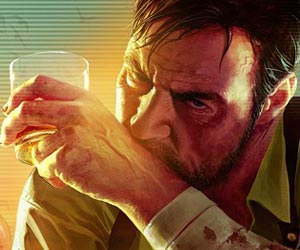
And yet, Max Payne 3 almost made me switch off the game, not just once but twice, due to the brutality it depicts.
And this is in no way an indictment of the game.
Max Payne 3 is a brutal game – and more than any shooter I’ve played it does a remarkably horrid job of showing what bullets do to bodies. Does the game revel in showing exit wounds? I think I’d be lying if I said it wasn’t – MP3 does not present its violence with the frat boy, fist-pump glee of other games, but it has a fascination for showing the damage done, both to people and to interior (and exterior) decorating, in slow motion. So much so that checking out some of the videos on YouTube makes me queasy – less with the game than with the Beavis and Butthead-ish tone of the video description and comments.
But it’s not so much seeing the carnage I’m authoring that made me wince, at least not after the first ten minutes or so. (There is definitely something numbing to seeing henchman after henchman dying horribly at the business end of my gun – and it’s this repetitiveness that’s a major flaw of the game in my opinion.) It’s two key scenes: in one, I finally find the beaten, bleeding trophy wife of a São Paolo business man earlier abducted by a favela gang, only to see one of the gangbangers put a bullet through her head. In another, the business man’s brother is covered with petrol and burnt alive. The game has previously shown the man as shallow, narcissistic and rather pathetic – but the way the game depicts his death got to me, and quite possibly more so than a similar scene would have in a film.
I don’t want to get into the question here of whether games are becoming too violent or whether people are desensitised to real-life violence and cruelty due to watching brutal films or playing violent games. That question is much bigger and deserves a longer discussion in a wider forum. What I’m interested in is this: why did these two scenes get to me to the extent where I wasn’t sure I wanted to continue playing (keeping in mind, as I’ve said, that I’m not all that squeamish)?
I think it’s this: games make a big thing of player agency – as gamers it’s our finger on the trigger, we decide who lives and who dies, it’s, like, interactive! – yet in practice our agency is always limited, it’s circumscribed in a hundred ways: by a game’s design, its user interface, our character’s abilities and, often frustratingly, by the story a game tells. You’re Superman while playing the game, you’re John McClane, you’re Neo – and then comes a pre-rendered sequence, and what’s pre-rendered as well is your impotence in the face of the great god, Plot. The villain jumps from the shadows and skewers your love interest with his great big sword. (I’ve never played Final Fantasy VII, but apparently this is one of the primal scenes of so many gamers into Japanese role-playing games… and I wonder whether the cod-Freudian subtext is as heavy when you’re actually playing.)
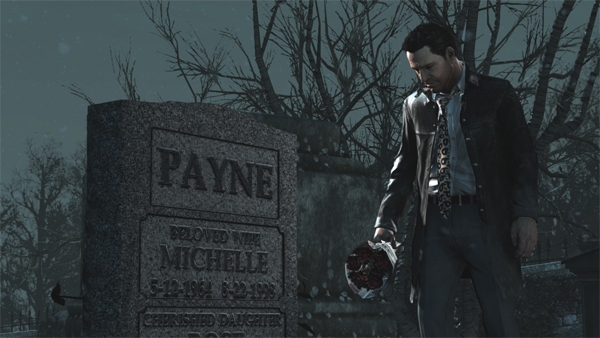
Many games use this in a frustrating way that feels like the program is cheating, in revenge for decades of players using hidden cheats and God modes to become invulnerable. Think you’re all-powerful, gamer? Take that! Ooh, that must’ve hurt! The two scenes in Max Payne 3 thatI mentioned earlier (and there are others, although none as pointed) may have an element of this, but I think the game is being cleverer than that: Max Payne, from the first game onward, told a story about revenge and redemption. I’m not sure to what extent it manages the latter all that well, although there’s a lot of quasi-Noirish verbiage in the game about it – but especially Max Payne 3 never lets you forget that the revenge you’re effecting is finally hollow. Yes, you might get to kill hundreds of bad guys in bloody, bone-crunching ways, but Max’ loss is the constant foil through which the player views this revenge. For every henchman killed, for every villain stopped, Max’ wife and child is not a single bullet closer to being alive. For a game that’s entirely about revenge and redemption, it’s bleakly ironic that revenge is shown to be pointless and redemption all but impossible. Max Payne’s extended trauerarbeit (and I don’t think this is wankerish pseudo-analysis imposed on the game – every second line of dialogue is about Max’ ongoing, futile quest to find some sort of meaning in a life that’s had all meaning shot to hell), like the hundreds of painkillers he keeps popping, only serves to dull his pain momentarily.
I’m not saying that Max Payne 3 is a deep, philosophical treatment of mourning, revenge and the futility of redemption – but it does address these issues within the rules it has set up for itself… and, like Rockstar’s earlier Red Dead Redemption (although my vote still goes to RDR for doing more interesting, complex things with the theme) it goes a long way to disabuse the player of this crazy idea that just because he’s got his finger on the trigger he can make everything all right.
As I mentioned in my last post, we were just one episode away from finishing The Prisoner – the original UK series starring Patrick McGoohan, that is, not the remake with Ian McKellen and Jim Caviezel. The Prisoner may just be one of the Top 3 cult series of all time; it’s up there with the likes of Twin Peaks. And, as with so many things that are given the ‘cult’ label, it’s difficult to come to them with fair, realistic expectations, isn’t it?
Well, to begin with: you have to make allowances for the series’ age. Even though everyone talks about how original and revolutionary the series was and still is, in some ways it’s very much a product of its time. Sometimes that’s charming – as in the ’60s art and costume design, making the Village perhaps the hippest prison resort ever – but sometimes it is tiresome, as in the pacing (few of the episodes need to be 50 minutes long, and most would have benefited from cuts) or the fight scenes, which are tame, repetitive and overly long, not least because we’ve all seen better, more exciting fights by now. I imagine that these are less of an issue if you’re revisiting the series wearing nostalgia goggles, but then, they’re not my main problem with The Prisoner.
The thing is, the series was undoubtedly a pioneer – it’s still rare to find much on TV that mixes mystery, politics, psychology and metaphysics as The Prisoner does, and that is as willing, or indeed eager, to keep clear-cut answers from the audience. The series definitely wants us to think along and to form our own ideas on what is happening to McGoohan’s Number 6. At times it’s almost like watching a spy thriller penned by Samuel Beckett. However, looking at the series, its world and its puzzles more closely, I think that one of the main reasons why it raises so many questions is that it has little to no internal consistency: to be quite frank, much of the mystery stems from The Prisoner’s overall mythologybeing an incoherent mess. Remember all the accusations levelled at Lost, especially as they were approaching the finale? “They’re making it up as they go along!” Well, the very same seems to be true when it comes to its older fellow puzzle box of a series. It establishes few rules that it is content to stick with, which may work at the beginning as Number 6 is trying to escape the Village but is foiled over and over again because, well, the deck is stacked against him – but the longer the series goes on, the more it feels like The Prisoner‘s universe is random and arbitrary.
As a result, it became increasingly difficult for me to engage with or care about what was happening on screen. Why think along if the series can just put on a monkey mask and make fun of your wish, if not for answers then for some sort of internal logic? I’ve mentioned Beckett before, and I think there’s a definite similarity between his cruel, bleak and at times strangely funny universe and The Prisoner – but while I may have the patience and will to sit through 1 1/2 hours of Beckett (and even then only if the acting is impeccable), I’m not sure I could sit still for more than one episode of Endgame: The Series. (Oh, wait: I just did. Doesn’t mean that I was happy to, though.)
It’s a shame, because there are a lot of scenes and ideas that are fascinating. There are moments that are great, like Rover sitting (does a giant white ball even sit?) in Number 2’s chair or the sheer silliness of kosho (a sport played by Number 6 that makes sumo wrestling look dignified), there are some fascinating characters, and at times the mood is as menacing as in The Wicker Man (though with less Christopher Lee in drag). There’s a lot of ambition in the series and a rebellious spirit that a lot of TV programmes would benefit from even today. It’s just that these rarely come together to form something coherent – and as a result I’m left to wonder whether the people who profess to love The Prisoner see something in it that I’m blind to or whether there’s an element of weirdness worship going on, where the series is loved uncritically because it’s just so different. It’s very well possible that The Prisoner broadcasts much of its goodness on frequencies that I’m not able to receive, but even then I think it’s fair to say the series is deeply flawed, with its first four or five episodes being pretty exchangeable, the final four suggesting that the producers were getting tired of the format (leading to their use of a rather Trekkian conceit, the Western Episode), and the entirety of the series never quite deciding whether Number 6’s adversaries, the constant procession of new and improved Number 2s, are always a step ahead of him or whether they’re playing a futile game of catch-up, with the titular character just being so much smarter than all of them.
Oh, and don’t get me started on a computer that’s blown up by being asked the Deep, Unanswerable Question: “Why?”